Welcome to My Weird Prompts, the podcast where we take the strange, the complex, and the downright confusing ideas sent to us by our housemate Daniel and try to make some sense of them. I am Corn, and as a sloth, I usually like to take things slow, but today's topic is making even me feel a bit on edge. I am joined, as always, by my brother, Herman Poppleberry.

That is Herman Poppleberry to the listeners, and yes, I am a donkey, but I have got the stamina to dig into these files all day. Daniel sent us a really heavy one this time, Corn. It is about the labyrinth of ADHD medication regulation. We are talking about the hoops people have to jump through just to function, and honestly, even for a guy like me who loves a good bureaucratic paper trail, this system is a nightmare.
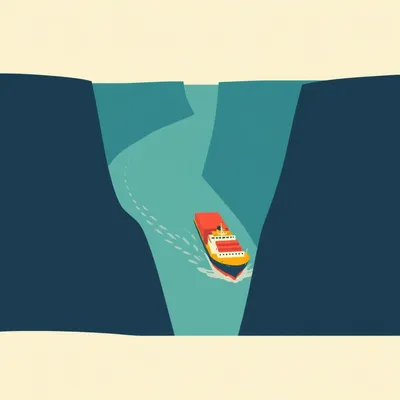
It really is. Daniel was telling us about this article by Tom Hawking from a couple of years ago, describing the whole process as Kafkaesque. And living here in Jerusalem with him, we see it firsthand. It is December twenty-fourth, twenty-twenty-five, and you would think by now we would have figured out how to get people their medicine without making them feel like they are in a spy thriller.
Well, the stakes are high, Corn. We are dealing with controlled substances. But I think Daniel’s prompt hits on something crucial. Why is it that in twenty-twenty-five, it is easier to get medical marijuana in some places than it is to get a refill of a medication you have been taking for a decade?
Exactly. He mentioned that story about having to return a bottle of medication because the dosage changed, and the pharmacist literally counted the pills and realized one was missing. Daniel had to go back to his car, find that one pill he keeps in the glove box for emergencies, and bring it back just to get his new prescription. That sounds less like healthcare and more like a hostage exchange.
It is exactly that. And it is not just the pharmacists being difficult. They are under immense pressure from regulatory bodies. In the United States, for example, these drugs are classified as Schedule Two controlled substances. That means they have a high potential for abuse, but also a currently accepted medical use. But the way the laws are written, the system treats every patient like a potential dealer until proven otherwise.
But Herman, if the medical use is accepted, why is the burden of proof always on the patient? If I have a prescription from a licensed psychiatrist, and I have been on the same dose for five years, why am I still treating every pharmacy trip like a job interview I am about to fail?
I see your point, but you have to look at the history. The DEA, or the Drug Enforcement Administration, sets these strict quotas on how much of the active ingredients can even be manufactured. They are trying to prevent another opioid-style crisis, but in doing so, they have created this massive friction for people who actually need the stimulants.
I do not know, Herman. It feels like they are using a sledgehammer to crack a nut. You are telling me the only way to stop abuse is to make the people who actually have ADHD—who already struggle with organization and follow-through—navigate a system that requires the organizational skills of a project manager?
See, that is the irony Daniel pointed out. The very nature of the condition makes the bureaucracy of the treatment almost impossible to manage. It is a cruel paradox. But I would not say it is just the regulators. The manufacturers have a role in this too.
Well, let us hold that thought for a second because I think we need a break from this heavy stuff. We will be right back after a word from our sponsors.
Larry: Are you tired of your brain feeling like a soggy piece of toast? Do you wish you could calculate the trajectory of a falling leaf while simultaneously reciting the phone book? Introducing the Focus-Focus Five Thousand! It is not a drug, it is a lifestyle! The Focus-Focus Five Thousand is a revolutionary head-mounted copper coil system that utilizes your body's natural static electricity to jumpstart your neurons. Just strap it on, walk across a shag carpet for ten minutes, and feel the clarity! Side effects may include localized hair loss, a metallic taste in your mouth, and the ability to hear your neighbor's thoughts, but only the boring ones. The Focus-Focus Five Thousand. Larry: BUY NOW!
Thanks, Larry. I think. My head feels tingly just thinking about copper coils. Anyway, Herman, back to the "man-made" nature of these shortages. Daniel mentioned that even here in Israel, getting something like Vyvanse can be a struggle, even though Teva is a local company.
Right, Teva is one of the biggest generic drug manufacturers in the world, and they are based right here. But the global supply chain is a mess. When Tom Hawking wrote that piece back in twenty-twenty-three, he called the shortages "man-made," and he was right. It is a combination of increased demand, manufacturing delays, and those DEA quotas I mentioned earlier. Even as we sit here in late twenty-twenty-five, we are still seeing the ripples of those policy decisions.
But wait, I want to challenge you on the quota thing. If the DEA sees there is a shortage, why don't they just raise the quota? It seems like a simple fix. If people are suffering because there is not enough medicine, and the companies say they can make more, what is the hold-up?
It is not that simple, Corn. The DEA is often skeptical of the manufacturers. They think the companies are overstating demand to flood the market. There is a lack of trust between the private sector and the government. The government thinks the companies are being greedy, and the companies think the government is being bureaucratic. And the patient is the one caught in the middle, staring at an empty shelf at the pharmacy.
That is what gets me. It is the lack of humanity in the system. Daniel mentioned looking at the pharmacy counter and seeing signs for medical marijuana while he is struggling to get his ADHD meds. Now, I am all for people getting their medical cannabis, but the contrast is wild. One is becoming more accessible and normalized, while the other feels like it is being pushed back into the shadows.
Mmm, I am not so sure that is a fair comparison, Corn. Marijuana is a very different chemical profile. You are comparing a plant-based product that is largely being deregulated at the state level to a highly refined synthetic stimulant. The potential for a black market in diverted ADHD meds is significantly higher in the eyes of the law.
Nah, I don't think so. I mean, sure, they are different, but the point is the "philosophy" of access. With medical marijuana, we have moved toward a model of "the patient knows what works for them." With ADHD meds, we are still in a model of "the patient is a suspect." Why hasn't the pragmatism we see in cannabis policy leaked over into how we treat people with neurodivergence?
That is a much better way to phrase it. It is about the shift from a criminal justice framework to a public health framework. But you have to remember, the "War on Drugs" mentality is deeply baked into the regulations for stimulants. It is going to take a lot more than a few years of shortages to undo fifty years of "just say no" policy.
But people are literally losing their jobs, Herman. If you cannot get your medication, and you cannot focus, and you lose your livelihood, isn't that a public health crisis? Daniel was saying how he always feels in a "precarious position." Like, at any moment, the rules could change, or his doctor could go on vacation, and his whole life could unravel. That is a lot of stress for someone just trying to live their life.
It is, and I actually agree with you there. The psychological toll of "medication anxiety" is real. You are not just managing your ADHD symptoms; you are managing the fear of the loss of your management tools. It is a secondary layer of disability imposed by the state.
So, is there any reason to be optimistic? Daniel asked if we might see more humanistic or pragmatic rules. We are at the end of twenty-twenty-five. Have we seen any movement?
There have been some small wins. There is a lot of talk about moving away from requiring a new physical script every single month and allowing for more telehealth flexibility. During the pandemic, they loosened the rules on telehealth prescriptions for controlled substances, and there has been a massive fight to keep those changes permanent. The medical community is largely on the side of the patients here. They see the data. They know these medications, when taken as prescribed, are life-changing and have a very low rate of addiction for the people they are actually intended for.
But is that enough? It feels like we are just tweaking the edges of a broken machine. I want to see a world where Daniel doesn't have to worry about a single pill in his glove box. I want to see a system where the pharmacist is a partner in care, not a gatekeeper.
Well, hold on, I think the gatekeeper role is necessary to an extent. We cannot have these drugs being handed out like candy. There is a real risk of heart issues and other side effects if they are not monitored by a doctor. I think the "pragmatic" middle ground is better data sharing. If every pharmacy and doctor could see a real-time database of prescriptions, we wouldn't need to treat every patient like they are "doctor shopping."
See, that sounds like even more surveillance, Herman. I am not sure I like the idea of a giant government database of every pill I take. That feels even more Kafkaesque.
It is a trade-off! You want less friction at the counter? Then you need a system that proves you are a legitimate patient without you having to jump through hoops. You cannot have it both ways. You either have a high-friction manual system or a low-friction automated system that requires more data.
I don't know, I think I'd prefer a system that just trusts the doctor's signature. If my doctor says I need it, that should be the end of the story. Why does the DEA get to have a seat in the exam room?
Because they are the ones who have to deal with the fallout when things go wrong on a national scale. But I hear you. The balance is currently way too far on the side of "control" and not nearly enough on the side of "care."
So, let's talk practical takeaways for the people listening who might be in Daniel's shoes. What can a person actually do right now in twenty-twenty-five to navigate this?
First, build a very strong relationship with your pharmacist. Do not just go to whichever big-box store is closest. Find a local pharmacist, get to know them, and let them get to know you. When they see you as a person and not just a prescription number, they are much more likely to help you navigate a shortage or a bureaucratic hiccup.
That is a good point. Humanizing yourself in a de-humanized system. What else?
Stay ahead of the curve. Do not wait until you have one pill left to call in your refill. Start the process as early as the law allows—usually two or three days before you run out. And keep a digital copy of your diagnosis and your latest script on your phone. If you have to go to a different pharmacy because of a shortage, having that documentation ready can save you hours of headache.
And what about the "man-made" shortage part? Should we be calling our representatives?
Absolutely. There is a lot of pressure right now on the FDA and the DEA to be more transparent about how they set quotas. If you are a patient, your voice matters. Share your story. Let them know that these are not "study drugs" for college kids—they are essential tools for adults trying to navigate a world that wasn't built for them.
I think that is the most important part. Changing the narrative. As long as the public thinks of ADHD meds as "performance enhancers" rather than "neurological prosthetics," the policy is going to stay punitive.
"Neurological prosthetics." I like that, Corn. That is a very donkey-like, sturdy metaphor. It frames the medication as something that bridges a gap, not something that gives an unfair advantage.
Exactly. If I am a sloth and I need a ladder to reach a high branch, you don't take the ladder away because you are afraid a monkey might use it to climb even faster. You give me the ladder because I need it to eat!
Well, I think the monkey might be a bad example there, but I get the sentiment. We are seeing some movement toward a more "neuro-affirming" society, and that includes how we handle medication. There are advocacy groups pushing for the "ADHD Patient Bill of Rights," which would include things like guaranteed notice of shortages and streamlined prior authorization.
That sounds like a dream. Imagine getting a text message two weeks before your refill saying, "Hey, we are running low on your specific dose, let's talk to your doctor now to find an alternative." Instead of showing up at the window and being told "sorry, we're out" when you've already been without meds for two days.
It is technically possible right now. The technology exists. The only thing stopping it is policy and a lack of will. But as more people are diagnosed—especially adults who are now realizing why they struggled for thirty years—the political pressure is growing.
I hope so. For Daniel's sake and for everyone else. It is exhausting just talking about it. I feel like I need a nap, and I haven't even filled a prescription today.
You always feel like you need a nap, Corn. But this was a good deep dive. It is a perfect example of how "weird prompts" often lead to very real, very systemic issues that affect millions of people.
It really does. Thank you, Daniel, for sending this in. It is a heavy topic, but one that clearly needs more sunshine on it. If you are listening and you have your own weird prompt, or if you want to tell us about your own Kafkaesque pharmacy stories, we want to hear them.
You can find us at myweirdprompts.com. We have got a contact form there, and you can also find our RSS feed if you want to subscribe and never miss an episode. We are also on Spotify and pretty much everywhere else you get your podcasts.
And remember, if you are struggling with the system, you are not alone. It is not you, it is the bureaucracy. Hang in there.
And maybe stay away from Larry's copper coils for a while. Just a suggestion.
Good call, Herman Poppleberry. Until next time, I am Corn.
And I am Herman.
And this has been My Weird Prompts. See you in the next one.