Hey everyone, and welcome back to My Weird Prompts. I am Corn, and I am sitting here in our living room in Jerusalem with my brother.

Herman Poppleberry, ready and reporting for duty. It is a bit of a somber morning here, actually. Our housemate Daniel just sent over a prompt that is a lot more personal than our usual deep dives into obscure tech or history.
Yeah, Daniel was sharing some of his own family history with us, and it really puts things into perspective. He was talking about the devastating impact of alcoholism, specifically thinking about his father and a friend who is currently struggling. It is a heavy topic, but it is one that touches almost every family in some way.
It really does. And what struck me about Daniel's question was the focus on how things have changed. He is looking at a twenty year window. If you think back to the early two thousands, the way we talked about and treated what we now call Alcohol Use Disorder was fundamentally different from the evidence based medicine we see here in twenty twenty six.
That is a great point. Even the terminology has shifted, right? We used to just say "alcoholic," which carries a lot of stigma and implies a binary state—you either are one or you are not. Now, clinicians use the term Alcohol Use Disorder, or A U D, to describe a spectrum.
Exactly. It is a chronic, relapsing brain disease. And I think that is the best place to start, because understanding it as a biological reality rather than a moral failing is what has allowed the medical community to make such massive strides in the last two decades.
So, let's tackle the first part of Daniel's prompt. He asked about the initial detox phase. Most people know that you can't just "quit" if you are a heavy, long term drinker, but I don't think everyone understands why it is actually life threatening. What is happening in the brain during those first seventy two hours?
This is where the neurochemistry gets really intense. Alcohol is a central nervous system depressant. It primarily works by enhancing the effects of G A B A, which is your brain's primary inhibitory neurotransmitter. Think of G A B A as the brakes on your brain. At the same time, alcohol inhibits glutamate, which is the excitatory neurotransmitter—the gas pedal.
So when you are drinking heavily every day, your brain tries to compensate for all that extra "braking" power from the alcohol.
Precisely. The brain is an incredible machine of homeostasis. It wants balance. So, it starts down regulating its own G A B A receptors and up regulating its glutamate receptors. It is essentially trying to floor the gas pedal just to keep the car moving at a normal speed because the brakes are constantly being pressed.
And then, you suddenly take the foot off the brake. You stop drinking.
And the gas pedal is still floored. That is what leads to the withdrawal syndrome. You have this massive "glutamate storm." Your nervous system goes into overdrive. This is why we see symptoms like tremors, extreme anxiety, tachycardia—which is a racing heart—and in severe cases, seizures or delirium tremens, often called the D T's.
Daniel mentioned that alcohol withdrawal is one of the few that can actually be fatal. I think people often compare it to opioid withdrawal, which feels like you are dying, but usually won't kill you. But with alcohol, the risk of a grand mal seizure or cardiac arrest is very real.
It is. And twenty years ago, the approach was often "cold turkey" in a padded room, or perhaps some basic sedatives. Today, the gold standard is much more sophisticated. We use what is called symptom triggered therapy. Medical staff use the C I W A scale—the Clinical Institute Withdrawal Assessment for Alcohol. They monitor ten specific symptoms and give medication only when the score hits a certain threshold.
And what are they giving? Is it still just Valium?
Benzodiazepines like Diazepam or Lorazepam are still the backbone because they act on those same G A B A receptors, essentially providing a "controlled brake" while the brain slowly recalibrates. But the big shift in the last few years has been the addition of things like Gabapentin and even certain anti convulsants like Carbamazepine. These help stabilize the glutamate system directly, which reduces the "kindling effect."
Wait, explain the kindling effect. I have heard that term in neurology but never quite understood it in the context of addiction.
It is a fascinating and terrifying concept. Kindling refers to the way that each subsequent withdrawal episode becomes more severe than the last. If someone goes through detox, relapses, and detoxes again, their brain becomes increasingly sensitized to the lack of alcohol. The "glutamate storm" gets more violent every time. By using better medications today to completely suppress that over-excitation, we are actually protecting the brain from long term neurological damage.
That is a huge shift. It is not just about getting through the week; it is about neuroprotection. And I imagine there is a lot more focus on nutrition now, too? I remember reading about Wernicke-Korsakoff syndrome.
Oh, absolutely. That is "wet brain," as it used to be cruelly called. It is caused by a severe deficiency in Thiamine, or Vitamin B one. Alcohol prevents the body from absorbing it. Today, high dose intravenous Thiamine is standard in any detox protocol. We have realized that a lot of the "permanent" cognitive decline we used to see in heavy drinkers was actually preventable if you caught the vitamin deficiency early enough.
So, once someone is physically stable—they have gotten through the tremors and the danger of seizures—we move into the long term. This is where Daniel's second question comes in, and it is a controversial one. The consensus for a long time was "total abstinence or death." Is that still the case? Can some people actually return to moderation?
This is arguably the biggest debate in addiction medicine right now. For a century, the Twelve Step model of Alcoholics Anonymous was the only game in town. Their core tenet is that you are "powerless" over alcohol and that one drink is too many. And for many people, that is true and that model has saved millions of lives.
But it doesn't work for everyone. The success rates for A A are notoriously difficult to track, but many studies suggest they are lower than we might hope for a primary medical intervention.
Exactly. And the "all or nothing" approach can actually be a barrier to treatment. Some people are so terrified of the idea of "never again" that they don't seek help until they have lost everything. Enter: Harm Reduction.
I have seen this gaining traction. The idea that if you can't get someone to stop entirely, you help them drink less, or drink more safely.
Right. And there is actual clinical evidence now that for some people—specifically those on the milder end of the A U D spectrum—controlled drinking is a viable goal. The European medical community has been much faster to adopt this than the United States or even here in Israel. They use medications like Nalmefene or Naltrexone to help people reduce their consumption.
Let's talk about Naltrexone. This is the "Sinclair Method," right? I find the science behind this absolutely wild because it basically tells you to keep drinking while you take the pill.
It is counter-intuitive, isn't it? But it is based on Pavlovian extinction. When you drink alcohol, your brain releases endorphins, which bind to opioid receptors, creating that "buzz" or "reward." Naltrexone is an opioid antagonist. It blocks those receptors.
So you take the pill, you wait an hour, and then you have a drink.
And the drink does... nothing. It doesn't feel good. You might get the physical effects of the alcohol, like feeling a bit dizzy or uncoordinated, but that "ping" of euphoria in the brain never happens. Over time, through dozens of sessions, the brain "unlearns" the association between alcohol and pleasure. It is called pharmacological extinction.
So for someone using the Sinclair Method, the goal isn't necessarily to never touch a drop again, but to reach a state where they just... don't care about it anymore. They might have one glass of wine at a wedding and stop because they don't have that "craving" for the second, third, and tenth glass.
Exactly. Now, I have to be careful here. For someone with severe, late stage A U D—someone whose liver is failing or who has significant brain damage—total abstinence is still the safest medical recommendation. The risk of a "slip" becoming a fatal relapse is just too high. But for the "functioning" person who realizes their drinking is becoming a problem, these new tools are revolutionary.
It feels like we are moving toward a "personalized medicine" approach for addiction. Instead of a one size fits all basement meeting, you have a suite of options: G A B A stabilizers, opioid blockers, cognitive behavioral therapy, and yes, peer support.
And don't forget Acamprosate. That is another one that has become a staple in the last twenty years. It helps reduce the "protracted withdrawal" symptoms—that lingering anxiety and insomnia that often leads to relapse months after someone has quit. It basically helps keep the brain's chemistry level so the person doesn't feel like they are constantly walking on eggshells.
I think it is important to acknowledge that the "abstinence only" crowd often views these medications as "cheating" or just "replacing one drug with another." But if we look at the data, the combination of medication and therapy has much higher success rates than therapy alone.
It is the "willpower" myth, Corn. We don't tell a diabetic that taking insulin is "cheating." We recognize their body has a physiological malfunction. Why do we treat the brain differently?
That leads perfectly into Daniel's third point. The biology and the genetics. He mentioned being the son of an alcoholic and feeling that pressure—the idea that it is "in the blood." What does the latest research tell us about the "alcoholism gene"?
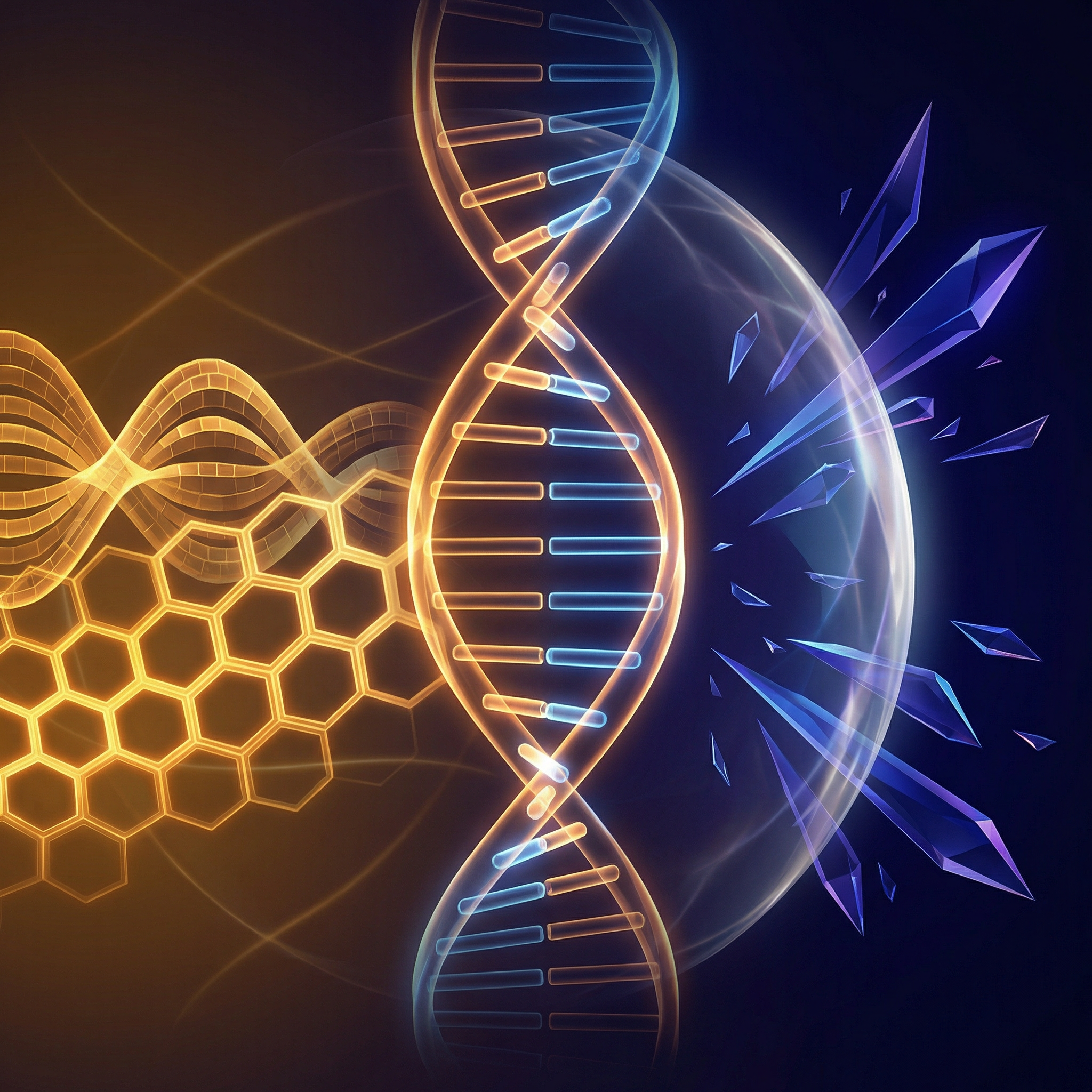
The short answer is: there isn't one. There is no single "alcoholism gene." It is what we call a polygenic trait, meaning it involves hundreds of small genetic variations across the entire genome.
So it is more like a "vulnerability map" than a "destiny."
Great way to put it. Current research suggests that about fifty percent of the risk for Alcohol Use Disorder is genetic. If you have a parent with A U D, you are roughly four times more likely to develop it yourself, even if you are raised in a different environment.
Four times. That is a significant number. What are those genes actually doing? Are they making the alcohol taste better?
Some of them, yes! It is fascinating. There are variations in the genes that code for how we metabolize alcohol. For example, many people of East Asian descent have a variant of the A L D H two gene. This causes "alcohol flush reaction." Their body can't break down acetaldehyde, a toxic byproduct of alcohol, very quickly.
Which makes them feel terrible—nauseous, heart racing, bright red face.
Right. And ironically, that genetic "defect" is actually a massive protective factor against alcoholism. If drinking makes you feel like you have the flu after ten minutes, you are probably not going to become a heavy drinker.
So on the flip side, some people probably have a "super metabolism" that lets them drink more with fewer immediate negative effects.
Exactly. There are people who can drink a lot and never feel a "hangover" in the traditional sense. They have a higher tolerance from day one. That is a huge red flag for future addiction because they don't have the natural "stop" signals that the rest of us have.
What about the brain's reward system? I have heard a lot about the D two dopamine receptor.
Yes, the "Reward Deficiency Syndrome" theory. Some people are born with fewer dopamine receptors in their brain's reward center. For these people, everyday life can feel a bit "gray." They don't get as much joy from a sunset or a good meal as the average person. But when they take a substance that forces a massive dopamine release—like alcohol—it is like the lights finally turn on.
So they aren't drinking to get high; they are drinking to feel "normal" for the first time.
Precisely. And that is a powerful, dangerous hook. We also see genetic links in the G A B A receptors we talked about earlier. Some people have a nervous system that is naturally "twitchy" or prone to anxiety. Alcohol "fixes" that temporarily, making it a very effective—and very addictive—form of self medication.
Daniel mentioned that he enjoys a glass of wine now and then, and he feels a bit of "guilt" or "awkwardness" from his family because of his father's history. Based on what we know in twenty twenty six, should the children of alcoholics be terrified of ever touching a drink?
Terrified? No. Vigilant? Yes. Knowledge is power here. If Daniel knows he has a four times higher risk, he can watch for the early warning signs. Does he find himself drinking to cope with stress? Does he have a hard time stopping once he starts? Does he have that "high tolerance" we talked about?
It is about knowing your own equipment. If you know your car has a sensitive throttle, you drive it differently.
Exactly. And the science of epigenetics is also giving us hope. We used to think genes were set in stone, but we now know that environmental factors—stress, diet, exercise, even social connection—can "turn on" or "turn off" certain gene expressions. Just because you have the "vulnerability map" doesn't mean you have to follow the road to addiction.
You know, we have talked a lot about the biology, but I think the "social connection" piece is something we shouldn't overlook. One of the biggest shifts in the last twenty years is the realization that "the opposite of addiction is connection," a phrase often attributed to Johann Hari.
It is so true. Isolation is the fuel for Alcohol Use Disorder. In the old days, we used to "shame" people into quitting. We would have these aggressive interventions where everyone yells at the person until they cry.
And research now shows that those high pressure interventions often backfire. They create so much shame and stress that the person's immediate instinct is to go and drink to numb that feeling.
Right! Today, the "Community Reinforcement and Family Training" model, or C R A F T, is considered much more effective. It teaches families how to reward sober behavior and allow natural consequences for drinking, without the shaming and the screaming. It is about keeping the bridge of connection open so that when the person is ready to seek help, they have somewhere to go.
I think that is a really important message for Daniel and for anyone listening who has a loved one struggling. The science has evolved, the medications are better, and our understanding of the brain is light years ahead of where it was when Daniel's father was struggling. But the human element—the empathy and the lack of stigma—is still the most important part of the equation.
Well said, Corn. I think it is also worth noting that we are seeing some incredible new frontiers in research. There are clinical trials happening right now with Psilocybin and other psychedelics for treating A U D.
Oh, I have been following that. The results for smoking cessation and alcohol use are mind blowing. Something like an eighty percent success rate in some small trials.
It is because those substances seem to "reset" the brain's default mode network. They allow people to step outside of those deeply ingrained "loops" of craving and self loathing. It is like shaking a snow globe and letting the flakes settle in a new pattern. By twenty thirty, that might be a standard medical treatment.
It is amazing how much of this comes down to neuroplasticity. The brain can be damaged, yes, but it can also be rewired. Whether it is through the Sinclair Method, or C B T, or even these newer psychedelic therapies, the "incurable" label is finally being peeled off.
And that is the "aha moment" I hope people take away from this. Alcoholism is a "weird prompt" from biology. It is a glitch in the way our ancient reward systems interact with a modern, fermented world. But a glitch can be patched.
I really hope this gives Daniel some comfort. Seeing the "grizzly and gruesome" side of this disease, as he put it, is traumatizing. But the medical world he lives in now is not the same one his father lived in. There is so much more hope now.
There really is. And for our listeners, if you are finding yourself reflecting on your own relationship with alcohol after hearing this, there are so many resources available now that don't involve a dark basement and a cup of bad coffee—unless that is what you want! You can talk to a primary care physician about Naltrexone, you can look into "Sober Curious" communities, or you can explore harm reduction apps.
The options are there. And hey, if you found this discussion helpful or if it gave you a new perspective on addiction, we would really appreciate it if you could leave us a review on your podcast app. We have been doing this for over three hundred and fifty episodes now, and your feedback is what keeps us going.
It really does. It helps other people find the show, and it helps us know which of these "weird prompts" are hitting home for you. You can also head over to myweirdprompts.com if you want to send us your own question or just get in touch.
Thanks for joining us today for a bit of a deeper, more serious conversation. We will be back next week with something hopefully a little lighter—maybe we will finally get around to that history of the rubber duck.
Oh, don't tease them, Corn. You know I have ten pages of notes on the vulcanization of latex.
I'm counting on it. Thanks for listening to My Weird Prompts. We will catch you in the next one.
Stay curious, stay connected, and we will talk to you soon.
This has been My Weird Prompts. You can find us on Spotify and at our website. Until next time.
Goodbye from Jerusalem!