Hey Herman, I was thinking about that prompt our housemate Daniel sent over this morning. It is a heavy one, especially given his family history with it, but man, it is such a critical mechanism to understand. He was asking about the kindling effect in alcohol withdrawal.

Herman Poppleberry, at your service. And yeah, Daniel really hit on something profound there. We have mentioned it in passing before, but we have never really peeled back the layers to see what is happening inside the neurons themselves. It is one of those topics that sounds a bit metaphorical, like starting a fire, but the biological reality is quite a bit more intense. In fact, the term itself has a fascinating history that dates back to the late nineteen sixties.
I did not realize it had a specific origin story. I always just assumed it was a general medical term.
No, it was actually coined by a British-Canadian psychologist named Graham Goddard in nineteen sixty seven. He was a student of Donald Hebb, who is often called the father of neuropsychology. Goddard was not even looking at alcohol at the time; he was studying the neurobiology of learning and memory. He was applying very weak electrical stimulations to the brains of rats—stimuli so weak they did not cause any visible reaction at first. But he found that if he repeated those tiny shocks every day, eventually the rats would have a full-blown seizure. He realized that the brain was essentially learning how to have a seizure. He called it kindling because it was like using small twigs to eventually set a large log on fire.
That is a terrifying analogy when you apply it to a human brain. So, the name kindling suggests that each successive withdrawal is like adding those small sticks to a fire, making the next blaze easier to start and more intense. But as Daniel pointed out, he is curious about the actual neurological hardware. What is actually changing in the brain to make this happen? Because it is a scary prospect, the idea that the more times you try to get sober and fail, the more dangerous the next attempt becomes.
It is one of the most counterintuitive aspects of addiction medicine. You would think the body would get used to it, like a tolerance, but with withdrawal, it is the exact opposite. It is a sensitization. To understand why, we have to talk about the two main players in your brain's chemical balancing act. We have talked about them before, but today we need to look at how they break. Those are gamma aminobutyric acid, which we usually call G A B A, and glutamate.
Okay, so G A B A is the brakes and glutamate is the gas pedal. That is the standard analogy. When you drink alcohol, you are basically slamming on the brakes, right? You are enhancing the effect of G A B A and suppressing the glutamate.
Exactly. Alcohol is a central nervous system depressant. It makes those G A B A receptors more effective at inhibiting neural activity, which is why you feel relaxed or sluggish. At the same time, it blocks the N methyl D aspartate receptors, or N M D A receptors, which are the primary docking stations for glutamate. So, the gas pedal is being held down but there is a block under it. But here is the kicker,
the brain does not just sit there. It fights back.
Right, the brain is an adaptive machine. If the brakes are always on, the brain starts building more gas pedals and making the existing ones more sensitive. It also starts turning down the sensitivity of the brakes.
Spot on. That is neuroadaptation. It is the basis of tolerance. You need more alcohol to get the same braking effect because your brain has become a high octane, glutamate heavy machine just to stay functional while you are drinking. Now, researchers have found that the brain specifically upregulates a certain type of N M D A receptor subunit called Glu N two B. This is important because Glu N two B is particularly sensitive to alcohol. When you drink chronically, your brain floods the synapses with these specific receptors to compensate for the alcohol's presence. Now, here is where the kindling starts. What happens when you suddenly take the alcohol away?
The block under the gas pedal is gone, and the foot is still flooring it. You get a massive surge of excitatory activity. That is the withdrawal. The shakes, the anxiety, the racing heart.
Right, but it is more than just a surge. It is a toxic flood. Without the alcohol to suppress it, that massive amount of glutamate hits those hypersensitive Glu N two B receptors. This causes a massive influx of calcium ions into the neurons. In normal amounts, calcium is great for signaling. In massive amounts, it is literally poisonous to the cell. It triggers a cascade of enzymes, like calpain and various proteases, that start breaking down the cell from the inside. This is called excitotoxicity.
So, the first time this happens, the brain is stressed, maybe you have a few tremors or a bad night's sleep. But Daniel's question is about why the second, third, or tenth time is so much worse. Why does the brain not just reset to its original state once the glutamate levels settle down?
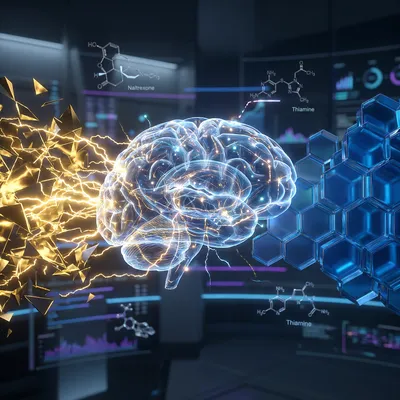
That is the mystery of kindling. It turns out that this excitotoxic event leaves a permanent mark. Think of it like a path through the woods. The first time you walk it, it is barely visible. But each time you have a withdrawal event, you are essentially paving that path. The brain undergoes structural changes. The N M D A receptors do not just go back to normal. Some studies suggest they remain in this hyper excitable state for a long time, or they become even easier to trigger. It is a form of long term potentiation, or L T P, which is the same mechanism we use for learning and memory. Usually, that is a good thing. It helps you remember your childhood phone number. But in this case, the brain is learning how to go into a state of extreme hyperexcitability.
So it is a form of cellular memory. The brain learns how to be in withdrawal. Is it specific areas of the brain that are getting kindled, or is it a global effect?
It seems particularly concentrated in the limbic system, especially the amygdala and the hippocampus. The amygdala is our emotional processing center, specifically for fear and anxiety. This is why each successive withdrawal often involves much more intense feelings of dread or panic. In fact, research from twenty twenty five has shown that kindling in the amygdala can actually distort how people perceive the world. People who have gone through multiple withdrawals often struggle to read facial expressions correctly; they tend to see anger or threat where there is none. The hippocampus is involved in memory and seizure regulation. When the kindling effect reaches a certain threshold in these areas, that is when you start seeing the really dangerous stuff, like grand mal seizures or delirium tremens.
That explains the progression Daniel was talking about. A mild withdrawal becoming moderate, then life threatening. But I want to push on the mechanism a bit more. You mentioned calcium ions and cell death. Does the actual loss of neurons contribute to the kindling? Like, if you lose the inhibitory neurons that are supposed to keep things in check, does that make the remaining system even more unstable?
That is a brilliant observation, Corn. Yes, that is a major part of the theory. There are specific interneurons in the brain that use G A B A to keep the excitatory neurons from firing too much. These interneurons are particularly sensitive to that calcium influx we talked about. So, if each withdrawal kills off a few of your internal peacekeepers, the next time the glutamate surge happens, there are fewer cells left to dampen the signal. You are losing the very hardware that provides the brakes. It is a double whammy: you are making the gas pedal more sensitive and you are literally breaking the brake lines.
That is a recipe for a total system failure. You mentioned earlier that this is not just about the cells dying, but also about the connections between them. What about the role of inflammation? I know that chronic alcohol use and withdrawal both trigger a massive inflammatory response in the brain. Does that play into the kindling?
Big time. Neuroinflammation is like the gasoline on the kindling fire. Recent studies published in late twenty twenty five have highlighted the role of microglia, which are the brain's resident immune cells. When those neurons are stressed by the glutamate surge, it activates the microglia. These cells start pumping out inflammatory cytokines like T N F alpha and interleukin one beta. This inflammation actually makes the N M D A receptors even more sensitive. So it is this vicious cycle. Glutamate causes stress, stress activates microglia, microglia cause inflammation, and inflammation causes more glutamate sensitivity. This inflammatory state can persist for weeks or even months after the last drink, which is a huge part of why people feel so terrible during early recovery.
This leads directly to the second part of what Daniel asked. For people in recovery, is there any way to reset this? Can we un-wire it? Or are you just stuck with a brain that is permanently primed for a lethal reaction if you ever slip up?
This is the million dollar question in addiction science. And I have to be honest, the current consensus is pretty sobering. Most researchers believe that once the kindling effect has reached a certain point, it is largely irreversible. The structural changes and the loss of those inhibitory interneurons are permanent. It is like a scar on the brain. You can heal the wound, but the scar tissue remains, and that tissue is never as flexible as the original skin. However, there is some very exciting new research that came out of Washington State University in September of twenty twenty five.
Oh? What did they find?
Researchers David Rossi and Nadia McLean found that the cerebellum—which we usually think of as just being for balance and motor control—is actually a key player in the emotional and physical distress of withdrawal. In their studies, they were able to ease withdrawal symptoms in mice by targeting specific pathways in the cerebellum. This suggests that while we might not be able to reset the kindling in the amygdala or hippocampus yet, we might be able to use the cerebellum as a therapeutic target to bypass the damage. It is like finding a back door to stabilize the system.
That is a much more hopeful way to look at it. It is not about deleting the past, it is about finding new ways to manage the present. But surely there is some nuance there? We talk about neuroplasticity all the time. Is there no way to build new pathways that counteract the kindled ones?
There is hope in that direction, but it is not a simple reset button. It is more like building a bypass around a broken bridge. You cannot fix the old bridge, but you can try to strengthen other parts of the brain to compensate. This is where things like long term sobriety and certain medications come in. For example, there is a drug called acamprosate. It is often prescribed to help people maintain abstinence. It is thought to be a glutamate antagonist and a G A B A agonist, essentially acting like a very mild, non addictive version of the balancing act alcohol used to perform. By keeping that glutamate activity in check, it might give the brain a chance to stabilize. It does not erase the kindling, but it might lower the baseline excitability so that the person does not feel like they are constantly on the verge of a panic attack.
What about gabapentin? I know that is used off label for alcohol withdrawal and cravings.
Gabapentin is interesting because it affects the calcium channels we were talking about earlier. By blocking those channels, it can prevent that massive influx of calcium that leads to cell death and the strengthening of those kindled pathways. There is some evidence that using gabapentin during the withdrawal phase can actually reduce the severity of the kindling effect for that specific episode. But again, it is more about damage control than a total reset. In fact, a twenty twenty five analysis of medical trends showed that hospitals are moving away from using benzodiazepines alone. They are increasingly using a cocktail of phenobarbital, ketamine, and dexmedetomidine to manage severe withdrawal because these drugs target different parts of that broken glutamate-G A B A system more effectively.
It sounds like the best way to deal with kindling is to never let it happen in the first place, which obviously is not helpful for someone who is already in that cycle. But for people listening who might be in early stages of alcohol use disorder, this is a massive argument for medical detox, right?
Absolutely. If you are a heavy drinker and you try to quit cold turkey at home, you are essentially gambling with your brain's long term stability. Every time you white knuckle it through a withdrawal, you are potentially kindling your brain. A medical detox uses powerful G A B A agonists to artificially keep the brakes on while the brain slowly adjusts its own chemistry. It prevents that toxic glutamate surge. It stops the kindling in its tracks. It is not just about making the process more comfortable; it is about neuroprotection. It is about preventing permanent structural damage that would make future recovery harder.
I think one of the misconceptions people have is that they should be able to just tough it out. But you cannot tough out excitotoxicity. You cannot willpower your way through calcium ions killing your neurons. That is a biological process that requires a pharmacological intervention.
Exactly. It is a harm reduction strategy for your future self. Let us talk about the long term for a second. Let us say someone has been sober for ten years. They had five or six bad withdrawals in their youth, so they are definitely kindled. If they have one drink today, does the kindling immediately snap back into place?
That is the big fear in recovery circles, right? That you are always just one drink away from the abyss.
Neurologically, there is some truth to that. Those paved paths in the woods do not disappear. They might get covered in some leaves and overgrowth, but the ground is still packed hard. As soon as the alcohol starts hitting the system and then leaves again, the brain recognizes that pattern. It falls back into those old, hyper excitable grooves very quickly. This is why many people find that if they relapse after years of sobriety, their withdrawal symptoms are just as bad, if not worse, than the last time they quit. The brain's memory for withdrawal is incredibly long lived.
That is a daunting prospect. But I am curious about the research into actually reversing it. Are there any experimental therapies on the horizon? I have read a bit about things like gene therapy or even deep brain stimulation.
We are in the very early stages of that. There is some fascinating work being done with viral vectors to try and reintroduce those G A B A producing interneurons into the hippocampus. Basically, you use a virus to deliver the genetic instructions for the brain to grow new brakes. It has worked in mice, which is exciting, but we are a long way from human trials. There is also research into using anti inflammatory drugs like minocycline to dampen the microglial response we talked about. If you can stop the inflammation, you might be able to slow down the progression of the kindling.
I want to go back to the idea of the switch Daniel mentioned. He asked if there is a way to switch it off. It sounds like there is no single switch, but rather a thousand tiny dials that have all been turned up to eleven.
That is a great way to put it. And because it is so multifaceted, involving receptor density, ion channel function, cell death, and inflammation, you would need a whole suite of interventions to truly reverse it. But here is something interesting: the concept of environmental enrichment. In animal studies, if you take a kindled animal and put it in a highly stimulating, positive environment with lots of social interaction and physical activity, you actually see some normalization of the brain chemistry over time.
So, neuroplasticity is not just a buzzword. Genuine lifestyle changes can actually move the needle, even if they do not erase the underlying damage. It is about outgrowing the kindling.
I love that. Outgrowing the kindling. It requires a lot of work, though. It is not just about not drinking. It is about active recovery. It is about therapy to manage the anxiety that the kindling produces. It is about nutrition to support brain health—eating a diet rich in antioxidants to fight that neuroinflammation. It is about exercise to stimulate neurotrophic factors like B D N F, which stands for brain derived neurotrophic factor. Think of B D N F as miracle grow for the brain. High levels of B D N F can actually help protect neurons from the kind of excitotoxic damage we are talking about. So, while you cannot switch off the kindling, you can certainly make your brain more resilient to its effects.
Let us talk about the implications for the healthcare system. If we know that kindling is this real, biological, progressive thing, why is it that so many people are still sent to standard emergency rooms where they might just get a saline drip and a pat on the back?
That is a systemic failure, Corn. It is a lack of understanding of the neurology of addiction. Too often, withdrawal is treated as a temporary inconvenience rather than a progressive neurological injury. If we treated every withdrawal as a potential kindling event, we would be much more aggressive with medical detox. We would be using those benzodiazepines or gabapentinoids or phenobarbital much more consistently to prevent the damage. It feels like there is still a lot of stigma attached to it, like people think if you are in withdrawal, you deserve to suffer a little bit. But that suffering is literally the sound of brain cells dying.
It is heartbreaking. We would never tell a person having a stroke to just tough it out and learn their lesson. But because it is alcohol, there is this moral overlay that obscures the biological reality. Understanding the kindling effect is one of the best ways to strip away that stigma. It is not a moral failing that the next withdrawal is worse; it is a physiological certainty. I think about Daniel's friend, the one he mentioned who is going through this right now. If that person has had multiple withdrawals in the past, they are at a much higher risk for things like seizures or even cardiovascular collapse during this attempt.
They really are. And that is why the advice has to be so clear. If you have a history of multiple withdrawals, you should never, ever try to quit without medical supervision. It is not just about comfort; it is about survival. The kindling effect means the stakes are higher every single time. And we should also mention P A W S, or post acute withdrawal syndrome. This is the lingering echo of the kindling. Even after the physical danger of seizures is gone, the brain is still in that hyper excitable state. You might have waves of anxiety, sleep disturbances, or intense cravings that come out of nowhere for months or even years. That is the kindled pathways still trying to fire.
And that is often what leads to relapse, right? The person feels like they are going crazy because they have been sober for six months but they still feel terrible. They think, if this is what being sober feels like, why bother? But if they understand that it is P A W S, and that it is a known neurological process that will eventually settle down, it gives them a reason to keep going. It is not their fault they feel this way; it is just their brain recalibrating.
Well said. Rebuilding the brain is a marathon, not a sprint. But the good news is that the brain is capable of it. It might never be the same as it was before the alcohol, but it can become something new and resilient. We are learning more every day—from the role of the cerebellum to the way microglia shape our recovery. The science is finally catching up to the reality of what people in recovery have been saying for decades.
I think that is a great place to start wrapping things up. We have gone deep into the neurons, we have talked about the calcium and the glutamate, and we have looked at the reality of the reset. Daniel, I hope this gives you and your friend some clarity on what is happening behind the scenes. It is a tough road, but understanding the terrain is the first step to navigating it.
Definitely. And for anyone else out there who is dealing with this, please, reach out for professional help. You do not have to do this alone, and your brain will thank you for the medical support. This stuff is fascinating, but it's also deeply personal. If we can help even one person understand why their body is reacting the way it is, then we've done our job.
Before we go, I want to give a quick shout out to everyone who has been listening and supporting the show. We have been doing this for three hundred and eighty eight episodes now, which is just wild to think about. We really appreciate the community that has grown around My Weird Prompts.
It really is incredible. And hey, if you are finding these deep dives helpful, we would love it if you could leave us a review on your podcast app or on Spotify. It genuinely helps other people find the show and helps us keep doing what we love.
Yeah, it makes a huge difference. You can find all of our past episodes and a contact form at myweirdprompts.com. We love hearing from you, so keep those prompts coming. Daniel, thanks again for the housemate contribution today.
Until next time, keep staying curious and take care of those brains. This has been My Weird Prompts.
Thanks for listening. We will catch you in the next one. Bye everyone.