Seven hundred episodes, Herman. Seven hundred. Can you believe we have actually made it this far? It feels like just yesterday we were sitting in that tiny apartment in Rehavia with one cheap microphone and a dream to talk about the strangest corners of the internet.

Herman Poppleberry here, and honestly, Corn, if you had asked me back at episode one, I would have said there is no way we would have enough weirdness to sustain seven hundred conversations. I thought we would run out of steam by episode fifty. But here we are, February nineteenth, twenty-twenty-six, still living in Jerusalem, still diving into the deep end of the pool every single week. The world just keeps getting weirder, which is great for job security, I suppose.
It is a pretty incredible milestone. And I think today is the perfect day to tackle a prompt that is as big as the milestone itself. Our long-time listener Daniel sent this in, and it is perfectly suited for a seven hundredth episode because it is all about legacy. It is about how we ensure that anything we do today, any of this digital noise we are creating, actually survives into the deep future. Daniel mentioned our previous talk on data permanency and the M-Disc, which he is a huge fan of. He even interviewed the inventor, Barry Lunt. But he wants us to go much broader today. We are talking about organized, large-scale efforts to preserve the memory of humanity.
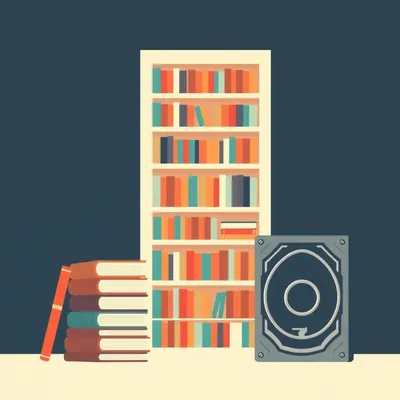
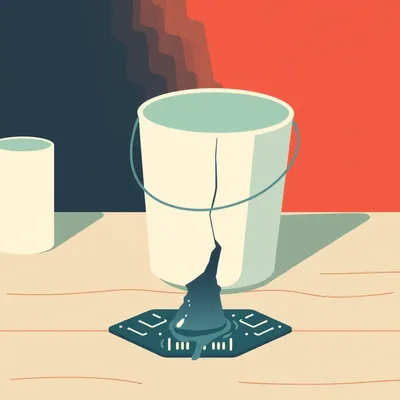
I love this topic because it hits that perfect intersection of high-stakes engineering and almost existential philosophy. We are living through what historians are already calling the start of the Artificial Intelligence revolution, and yet, our primary medium for recording it, digital storage, is notoriously fragile. We are building a civilization on sand. If you leave a standard hard drive on a shelf for twenty years, there is a good chance the magnetic bits will flip or the lubricant in the spindle will seize up and it will not spin up again. If you leave a burned Compact Disc in the sun, the organic dye degrades and it is toast. We are facing what Vint Cerf called the Digital Dark Age.
That is the big fear, right? That we are the most documented generation in history, but we might leave the smallest footprint. We have billions of photos on the cloud, but if the servers go dark and the subscriptions stop being paid, what remains? Daniel pointed out the Svalbard Seed Vault as a physical example of preservation, but the digital equivalents are where things get really wild. Herman, I know you have been obsessed with the Arch Mission Foundation lately. That seems like a good place to start for the truly long-term, multi-millennial stuff.
The Arch Mission Foundation is fascinating because their goal is not just to save data for a hundred years, but for billions of years. They call it the Billion Year Archive. Their philosophy is that we should treat the solar system as a backup drive. They want to put archives on the Moon, on Mars, and orbiting the Sun. One of their most famous projects was the Lunar Library. They used a technology called Nanofiche. Now, Corn, this is cool because it is not digital in the traditional sense, but it is a way to store massive amounts of digital information in an analog format.
Wait, if it is not digital, how does it work? Is it just really small writing? Like those Bibles people used to engrave on the head of a pin?
Essentially, yes, but on a massive scale. It is nickel-etched film. They use lasers to etch microscopic images onto thin sheets of nickel, layer by layer. You do not need a computer to read it; you do not need a specific operating system or a USB-C port. You just need a powerful microscope and a source of light. On the Lunar Library, they had something like thirty million pages of information. That included the entire English Wikipedia, thousands of books, and the Long Now Foundation’s Rosetta Project, which is a key to thousands of human languages. The idea is that if a future civilization finds it, they have a primer to understand everything else.
And that was on the Beresheet lander, right? The Israeli mission that attempted to land on the moon back in twenty-nineteen. Being here in Jerusalem, that felt very close to home. I remember the excitement in the city that night. Even though the lander crashed, the Arch Mission folks believe the nickel disks likely survived because they are incredibly tough. They can withstand radiation, extreme temperatures, and the vacuum of space. They are basically indestructible coasters sitting in the Mare Serenitatis right now.
Exactly. And that is a key distinction in the world of time capsules. You have to separate the storage medium from the retrieval mechanism. This is where most people fail. If you store data in a format that requires a specific proprietary codec or a cable that no longer exists, you have failed the future. The nickel disks are great because they are analog. But for truly massive digital archives, the kind that can hold the petabytes of data we generate every day, we have to get more creative. Have you looked into the updates on the GitHub Arctic Code Vault lately?
I have. That one is a bit more grounded, literally. They took every active public repository on GitHub, which is millions of projects, and stored them in an abandoned coal mine in Svalbard, Norway. It is in the same mountain as the Seed Vault. But they did not use nickel disks for that. They used a different approach called Piql film.
Piql is a great company out of Norway. They use a high-resolution, silver-halide polyester film. It looks like old movie film, but instead of frames of a movie, it stores data as high-density QR codes. Again, it is about durability. The film is designed to last for at least five hundred to one thousand years in those cold, dry conditions. And even if the digital readers are gone, a human could theoretically look at the film with a magnifying glass, see the patterns, and reconstruct the digital logic. They even included a "human-readable" guide on the first few frames of every reel that explains how to build a computer to read the rest of the film.
It is interesting that they chose code as the primary artifact. It suggests that our most valuable cultural artifact right now is not just our literature or our art, but our logic. The way we instruct machines to think. If you want to understand the twenty-twenties, you have to understand the algorithms that ran our lives. But Herman, let us talk about the scale. Wikipedia is great, and open-source code is important, but what about the sheer volume of human experience? Is there anything that can handle the actual data weight of the AI revolution?
That is where we move into the realm of experimental physics. There is a project by Microsoft Research called Project Silica. This is one of the most promising technologies for long-term digital storage I have ever seen. They use femtosecond lasers, which are lasers that pulse at one quadrillionth of a second, to etch data into quartz glass. Imagine a small slab of glass, about the size of a drink coaster. They can store terabytes of data on that single piece of glass by creating these tiny three-dimensional structures called voxels inside the material.
And glass is famously stable, right? We have glass artifacts from ancient Rome that look exactly the same as the day they were made.
Precisely. Glass does not degrade like magnetic tape or spinning platters. It does not suffer from bit rot. You can boil it, you can bake it in an oven, you can scrub it with steel wool, and the data remains intact. Microsoft actually demonstrated this by storing the original nineteen-seventy-eight Superman movie on a piece of silica glass. They are pitching it as a way for cloud providers to have a "cold" archive that requires zero energy to maintain. Once it is written, it just sits there for tens of thousands of years. No climate control needed, no constant refreshing of the hardware.
That feels like the ultimate time capsule material. But it brings up the question Daniel touched on. Who decides what goes into these capsules? If we are creating a digital memory for humanity, is it just the stuff that big corporations or governments deem important? If Microsoft is the one holding the glass, do they get to decide what we remember?
That is the million-dollar question. Or perhaps the billion-year question. Most of these projects are currently curated by small groups of experts. The Arch Mission Foundation has a selection committee. GitHub obviously focused on code. But there are decentralized efforts too. Think about the Internet Archive and their Wayback Machine. They are essentially running a real-time time capsule of the entire web. Every time someone saves a page there, they are contributing to the archive. It is a democratic, albeit messy, record of our digital lives.
But even the Internet Archive is a centralized organization that could, theoretically, be shut down or lose its funding. We have seen the legal battles they have faced over the last few years. I wonder if there is a way to use decentralized technology, like blockchain or peer-to-peer networks, to create a time capsule that no one person or government can delete.
There are definitely people trying. Projects like Arweave are designed specifically for permanent storage. They use a system where you pay once upfront, and that fee goes into an endowment that pays for the storage of that data forever, distributed across thousands of computers worldwide. It is a digital version of a trust fund for your data. But again, that relies on the internet staying functional. If the global network goes down, the distributed archive goes with it. That is why the physical capsules, the glass and the nickel, are so important as a last resort.
This leads me to a thought about the "why" behind all of this. Daniel mentioned looking back at our era like we look at old black-and-white photos. When we look at a photo from nineteen hundred, we see the clothes, the architecture, the expressions. But we are missing the context. We do not know what they were thinking or how they felt about the technological shifts of their time. With AI, we are in the middle of a massive shift. How do we capture the "feeling" of the start of the AI revolution?
I think that is where we need to move beyond just saving files and start saving "environments." There is a concept called "emulation as a service." If you want someone in the year twenty-five hundred to understand what it was like to use a Large Language Model in twenty-twenty-six, you cannot just give them a text file of the weights. You have to give them the hardware environment, the interface, and the training data. You have to save the "experience" of the interaction.
That sounds incredibly difficult. You are talking about preserving a whole stack of technology.
It is! But it is necessary. Think about the early days of the internet. So much of that is already gone because the browsers we used back then do not work on modern systems. We have the data, but we have lost the experience of the "World Wide Web" as it was. A digital time capsule for the AI era needs to include the models themselves. There are groups like the Museum of Art and Digital Entertainment that are working on preserving software in a playable, executable state. They are literally saving the "soul" of the machine, not just the body.
I love that analogy. It makes me think about what I would put in my own digital time capsule. If I were making one for our family, or for this podcast, it would not just be the audio files. It would be the notes we take, the research papers you read, Herman, and the emails we exchange with Daniel. It is the connective tissue that makes the content meaningful.
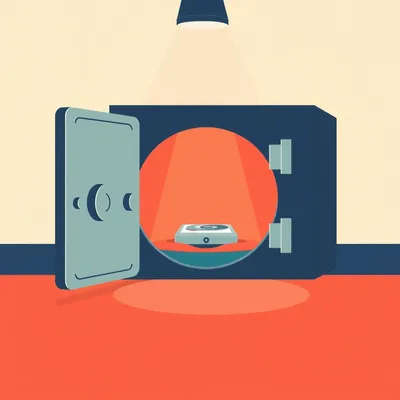
And that brings us back to the M-Disc that Daniel mentioned. For an individual, that is still one of the best tools we have. For those who do not know, the M-Disc is a type of DVD or Blu-ray that replaces the organic dye layer with an inorganic, stone-like layer. When the laser writes to it, it literally etches the data into a rock-hard material. It is rated to last for one thousand years. If you are a listener and you want to make sure your great-grandchildren can see your photos, burning them onto an M-Disc and putting it in a fireproof safe is a great start. It is the most accessible "personal" time capsule technology we have.
But on a societal level, we need something much more robust. We need a "Global Data Commons" that is protected by international treaty, much like Antarctica or the Moon. Do you think there is an appetite for that? Governments usually struggle to plan past the next election cycle, let alone the next millennium.
There is some movement. UNESCO has a program called Memory of the World. They are starting to look at digital heritage as something that needs the same level of protection as the Pyramids or the Great Wall of China. But the pace of technological change is so fast that the policy-makers are constantly playing catch-up. By the time they pass a law about preserving hard drives, we have moved on to holographic storage or DNA.
Let us talk about a specific challenge: the AI training data. We are currently in a window where the majority of the data on the internet was created by humans. In a few years, a huge percentage of the web will be AI-generated content. Future historians might look back and see this specific moment, right now, as the last "pure" record of human thought before the feedback loop of AI-generated data began.
That is a brilliant point, Corn. We are at a "Peak Human Data" moment. If we do not archive the current state of the internet now, we might lose the baseline for what human creativity looked like before the machines joined the conversation. There is a project called the Common Crawl that is doing a great job of this, but we need to make sure those petabytes of data are moved into something like Project Silica glass or the Arctic Code Vault. We are essentially saving the DNA of human culture.
Speaking of DNA, that is another one, right? DNA storage? I remember you getting excited about this a few months ago.
Oh, do not get me started. DNA is the ultimate storage medium. It is nature's own time capsule. We have successfully sequenced DNA from mammoths that died tens of thousands of years ago. The information density is staggering. You could theoretically store all the data in the world in a few grams of DNA.
But how do you write a digital file into a biological strand? It sounds like science fiction.
You translate the zeros and ones of binary into the A, C, G, and T of DNA base pairs. Then you synthesize that DNA and store it in a cool, dry place. To read it back, you just sequence the DNA and translate the letters back into binary. It is slow and expensive right now, but as a "last resort" backup for humanity, it is incredible. You could literally put a time capsule of human knowledge into a vial of synthetic DNA and bury it in a salt mine, and it would be readable for millions of years.
It is poetic, in a way. Using the very building blocks of life to preserve the history of life. But there is a bit of a "mad scientist" vibe to it. Imagine a future species finding a vial of DNA and realizing it is not a blueprint for a creature, but the archives of a twenty-first-century podcast.
Hey, if they find episode seven hundred, I hope they appreciate the effort! But seriously, the real challenge with all of these digital time capsules is the "Metadata Problem." You can have all the data in the world, but if you do not have a map of what it is and how it is organized, it is just noise.
That is the "Rosetta Stone" issue again. If I find a piece of glass with three terabytes of voxels in it, how do I even know it is data? It might just look like a pretty paperweight.
Right. Most of these projects include what they call "Human-Readable Primers." They start with very simple pictures. A picture of a human, a picture of the solar system, a picture of a mathematical constant like Pi. Then they use those pictures to teach the finder how the encoding works. It is a slow, step-by-step process of building a common language from scratch. The Long Now Foundation is actually working on a "Manual for Civilization" that is designed to be the first thing a future society reads to help them rebuild.
It makes me wonder if we are overthinking it. Maybe the best time capsule is just the stuff that survives by accident. The "trash" of our era might tell future historians more than our carefully curated archives. A discarded smartphone in a landfill might be more revealing than a nickel disk on the moon.
That is the archeologist's perspective! And you are not wrong. But the problem with digital "trash" is that it does not survive. A plastic bottle will last for five hundred years, but the memory chip inside a phone will lose its charge and its data in a decade. We are the first civilization that produces "ephemeral trash." Our digital footprints are like writing in the sand at low tide. If we do not make a conscious effort to build these capsules, we will leave behind a lot of plastic and very little meaning.
So, let us look at the practical side. For our listeners who are thinking about this, what are the takeaways? If you want to contribute to the "memory of humanity" or just save your own family's history, what should you be doing right now?
First, adopt the three-two-one rule, but with a long-term twist. Three copies of your data, on two different types of media, with one copy stored off-site. For the "off-site" or "long-term" copy, do not rely on a cloud provider alone. Use something physical. An M-Disc is great for personal archives. If you have the budget, look into some of the services that offer archival-grade film backups.
And what about the content? I think we should be more intentional about what we save. We take ten thousand photos of our lunch, but do we write down how we felt when we first used an AI that could hold a conversation? Do we record the sounds of our city? The things that seem mundane today are the things that will be most precious in a hundred years.
Exactly. Context is king. If you are saving a photo, save a text file with it that explains who is in it and why it matters. Use open formats. Avoid proprietary file types that might not be supported in twenty years. Stick to things like PDF-A for documents, which is a specialized version of PDF designed for long-term archiving, and use uncompressed formats for audio and video if you can.
I also think there is value in the "analog backup." I know we are talking about digital time capsules, but sometimes the best way to save a digital memory is to print it out. A high-quality photo print on acid-free paper will outlast almost any digital drive you can buy at a consumer electronics store.
Spoken like a true analyst, Corn. Sometimes the most advanced technology is the one we have been using for centuries. But I want to go back to Daniel's point about the "start of the AI revolution." If we are the ones living through it, we have a responsibility to document the transition. I would love to see a project where people around the world contribute their "first impressions" of AI to a central, permanent archive. A sort of "Voices of the Transition" capsule.
That would be incredible. Imagine reading a thousand years from now about the fear, the excitement, and the confusion we are all feeling right now. It would humanize the technology in a way that technical papers never could. It would show that we were not just passive observers, but active participants in this massive change.
And it would give that future generation a sense of connection to us. They will likely be living in a world where AI is as invisible and essential as electricity. For them, looking back at our era will be like us looking back at the first people who harnessed fire or the first people who used a printing press. They will see us as pioneers, even if we feel like we are just stumbling around in the dark.
It is a humbling thought. We are the ancestors of a very different kind of future. And these digital time capsules are the messages we are sending forward. It is not just about data; it is about saying, "We were here, we were thinking, and we were trying to understand what was happening to us."
Well said. I think that is a perfect place to wrap up our seven hundredth exploration. It is a big topic, and we have only scratched the surface. There are projects involving storing data in the shadows of lunar craters where the temperature never changes, and even ideas about using the gravitational lensing of the sun to broadcast our archives to other star systems.
Maybe we will save the interstellar broadcasting for episode fourteen hundred.
It is a date! But before we go, I want to take a second to talk to you, the listeners. We have been doing this for seven hundred episodes now, and the reason we keep coming back is because of the community that has grown around "My Weird Prompts." If you have been enjoying these deep dives, whether you have been here since episode one or you just joined us today, we would really appreciate it if you could leave a review on your podcast app or on Spotify. It genuinely helps other curious minds find the show, and it means a lot to us to hear from you.
It really does. And remember, you can find all our past episodes, including the ones we mentioned today, at myweirdprompts dot com. There is an RSS feed there for subscribers and a contact form if you want to send us your own thoughts on digital time capsules or anything else on your mind. You can also reach us directly at show at myweirdprompts dot com.
We are on Spotify, Apple Podcasts, and pretty much everywhere else you might listen to podcasts. This has been "My Weird Prompts," a human-AI collaboration that is, hopefully, being archived somewhere in a glass slab as we speak.
Thanks for being part of the journey for seven hundred episodes. We will be back next week with another prompt from Daniel.
Until then, keep thinking about what you want to leave behind.
Goodbye, everyone.
Goodbye!