Hey everyone, welcome back to My Weird Prompts. I am Corn, and I am sitting here in our living room in Jerusalem with my brother.

Herman Poppleberry, at your service. It is a beautiful day here, though I have been buried in economic papers for the last few hours, so my eyes are still adjusting to the light.
Well, you are in luck, because our housemate Daniel sent us a prompt that is right up your alley. He and his wife recently switched to a new retail bank here in Israel, and it got him thinking about the bigger picture. Specifically, the central banks. He sees the Governor of the Bank of Israel, Amir Yaron, in the news all the time, hears about interest rate decisions, and knows the bank is based right here in the Kiryat HaLeom district of Jerusalem, but he wants to know what they actually do all day.
That is such a great starting point. Most people interact with their retail bank every day—you know, the place where your paycheck goes or where you got your mortgage—but the central bank feels like this mysterious, high-level entity that only exists in news headlines about inflation or financial crises.
Right, and Daniel was asking about the basics. What are they? Why do we need them? And is the role of a central bank the same everywhere, or does it change depending on the country? I think we should start with the big one: why do they even exist? Because for a long time in human history, we did not have them, right?
Exactly. The concept of a central bank is relatively modern in the grand scheme of things. If you look at the history, the earliest ancestor is usually cited as the Sveriges Riksbank in Sweden, which was founded in sixteen sixty-eight. Then you have the Bank of England in sixteen ninety-four. But back then, they were not exactly what we think of today. The Bank of England was actually a private joint-stock company created specifically to lend money to the government to fund a war against France.
So it started as a way for the government to get a loan? That is a far cry from setting national interest rates or managing the money supply.
It really is. Over time, these institutions evolved because the financial system kept breaking. In the nineteenth century, you had these frequent banking panics. A bank would make some bad loans, people would get nervous and try to withdraw all their money at once—a bank run—and because banks only keep a fraction of their deposits on hand, they would collapse. This would often trigger a domino effect, taking down other banks and the whole economy with them.
And that is where the famous term lender of last resort comes from, right?
Precisely. That is one of the foundational reasons we have central banks. Walter Bagehot, a famous editor of The Economist in the eighteen hundreds, laid out what is now known as Bagehot's Rule. He said that in a crisis, the central bank should lend early and freely to solvent firms, against good collateral, at a high interest rate. Basically, they are the backstop. They provide the liquidity that keeps the pipes from freezing when everyone else is too scared to lend.
Okay, so they are the banker's bank. I think that is a helpful way to visualize it. If my bank has a problem, it goes to the central bank. But most of the time, we are not in a crisis. On a normal Tuesday, what is the Bank of Israel or the Federal Reserve in the United States actually doing?
On a day-to-day basis, their most visible role is monetary policy. This is the process by which a central bank manages the supply of money in the economy to achieve specific goals. In most modern economies, that goal is usually price stability, which is a fancy way of saying keeping inflation low and predictable.
I have always wondered about that. Why is the target almost always two percent? It seems like such an arbitrary number. Why not zero percent? Wouldn't zero inflation be the ultimate price stability?
That is a brilliant question, Corn. It seems counter-intuitive, but economists actually fear zero inflation—or worse, deflation—more than they fear a little bit of inflation. If inflation is zero, and the economy hits a rough patch, you run the risk of falling into deflation, where prices actually start going down.
Which sounds great for a consumer! My groceries get cheaper. What is the downside?
The downside is that if you think your groceries or a new car will be cheaper next month, you wait to buy them. If everyone waits, demand craters, businesses lose money, they lay off workers, and those workers then have even less money to spend. It creates a downward spiral that is incredibly hard to break. A small, steady inflation rate like two percent acts as a sort of grease in the economic wheels. It encourages spending and investment today rather than hoarding cash for tomorrow. Plus, it gives the central bank some room to maneuver with interest rates.
Okay, so they use interest rates to control that inflation. How does that actually work in practice? When the central bank raises the interest rate, how does that translate to the price of milk or the cost of a new apartment?
It is all about the cost of borrowing. When the central bank raises its benchmark rate—which is the rate it charges other banks to borrow money overnight—those banks pass that cost on to us. Your credit card interest goes up, your mortgage rate goes up, and business loans get more expensive. When borrowing is expensive, people spend less and businesses invest less. This cools down the economy. If there is less demand for goods and services, companies can't raise their prices as easily, and inflation slows down.
And the reverse is true when the economy is sluggish? They drop the rates to make borrowing cheap, which encourages us to go out and buy things or for a company to build a new factory?
Exactly. It is like a thermostat for the economy. But here is the catch, and this touches on Daniel's question about whether the role is standard across countries. Not every central bank has the same mandate.
Right, I have heard about the dual mandate in the United States.
Yes! The Federal Reserve in the United States is somewhat unique because it has a dual mandate from Congress: to promote maximum employment and stable prices. So they are constantly trying to balance those two things. If they raise rates too high to fight inflation, they might cause unemployment to rise. If they keep rates too low to help jobs, they might let inflation get out of control.
Whereas the European Central Bank is different, right?
Very different. The European Central Bank, or the E C B, has a primary mandate of price stability, period. They can support general economic policies in the European Union, but only if it doesn't interfere with their goal of keeping inflation near two percent. This reflects a very German-influenced fear of hyperinflation, rooted in their history from the nineteen twenties.
It is fascinating how much history and culture shape these institutions. What about here in Israel? The Bank of Israel seems to be quite active, especially regarding the exchange rate of the Shekel.
You hit on a very important third function that many central banks have, especially in smaller, export-oriented economies. In addition to managing inflation and acting as a lender of last resort, they often manage the country's foreign exchange reserves and sometimes intervene in the currency markets. If the Shekel gets too strong too quickly, it makes Israeli exports like high-tech or medical equipment more expensive for people in other countries to buy. That hurts Israeli businesses. So the Bank of Israel might step in and buy foreign currency to help balance things out.
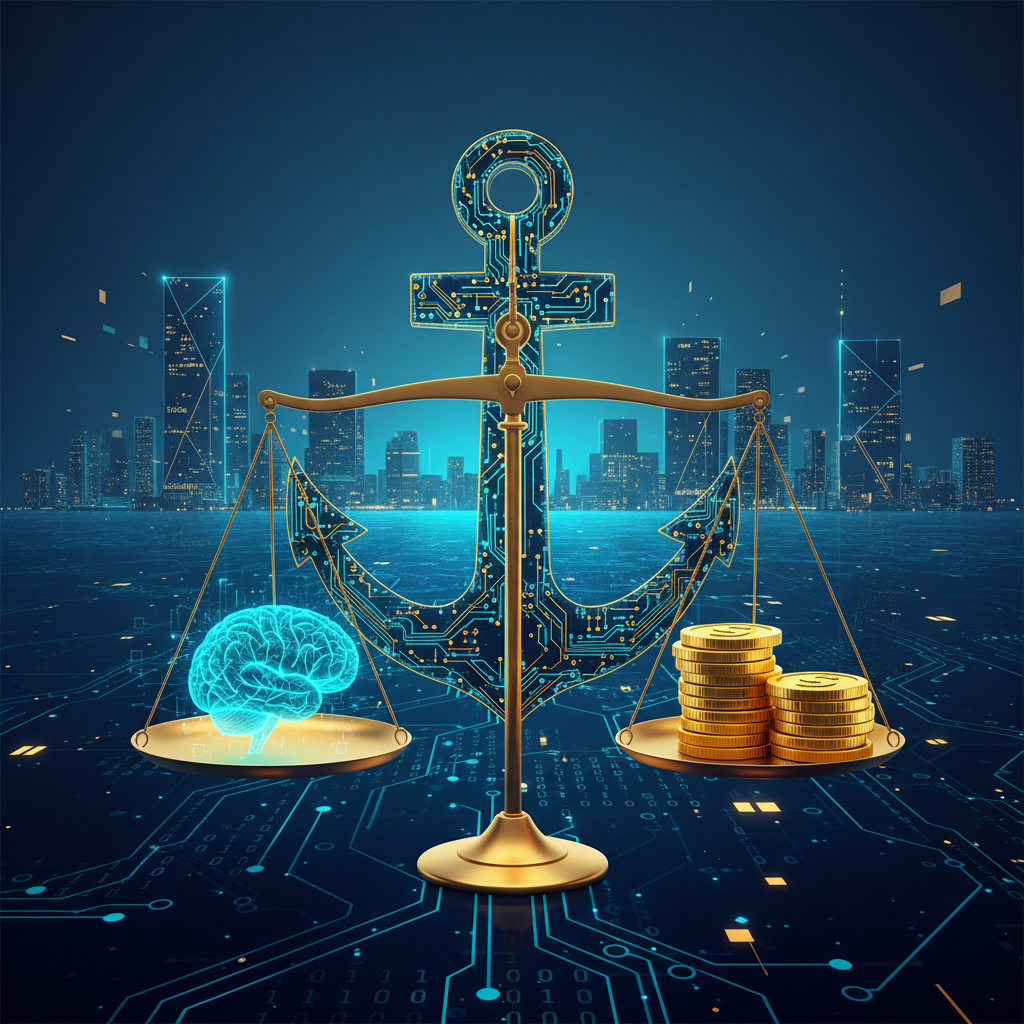
So they are essentially trying to keep the entire economic ship on an even keel. It sounds like an impossible job. You are trying to predict the future behavior of millions of people and thousands of businesses.
It is incredibly difficult, and they don't always get it right. They are working with lagging data. By the time you see the inflation numbers for January, you are already halfway through February. It is like trying to drive a car while only looking in the rearview mirror.
That is a great analogy. It also explains why they are so obsessed with communication. I noticed Daniel mentioned that the central banker here is a very visible figure who gives a lot of speeches. Why is that?
Because expectations are everything in economics. If the central bank can convince everyone that they are committed to keeping inflation at two percent, businesses and workers will set their prices and wage demands accordingly. If people believe inflation will stay low, it often does stay low. But if the central bank loses credibility, people start expecting higher prices, they demand higher wages, and you get a self-fulfilling prophecy. Those speeches are not just for show; they are a tool of monetary policy themselves. We call it forward guidance.
I want to dig into something else Daniel mentioned, which is the idea of sovereign digital currencies. This feels like a huge shift. We have moved from gold-backed money to fiat money—which is just backed by the government's promise—and now we are talking about digital versions of that. What is the deal with the digital Shekel?
This is one of the most exciting frontiers in central banking right now. A Central Bank Digital Currency, or C B D C, is essentially a digital form of a country's sovereign currency. It is not like Bitcoin, which is decentralized and highly volatile. A digital Shekel would be an exact digital equivalent of the paper cash in your wallet, issued and backed directly by the Bank of Israel.
But wait, I already have digital money. When I pay with my phone or check my bank balance online, that is digital. How is a C B D C different from what I use every day?
That is a common misconception. The money in your commercial bank account is technically a private claim. You are lending your money to the bank, and they promise to give it back to you or transfer it when you ask. If the bank fails, you are relying on government deposit insurance to get your money back. Cash, on the other hand, is a direct liability of the central bank. It is the safest form of money because a central bank can't go bankrupt in its own currency.
So a C B D C would be like having a digital wallet directly with the central bank?
Exactly. It would provide the safety and finality of cash but with the convenience of digital payments. The Bank of Israel has been very proactive here. They completed Project Sela a couple of years ago, which proved that a retail digital Shekel could be both secure and accessible. More recently, they launched the Digital Shekel Challenge, where they invited fintech companies to build actual applications on a sandbox version of the currency. They are looking at how it could handle everything from smart contracts to offline payments.
That brings up a big concern though—privacy. If the central bank issues a digital currency, can they see every single thing I buy? At least with cash, my transactions are anonymous.
That is the million-dollar question, or the million-shekel question. It is the biggest hurdle to public acceptance. Central banks are trying to design systems that have tiers of privacy. For example, small everyday transactions might be anonymous, while larger ones would require more oversight to prevent money laundering or terrorism financing. It is a delicate balance between privacy and security.
It also seems like it could create a problem for the retail banks, like the one Daniel just switched to. If everyone can just keep their money in a super-safe account with the central bank, why would anyone put money in a regular bank?
You are hitting on a major structural risk. If there is a financial scare, people might rush to move all their money from their retail bank to their central bank digital wallet. This is called a digital bank run. To prevent this, central banks are considering things like putting limits on how much C B D C an individual can hold—perhaps a few thousand Shekels—or not paying interest on those accounts so that people still have an incentive to keep their money in commercial banks.
It is amazing how every solution in economics seems to create a new set of problems to solve.
That is why they employ so many of those highly skilled economists Daniel mentioned! It is a constant game of optimization.
I want to go back to the idea of independence. We often hear that central banks need to be independent of the government. Why is that so important? If the government is elected by the people, shouldn't they have a say in the money supply?
This is actually one of the most hard-won lessons in economic history. The problem is that politicians operate on very short time horizons—usually until the next election. There is always a temptation for a government to print more money to fund popular programs or to keep interest rates artificially low to juice the economy right before an election.
Right, the short-term gain of a booming economy versus the long-term pain of inflation.
Precisely. If a politician controls the printing press, they will almost always choose the short-term gain. We have seen this happen over and over again in places like Zimbabwe or more recently in Turkey, where political interference in the central bank led to runaway inflation and a collapsing currency. An independent central bank can take the unpopular but necessary steps—like raising interest rates—to protect the long-term health of the economy, even if it makes the current government look bad.
It is almost like having an adult in the room who can say no when everyone else wants to keep the party going.
That is a perfect way to put it. In fact, William McChesney Martin, a former chair of the Federal Reserve, famously said the job of the central bank is to take away the punch bowl just as the party gets going.
I like that. So, we have covered their role as a lender of last resort, their role in setting interest rates to control inflation, their role in managing currency, and the future of digital money. Is there anything else they do that most people don't realize?
There is a big one we haven't touched on yet: bank supervision and regulation. In many countries, the central bank is also the primary regulator for the commercial banks. They set the rules for how much capital a bank must hold, how much risk they can take on, and they perform stress tests to make sure the banks can survive an economic downturn.
So they are not just the bank for banks; they are also the police for banks.
Exactly. After the two thousand eight financial crisis, this role became even more prominent. We realized that it wasn't enough to just manage interest rates; you also had to watch out for systemic risks—things that could take down the whole financial system, like the housing bubble. Now, many central banks have what they call macroprudential policy tools. These are specific rules, like requiring larger down payments for mortgages—what we call the Loan To Value ratio—that they can use to cool down specific parts of the economy without raising interest rates for everyone.
That is interesting. It gives them a more surgical approach rather than just the blunt instrument of interest rates.
It does, although those tools can be controversial because they directly affect people's ability to buy homes or get loans. But the goal is always the same: stability.
I'm curious about the global aspect again. We talked about the Fed and the E C B. What happens when they are not in sync? If the Fed is raising rates but the Bank of Israel is keeping them low, what does that do?
It creates massive ripples. Money tends to flow to where it can earn the highest return. If interest rates in the United States are much higher than in Israel, investors will sell their Shekels to buy Dollars so they can invest in U S bonds. This causes the Shekel to weaken and the Dollar to strengthen. This is why you often see central banks around the world moving in somewhat of a herd. If the Fed starts a major hiking cycle, other central banks often feel pressured to follow suit to protect their own currency values and prevent imported inflation.
Imported inflation? Because a weaker currency makes everything we buy from abroad more expensive?
Exactly. If you are a country like Israel that imports a lot of fuel, grain, and electronics, a weak Shekel means the price of those things goes up immediately for Israeli consumers. So, the Bank of Israel has to keep a very close eye on what is happening in Washington, Frankfurt, and Tokyo.
It sounds like a global web of interconnectedness. No central bank is truly an island.
Not at all. And that brings up another interesting point—the role of the U S Dollar as the world's reserve currency. Because so much of global trade is conducted in Dollars, the Federal Reserve is effectively the world's central bank. When they make a move, it affects every corner of the planet, from emerging markets in South America to tech hubs in Tel Aviv.
That is a lot of power for one institution in one country.
It really is, and it is a source of a lot of international tension. It is also one of the reasons countries like China or groups like the B R I C S nations—Brazil, Russia, India, China, and South Africa—are trying to find ways to reduce their dependence on the Dollar. They are exploring their own payment systems and even the idea of a shared currency.
Do you think we will ever see a truly global central bank? Or is that just a science fiction trope?
We have something that is a little bit like it: the International Monetary Fund, or I M F, and the Bank for International Settlements, the B I S. The B I S is often called the central bank for central banks. It is based in Switzerland and it is where central bankers meet to coordinate and set global standards. But they don't have the power to actually issue a global currency or set global interest rates. For now, sovereignty over money is one of the most jealously guarded powers of the nation-state.
I think that makes sense. Money is so tied up with national identity and political power. I mean, think about when a country joins the Euro. They are giving up a huge part of their autonomy to the European Central Bank.
They really are. They lose the ability to tailor their interest rates or currency value to their own specific economic conditions. If Greece is in a recession but Germany is booming, the E C B has to find a middle ground that might not be perfect for either. It is a huge trade-off.
So, looking forward, what do you think is the biggest challenge facing central banks over the next decade? Is it the digital currency transition, or something else?
I think it is the challenge of maintaining independence in an increasingly polarized political world. As central banks have taken on more roles—like considering climate change risks or addressing inequality—they are stepping into territory that is traditionally the domain of elected politicians. The more they do that, the more they open themselves up to political attacks. If they lose their independence, we could see a return to the high-inflation eras of the past.
That is a sobering thought. It seems like the best thing a central bank can be is boring. When they are doing their job well, nobody is talking about them.
Exactly! Success for a central bank is a stable, predictable economy where people can make long-term plans without worrying about the value of their money. It is the invisible plumbing of civilization.
Well, I think we have given Daniel a lot to chew on. From the seventeenth-century war loans to the digital Shekel, it is a much bigger story than just the interest rate on his new mortgage.
It really is. And it's a great reminder that even the most technical parts of our world are built on a foundation of history, psychology, and a lot of very complex trade-offs.
Definitely. I think the big takeaway for me is that the central bank is the ultimate balancer. They are trying to balance inflation against growth, privacy against security, and national needs against global realities.
Well said, Corn. It is a never-ending balancing act.
Before we wrap up, I want to say thanks to everyone who has been listening. We have been doing this for over five hundred episodes now, and it is still just as fun as the first day. If you are enjoying the show, we would really appreciate it if you could leave us a review on your favorite podcast app or on Spotify. It really does help other people find the show.
It really does. And if you have a question or a topic you want us to dive into, you can find the contact form on our website at myweirdprompts dot com. We love hearing from you.
You can also find our full archive and the R S S feed there. Thanks again to our housemate Daniel for sending this one in. It was a great excuse to finally get Herman to explain all those economic papers he has been reading.
Any time, Corn. Any time.
All right, this has been My Weird Prompts. We will see you next time.
Goodbye everyone!