Hey everyone, welcome back to My Weird Prompts. We are coming to you from a very rainy Jerusalem today. The stone streets outside are glowing under the streetlights, and there is that specific smell of wet earth and ancient dust in the air. But the vibes inside the studio are great because we have been doing some serious digital housekeeping over the last few weeks. If you have visited myweirdprompts.com lately, you will notice the version two point zero facelift. We have finally integrated the full archive, we are officially live on Apple Podcasts and Spotify, we are building out the YouTube presence, and we are really trying to make sure the show is accessible everywhere. It feels good to have the pipes cleaned out, so to speak.

Herman Poppleberry at your service. And Corn, I have to say, the website looks sharp. It is responsive, it is clean, and most importantly, it feels like it is built to last. Which is actually a perfect segue into what we are diving into today. Daniel sent us a prompt that really stopped me in my tracks. It covers something that is near and dear to my heart: the quest for data permanence. He has been looking at decentralized projects like Arweave and the Interplanetary File System, but he is asking about the next frontier: putting data in orbit, on the Moon, or deep under mountains. He wants to know how an ordinary person can ensure their digital legacy survives the next century.
It is a fascinating thought, and honestly, a bit of a reality check. We spend so much of our daily lives worrying about immediate things like phone storage alerts or whether our cloud subscriptions are up to date. We rarely take a step back to think about the physical or temporal durability of that data. Daniel’s prompt really gets at the heart of what I call the "don't put all your eggs in one basket" philosophy. If the goal is making sure a specific piece of data—maybe a family photo, a manuscript, or a private key—exists a hundred years from now, where does it actually go? Because let’s be honest, a standard hard drive in a desk drawer is not going to cut it.
Not even close. In fact, most consumer hardware is designed to fail within five to ten years. And the timing of this question is perfect. We are sitting here in February of twenty twenty-six, and we have spent the last decade talking about "the cloud" as if it is this ethereal, indestructible, heavenly realm. But as we have seen with the massive regional outages of twenty-four and twenty-five, and the shifting economics of big tech companies, the cloud is just someone else’s computer. And that computer can be turned off, or the company can go bankrupt, or the hardware can simply degrade. We are currently living through what historians are calling the "Digital Dark Age," where we are creating more information than ever before, but we are also losing it at an unprecedented rate.
Right, so let us start with the foundation. Daniel mentioned the distributed storage projects like Arweave and IPFS. These are the terrestrial, software-based precursors to the more exotic stuff. For someone who is not deep in the crypto or decentralized web world, how do these actually solve the permanence problem? Because "decentralized" sounds like it just means "it is in a lot of places," but that does not necessarily mean it lasts forever.
That is a crucial distinction. Let’s look at the Interplanetary File System, or IPFS, first. IPFS is really about changing the "how" of finding data. In the traditional web, we use location addressing. You say, "go to this specific server at this specific IP address to find this file." If that server goes down, the link is broken, even if the file exists somewhere else. IPFS uses content addressing. You ask the network for a file based on its unique cryptographic hash—its digital fingerprint. As long as at least one person on the network is hosting that file, you can find it. But—and this is the big "but"—IPFS does not inherently guarantee that the data will stay there forever. Someone still has to "pin" it. If everyone stops hosting it, the file vanishes from the network. It is a distribution tool, not necessarily a preservation tool.
Which is where Arweave comes in. I remember you explaining their "blockweave" structure to me, and it sounded like a very different beast.
It is. Arweave is the one that really leans into the "permanence" aspect as a core economic feature. They have this fascinating model called the storage endowment. When you upload data to Arweave, you pay a one-time upfront fee. Now, here is the clever part: only a small fraction of that fee pays for the immediate storage. The rest goes into a massive endowment pool that earns interest over time. The network calculates the cost of storing that data for two hundred years, factoring in the historical trend that the cost of storage drops by about thirty percent every year.
Two hundred years. That is a bold claim for a digital protocol, especially when most startups don't last two hundred weeks.
It is incredibly bold. But the math is based on the declining cost of hard drive space over the last fifty years. Even if the rate of improvement slows down significantly, the endowment is designed to cover the costs indefinitely. They also use a consensus mechanism called Succinct Proof of Random Access. It basically forces miners to prove they have access to old, rare data in order to mine new blocks. If you are a miner and you can prove you are storing a file that very few others have, you get a much higher reward. It creates a self-healing library where the network naturally protects the most "at-risk" data. And with the recent rollout of the AO protocol—the Actor Oriented computer on top of Arweave—we are now seeing permanent, decentralized applications, not just static files. It is like a computer that never turns off.
Okay, so that is the software and economic layer. It is decentralized, it is incentivized, and it is terrestrial. But Daniel’s prompt takes a hard turn into the physical. He is asking about putting data in orbit. He mentioned SpaceX and the idea of a "Space NAS," or Network Attached Storage. Herman, we are in twenty twenty-six now. Is this actually happening for regular consumers, or is it still just for governments and billionaires?
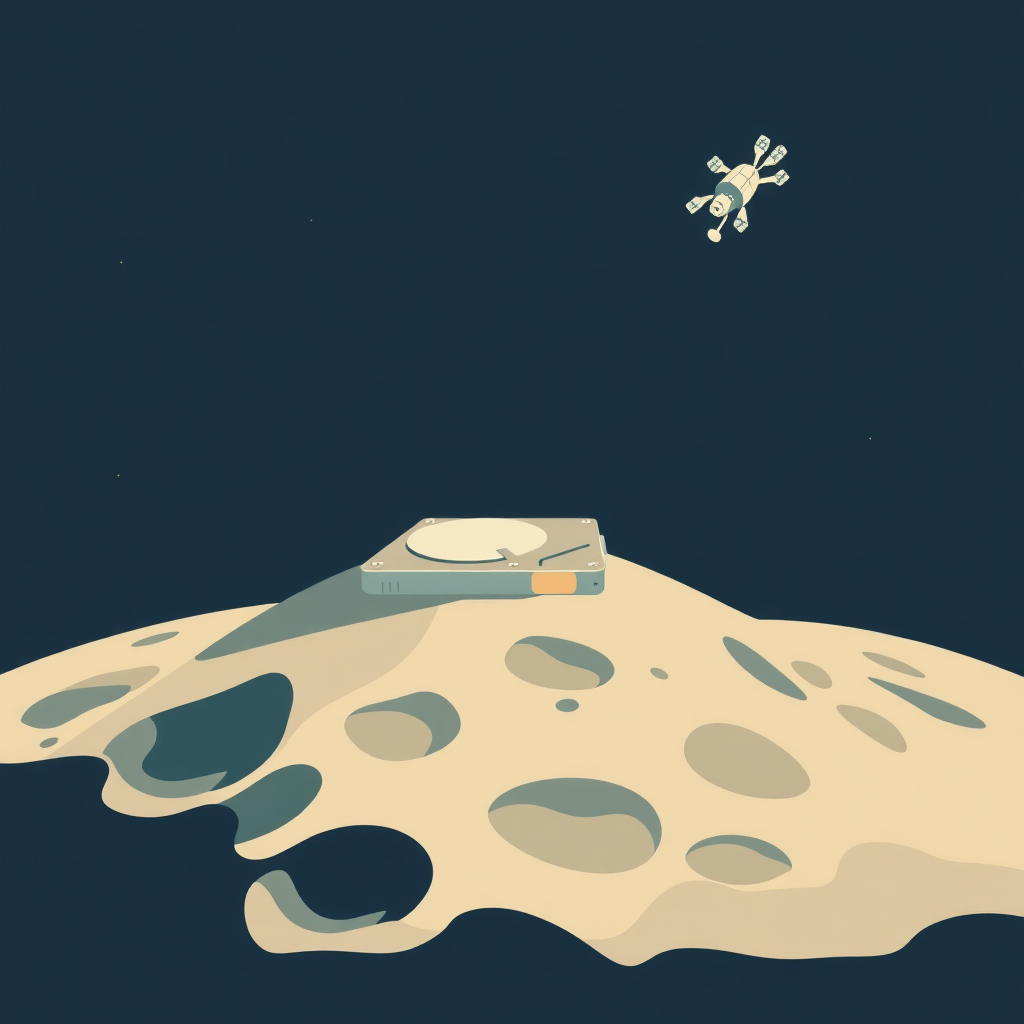
We are much closer than people realize. The "Space NAS" concept has moved from whiteboards to actual hardware in the last twenty-four months. One of the leaders here is Lonestar Data Holdings. They have already successfully sent data center payloads to the Moon. In fact, their "Independence" mission proved that you could store data on the lunar surface and transmit it back to Earth. Their goal is to create a lunar data storage vault that acts as the ultimate "off-site" backup.
Wait, I have to push back on the Moon thing. Why the Moon? It seems like you are adding a massive amount of latency and complexity for no reason. Why not just a satellite in Low Earth Orbit?
Latency is the enemy of "fast" data, but it is irrelevant for "permanent" data. If you are backing up the blueprints of human civilization or your family’s medical history, you don't care if it takes two seconds or two minutes to retrieve. The Moon is the ultimate "cold storage" because it is geologically and politically stable. Earth is chaotic. We have hurricanes, earthquakes, rising sea levels, and, unfortunately, human conflict. A data center on Earth is always at risk from its environment. The Moon has no atmosphere to trap heat, no weather, and no tectonic activity. If you tuck your data servers into a lunar lava tube or a shielded bunker on the lunar surface, you are protected from almost everything that could destroy a data center on Earth.
But for an "ordinary consumer," as Daniel put it, am I ever going to be able to right-click a folder on my desktop and select "Backup to Moon"?
We are getting there. Right now, it is still a "boutique" service, but the costs are plummeting. Think about the "Moonikin" missions and the proliferation of CubeSats. Launching a gram of mass to orbit used to cost tens of thousands of dollars. With the full operational capacity of SpaceX’s Starship that we are seeing now in early twenty twenty-six, we are looking at launch costs dropping toward a hundred dollars per kilogram. If you can fit a few hundred terabytes into a small, radiation-hardened solid-state drive that weighs fifty grams, the math starts to look very consumer-friendly. There are already startups talking about "Digital Time Capsules" where you pay a few hundred dollars to have your "legacy file" included in the next lunar lander payload.
Let's talk about that "radiation-hardened" part, because that seems like the catch. Space is a nightmare for electronics. You have cosmic rays, solar particles, and high-energy protons constantly zipping through everything. In a normal data center on Earth, a "bit flip"—where a zero turns into a one because of a stray particle—is a rare nuisance. In space, it is a constant bombardment. How do they keep the data from just rotting away in a week?
That is the biggest technical hurdle. You cannot just send a standard consumer SSD into orbit and expect it to work for a decade. It would be riddled with errors within months. To solve this, you need three things. First, physical shielding—usually specialized plastics or aluminum-lead composites to block the lower-energy particles. Second, you need Error Correction Code, or ECC, memory on steroids. We are talking about triple-modular redundancy, where the computer does every calculation three times and takes a "vote" on the result. And third, you need to solve the thermal problem. In space, there is no air to carry heat away. Your "Space NAS" is basically a vacuum flask. If you don't have a way to radiate that heat out into the void, the chips will literally melt themselves.
So your "Space NAS" is actually a very hot, very shielded, very expensive little box. It sounds like a lot of work just to keep a few JPEGs safe.
It is! But there is another approach that Daniel might find even cooler, which is photonic storage in orbit. There is a company called LyteLoop that has been pioneering this. Instead of writing bits to a physical disk where they can be degraded by radiation, they store data by keeping it in constant motion as pulses of light between satellites. The data exists as a stream of photons traveling at the speed of light in a continuous loop.
That sounds like something straight out of a sci-fi novel. You are saying the data is never "at rest"? It is just constantly being bounced around in a circle?
Exactly. It is storage through transmission. If you have a mesh network of satellites, you can keep terabytes of data "in flight" indefinitely. Since photons are not affected by the same radiation issues as a silicon chip, you bypass the hardware degradation problem. As long as the satellites stay in orbit and keep their lasers pointed at each other, the data remains perfect. It is a radical rethinking of what "storage" actually means.
I love that. It is such a departure from the "put it on a disk" mentality. But let us bring it back down to Earth for a moment, because Daniel also asked about data centers in highly resilient places, like under mountains. He mentioned the Svalbard Global Seed Vault. I know there are some famous bunkers that have been converted into data centers, right?
Oh, absolutely. This is much more of a reality for consumers today than space storage. One of the most famous is the Pionen data center in Stockholm, Sweden. It is located thirty meters under the solid granite of the Vita Bergen Park. It was originally a Cold War nuclear bunker designed to survive a direct hit from a hydrogen bomb. It has two-foot-thick steel doors and backup generators that are actually submarine engines. It looks like a James Bond villain’s lair—they have artificial waterfalls, vertical gardens, and simulated sunlight to keep the staff from going crazy.
I have seen the photos of Pionen. It is stunning. But is that a "consumer" service? Can I, as an individual, buy a few gigabytes in a nuclear bunker?
Indirectly, yes. Many high-end cloud providers or specialized "cold storage" companies lease space in these facilities. There is also the Swiss Fort Knox, which consists of two massive data centers deep in the Swiss Alps. They offer what they call "digital private banking." They are physically guarded by former military personnel, and the locations are highly restricted. They offer "Bitcurator" services where they don't just store your bits; they ensure the software needed to read those bits is also preserved. Because what good is a file in a hundred years if no one knows how to open a PDF?
That is a great point. The "format" problem is just as big as the "storage" problem. But what about the Svalbard comparison? The Seed Vault is designed to be passive. It stays cold because of the permafrost, even if the power goes out. Is there a "Seed Vault for Data" that doesn't require a massive power bill to keep the servers running?
There is! It is called the Arctic World Archive, and it is actually located on the same mountain as the Global Seed Vault in Svalbard, Norway. It was started by a company called Piql. They realized that hard drives and servers are actually terrible for long-term preservation because they require constant maintenance, power, and "refreshing"—you have to move the data to new drives every few years. So, Piql went back to basics. They use a specialized high-resolution, photosensitive film.
Film? Like what we used for movies before digital?
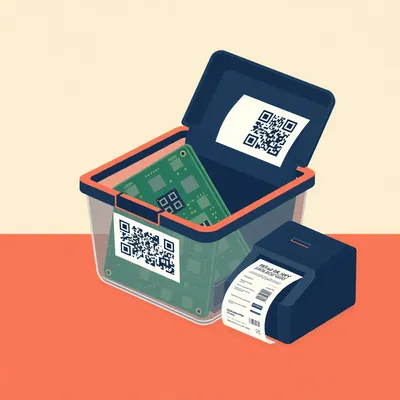
Exactly, but much more advanced. It is a multi-layered, silver-halide film that can store data as high-density QR-like codes. They "print" the digital data onto this film, which is then stored in a vault deep inside the permafrost. It is designed to last for at least five hundred years, and potentially up to a thousand. The beauty of it is that it is completely passive. You don't need electricity to keep the data alive. Even if civilization collapses and we lose the ability to build advanced microchips, you could technically reconstruct the data using a light source and a camera—or even a magnifying glass and a lot of patience.
That is the ultimate low-tech solution for high-tech data. It solves the "bit rot" problem and the power problem. But again, for Daniel—who is a tech-savvy guy but not necessarily a billionaire—how does he get his data into the Arctic World Archive?
It is more accessible than you think. Piql has a service where individuals can contribute to the "GitHub Arctic Code Vault." In twenty twenty, GitHub actually sent a snapshot of every active public repository to the Arctic World Archive. So, if you have ever contributed to an open-source project on GitHub, your code is already under a mountain in Svalbard. For personal data, they have been rolling out "PiqlConnect," which allows users to upload files that are then periodically "printed" to film and sent to the vault. It is not as instant as Dropbox, but it is the gold standard for a "legacy" backup.
It strikes me that we are seeing a split in how we think about data. On one hand, we have the "fast" data—our emails, our social media, our work files—which we want everywhere, instantly. For that, IPFS and Arweave are great because they are decentralized and resilient against censorship. But for "legacy" data—the stuff we want our great-grandchildren to see—we are moving toward these physical, "slow" storage solutions like film in the Arctic or drives on the Moon.
That is a great way to frame it. The "Fast Web" versus the "Deep Web," but in a literal, physical sense. And I think for the average person, the most practical takeaway today is to look into "pinning" services for IPFS or using an Arweave gateway. There are services like ArDrive that make it very easy to take a file and ensure it is distributed across thousands of nodes. It is not "on the Moon," but it is a lot safer than having it on a single external hard drive in your desk drawer.
I want to go back to the space idea for a second, because I think there is a middle ground between "my own satellite" and "the Moon." What about the spare capacity on existing satellite constellations? We have thousands of Starlink satellites in low Earth orbit right now. Each one of those is essentially a high-powered computer with storage. Is anyone talking about using that as a distributed cloud?
They definitely are. There is a lot of talk about "Edge Computing" in space. If you are a company like SpaceX or Amazon with Project Kuiper, you have this massive infrastructure that is already powered, shielded, and connected. Why not sell the spare storage? The issue right now is mostly a business and security one. Providing a consumer-facing "Space Cloud" requires a whole layer of software and customer support that these companies aren't really focused on yet. But the hardware is there. It is only a matter of time before someone builds a "Dropbox for Space" that sits on top of those constellations.
It feels like the bottleneck is always the "last mile" of the user interface. The technology to store data for a thousand years exists. The technology to store data in orbit exists. But making it as simple as dragging a file into a folder—that is where the innovation needs to happen.
Exactly. And that is why projects like Arweave are so important, because they are trying to build that interface layer. They have the "Permaweb," which is a version of the internet where every page and every file is stored forever. You can browse it just like the regular web, but nothing can ever be deleted. It is a permanent record of human thought.
Which is both incredible and slightly terrifying. Imagine if every embarrassing post or every mistake was literally etched into the digital bedrock for five hundred years.
That is the trade-off, right? Permanence means you lose the "right to be forgotten." But for cultural heritage, for scientific data, and for our own personal histories, I think the pros outweigh the cons. We are living in a "Digital Dark Age" in some ways, where so much of our early internet history has already been lost because Geocities shut down or MySpace lost its music archives. These projects are a reaction to that loss.
You know, it reminds me of that project where they encoded data into DNA. We haven't talked about that yet, but if we are talking about resilient storage, DNA is hard to beat. It has been storing complex data for billions of years.
Oh, don't get me started on DNA storage! That is the ultimate bio-bunker. You can encode petabytes of data into a single gram of DNA. And as long as there is life on Earth, we will always have the technology to read it. There are companies like Twist Bioscience and Catalog Technologies that are already doing this. They encoded a Netflix episode of "Biohackers" into DNA a few years ago. It is incredibly expensive right now—thousands of dollars for a tiny amount of data—but as a proof of concept, it is mind-blowing. You could store a copy of the entire internet in a shoebox.
So, if we combine these ideas... we could have DNA-encoded data, stored on a film reel, in a nuclear bunker, under a mountain, in the Arctic. Or just send it to the Moon.
Why not both? Redundancy is the name of the game. If I’m Daniel, I’m looking at Arweave for my "active" permanent storage, and maybe I’m keeping an eye on these lunar startups for the "ultimate" backup in ten years.
It is amazing how much of this comes down to geology and physics. We think of technology as this fast-moving, ephemeral thing, but when you want it to last, you have to go back to the basics: granite, permafrost, and the vacuum of space.
It is a beautiful irony. The more advanced our data becomes, the more we have to rely on the most ancient and stable parts of the universe to protect it. It is like we are building digital pyramids. The pharaohs used limestone and hidden chambers; we use blockweaves and lunar lava tubes.
I think that is a perfect place to take a quick breather. When we come back, I want to talk about the practical side of this for someone like Daniel. If you want to start "future-proofing" your digital life today, what are the actual steps? What tools can you use without being a blockchain developer or an aerospace engineer?
Sounds like a plan. Let’s look at the toolkit for the modern digital survivalist.
Alright, we are back. Herman, we’ve talked about the "where"—the mountains, the Moon, the distributed nodes. But let’s talk about the "how" for a regular person. If Daniel wants to start moving his most important files—say, his family tree, his favorite podcast episodes, or his private keys—into a more permanent state, what does that look like in practice?
The first thing I would tell anyone is to start with a "tiered" approach. Not everything needs to live forever. You have to curate. For the top-tier stuff, the absolute "must-survive" data, I would look at Arweave. There are tools like ArDrive which provide a very user-friendly, Dropbox-like interface for Arweave. You pay a one-time fee in their token, A-R, and your files are uploaded to the permaweb. No subscriptions, no monthly bills. Once it’s there, it’s there.
And what about IPFS? You mentioned it’s not inherently permanent, but it is distributed. How does a consumer use that effectively?
IPFS is great for things you want to share easily and ensure are resilient against a single point of failure. If you use a service like Fleek or Pinata, you can host a website or a set of files on IPFS. They handle the "pinning" for you, so the data stays online even if your own computer is off. The cool thing is that because it’s content-addressed, if someone else also pins that same file, the network becomes even stronger. It’s like a global, cooperative file-sharing system.
Okay, so that handles the decentralized web. But what about the physical stuff? If I want to go "full Svalbard" but on a budget, what are my options?
This is where we get into M-DISC technology. Have you ever heard of these?
It sounds like a mid-nineties format that never took off. Like a Zip drive or a Minidisc.
It actually came out in two thousand nine, and it is still one of the best consumer-grade permanent storage solutions. An M-DISC is a type of Blu-ray or DVD that uses a rock-like inorganic data layer instead of the organic dye used in standard discs. Standard discs degrade over ten or twenty years because the dye breaks down—it is called "disc rot." An M-DISC is literally engraved. The company claims they can last for a thousand years.
A thousand years? On a Blu-ray?
Yes! You need a specific type of burner to write to them, but most modern Blu-ray drives are M-DISC compatible. You can buy a pack of twenty-five gigabyte or even one hundred gigabyte M-DISCs for a relatively low price. If you burn your most important photos to an M-DISC and store it in a cool, dark, dry place—like a fireproof safe or even a safety deposit box—you are doing better than ninety-nine percent of the population. It is your own personal mini-vault.
That is actually very practical. It’s a physical object you can hold. There is something comforting about that compared to a "token" on a blockchain.
I agree. There is a "digital-physical" hybrid strategy that I really like. You put the data on the permaweb for accessibility and global redundancy, and you put it on an M-DISC for your own physical control. If the internet goes dark, you have the disc. If your house burns down, you have the permaweb.
And what about the mountain bunkers? Is there any way for a regular person to get a piece of that?
There are companies like Iron Mountain—which many people know for paper shredding—that have massive underground storage facilities for digital media. You can actually rent space in their climate-controlled vaults to store your hard drives or your M-DISCs. It’s not "under a mountain in the Arctic," but it is often in a former limestone mine or a reinforced bunker. It’s surprisingly affordable for a small locker.
It’s funny, we started this conversation talking about the most cutting-edge space technology, and we’ve ended up talking about burning Blu-rays and renting lockers in limestone mines. But that’s the reality of data permanence, isn’t it? It’s about layers.
Exactly. There is no "silver bullet." Even the Moon isn't perfectly safe—lunar landers can crash, and satellites eventually de-orbit. The only true permanence comes from constant migration and redundancy. You have to follow the "three-two-one-one-zero" rule.
I know the "three-two-one" rule—three copies, two different media, one off-site. What are the extra numbers?
The updated version for twenty twenty-six is: three copies of your data, on two different types of media, with one copy off-site, one copy offline—meaning "air-gapped" from the internet—and zero errors, which you ensure by regularly checking the "checksums" or digital fingerprints of your files to make sure they haven't degraded.
Checksums. That is another one of those nerdy terms that people ignore until it is too late.
It is vital! Bit rot is real. Over time, even on a good drive, a few bits can flip. If that happens in the middle of a photo file, you might get a weird line. If it happens in a zip archive, the whole thing might become unreadable. You should use a tool to generate a "hash" of your important folders once a year. If the hash changes, you know your data is starting to decay and it is time to replace the drive.
It’s a bit like a relay race. Each generation has to hand the data off to the next one, using the best tools available at the time. Right now, those tools are Arweave, IPFS, M-DISCs, and maybe a little bit of lunar ambition.
I think Daniel is on the right track. By even asking these questions, he’s thinking further ahead than most people. We spend so much time "capturing" the moment with our phones, but we spend almost no time "securing" it. We are the most documented generation in history, yet we are at the highest risk of being completely forgotten by the twenty-second century.
Well, I for one am going to look into those M-DISCs. I have a lot of family photos that are currently sitting on a ten-year-old external drive that makes a very concerning clicking sound every time I plug it in.
Oh, Corn, the "click of death"! You need to migrate that data yesterday. Get it on Arweave, get it on a disc, and maybe, if you’re feeling fancy, we can see if SpaceX has any spare room on their next Starship launch.
I’ll just tell Elon it’s a very small, very important file. I’m sure he’ll understand.
Just tell him it’s a meme. He’ll put it in the cockpit.
Haha, exactly. Well, this has been a deep dive. I feel like I’ve learned a lot about the physical geography of the internet. It’s not just cables under the ocean; it’s granite, permafrost, and photons in orbit.
It’s a big, weird world, Corn. And I’m glad we get to explore it.
Me too. And hey, to everyone listening, if you’ve been enjoying these deep dives into Daniel’s prompts, we would really appreciate it if you could leave us a review on Apple Podcasts or Spotify. It genuinely helps the show grow and helps other curious minds find us.
Yeah, it makes a huge difference. And if you have your own weird prompts or questions about data permanence, or anything else for that matter, head over to myweirdprompts.com and use the contact form. We love hearing from you.
You can also reach us at show at myweirdprompts dot com. We’re on Spotify, Apple Podcasts, and YouTube now, so there are plenty of places to follow the journey.
This has been My Weird Prompts. Thanks for sticking with us through the rabbit hole.
We’ll see you next time. Goodbye!
Goodbye!