Hey everyone, welcome back to My Weird Prompts. We are coming to you from our usual spot here in Jerusalem, and I have to say, the air is a bit crisp today, but the coffee is strong. I am Corn, and sitting across from me is my brother, the man who probably has a physical filing cabinet for his thoughts.

Herman Poppleberry, at your service. And you are not wrong about the filing cabinet, Corn. Though these days it is more of a sprawling digital archive. But there is something to be said for the physical, isn't there?
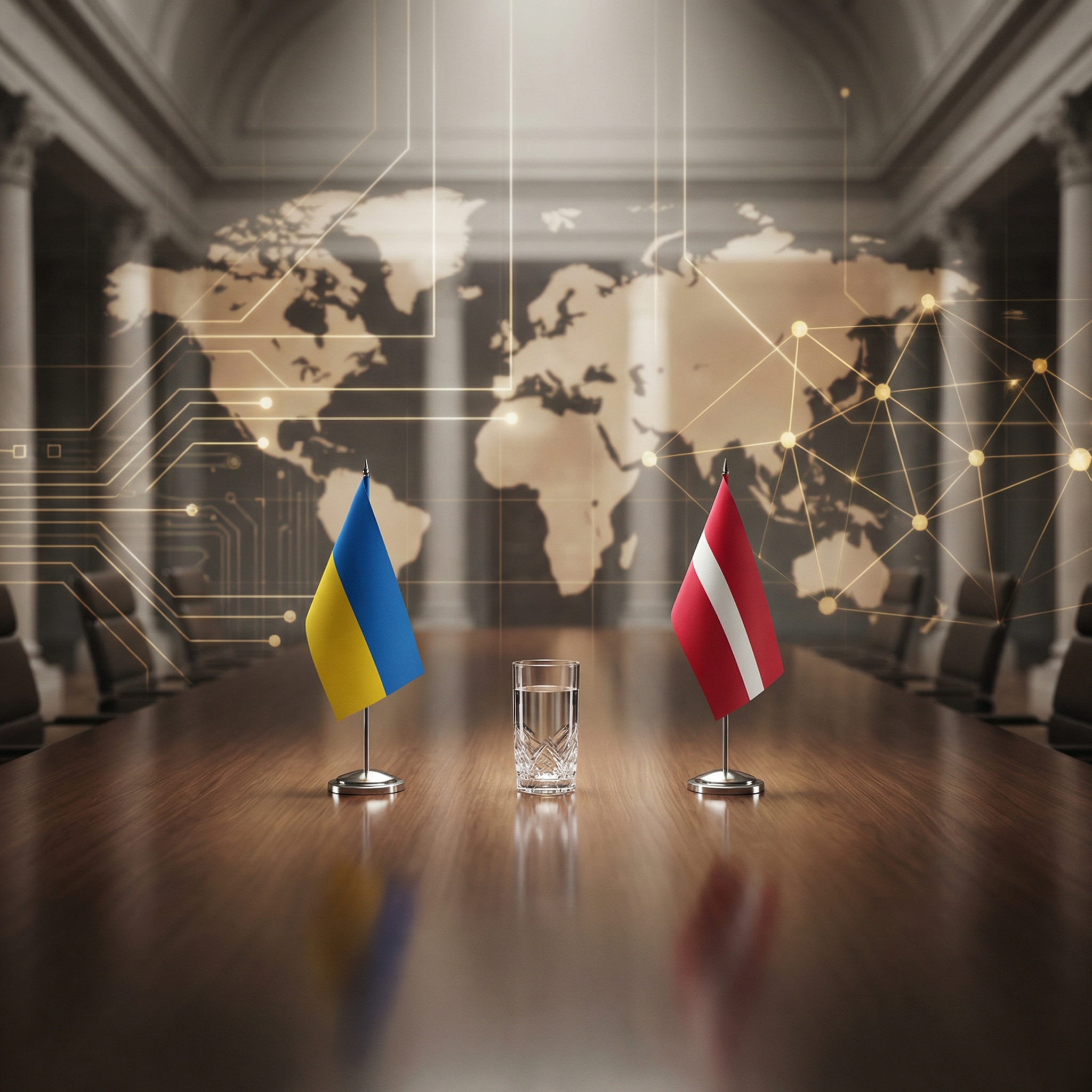
There really is. And that is actually what our housemate Daniel was getting at with the prompt he sent over this morning. He has been following the news cycles, and he mentioned seeing reports about these ongoing, often very quiet negotiations between the United States and Iran. Specifically, he was curious about these mentions of personal letters being sent between leaders, like the reports of President Trump writing to Ayatollah Khamenei.
It is a fascinating bit of news, though we should probably qualify that these specific reports often surface in the media before they are officially confirmed by either the State Department or the Iranian Foreign Ministry. In the world of high-stakes diplomacy, the existence of a letter is sometimes more important than the content itself, at least for the public narrative.
Exactly. And Daniel's question was really about the "how" of it all. If we are living in twenty-twenty-six, where we have quantum-encrypted communications and real-time satellite links, why are we still talking about letters? Is it just for the optics, or is there a functional reason for it? He also wanted to know who actually writes these things. Is the President sitting there with a fountain pen, or is there a whole committee involved?
It is such a great question because it pulls back the curtain on a part of international relations that feels almost medieval in its formality, yet it is happening right alongside our most advanced technology. I mean, think about it. We are literally watching the NASA Artemis II mission prepare for launch after completing a wet dress rehearsal test in early February. The mission recently encountered some technical challenges during testing, but NASA is targeting March as the earliest possible launch opportunity for this historic lunar mission. We are talking about becoming a multi-planetary species, and yet, the most sensitive communications on Earth might still travel in a physical envelope.
It is that contrast that is so jarring. So, Herman, let us start with the "who." When we hear that a head of state has "written a letter," what does that actually mean in practice?
Well, it is almost never a solo effort, Corn. While the final product might bear the signature of the President, the drafting process is an incredibly intricate team sport. It usually starts within the National Security Council or the State Department. If the topic is something like the Iranian nuclear program or regional security, you have dozens of experts, linguists, and regional analysts weighing in on every single syllable.
I imagine the word choice is a literal minefield.
Oh, absolutely. In diplomacy, a comma is not just a comma. It can be a signal of a shift in policy. They use what is often called the UN Correspondence Manual as a baseline. Daniel mentioned he has a copy of that on his shelf, actually. It is this fascinating document that sets the tone for how these things are structured. There is a specific kind of "flowery" language that feels very dated to us, but it serves a purpose. It provides a layer of professional distance and respect that allows leaders to discuss incredibly tense or even hostile topics without it feeling like a personal attack.
Right, so instead of saying "we are angry about this," they might say "The Government of the United States presents its compliments and wishes to draw attention to its concerns regarding..." It is a way of lowering the temperature.
Exactly. It is a linguistic buffer. And when you are dealing with a country like Iran, where there has been no formal diplomatic relationship since the nineteen-seventy-nine hostage crisis, that buffer is essential. Every word is vetted to ensure it does not accidentally trigger a red line or misrepresent a strategic position. It goes through multiple rounds of "clearance." The legal team looks at it, the intelligence community looks at it to make sure no sensitive sources are compromised, and the regional desks make sure the cultural nuances are correct.
So by the time it gets to the President's desk, it has been polished to a mirror finish. Does the President actually change anything?
Often, yes. Especially with someone like Donald Trump, who has a very distinct personal style. We saw this with the correspondence with Kim Jong Un a few years back. The "love letters," as they were called in the media. Those had a very different tone than a standard State Department cable. A leader might add a personal note or change the closing to make it feel more like a direct communication from one human to another. That is the "personal" part of personal diplomacy. It is meant to signal that this is not just a bureaucracy talking to a bureaucracy, but a leader talking to a leader.
That makes sense. It creates a sense of accountability. But then there is the logistics part of Daniel's prompt. This is the part that really feels like a spy novel. If the U.S. and Iran do not have embassies in each other's capitals, how does the letter actually get there? You can't just put a stamp on it and drop it in a mailbox in Washington D.C. and hope it arrives in Tehran.
This is where we get into the world of the "Protecting Power." Since the early nineteen-eighties, Switzerland has served as the protecting power for U.S. interests in Iran. They are essentially the middleman. We actually touched on this kind of back-channel work in a previous episode when we talked about shadows and signals in diplomacy.
Right, I remember that. So the Swiss Embassy in Tehran is the physical link?
Exactly. The process usually looks something like this. The State Department will deliver the physical letter to the Swiss Embassy in Washington. Or, more commonly, they will send a digital, encrypted version to the Swiss Ministry of Foreign Affairs in Bern. The Swiss then relay that message to their embassy in Tehran. The Swiss Ambassador in Tehran then requests a meeting with the Iranian Foreign Ministry to hand over the document. It is a very formal, very physical hand-off.
So there is a literal "handing over of the envelope" moment?
There usually is. And that moment is itself a message. The level of the person who receives the letter on the other side signals how seriously they are taking the communication. If it is handed to a junior staffer, that is a snub. If it is handed to the Foreign Minister himself, that shows a high level of engagement.
It is amazing how much meaning is packed into the physical act. It reminds me of a previous episode where we talked about the invisible architecture of protocol. Everything is a signal.
Everything. And Daniel's point about this being "legacy technology" is interesting, because while it is old-fashioned, it is also incredibly secure in a way that digital communication is not. When you send a physical letter through a trusted neutral party like the Swiss, you are bypassing the entire global internet infrastructure. You don't have to worry about a middle-man hack or a server being compromised in the same way. The chain of custody is human and verifiable.
That is a great point. In an age of deepfakes and AI-generated misinformation, a physical piece of paper with a wet-ink signature and a specific seal is a very strong proof of authenticity. It is much harder to forge a physical diplomatic packet than it is to spoof an email or a digital message.
Precisely. And it also creates a permanent, physical record for the archives. These letters are often classified for decades, but when they are eventually released, they provide this incredibly granular look at what was actually being said behind the scenes. It is the "hidden world" Daniel was asking about.
I want to go back to the idea of the "Swiss Channel" for a second. Is it just letters? Or is there a constant back-and-forth?
It is a bit of both. There is a regular exchange of what are called "Notes Verbales." These are formal, third-person notes that deal with the day-to-day business of being protecting powers—things like prisoner welfare, legal issues, or administrative tasks. But the "Head of State" letters are the big guns. Those are reserved for the most critical moments—trying to prevent a war, proposing a major shift in policy, or opening a new line of negotiation.
And what about the acknowledgment? Daniel asked how they are acknowledged. Does the other side just send a text saying "got it"?
Usually, the acknowledgment is just as formal. The receiving party will issue a statement or a return note through the same Swiss channel. Sometimes, they might not acknowledge it at all publicly, which is a message in itself. In the world of diplomacy, silence is often a very loud answer. It might mean "we received this, but we are not ready to talk," or "we find this proposal unacceptable."
It is like the ultimate "read receipt" anxiety, but on a global scale.
Exactly. And sometimes, one side will leak the existence of a letter to the press to put pressure on the other side. This might be what Daniel is seeing in the news right now. If one side wants to show their domestic audience that they are being "tough" or "proactive," they might let it slip that a letter was sent, even if the contents remain secret.
That brings up an interesting angle. The "misconception busting" part of our show. I think a lot of people assume that if two countries are "enemies," they just don't talk at all. But the reality is that they are talking all the time, just through these very specific, very controlled channels.
That is a huge misconception. Total silence is actually very rare and usually very dangerous. Even at the height of the Cold War, there was the famous "red telephone" between the White House and the Kremlin. But even that was not actually a telephone—it was a teletype system, and later a fax machine, because they wanted a written record to avoid any "lost in translation" moments that can happen in a voice call.
Right, because in a live conversation, you might misspeak or get emotional. With a letter, you have the benefit of time and deliberation. You can make sure your words are exactly what you want them to be.
And that is why the "legacy technology" of letter-writing persists. It forces a certain pace. It prevents the kind of "twitter-diplomacy" or "X-diplomacy" where a leader can fire off a thought in thirty seconds that might have massive unintended consequences. A letter requires a process. It requires a team. It requires a physical journey. All of those things act as a "cool-down" mechanism.
That is a really profound point, Herman. The slowness is a feature, not a bug. In a world that is moving faster and faster, diplomacy sometimes needs to move slowly.
I think that is exactly right. And when we look at the current situation with the U.S. and Iran, especially with the reports Daniel mentioned, we have to remember that we are seeing the tip of the iceberg. Underneath that tip is a massive structure of career diplomats, Swiss intermediaries, and centuries of established protocol.
Let us talk about the "second-order effects" of this. If these letters become a primary way of communicating, what does that do to the role of the traditional diplomat? If the leaders are talking "directly," even through a letter, does the State Department become less relevant?
That is a debate that has been raging for a while. Some call it the "summitry" model, where the leaders do all the heavy lifting. But the reality is that the leaders can only send the letters because the diplomats have done the groundwork to make sure the letter will be received in the right spirit. Without the diplomats, a letter from a President to an Ayatollah might just be seen as an insult or a threat. The diplomats are the ones who "socialize" the ideas before the letter is ever written.
So it is a collaborative effort between the political leadership and the bureaucratic expertise.
Exactly. And it is also a way of bypassing the public posturing. Leaders often have to say very aggressive things in public to satisfy their political bases. A private letter allows them to say, "Look, I have to say those things for the cameras, but here is what I actually want to achieve." It provides a space for pragmatism that public forums often destroy.
It is the "hidden world" Daniel was talking about. The space between the headlines. You know, we should probably mention steganography here too. We did a whole episode on that in a previous series. While these letters are formal, sometimes there are "hidden" messages in the way things are phrased or the specific examples chosen that are meant for the intelligence agencies of the other side to decode.
Oh, definitely. There is a whole layer of "signaling" that happens. For example, if a letter mentions a specific historical event or a previous agreement, it might be a signal that they are willing to return to those terms without saying it explicitly. It is a way of testing the waters without making a formal commitment.
It is like a high-stakes game of chess where you are not just moving pieces, but you are also choosing the material the pieces are made of and the color of the board to send messages.
That is a perfect analogy. And to Daniel's question about whether it is a "team effort"—it is the ultimate team effort. Even if the letter is only two pages long, it might represent ten thousand man-hours of work.
That is an incredible thought. Ten thousand hours for a two-page letter. It really puts the "efficiency" of modern communication into perspective.
It really does. And I think there is a lesson there for all of us. Sometimes, the most important things shouldn't be said quickly. They should be considered, vetted, and delivered with a certain level of gravity.
So, looking at the practical takeaways for our listeners, what can we learn from this "hidden world" of diplomatic correspondence?
I think the first thing is to be skeptical of the "total silence" narrative. Even when countries seem like they are on the brink of conflict, there are almost always these "quiet channels" working in the background. Understanding that Switzerland is the key player for the U.S. in Iran is a great bit of knowledge to have when you are reading the news. If you see the Swiss Ambassador being summoned in Tehran, that is a huge signal that something is happening.
Another takeaway is the power of formal language. In our daily lives, we tend to be very casual, but there are times when using a more formal, respectful tone can actually help solve a conflict by removing the "personal" element and focusing on the "issue."
I use that one with you all the time, Corn. "Brother Corn, I present my compliments and wish to draw your attention to the fact that you left the milk out again."
Ha! And I shall respond through our protecting power, Daniel, with a formal note expressing my regret and my commitment to future dairy security.
See? It works! It lowers the tension immediately. But on a serious note, the final takeaway is about the value of the physical record. In a digital world, things can be deleted, altered, or lost. A physical letter is a stake in the ground. It is a commitment that carries a different kind of weight.
I love that. So, as we wrap up this look at the secret world of diplomatic letters, I am struck by how much "old" technology still powers the "new" world. We are looking at the moon, but we are still sending envelopes across the ocean to keep the peace.
It is the human element, Corn. Technology changes, but the way we build trust—or manage distrust—hasn't changed all that much in a thousand years. It still comes down to words, respect, and the physical delivery of a promise.
Well said, Herman. And thank you, Daniel, for that prompt. It really opened up a world I think a lot of us only catch glimpses of in the news.
It really did. And hey, if any of you listening out there have your own "weird prompts" or questions about the hidden systems that run our world, please do get in touch. We love diving into these topics. You can find the contact form and our entire archive of episodes at myweirdprompts.com.
And if you are enjoying the show, we would really appreciate a quick review on your podcast app or a rating on Spotify. It genuinely helps other curious people find us and join the conversation.
It really does make a difference. We see every one of them.
Alright, that is it for today. This has been My Weird Prompts. We will be back soon with another deep dive into the strange and fascinating corners of our world.
Until next time, keep asking those questions.
Thanks for listening. We will catch you in the next episode.
Goodbye from Jerusalem!
Bye everyone.
Oh, and Corn?
Yeah?
I really am serious about the milk.
I will get a formal response to you by the end of the day, Herman Poppleberry. Through the proper channels, of course.
I look forward to it.
Take care, everyone. See you next time on My Weird Prompts.
Bye!