Hey everyone, welcome back to My Weird Prompts. I am Corn, your resident seeker of nuance, and as always, I am joined by my brother.

Herman Poppleberry, here and ready to dive into the deep end. We have a fascinating prompt today from our housemate Daniel. He was feeling a bit under the weather and found himself reading about a meeting between the Israeli Prime Minister and a United States Senator. That led him down a rabbit hole of his own memories from a state visit by Queen Elizabeth the Second to Ireland back when he was in college.
It is funny how those moments stick with you. Daniel mentioned seeing all these people in suits with pins that simply said protocol. It got him wondering about the invisible architecture of international relations. How much planning goes into these events? What exactly does a protocol officer do? And yes, he specifically asked if they are the ones responsible for the placement of national flags. He even mentioned that the Netherlands protocol department actually sent him photos of their flag store, which was barcoded and highly organized.
Oh, I love this topic. Protocol is often dismissed as just being about fancy manners or which fork to use at a state dinner, but in reality, it is the operating system of global diplomacy. Without it, the world would be a much more chaotic and potentially violent place. It is the framework that allows two people who might fundamentally disagree on everything to sit in a room and communicate with a baseline level of mutual respect. It is about creating a predictable environment where the only surprises are the ones you intend to make.
That is a strong way to frame it. An operating system. So, if protocol is the code, the protocol officers are the developers and the system administrators. Let us start with the basics for our listeners. When we talk about diplomatic protocol, we are not just talking about being polite. We are talking about a very specific set of rules, right?
Exactly. Most of what we see today is codified in the Vienna Convention on Diplomatic Relations from nineteen sixty-one. Before that, diplomatic rules were a bit of a wild west. You had centuries of tradition, but it was inconsistent. The nineteen sixty-one convention created a universal standard. It covers everything from diplomatic immunity to the way a country should receive an ambassador. Specifically, Article fourteen and Article sixteen are the bibles for protocol officers. Article fourteen divides heads of mission into three classes, and Article sixteen dictates that precedence within those classes is determined by the date and time they took up their functions. It is a strictly chronological hierarchy to prevent ego-driven disputes.
So, it is literally first come, first served in the world of diplomacy?
In many ways, yes. Except for the Holy See. Article sixteen actually allows for the representative of the Pope to take automatic precedence in some countries, which is a fascinating holdover from history. But for everyone else, it is about the clock. Daniel mentioned those protocol pins. It sounds like they are the invisible hands behind the scenes. When a major leader travels, or when there is a multilateral summit like the Group of Seven or the Group of Twenty summit in Miami later this year, what does the timeline look like? I assume this is not something you pull together in a weekend.
Not at all. For a major state visit, the planning starts six to twelve months in advance. It begins with what is called an advance team. This is not just one group; it is a tiered system. First, you have the Site Survey team. They are the ones who look at the broad strokes. Then comes the Pre-Advance team, which includes protocol officers, security detail, and logistics experts who travel to the host country weeks before the event. Finally, you have the Lead Advance team, which arrives about five days before the leader. They literally walk every inch of the route. They measure the height of the podiums. They check the acoustics of the rooms. They even time how long it takes to walk from the car to the front door at a normal pace.
Why the extreme level of detail? If a walk takes forty-five seconds instead of thirty, does that actually matter in the grand scheme of international relations?
It matters because of the second-order effects. In diplomacy, time is a resource and a symbol. If a leader is kept waiting, it can be perceived as a slight, a deliberate sign of disrespect. If a schedule runs late, it cascades through the entire day, affecting security rotations, press pools, and the mental state of the participants. Protocol officers aim for zero surprises. They want the leaders to focus entirely on the substance of their conversation, not whether they are going to trip over a loose carpet or wonder where they are supposed to stand. They even map out the motorcade in detail. You have the Lead car, the O car for the official, the S car for security, and the follow-up vehicles. If the sequence is wrong, the security perimeter is compromised.
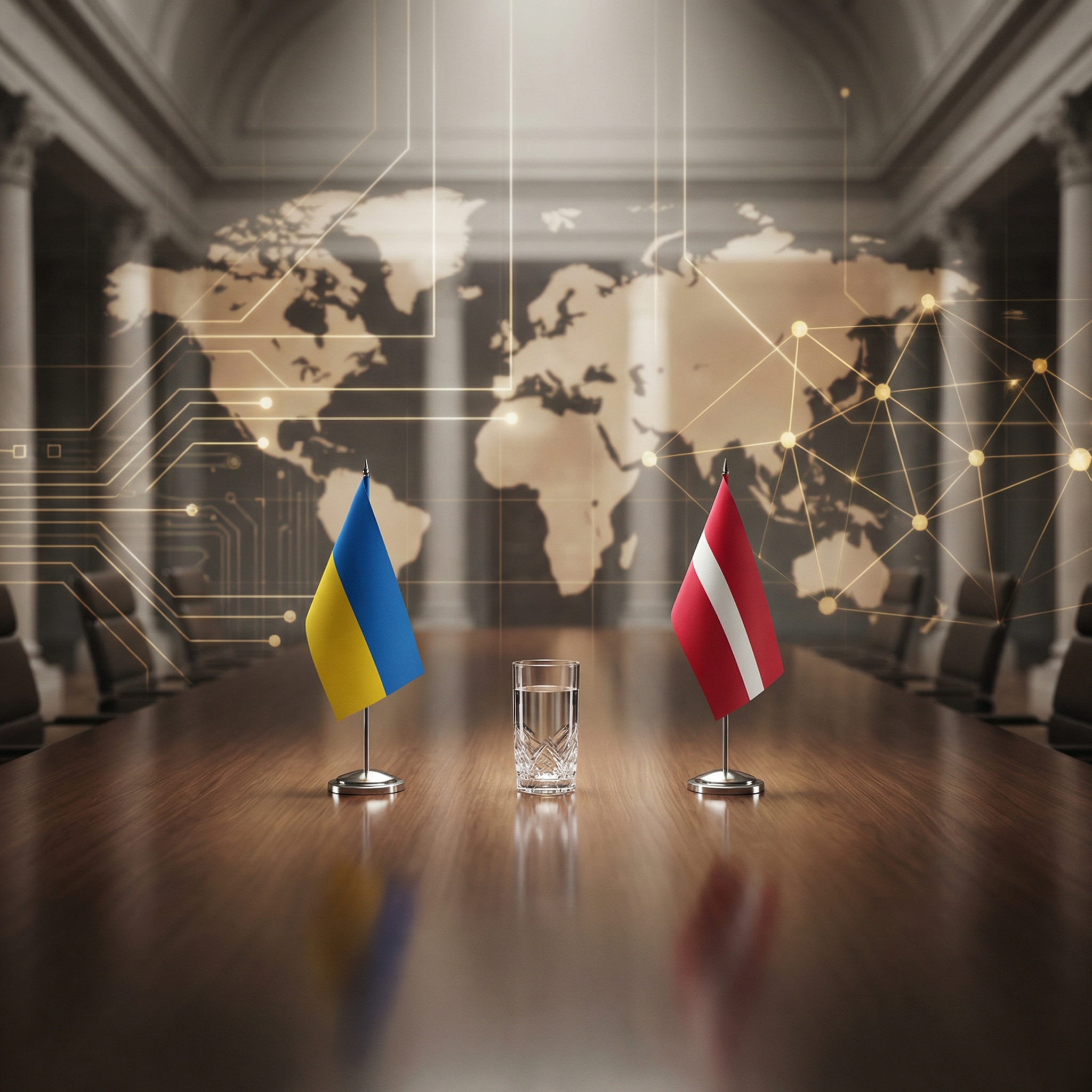
That makes sense. It is about removing friction so that the only friction left is the actual political disagreement. Now, let us address Daniel's specific question about the flags. He was fascinated by that Dutch warehouse. Who actually places those flags on the table during a bilateral meeting?
That is a direct responsibility of the protocol office. And it is not just about putting them there; it is about the order of precedence and the right of honor. There is a rule in international protocol called the right of honor, which states that the position of honor is to the right of the host. So, if you see two leaders sitting at a table, the guest is typically on the host's right. Correspondingly, the guest's national flag will be on the right from the perspective of the people in the room, or on the left from the perspective of the audience looking at them.
Wait, let me make sure I have that straight. If I am the host and you are my guest, you sit on my right. So, if we are looking out at a crowd, your flag is on the right side of the stage?
Precisely. This is where it gets incredibly technical. Protocol officers have to know the specific flag codes for every nation. For example, some flags cannot be flown at night without illumination. Some flags have a specific top and bottom that might not be obvious to a casual observer. If you accidentally fly a flag upside down, it is not just a mistake; it can be interpreted as a signal of distress or, worse, a deliberate insult. There was a famous incident in twenty-twelve at the London Olympics where the South Korean flag was shown on the big screen during a North Korean women's soccer match. The team walked off the pitch. That is the power of a protocol failure. In twenty-twenty-four, we saw similar tensions at the Paris Olympics regarding the neutral status of certain athletes. The protocol team has to manage those visual symbols like they are high explosives.
It is a visual language. If you get the grammar wrong, you are saying something you did not intend to say. I am curious about the scale. Daniel was wondering if every foreign affairs department just has a warehouse full of flags. Based on his interaction with the Dutch, it sounds like the answer is yes.
Most do. A well-equipped ministry of foreign affairs will keep a stock of the flags of every country recognized by the United Nations, usually in multiple sizes. You need the giant ones for the flagpoles outside, the medium ones for the hallways, and the tiny ones for the desk displays. The Dutch example Daniel found is a great one because it shows the level of professionalization. They use barcoding because you might have two hundred different countries, and many flags look similar to the untrained eye. Think of the flags of Luxembourg and the Netherlands, or Chad and Romania. They are nearly identical except for the shade of blue or the proportions. A barcode ensures that the officer pulls the correct flag for the correct guest every single time.
You mentioned the advance team earlier. I want to go deeper into that. Beyond flags and timing, what are they looking for? I have heard stories about dietary restrictions and even the color of the flowers in a room being a point of contention.
Oh, the flowers are a classic. In some cultures, certain flowers are associated with funerals. You do not want to fill a meeting room with white lilies if your guest associates them with mourning. Dietary restrictions are even more critical. Protocol officers keep what are essentially dossiers on foreign leaders. Does this person have a peanut allergy? Are they observing a religious fast? Do they have a preference for a specific type of bottled water? If a host serves a meal that a guest cannot eat, it creates an awkward moment that can derail the mood of the entire meeting. They often avoid the big eight allergens entirely to be safe. And it is not just the food; it is the seating style. Do you use the French style, where the host and guest of honor sit in the middle of the table facing each other? Or the English style, where they sit at the ends? These choices dictate the flow of conversation.
It feels like a mix of being a high-end concierge and a strategic analyst. You are managing the physical environment to influence the psychological environment.
That is a perfect way to put it. There is a concept in protocol called precedence. It is the formal hierarchy of importance. Who walks into the room first? Who sits where at a round table versus a rectangular table? If you have twenty world leaders in a room, the order of precedence is usually determined by how long they have been in office. But even that can be tricky. When the United States hosts the Group of Twenty in Miami later this year, the protocol team will have to navigate complex diplomatic relationships and ensure all members feel appropriately honored. That is a massive undertaking. Disinviting a member would be like a diplomatic earthquake.
Which creates its own set of problems! I can imagine the tension if a leader feels they have been pushed down the line.
Absolutely. There was an incident a few years ago, often referred to as sofa-gate, where a female leader was left without a chair during a meeting while two male leaders took the only two chairs available. It was a massive protocol failure that dominated the news cycle for days and completely overshadowed the actual policy being discussed. That is why protocol officers are so stressed. Their job is to be invisible, but if they make one mistake, they are the only thing people talk about. They have to be the masters of the floor plan. Protocol failures at major summits can lead to leaders sitting in the wrong order of seniority. It sounds petty, but in the world of power, where you sit is who you are.
It is a high-stakes game of keeping things boring. If the news reports on the policy, the protocol officer has won. If the news reports on the seating arrangement, the protocol officer has lost. Let us talk about the difference between a major multilateral event, like a Group of Twenty summit, and a smaller bilateral meeting. I assume the protocol for the Group of Twenty is an absolute nightmare.
It is a logistical mountain. At a Group of Twenty summit, you are dealing with twenty different heads of state, each with their own protocol teams, security details, and press corps. The host country's protocol office has to coordinate with nineteen other offices. They have to agree on a joint communique, which is the official statement, but they also have to agree on the family photo. You know those photos where all the leaders stand in a row and wave?
Yeah, they always look a bit stiff.
That photo is a masterpiece of protocol. The placement of every leader is negotiated. Usually, the host is in the center, and the other leaders are arranged based on their seniority in office. But even then, you have to consider things like height and gender balance to make the photo look cohesive. It can take hours of negotiation just to decide who stands next to whom. Managing these complex arrangements requires extreme care to avoid making any delegation feel slighted.
It sounds like the ultimate ego management project. You are dealing with people who are, by definition, the most powerful people in their respective countries. They are used to being the most important person in the room. When you put twenty of them together, someone has to be on the end of the row.
And that is why the rules are so important. If the rules are transparent and applied equally to everyone, it is much harder for a leader to take offense. It is not the host's fault that you are on the end; it is just the rule of seniority. Protocol provides a shield for the host. It allows them to say, we are just following the standard international practice. This is why the United States State Department has an entire Office of the Chief of Protocol. They manage everything from the Blair House, which is the president's guest house, to the Gift Unit.
Wait, a Gift Unit? Like a dedicated department for presents?
Yes! It is a serious business. Protocol officers spend weeks researching appropriate gifts. You want something that represents your country but is also meaningful to the recipient. But you have to be careful. You do not give a bottle of wine to a leader from a country that prohibits alcohol. You do not give a clock in some East Asian cultures because it is associated with death. In the United States, there is a limit on the value of gifts a leader can keep. Anything over that limit belongs to the government and goes to the National Archives. The Gift Unit appraises every single item, from ruby-encrusted swords to gold-plated mechanical birds. They even have to handle the disposal of perishable items like food or liquids, which are usually destroyed for security reasons.
I want to pivot a bit to the human side of this. These protocol officers, what kind of background do they usually have? I imagine they need a very specific temperament. You cannot be a hothead in that job.
Definitely not. You need extreme patience, incredible attention to detail, and a very high level of cultural intelligence. Many protocol officers are career diplomats who have served in multiple countries. They need to understand the subtle cues of different cultures. For example, in some cultures, a firm handshake is a sign of confidence, while in others, it can be seen as aggressive. In some places, making direct eye contact is respectful, while in others, it is a challenge. A protocol officer has to brief their leader on all of these nuances before they even step off the plane. They are the ones who tell the president, do not touch the Queen's back, or make sure you use your right hand when passing a document.
It is like they are cultural translators. They are translating behavior, not just words. You know, thinking about Daniel's story, he mentioned the late Queen Elizabeth's visit to Ireland. That was a huge historical moment because of the long and complicated history between those two nations. I imagine the protocol for that visit was handled with extreme care.
That is a brilliant example. When there is historical tension, protocol becomes a tool for reconciliation. Every gesture is scrutinized for its symbolic weight. In that specific visit, the Queen laid a wreath at the Garden of Remembrance in Dublin, which honors those who died fighting for Irish independence from Britain. The protocol team had to ensure that the gesture was seen as sincere and respectful, without being seen as a political surrender. The timing, her posture, the silence—all of that was orchestrated to convey a message of healing. When protocol works in those moments, it can literally change the course of history by opening a door that had been locked for decades. We are seeing similar high-stakes protocol today with the delicate choreography of meetings between leaders in the Middle East or the ongoing tensions in Eastern Europe.
It is about creating the space for a new narrative. If you get the ceremony right, you give the politicians the cover they need to be courageous. But let us talk about the modern era. We are in twenty-twenty-six. How has technology changed protocol? Daniel mentioned the barcoded flags in the Netherlands. Is there a digital side to this now?
Absolutely. There is a lot of digital protocol now, especially with the rise of virtual summits that started during the pandemic and have continued for smaller working groups. Even on a video call, there is protocol. Who speaks first? How are the digital tiles arranged on the screen? Do you show the national flag in the background of your video feed? There are now guidelines for what is called netiquette in diplomacy. And with the integration of Artificial Intelligence, protocol offices are using predictive modeling to anticipate traffic delays for motorcades or to translate cultural nuances in real-time during informal side-line meetings.
Netiquette for presidents. I love that. I can just imagine a protocol officer frantically texting a leader to tell them they are on mute.
It has happened! But on a more serious level, technology helps with the logistics. There are now complex software systems used to track the movements of hundreds of delegates at a summit. They use radio frequency identification tags to know exactly when a motorcade is five minutes away so the host can walk out to the curb at the precise moment. It is all about that zero-friction experience we talked about earlier. In Miami this year, they are expected to use advanced biometric scanning to speed up the entry of delegations while maintaining the highest levels of security protocol.
I wonder about the misconception that this is all just elitist fluff. Some people might look at this and say, why are we spending so much time and money on flag placement and flower colors when there are real problems to solve? What is the counter-argument to that?
The counter-argument is that the cost of a protocol failure is infinitely higher than the cost of a protocol office. If a misunderstanding at a summit leads to a breakdown in trade negotiations or, in the worst case, a military escalation, the economic and human cost is staggering. Protocol is a preventive measure. It is the grease that keeps the machinery of international relations from seizing up. It is an investment in stability. Think of it like the safety protocols in a nuclear power plant. Most of the time, they seem redundant and boring, but you really do not want to see what happens when they are ignored. Protocol breaches can quickly turn into policy crises.
That is a sobering analogy. It makes me think about the smaller-scale versions of this. Most of our listeners are not world leaders, but we all deal with protocol in some form, right? Business meetings, weddings, even just being a guest in someone's home. There is a universal human need for these frameworks of respect.
Totally. At its heart, protocol is just about making the other person feel seen and respected. In a business context, it might mean doing your research on a client's culture before a meeting. It might mean being intentional about who you introduce first in a group setting. It is about removing the awkwardness so that people can connect. If you show that you have put effort into understanding someone's norms, you are signaling that you value the relationship. It is the difference between a transaction and a partnership.
It is a form of empathy, really. You are stepping outside of your own comfort zone to meet someone else in theirs. Herman, you mentioned the nineteen sixty-one Vienna Convention. Has there been any push to update it? The world has changed a lot in sixty-five years.
There are ongoing discussions, especially around things like cyber diplomacy and the status of non-state actors. For example, how do you handle protocol for a meeting with the head of a massive tech company that has more influence than some small nations? Or how do you handle the protocol of a climate summit where activists are just as important to the outcome as the ministers? The traditional rules are being stretched, but the core principles of precedence and respect remain the same. The United Nations is currently looking at a supplemental framework for digital diplomatic conduct to address these twenty-first-century challenges.
It is fascinating to think about. A protocol officer for a meeting between a prime minister and a tech billionaire. Do you put the corporate logo next to the national flag? That feels like a minefield.
It really is. Most protocol offices still stick to the rule that only sovereign states get the full honors. But in practice, they have to be flexible. Diplomacy is the art of the possible, and protocol has to be the art of the appropriate. This is why the Dutch flag warehouse is so important. It is not just a storage room; it is a library of sovereignty. When a country changes its name or its flag, like when the Republic of North Macedonia updated its name, every protocol office in the world had to update their records and their physical stock immediately.
Let us go back to the flags for a second, because I know this is what Daniel was really curious about. Is there a specific protocol for how you retire a flag? If a country changes its flag, what happens to all those old flags in the ministry warehouses?
They are usually disposed of with dignity. Most national flag codes specify that when a flag is no longer fit for display, it should be destroyed in a respectful way, often by burning in a private ceremony. They do not just throw them in the trash. When a country changes its flag, the protocol offices around the world have to update their stock immediately. It is a big day for the flag manufacturers! And the specificity of the colors is vital. For a high-level visit, the protocol officer will often send the exact color specifications—the Pantone numbers—to the host country to ensure the flags they produce are accurate. If the blue in the United States flag is not Old Glory Blue, it is a protocol issue.
The level of detail is just mind-blowing. It is like a fractal. The closer you look, the more complexity you find. We have talked about the successes, but I want to hear about a few more gaffes. Not to be mean, but because they illustrate the rules so well.
Well, there was a famous one where a visiting leader was greeted with the wrong national anthem. Imagine standing there on the red carpet, ready for a moment of solemn pride, and a brass band starts playing the anthem of your neighbor, who you might be in a border dispute with. That is a nightmare scenario for a protocol officer. It usually happens because someone grabbed the wrong sheet music or the band conductor was not properly briefed. Or consider the twenty-sixteen incident where President Obama arrived in China for a summit and there was no staircase provided for the main exit of Air Force One. He had to use a smaller, internal staircase. It was seen globally as a massive snub, even if the hosts claimed it was a logistical error. Protocol is the language of power, and every missing staircase is a sentence.
That is an instant viral moment today. It really underscores your point that this is about signaling. A lazy gift or a missing staircase signals a lazy relationship.
Precisely. On the flip side, a really thoughtful gift can be a huge win. When the Obama administration gave the Queen of England an iPod loaded with photos of her previous visits to the United States and some Broadway show tunes, it was seen as a modern and personal touch. It showed they had done their homework on her interests. It is about the research. Protocol officers are essentially the world's best researchers.
Okay, so we have covered the flags, the timing, the seating, the food, and the gifts. What is left? What is the final piece of the protocol puzzle?
I think the final piece is the departure. How a visit ends is just as important as how it begins. The departure ceremony, the final statements, the way the leader is escorted back to the airport. It is all about leaving a lasting impression of respect and cooperation. Protocol officers are working right up until the wheels of the plane leave the tarmac. Only then can they go home and sleep for fourteen hours. They are the stage managers of the world stage, and if the play goes well, nobody even knows they were there.
I have a newfound respect for these people. It sounds like one of the most stressful jobs in the world, and the better you are at it, the less anyone knows you exist.
That is the tragedy and the glory of the protocol officer. They are the architects of the invisible.
Well, I think we have given Daniel a pretty deep dive into his question. It is not just about the flags, although the flags are a huge part of it. It is about the entire architecture of how we interact as a species at the highest levels.
It really is. And for our listeners, next time you see a clip of two world leaders meeting, look past the handshakes. Look at the flags, look at the seating, look at the people hovering in the background with those little pins. You are seeing a very expensive, very carefully choreographed dance that is designed to keep the world spinning.
I love that. The choreography of peace. Before we wrap up, I want to remind everyone that if you are enjoying these deep dives into the weird and wonderful prompts Daniel sends our way, please leave us a review on your podcast app. Whether you are on Spotify or Apple Podcasts, those ratings really help other curious minds find the show.
It truly does help. And if you want to see the show notes or get in touch with us, head over to our website at myweirdprompts.com. We have the full archive there, and you can even send us your own weird prompts through the contact form.
We are always looking for new rabbit holes to explore. This has been episode two hundred and seventy of My Weird Prompts. We have talked about everything from the engineering of the human heart in episode two hundred and sixty-seven to the legal layers of Israel in episode two hundred and sixty-five, but this look into the invisible world of protocol has been a real highlight.
I agree. It is one of those topics that is hiding in plain sight. Thanks for the prompt, Daniel, and I hope you are feeling better soon.
Thanks for listening, everyone. We will be back next week with another deep dive. Until then, stay curious.
And watch where you put those flags!
Goodbye!
Bye everyone!