Hey everyone, welcome back to My Weird Prompts. I am Corn, and I am joined as always by my brother.

Herman Poppleberry, reporting for duty. And Corn, can you believe we are at episode five hundred? It feels like just yesterday we were sitting in our living room in Jerusalem wondering if anyone would actually want to hear us ramble about weird ideas.
It really does. Five hundred episodes of diving into the strange and the overlooked. And to mark the occasion, our housemate Daniel sent us a prompt that touches on something we have talked about in pieces before, but never quite this holistically. He was talking to his father-in-law about electric vehicles and how they are actually much older than most people realize.
Oh, I love that. It is such a great starting point because there is this collective amnesia about the history of technology. We tend to think of the electric vehicle as this sleek, futuristic thing born in a Silicon Valley garage in the early two thousands, but the reality is so much more interesting.
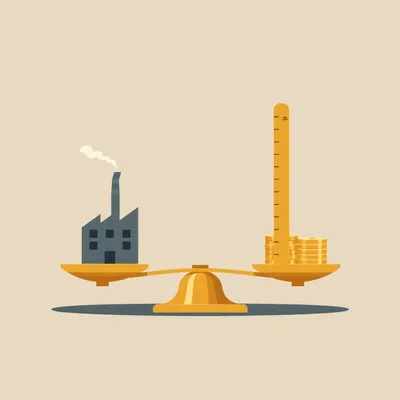
Exactly. Daniel was asking whether the benefit of reduced pollution and fossil fuel consumption actually outweighs the environmental and human costs of producing those massive batteries. It is a deep, messy question that involves everything from nineteenth-century engineering to modern-day mineral mining in the Congo.
It is the perfect topic for today. Because if we are going to look at the sustainability of electric vehicles, or E V s, we have to look at the whole lifecycle. But before we get to the dirty business of mining, we should probably address that historical point Daniel made. Corn, did you know that in the year nineteen hundred, electric cars actually outsold gasoline cars in the United States?
I had heard that, but it always sounds like one of those urban legends until you see the numbers. It was something like thirty-eight percent of the market was electric, forty percent was steam, and gasoline was trailing behind at just twenty-two percent.
Right. And back then, the reasons people liked electric cars are almost exactly the same as why people like them now. They were quiet, they did not vibrate your teeth out of your head, and they did not smell like a refinery. But the biggest thing was the ease of use. If you wanted to start a gasoline car in nineteen hundred, you had to manually crank it, which was physically dangerous. If the engine backfired, that crank could literally break your arm. The electric car, like the famous nineteen fourteen Detroit Electric, was marketed heavily to women because you just turned a key and went.
So why did we stop? If we had a lead in electric tech over a century ago, how did we end up in a world where the internal combustion engine reigned supreme for a hundred years?
It was a combination of three things. First, the electric starter was invented for gasoline cars, which eliminated the broken-arm problem. Second, we discovered massive oil reserves in Texas, which made fuel incredibly cheap. And third, people wanted to go further. Early E V s were great for city driving, but as soon as we started building a national highway system, the limited range of those lead-acid batteries just could not compete with the energy density of gasoline.
That energy density is really the heart of the technical challenge, is it not? I mean, gasoline is almost a miracle fuel in terms of how much energy you can pack into a small space.
It really is. To give you some perspective, gasoline has an energy density of about forty-six megajoules per kilogram. A modern lithium-ion battery in early twenty-twenty-six is somewhere around one to one point two megajoules per kilogram. So, even though electric motors are much more efficient at converting that energy into motion, you still have to carry a massive amount of weight in batteries to match the range of a gas tank.
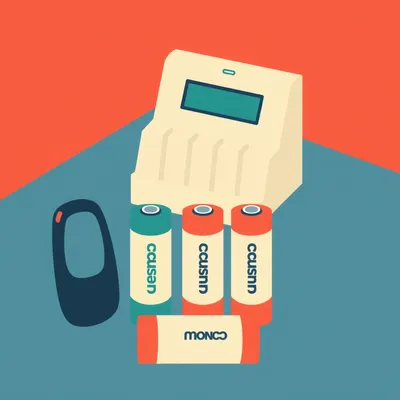
And that brings us right to the core of Daniel's question. To get that range, we need these massive batteries, and those batteries require materials that are not exactly easy to get. We are talking about lithium, cobalt, nickel, and manganese. So, Herman, let us tackle the big one. Is an E V actually better for the planet when you factor in the carbon cost of digging all that stuff out of the ground?
This is where we have to look at the life-cycle analysis. You are absolutely right that the manufacturing of an electric vehicle is more carbon-intensive than a gasoline car. In fact, making an E V can generate about sixty to seventy percent more emissions during the production phase. Most of that comes from the energy needed to mine the raw materials and the high-heat processes used to manufacture the battery cells.
So, right out of the gate, the E V starts in a hole. It has a carbon debt it needs to pay off.
Exactly. It starts with a debt. But the question is how quickly it pays that debt back. As soon as you start driving, the E V is vastly more efficient. A gasoline engine is actually a pretty terrible piece of engineering if you look at it purely through the lens of efficiency. About seventy to eighty percent of the energy in gasoline is wasted as heat and friction. Only about twenty percent actually goes into turning the wheels.
Whereas an electric motor is what, eighty or ninety percent efficient?
Often over ninety percent. So, even if the electricity used to charge the E V comes from a grid that uses some fossil fuels, the sheer efficiency of the motor means you are using less total energy per mile. In the United States, on the average twenty-twenty-six power grid, an E V usually pays off its carbon debt within about twenty thousand to twenty-five thousand miles of driving. If you are in a place like Norway or Quebec where the grid is almost entirely hydro or wind, that break-even point happens in less than ten thousand miles.
Okay, so from a carbon perspective, the math seems to favor the E V over the long term. But carbon is only one part of the sustainability story. Daniel mentioned the human cost and the labor practices. This is where the conversation gets really uncomfortable. We are talking about cobalt mining in the Democratic Republic of the Congo.
It is more than uncomfortable, Corn. It is a humanitarian crisis. About seventy percent of the world's cobalt comes from the D R C. While much of it is mined in large-scale industrial mines, about fifteen to thirty percent comes from what they call artisanal mining. That is a polite way of saying people, including children, digging in dangerous pits with hand tools, often controlled by local warlords or middle-men with zero safety standards.
And that cobalt ends up in the batteries of the cars we drive to feel better about the environment. That is a massive ethical contradiction. Is there any way around it?
There is, and we are actually seeing the industry shift quite rapidly. Because of the ethical concerns and the price volatility of cobalt, many manufacturers have moved toward L F P batteries. That stands for Lithium Iron Phosphate. These batteries use no cobalt and no nickel. In fact, by late twenty-twenty-five, L F P batteries made up nearly half of the global E V market. They are less energy-dense, so the car might have a shorter range, but they are cheaper, safer, and much more ethical from a sourcing standpoint. We are even starting to see sodium-ion batteries enter the low-end market, which use zero lithium at all.
That is interesting. So the tech is evolving to solve the very problems it created. But what about lithium? We hear a lot about the water usage in places like the Lithium Triangle in South America. Chile, Argentina, and Bolivia.
Lithium is another tough one. Traditionally, most of the lithium there is extracted from brine pools. They pump salty water from underground into these massive evaporation ponds. It takes about five hundred thousand gallons of water to produce one metric ton of lithium. In an arid region like the Atacama Desert, that can deplete the local water table. However, in twenty-twenty-six, we are seeing the commercial rollout of D L E, or Direct Lithium Extraction. This technology filters the lithium out of the brine and then pumps the water back underground, which could reduce water consumption by over ninety percent.
It feels like we are just trading one kind of extraction for another. We used to drill for oil, and now we are mining for minerals. Is it actually a net gain?
It is a net gain in the sense that minerals are recyclable, whereas oil is a one-time-use fuel. Once you burn a gallon of gasoline, it is gone. It is in the atmosphere as carbon dioxide. But once you have a pound of lithium or cobalt in a battery, you can theoretically recover over ninety-five percent of it at the end of the battery's life. Plus, as of this year, the European Union has officially started implementing the Battery Passport. It is a digital record that tracks the entire history of a battery, from the mine to the factory to the recycling center, so consumers can actually see the ethical and carbon footprint of their specific car.
Theoretically. But are we actually doing that? Because right now, it feels like we are just piling up old electronics.
We are at the very beginning of the battery recycling industry. For a long time, there just were not enough E V batteries reaching their end of life to make recycling profitable. But that is changing. Companies like Redwood Materials are already achieving very high recovery rates. The goal is a circular economy where we eventually stop mining new materials altogether and just keep cycling the same minerals through new batteries. We are not there yet, but the physics allows for it in a way that fossil fuels never will.
I want to pivot back to something Daniel mentioned about our previous discussions on urbanism. We have spent a lot of time on this show talking about how car-centric cities are fundamentally broken. They take up too much space, they isolate people, and they create dangerous environments for pedestrians. If we just replace every gasoline car with an electric car, have we actually solved the problem?
This is such a crucial point, and it is where I think the E V hype often misses the mark. If you have a traffic jam of a thousand gasoline cars, and you replace them with a thousand electric cars, you still have a traffic jam. You still have the same amount of land dedicated to parking lots and sixteen-lane highways. You still have the same issues with suburban sprawl and social isolation.
And you still have the issue of particulates, right? I read somewhere that a significant portion of the pollution from cars actually comes from tire wear and brake dust, not just the tailpipe.
That is exactly right. Because E V s are significantly heavier than gasoline cars due to the battery weight, they do produce more tire-wear particles. However, a major study released by Ricardo in late twenty-twenty-five showed that E V s actually produce significantly less fine particulate matter overall because regenerative braking almost eliminates brake dust. So, while tire wear is still a problem, the air in an E V-heavy city is much cleaner than a gasoline-heavy one. But you are right, they do not make the air perfectly clean, and they do not solve the space problem.
So, if we look at the big picture, it sounds like E V s are a necessary tool for decarbonization, but they are not a silver bullet for the problems of modern living.
I think that is the most honest way to put it. We tend to want one big technological fix that lets us keep our current lifestyle exactly as it is. We want to keep living thirty miles from where we work, driving a three-ton S U V alone in traffic, but we want it to be green. And the reality is that a three-ton S U V is never going to be truly sustainable, no matter what is powering it.
It is the difference between a better car and a better system.
Exactly. A truly sustainable future probably looks like fewer cars overall. It looks like better public transit, more walkable cities, and E V s filling in the gaps where those other things are not practical. But if we just view E V s as a way to save the car industry rather than a way to save the planet, we are going to run into those resource limits Daniel was worried about.
Let us talk about those resource limits for a second. If we were to transition the entire global fleet of cars to electric, do we even have enough minerals in the ground to do it?
It is a massive challenge. To meet the goals of the Paris Agreement, we would need to increase lithium production by something like forty-fold by the year twenty-forty. That is an enormous industrial undertaking. It is not just about whether the minerals exist, they do, but it is about whether we can build the mines and processing facilities fast enough without destroying the environment in the process.
And that brings us back to the geopolitical side. Right now, China dominates the entire supply chain for E V batteries. They process the vast majority of the world's lithium and cobalt, and they manufacture most of the cells.
They were very smart about this. They saw the transition coming twenty years ago and started securing resources and building capacity while the rest of the world was still debating whether climate change was real. Now, Europe and North America are scrambling to catch up, which is leading to this new era of resource nationalism. We are seeing the United States pass laws like the Inflation Reduction Act to try and build a domestic supply chain, but you cannot build a lithium mine or a battery factory overnight. It takes a decade.
So, we have this tension between the urgent need to stop burning fossil fuels and the physical and ethical reality of building the alternative. It feels like we are caught between a rock and a hard place.
It does, but I think we need to maintain some perspective. When we talk about the environmental cost of mining for E V s, we have to compare it to the environmental cost of the oil industry. We often take the oil industry's impact for granted because it is so ingrained in our world. We are talking about massive oil spills, the destruction of the Niger Delta, the wars fought over oil, and the millions of tons of pollutants pumped into the air every single day.
That is a fair point. We are scrutinizing the E V supply chain with a level of detail that we rarely apply to the oil supply chain.
Exactly. And that is good! We should be scrutinizing it. We should be demanding better labor standards and more efficient recycling. But we should not let the perfect be the enemy of the good. An E V with a cobalt-free battery, charged on a green grid, and eventually recycled, is orders of magnitude better for the planet than any internal combustion engine will ever be.
So, for someone like Daniel's father-in-law, who sees the history and the modern complexity and feels skeptical, what is the takeaway? Are E V s a scam, a miracle, or something in between?
They are a vital bridge. They are the best tool we have right now to move away from the fossil fuel era, but they are not the end of the journey. The real innovation will be when we move beyond the idea of the car as the primary unit of transportation. But while we are still living in a car-dependent world, the E V is a massive improvement.
I also think it is worth mentioning the second-order effects. When you have more E V s, you have more demand for a clean grid. When you have more demand for a clean grid, you get more investment in wind, solar, and storage. It creates this virtuous cycle where the car becomes a part of the energy infrastructure.
Oh, the vehicle-to-grid stuff is fascinating. Imagine your car battery acting as a backup for your house, or helping to stabilize the city's power grid during peak hours. That is something a gasoline car could never do. It just sits there being an expense, whereas an E V can be an active participant in the energy system.
So, let us get practical. If someone is listening to this and they are thinking about their next car, what should they be looking for if they actually care about the things Daniel brought up? The ethics and the sustainability?
First, I would say look at the battery chemistry. If you can find a car with an L F P battery, you are immediately bypassing the cobalt and nickel issues. Many entry-level models from companies like Tesla and various Chinese manufacturers are already using these. Second, think about the size of the battery. Do you really need a three-hundred-mile range if you only drive thirty miles a day? A smaller battery means less mining, less weight, and a more efficient car.
And I would add, think about whether you need a car at all for every trip. I know we are talking about E V s, but the most sustainable E V is an electric bike. It uses about one percent of the battery materials of a car and gets you around a city just as fast in many cases.
You are speaking my language now, Corn. The e-bike is the real revolution in urban mobility. It solves the parking problem, it solves the congestion problem, and it is incredibly low-impact. But for the times when you do need a car, the E V is the way to go.
We also have to talk about the longevity of these things. One of the big fears people have is that the battery will die in five years and the car will be a paperweight.
That is one of those misconceptions that really needs to be busted. Modern E V batteries are designed to last for hundreds of thousands of miles. Most manufacturers offer eight-year or one-hundred-thousand-mile warranties on the battery, and data from early E V s shows that they often outlast the life of the car itself. And even when the battery is no longer good for a car, it can have a second life as stationary storage for a home or a business before it ever gets recycled.
It is interesting how much of the skepticism around E V s is based on information that is ten or fifteen years old. The technology is moving so fast that what was true in two thousand ten is completely irrelevant today.
That is the nature of exponential technology. We are seeing improvements in energy density, charging speed, and manufacturing efficiency every single year. We are even seeing the development of solid-state batteries. In fact, twenty-twenty-six is being called the verification year for solid-state. We are seeing the first small-batch deliveries for things like high-end electric motorcycles, and major automakers are currently testing prototypes that could eventually double the energy density of current batteries.
So, looking forward, where do you see this debate in ten years? Will we still be arguing about the sustainability of E V s?
I think the argument will shift. By twenty-thirty-six, the mining and labor issues will hopefully be much better regulated, and the recycling industry will be in full swing. The debate will probably be more about the grid. How do we power a billion electric vehicles without crashing the system? And I think we will also be having a much more honest conversation about urban planning. We will realize that even with electric cars, we cannot keep building cities the way we have been.
I hope so. Because that is the real challenge. It is easy to change an engine. It is hard to change a culture.
Well said. And I think that is a good place to wrap up our five-hundredth episode. It is a complex topic, but that is why we love doing this show. There are no easy answers, only better questions.
Absolutely. And thank you to Daniel for sending this in. It was a great way to mark the milestone. If you have been listening to us for a while, or even if this is your first episode, we would really appreciate it if you could leave us a review on your podcast app or on Spotify. It genuinely helps other people find the show and keeps us going.
It really does. And remember, you can find all our past episodes, including the ones where we dive deeper into urbanism and the history of technology, at myweirdprompts.com. There is a contact form there too if you want to send us your own weird prompts.
Thanks for being part of this journey with us for five hundred episodes. Here is to the next five hundred.
Cheers to that. This has been My Weird Prompts.
We will see you next time. Stay curious.
And keep reading those papers!
Goodbye everyone.
Bye!