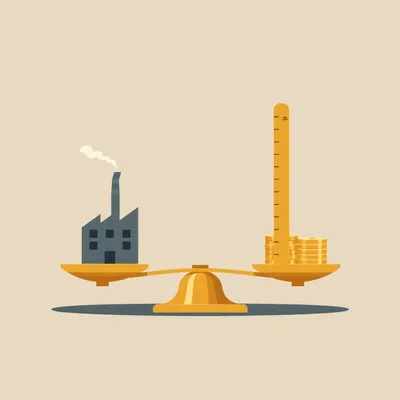
I was reading through some historical notes earlier today and it struck me how much we still rely on a system designed in a New Hampshire hotel back in nineteen forty-four. But if you look at the headlines from just this past week, it feels like that old Bretton Woods architecture isn't just getting a fresh coat of paint. It is being completely re-engineered from the foundation up. Today's prompt from Daniel is about the massive overhaul of international financial architecture, specifically looking at the International Monetary Fund and the World Bank as they pivot toward climate resilience and private capital mobilization. We are standing at a crossroads where the very definition of global development is being rewritten in real-time.

I am Herman Poppleberry, and Corn, you are hitting on something that has been keeping me up at night for weeks. We are living through the most significant shift in global finance in eighty years. The Evolution Roadmap at the World Bank and the expansion of the Resilience and Sustainability Trust at the International Monetary Fund are fundamentally changing what these institutions are for. For decades, the goal was poverty alleviation in a very traditional sense—building schools, improving basic health, and managing debt. But as of March twenty-sixth, twenty twenty-six, the mandate has expanded to include creating a livable planet as a core requirement for economic stability. It is no longer an "either-or" scenario; it is an "and" scenario. You cannot have a stable economy on a planet that is burning or flooding.
It is a massive shift in scope, and frankly, it can feel a bit overwhelming. I want to start by clearing up the confusion most people have about these two entities. They always get lumped together like a single two-headed monster in Washington, D-C, but they have very different jobs. If the global economy is a giant construction site, how would you distinguish the roles of the International Monetary Fund versus the World Bank?
That is a helpful way to look at it. Think of the International Monetary Fund, or the I-M-F, as the global firefighter or the emergency room doctor. Their primary job is macroeconomic stability. They monitor exchange rates and act as the lender of last resort when a country is facing a balance of payments crisis and cannot pay its international bills. They use a unique reserve asset called Special Drawing Rights, or S-D-Rs, which are essentially a claim on the currencies of I-M-F members. It is a basket of the world's most important currencies—the dollar, the euro, the yuan, the yen, and the pound. When a country's currency is collapsing, the I-M-F provides that liquidity to keep the lights on.
And the World Bank? If the I-M-F is the emergency room, is the World Bank the physical therapist?
More like a general contractor or a long-term investment firm. Their focus is on structural development, infrastructure, and long-term economic growth. They provide loans and grants for specific projects, like building a power grid, reforming an education system, or now, building massive sea walls. They operate through different arms, like the I-B-R-D for middle-income countries and the I-D-A for the poorest nations. While the I-M-F looks at the plumbing of the currency, the World Bank looks at the actual construction of the economy.
And the big news recently is that the World Bank, under President Ajay Banga, has officially moved beyond just looking at gross domestic product or literacy rates. They are now explicitly tasked with climate resilience. But I noticed something in a report from Devex earlier this month that really caught my eye. It said that multilateral development banks, or M-D-Bs, now account for fifty-six percent of net financial flows to low-income countries. That is a huge jump from just twenty-eight percent a decade ago. Why are these institutions suddenly carrying so much more of the weight?
It is what researchers are calling the Great Reversal. Bilateral aid, which is direct money from one country to another—like from the United States or China—has been shrinking as domestic politics in those countries turn inward. We are seeing more isolationism and tighter domestic budgets. At the same time, private investors have become much more cautious about emerging markets due to global volatility and high interest rates. That leaves the multilateral development banks to fill the gap. But because they do not have infinite piles of taxpayer cash, they have to get creative with how they use their balance sheets. They are being forced to do more with less, which is where the "Evolution Roadmap" comes in.
This is where you get excited about the technical stuff, right? I saw you highlighting a section in the World Bank’s recent progress report about equity-to-loan ratios. To most people, that sounds like a cure for insomnia, but you seem to think it is a masterclass in financial engineering. Can you explain why a one percent change is such a big deal?
It genuinely is a masterclass. For years, the World Bank kept a very conservative equity-to-loan ratio of twenty percent to protect its triple-A credit rating. That rating is their lifeblood; it allows them to borrow money cheaply on international markets and then lend it to developing nations. But as part of this Evolution Roadmap, they have nudged that down to nineteen percent. That one percent change sounds tiny, but it effectively frees up four billion dollars in additional lending capacity every single year without asking for a single extra cent from taxpayers. It is balance sheet optimization at its finest. They are essentially saying they can take on a bit more risk because their portfolio is diversified enough to handle it, allowing them to stretch every dollar of capital much further. It is like finding a hidden room in your house that you didn't know you could rent out.
So they are trying to do more with less, which makes sense given the scale of the climate transition. But let’s look at the I-M-F side of this. They have been expanding this Resilience and Sustainability Facility, or the R-S-F. Usually, the I-M-F gives short-term loans to fix immediate crises—maybe three to five years. But the R-S-F is offering twenty-year maturities with a ten-and-a-half-year grace period. That feels like a massive departure from their traditional role as a short-term emergency lender. Is the I-M-F trying to become a development bank?
It is a recognition that climate change is a macro-critical risk. In the past, the I-M-F might have said that environmental policy is for the World Bank to handle. But now, Kristalina Georgieva and her team realize that if a country’s entire agricultural sector is wiped out by a predictable pattern of extreme weather, that country’s currency and debt stability will collapse anyway. So, the I-M-F is now using what we call "green conditionality." When they provide these long-term loans, they require the country to implement specific reforms, like ending fossil fuel subsidies or improving climate-related financial disclosures. They are baking climate policy into the very foundation of national budgets.
I saw a perfect example of this just a few days ago. On March nineteenth, twenty twenty-six, the I-M-F reached a staff-level agreement with the Seychelles. This is apparently the first time they have fully integrated blue economy metrics into an R-S-F program. They are literally tying the financial health of the country to the health of its ocean ecosystems and mangrove protections. It makes me wonder about the actual mechanics of these loans. How does a global institution in Washington, D-C, actually interact with a local national bank in a place like the Seychelles or South Africa?
The relationship is actually quite technical and direct. The I-M-F works primarily with national central banks. For instance, the South African Reserve Bank holds Special Drawing Rights as part of its international reserves. When the I-M-F conducts what they call an Article Four consultation, they are essentially auditing the central bank’s monetary policy to ensure they aren't printing too much money or letting their reserves drop too low. The World Bank, however, usually interfaces with the Ministry of Finance. They are the ones who manage the national budget and oversee specific infrastructure projects. So the I-M-F handles the plumbing of the currency, while the World Bank handles the actual construction of the economy. In the Seychelles case, the I-M-F is saying: "We will give you this long-term stability loan, but you have to prove you are protecting the coral reefs that drive your tourism and fishing industries, because without those, your economy is a house of cards."
That distinction is key, but let’s talk about the friction here. You mentioned that private capital is fleeing emerging markets. This brings us back to something we have discussed before—impact investing and blended finance. The World Bank has this new Private Sector Investment Lab that is trying to operationalize what they call Global Impact Guarantees. From what I can gather, they are trying to act like a giant insurance policy for private investors. Is that a fair assessment?
That is exactly what is happening. The goal is de-risking. Imagine you are a pension fund manager in London or New York. You want to invest in a massive solar farm in sub-Saharan Africa because the returns look good on paper, but you are terrified of the political risk or the currency fluctuating. If the local currency devalues by thirty percent, your investment is ruined. The World Bank comes in and says, "We will provide a guarantee that covers the first twenty percent of any losses." Suddenly, that "unbankable" project looks like a safe bet for institutional capital. This is the heart of the shift from traditional aid to private capital mobilization. They are trying to turn millions of dollars of public money into billions of dollars of private investment. It is about using the World Bank's balance sheet to make the private sector feel brave.
It sounds great in a boardroom, but I have to play the skeptic here. We have seen these pay-for-success models before. If the World Bank is prioritizing making projects attractive to private investors, does that come at the expense of the people they are supposed to be helping? I know civil society groups like Eurodad have been very vocal this month, claiming that this de-risking approach is just a fancy way of subsidizing private profits with public money. They argue that if a project is profitable, the private sector should take the risk, and if it is a public good, the government should just fund it.
That is the central tension of development finance in twenty twenty-six. The Eurodad critique is that when you focus on "bankability," you might skip over the poorest communities who can’t afford to pay for the services that would generate a return for an investor. If you are building a toll road, you build it where people can pay the toll. But what about the remote village that needs a dirt road just to get crops to market? There is a real fear of "greenwashing," where a project gets labeled as climate-resilient just to trigger these guarantees, even if the actual impact on the ground is minimal. This is why the move toward results-based financing is so important. At the G-twenty Finance Ministers meeting in Johannesburg earlier this month, they introduced a framework that moves away from just counting dollars spent.
Right, they are looking at verified outcomes now. Instead of saying, "We spent fifty million dollars on a literacy program," they want to see the actual increase in literacy rates before the full payment is released. Or in the case of climate, they want to see the actual carbon tons sequestered or the reduction in flood damage. It is a much more rigorous way of doing business, but it also sounds incredibly difficult to monitor. Who is doing the verifying? If you are measuring carbon sequestration in a remote forest, who is checking the math?
That is the billion-dollar question. It requires a massive increase in data transparency and local monitoring capacity. And this brings us to a very messy situation that unfolded in early March. The I-M-F had to halt a program in Senegal because they discovered thirteen billion dollars in previously unreported liabilities. This was hidden debt, often tucked away in state-owned enterprises or through complex collateralized loans—where a country borrows money and promises future oil or gas production as collateral—that didn't show up on the main balance sheet. When you are trying to move to an outcome-based model, you can’t even start if the underlying financial data is being manipulated.
Thirteen billion dollars is not a rounding error. That is a massive breach of trust. It highlights the risk of these institutions becoming too eager to lend in the name of climate or development without doing the hard work of ensuring basic transparency. It also feeds into the geopolitical friction we are seeing. You have the B-R-I-C-S plus bloc—Brazil, Russia, India, China, South Africa, and the new members like Saudi Arabia and Egypt—which has expanded significantly over the last year. They are demanding a redistribution of voting quotas in the I-M-F. Right now, the United States and Europe still hold the lion's share of the power, and the Global South is saying the system is still rigged in favor of the old guard from nineteen forty-four.
The voting power issue is a powder keg. The I-M-F quotas are still largely based on the economic realities of the post-war era, not twenty twenty-six. But while that debate rages on in the boardrooms, the United States has been making its own moves to compete. The U-S International Development Finance Corporation, or the D-F-C, was recently reauthorized with a two hundred and five billion dollar lending ceiling. That is a massive jump from its previous sixty billion dollar limit. It is a direct response to China’s Belt and Road Initiative. The U-S is essentially saying, "If you want high-standard, transparent infrastructure finance that won't lead to hidden debt traps like the one we saw in Senegal, we are finally putting real money on the table." It is competitive development.
It feels like a new era of "Great Power Competition" played out through bank balance sheets. On one side, you have the traditional multilateral institutions trying to reform themselves through this Evolution Roadmap, and on the other, you have bilateral agencies like the D-F-C scaling up to provide a clear alternative to Chinese influence. But for a country in the Global South caught in the middle, this must be a nightmare to navigate. You have to balance I-M-F green conditionality, World Bank private sector guarantees, and the geopolitical strings attached to D-F-C or Chinese loans. It is like having five different bosses, all with different rules.
It is incredibly complex. This is why the Johannesburg Declaration on Debt, which was adopted by the G-twenty finance ministers a couple of weeks ago, is so critical. They are trying to streamline the Common Framework for debt restructuring. When a country like Zambia or Ghana hits a wall, they currently have to negotiate with dozens of different creditors—from traditional Western governments in the Paris Club to Chinese state banks to private bondholders in New York. It can take years to reach a deal, and in the meantime, the country's economy just withers. The Johannesburg Declaration is an attempt to create a faster, more predictable process so that debt crises don't become permanent roadblocks to development.
I wonder if this all comes back to the idea of efficiency. We talked about pay-for-success and how that is supposed to make every dollar work harder. But if the system for restructuring debt is broken, and if hidden liabilities keep popping up, does the efficiency of the individual project even matter? It feels like you are trying to fix the sink while the basement is flooding.
That is a very Corn observation, and you are not wrong. The macro stability and the project-level success are inextricably linked. If the I-M-F can’t ensure debt transparency, the World Bank’s solar farm guarantee isn't going to save the economy. But what is different now is the level of integration. We are seeing the I-M-F and the World Bank working together more closely than ever before. They are coordinating their climate assessments so a country doesn't have to fill out two different sets of massive paperwork for the same set of reforms. They are trying to create a unified front on what a livable planet actually looks like in financial terms. They are trying to turn the "two-headed monster" into a synchronized team.
So, for someone listening who is interested in impact investing or global policy, what is the actual takeaway from this March twenty-sixth landscape? It seems like the old ways of just writing a check for a school and hoping for the best are officially dead.
The first takeaway is that "balance sheet optimization" is the new frontier. If you want to understand how the world is being built, you have to look at these equity-to-loan ratios and how public institutions are de-risking private capital. We are moving toward a world where the success of a development project is measured by how much private money it attracted, not just how much public money was spent. Second, investors need to get very comfortable with outcome-based metrics. If you are putting money into a sustainability-linked bond, you need to understand exactly how the carbon tons or the biodiversity gains are being verified. The era of vague environmental, social, and governance labels—the E-S-G we used to talk about—is being replaced by hard, verified data tied to loan repayments.
And third, I would say keep a very close eye on the Common Framework and debt transparency. The Senegal situation is a warning shot. As more money flows into these markets under the banner of climate resilience, the temptation to hide liabilities to stay in the I-M-F’s good graces is going to be huge. True impact requires true transparency. You can’t build a green future on a foundation of red ink that nobody knows about. If we don't fix the transparency issue, all this financial engineering is just building a taller tower on a shaky foundation.
I think that is the perfect way to frame it. The Evolution Roadmap is an ambitious attempt to fix the system from within, but it relies entirely on the quality of the data and the political will of the member nations. Whether Ajay Banga at the World Bank and Kristalina Georgieva at the I-M-F can actually pull this off while navigating the B-R-I-C-S plus tensions is the big question for the rest of twenty twenty-six. We are essentially trying to upgrade the engine of a plane while it is flying through a storm.
It is a lot to digest, but it’s fascinating to see these eighty-year-old institutions trying to learn new tricks. It is not just about banking anymore; it is about survival in a very different world than the one that existed in nineteen forty-four. I think we have covered a lot of ground here, from the plumbing of Special Drawing Rights to the high-stakes drama of hidden debt in Senegal. It really brings home the idea that global finance isn't just numbers on a screen—it's the literal blueprint for how we survive the next century.
I could talk about equity-to-loan ratios for another three hours, but I suspect our listeners might appreciate us wrapping it up here. It is a transformational moment, and seeing the South African Finance Minister, Enoch Godongwana, lead the G-twenty toward this Johannesburg Declaration gives me some hope that the Global South is finally getting a more central seat at the table in these discussions. The question is whether that seat comes with a microphone that actually works.
We will have to see if that seat comes with actual voting power or just a better view of the old guard making the decisions. But for now, the shift toward outcome-based aid and private capital mobilization is the clear direction of travel. We will keep tracking how these Global Impact Guarantees actually perform in the wild. If they work, they could unlock trillions. If they fail, they could be the next big financial bubble.
Definitely. There is a lot more to dig into as these March twenty-sixth reports continue to roll out. The data is coming in faster than ever, and we will be here to sift through it.
That is a good place to leave it for today. If you want to dive deeper into the mechanics of these financial instruments, I highly recommend checking out episode thirteen sixty where we talked about the resilience pivot in impact investing. It provides a lot of the foundational language for how these outcome-based models actually work on the ground.
And episode fourteen forty-four on municipal bonds is also great for understanding how debt functions as the backbone of infrastructure, which is essentially what these multilateral banks are doing on a global scale. It is the same logic, just applied to nations instead of cities.
Thanks as always to our producer, Hilbert Flumingtop, for keeping the gears turning behind the scenes. And a big thanks to Modal for providing the G-P-U credits that power the generation of this show. We literally couldn't do this without that infrastructure.
It is the backbone of our own little architecture here.
If you are finding these deep dives useful, the best way to stay updated is to search for My Weird Prompts on Telegram. We send out a notification every time a new episode drops so you never miss a topic.
This has been My Weird Prompts.
We will talk to you next time.