Hey everyone, welcome back to My Weird Prompts. I am Corn, and I am joined, as always, by my brother.

Herman Poppleberry, reporting for duty. And man, Corn, we have a relatable one today. Our housemate Daniel just finished an absolute marathon of a session building a home server.
Eight hours, Herman. He spent eight hours hunched over a case. I saw him emerging from his room looking like he had just gone ten rounds in a boxing ring. He was covered in dust, his eyes were bloodshot, and I am pretty sure he was talking to a Phillips head screwdriver like it was a sentient being.
I am not surprised at all. Building a computer, especially a home server where you might be repurposing older enterprise parts or trying to cram ten hard drives into a case designed for four, is a physical and mental endurance test. It is funny, Daniel mentioned he had not done a full build in about twenty years. Think about that. The last time he did this, we were still using IDE ribbon cables and setting jumpers for master and slave drives.
Oh, I remember those. Those gray ribbons were like trying to fold a road map inside a shoebox. They blocked every bit of airflow. But Daniel realized quickly that while the technology has changed, the fundamental frustration of a tiny M dot two screw falling into the dark abyss of a power supply shroud? That is eternal. It is a universal constant of the human experience.
It really is. He was asking us about the gear and tools that make this easier. Because he realized, halfway through, that a standard toolbox from the hardware store just does not cut it when you are dealing with millimeter clearances and those tiny front panel pins. You cannot use a hammer and a massive wrench to seat a stick of DDR5 RAM.
So, let's break this down for Daniel and for everyone else who has ever felt the urge to host their own cloud or build a dedicated AI workstation. If you are getting into home labbing or just want to be the person who can actually fix a computer without a trip to the emergency room for your lower back, what should you have on your workbench in February of twenty twenty-six?
The first thing we have to talk about is exactly what Daniel mentioned: lighting. He used a headlamp, which is a total pro move. Most people try to build under their standard room lighting, which is usually a single bulb in the center of the ceiling. The moment you lean over the case to see where a cable goes, you are working in your own shadow. You are basically performing surgery in a cave.
Right, and that is how you end up plugging a fan header into the wrong pins. I have seen those high-CRI headlamps, the Color Rendering Index ones. Does the quality of light actually matter when you are just looking for a screw, or is that just marketing fluff?
It actually matters immensely. High-CRI light, specifically anything ninety-five or higher, helps you distinguish between subtle color differences on wires or motherboard markings. When you are trying to find the tiny plus and minus signs on a motherboard header, or trying to see if a capacitor looks slightly bloated or discolored, having light that represents colors accurately is huge. But even more than that, it is about the hands-free nature. You need both hands for the components. A magnetic work light that you can stick to the side of the case is also a game changer. I like the ones with a flexible neck so you can point the beam exactly into the dark corners of the drive bays.
I like the magnetic idea. But let's talk about the actual tools. Daniel mentioned the tiny screws and the struggle of keeping them organized. I know you are a big fan of specialized kits.
You cannot talk about computer building in twenty twenty-six without mentioning the iFixit kits. They have become the gold standard for a reason. Specifically, something like their Pro Tech Toolkit. It is not just that it has every bit imaginable, including those weird security torx bits you find in brand-name servers from Dell or HP, but the driver itself is designed for precision.
What makes a driver a precision driver versus just, you know, a small screwdriver from the junk drawer?
It is the spinning cap on the top. You rest the cap in the palm of your hand and rotate the barrel with your fingers. It allows for much more controlled torque. When you are screwing into a motherboard standoff, you do not want to be manhandling it. You want to feel exactly when it seats so you do not strip the threads or, heaven forbid, slip and gouge the PCB.
PCB, the printed circuit board. I have seen people do that. One slip of a standard Phillips head and you have just severed a tiny copper trace on a seven hundred dollar motherboard. It is a very expensive mistake.
It is heartbreaking. And that brings up another essential tool: magnetism. A magnetized screwdriver tip is non-negotiable. I know some old-school builders worry about magnets near electronics, but the strength of a screwdriver tip is not going to hurt a modern component. It is far more dangerous to have a loose screw rattling around behind your motherboard where it could cause a short circuit the moment you hit the power button. If your kit isn't magnetized, get a small magnetizer-demagnetizer block. You just slide the driver through it and suddenly it holds onto those tiny screws like glue.
Daniel mentioned he felt like he needed a magnifying glass. He was using his phone camera to zoom in and even sending photos to an AI to help identify things. Is a physical magnifying glass still relevant when we have forty-eight-megapixel cameras in our pockets?
Honestly, I think a jeweler's loupe or a desk-mounted magnifying lamp is better than a phone. The problem with a phone is the depth of field and the slight lag in the digital viewfinder. If you are wearing a magnifying visor, like those ones watchmakers use, you have binocular vision. You can see the depth. That is crucial when you are trying to line up the pins for an M dot two drive or inspecting the CPU socket.
Let's talk about the CPU socket for a second. That is the most high-stakes part of the build, right? Especially with the modern sockets we are seeing now.
Absolutely. Especially with Land Grid Array sockets where the pins are on the motherboard rather than the chip. There are thousands of them, and they are thinner than a human hair. If you bend one, you are in for a very bad day. This is where Daniel's point about a good camera comes in. Before you even think about putting the CPU in, take a high-resolution photo of the socket. Zoom in. Make sure every pin is perfectly aligned from the factory. If it is not, you want to know that before you clamp down and crush them, because once you clamp it, the manufacturer will just say you did it.
That is a great tip. It is like a pre-flight check for a pilot. Now, Daniel also mentioned the physical toll. His knees and back were killing him. He is looking for knee pads, but is there a better way to set up the workspace?
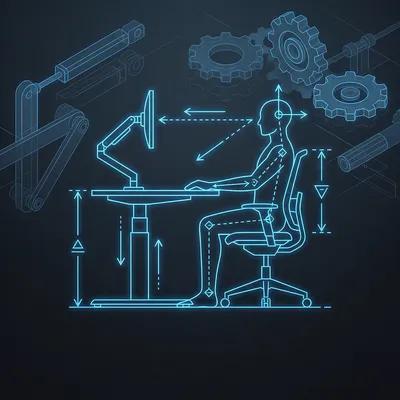
The floor is the enemy, Corn. Never build on the floor if you can avoid it. I know it is tempting because it is a big flat surface, but it is a recipe for disaster. You want a table that is at least waist-high. Ideally, a standing desk that you can adjust. If you are building a server, those cases can be heavy, thirty or forty pounds once they are loaded with drives. Lifting that up and down from the floor is how you throw out your back.
I have seen people use those anti-static mats. Is that just for the static protection, or does it help with the ergonomics too?
Both. A good anti-static mat, like a large grounded one that covers your whole table, gives you a safe place to lay out your components. But the good ones are also slightly cushioned. It protects the case from scratches, and it is much nicer on your hands and wrists than a hard wooden table. And for the feet? An anti-fatigue mat is worth its weight in gold if you are standing for eight hours like Daniel was.
Eight hours still feels like a long time for a build. What takes up most of that time? Is it the cable management?
It is always the cable management. And this is where a specific set of tools comes in. You need good flush-cut snips. Not regular wire cutters, but flush cutters. They allow you to cut zip ties so the end is perfectly flat. If you use regular scissors or pliers, they leave a sharp little plastic fang that will slice your fingers open the next time you reach into the case to add a drive. It is called the blood sacrifice of PC building, but with flush cutters, you can avoid it.
I have definitely been a victim of the zip-tie fang. What about Velcro ties? I see those more often now.
Velcro is the superior choice for home servers. Servers are living things. You are going to be adding drives, changing fans, or upgrading the network card. If you zip-tie everything down, you have to cut them all every time you make a change. Velcro wraps make it a five-second job to add a new cable to the bundle. Plus, they don't put as much stress on the cable jackets.
Let's talk about the things most people forget. Like, what do you keep on hand for when things go wrong? Because things always go wrong.
A power supply tester. They are cheap, maybe twenty or thirty dollars. Before you plug everything into your expensive motherboard, plug the power supply into the tester. It will tell you if the voltages are correct. Daniel mentioned his previous power supply fried his motherboard years ago. A tester could have caught that before it happened to the new one. It is a small price to pay for peace of mind.
That is a huge one. What about the thermal paste? Daniel mentioned he had to get new paste because the stuff that came with his cooler looked a bit dry. Is there a specific tool for that?
In twenty twenty-six, we are actually moving away from traditional paste in many high-end builds and using phase-change materials like Honeywell PTM seven thousand nine hundred and fifty. It comes in a thin sheet that you cut to size. It is much easier to apply and it doesn't pump out over time. But if you are using paste, the real tool you need is high-purity isopropyl alcohol, ninety-nine percent if you can find it, and lint-free wipes. Coffee filters actually work great as lint-free wipes. You need to get that surface surgically clean before you apply the new material. Any leftover oils from your fingers will create a microscopic gap that ruins the thermal transfer.
It is amazing how much of this is about cleanliness and precision. It really is like surgery.
It is. And since Daniel is building a server, he is probably dealing with more hard drives than the average person. For that, I always recommend a magnetic parts tray. They are these little metal bowls with a magnet in the base. You drop your screws in there, and they stay put even if you knock the tray over. When you are dealing with three different types of tiny screws for drive rails, motherboards, and the case, keeping them organized is the difference between finishing in an hour and hunting through the carpet for half the night.
I want to go back to the front panel headers. Those tiny little pins for the power button and the hard drive light. Is there any tool that makes that easier? I have seen those little G-connectors that some motherboard manufacturers include.
Those are a godsend. You plug all the tiny pins into a single plastic block first, where you can see everything clearly, and then you plug that block into the motherboard. If your motherboard doesn't come with one, a pair of long, thin needle-nose pliers or even specialized electronics tweezers can help you guide those pins into place without your fingers getting in the way of your light.
So, we have lighting, precision drivers, magnetic trays, anti-static mats, and magnification. That sounds like a solid starter kit. But what about the second-order stuff? If someone is doing this regularly, is there anything more advanced?
If you are really getting into the weeds, a digital multimeter is essential. Not just for testing the power supply, but for checking continuity if a button on your case isn't working or if you suspect a cable is bad. And if you are working with older servers, a can of compressed air is okay, but an electric duster is mandatory. You do not want to be breathing in ten years of server room dust.
Oh, the electric dusters are so much better than the cans. They pay for themselves after about five uses, and they don't have that bitterant or moisture that the cans sometimes spray out.
They really do. But here is the thing, Corn. The most important tool isn't something you buy. It is the documentation. Daniel was using his camera and AI, but having the motherboard manual open on a tablet or a second screen is vital. You need to know the exact pinout of those headers. You need to know which PCIe slots share bandwidth. If you plug a fast NVMe drive into a slot that shares bandwidth with your network card, your server is going to be hobbled from day one.
That brings up an interesting point. Building a server is different from building a gaming PC. In a server, you are often optimizing for stability and IO, the input-output, rather than just raw frame rates.
Exactly. And that affects your tool choice too. You might need a label maker. If you have ten identical SATA or SAS cables running to a drive backplane, you want to label both ends. Drive zero, Drive one, and so on. If a drive fails in six months, you do not want to be guessing which cable to pull while the system is running.
Labeling is one of those things that feels like overkill when you are doing it, but you feel like a genius later. It is the ultimate gift to your future self.
Every single time. And while we are talking about labels, let's talk about cable management outside the case. If Daniel is building a home server, it is probably going into a rack or a closet. Having a good set of slim patch cables and a crimping tool if you are making your own lengths is the next level of the hobby.
I think we should take a step back and look at the why here. Daniel spent eight hours doing this. Most people would just buy a pre-built NAS, a Network Attached Storage device, or just pay for more cloud storage. Why go through the pain of building a custom server in twenty twenty-six?
It is about control and the right to repair. When you build it yourself, you know every single component. You know how to fix it when it breaks. You aren't beholden to a company's subscription model or their hardware lifecycle. Plus, for a home labber, the building is part of the learning. You learn about thermals, about bus speeds, and about how hardware and software actually interface. In the age of AI, many people are building these servers to run local Large Language Models so their data stays private. That requires specific hardware, like high-VRAM GPUs, that you can't always find in a standard off-the-shelf NAS.
And there is a certain satisfaction in it. Even if your back hurts and your knees are sore, when that machine finally posts and you see the BIOS screen for the first time... it is a rush.
Oh, the POST beep is the sweetest sound in the world. For those who don't know, POST stands for Power-On Self-Test. It is that little bip that tells you the CPU, the RAM, and the motherboard are all talking to each other. If you don't get that beep, or if you see a red error LED on the board, that is when the real troubleshooting begins.
And that is when you need your tools the most. I think a lot of people get discouraged because they try to do it with just a single kitchen screwdriver and a flashlight they have to hold in their teeth.
Right. It is like trying to fix a mechanical watch with a hammer. You might get lucky, but you are probably just going to make a mess. If you invest even sixty or seventy dollars in a decent set of electronics tools, the whole experience changes. It becomes a craft rather than a chore. You start to appreciate the engineering of the components rather than just fighting with them.
I wonder if there is a psychological element to it too. When you have the right gear, you feel more confident. You are less likely to rush, and rushing is where most mistakes happen. Rushing is how you forget to peel the plastic off the bottom of the CPU cooler.
That is a classic mistake! I have seen people run their servers for a year with that plastic film still on there, wondering why their idle temperatures are eighty degrees Celsius. But you are right. When you have a headlamp and you can see everything clearly, you don't feel that frantic need to just get it over with. You can take your time. You can route that cable perfectly. You can double-check the seating of the RAM.
So, for Daniel, and for anyone else who might be looking at a pile of components and feeling a bit overwhelmed, what is the one holy grail tool they should get first?
If I had to pick just one? It is the precision screwdriver set with magnetic tips. Everything else is a luxury, but a good driver that actually fits the screws and holds onto them is the foundation of everything. It prevents stripped heads, it prevents lost screws, and it gives you the tactile feedback you need to not over-tighten things.
And if I can add a second one, it would be the lighting. Whether it is a headlamp or a high-intensity magnetic work light, being able to see what you are doing is fifty percent of the battle. If you can't see the pins, you can't connect the pins.
Agreed. And maybe a nice comfortable chair? If you are going to be there for eight hours, don't do it on a wooden stool.
Or the floor. Definitely not the floor. I think it is fascinating how this hobby has evolved. Back when Daniel was doing this twenty years ago, we were dealing with those huge IDE ribbons. Now we have NVMe drives that are the size of a stick of gum and can transfer seven gigabytes per second.
It is incredible. But the components are also much more dense. We have moved from big and clunky to tiny and fragile. Which brings us back to the need for precision tools. The weird prompt here is really about the intersection of human physical limits and the microscopic world of modern electronics. We are these big, clumsy mammals trying to manipulate things that are measured in nanometers.
It is a miracle it works at all, honestly. When you think about the tolerances involved, especially in something like a CPU socket with nearly two thousand pins in a space the size of a postage stamp. It really is a feat of engineering that we can just buy these parts and snap them together in our living rooms.
It really is. And that is why having the right gear is so important. It bridges that gap. It makes our big hands a little more precise and our eyes a little more sharp. It gives us the ability to interact with that microscopic world without destroying it.
Well said. I think Daniel is going to be much better prepared for his next build. Because let's be honest, once you build one server and realize how much power you have, you are already planning the next one. It is an addiction.
It really is. He is already talking about adding a twenty-five-gigabit network card and a dedicated storage shelf.
See? It never ends. But that is the fun of it. You are never really done with a home server. It is a constant process of optimization and learning.
Exactly. Well, I think we have given a pretty good rundown of the essential kit. Let's recap for everyone listening.
Alright, here is the Poppleberry-approved toolkit for the aspiring system builder in twenty twenty-six. First, a high-quality precision screwdriver set. Look for one with a spinning cap and a wide variety of bits, including security bits. Magnetism is your best friend here. Second, lighting. A high-CRI headlamp or a magnetic LED work light with a flexible neck. Third, a magnetic parts tray to keep those tiny screws from vanishing into the carpet. Fourth, an anti-static mat, ideally a large one that covers your whole workspace and is grounded. Fifth, some form of magnification, whether it is a jeweler's loupe or a magnifying lamp.
And don't forget the ergonomics. A waist-high table, an anti-fatigue mat if you are standing, and maybe some knee pads if you absolutely must be on the ground for a moment. Also, keep the documentation handy on a tablet and have a way to test your power supply before you risk your other components.
And for the love of all that is holy, use Velcro ties instead of zip ties for your internal cables. Your future self will thank you when you go to upgrade your storage in six months.
That is a solid list. I think if Daniel had even half of that, his eight-hour marathon might have been a four-hour sprint. He would have had more time to actually configure the software instead of hunting for a dropped screw under his desk.
Probably. But hey, he finished it. The server is up and running, the lights are blinking, and that is what matters. He has earned his stripes as a home labber.
He definitely has. And it is a great reminder for all of us that the right tools don't just make the job faster, they make it safer and more enjoyable. It turns a stressful situation into a learning experience. And that is what this show is all about, really. Exploring the how and the why behind the things we do.
Absolutely. Well, I think that covers it for this one. It was great to dive into the nitty-gritty of hardware. It is a nice change of pace from our more abstract topics.
I love the technical stuff, Corn. You know that. I could talk about PCIe lane bifurcation and ECC memory error correction all day.
I know you could, Herman. But we should probably spare the listeners that for now. We will save the deep dive into memory timings for episode seven hundred.
Deal.
Before we go, I want to say a big thank you to our housemate Daniel for sending in this prompt. It was a great excuse for us to geek out on tools and reflect on how far the hobby has come. And hey, if you are enjoying My Weird Prompts, we would really appreciate it if you could leave us a review on your podcast app or on Spotify. It genuinely helps other people find the show and keeps us motivated to keep digging into these topics.
It really does. We read every single review. And if you want to see our full archive or get in touch with your own weird prompts, head over to myweirdprompts dot com. We have all five hundred and forty-nine episodes there, and a contact form if you have a question or a topic you want us to tackle.
Thanks for listening, everyone. We will be back next time with another deep dive into the strange and wonderful things that catch our attention. This has been My Weird Prompts.
Until next time, keep building, keep upgrading, and keep questioning. Goodbye!
Bye!