Hey everyone, welcome back to My Weird Prompts. I am Corn, and I am joined as always by my brother, the man who probably has a schematic of a directed energy weapon taped to his bathroom mirror.

Herman Poppleberry at your service. And for the record, it is not taped to the mirror, it is a high-resolution digital display. But you are not far off, Corn. We have a really fascinating topic today that is quite literally hitting close to home for us here in Jerusalem.
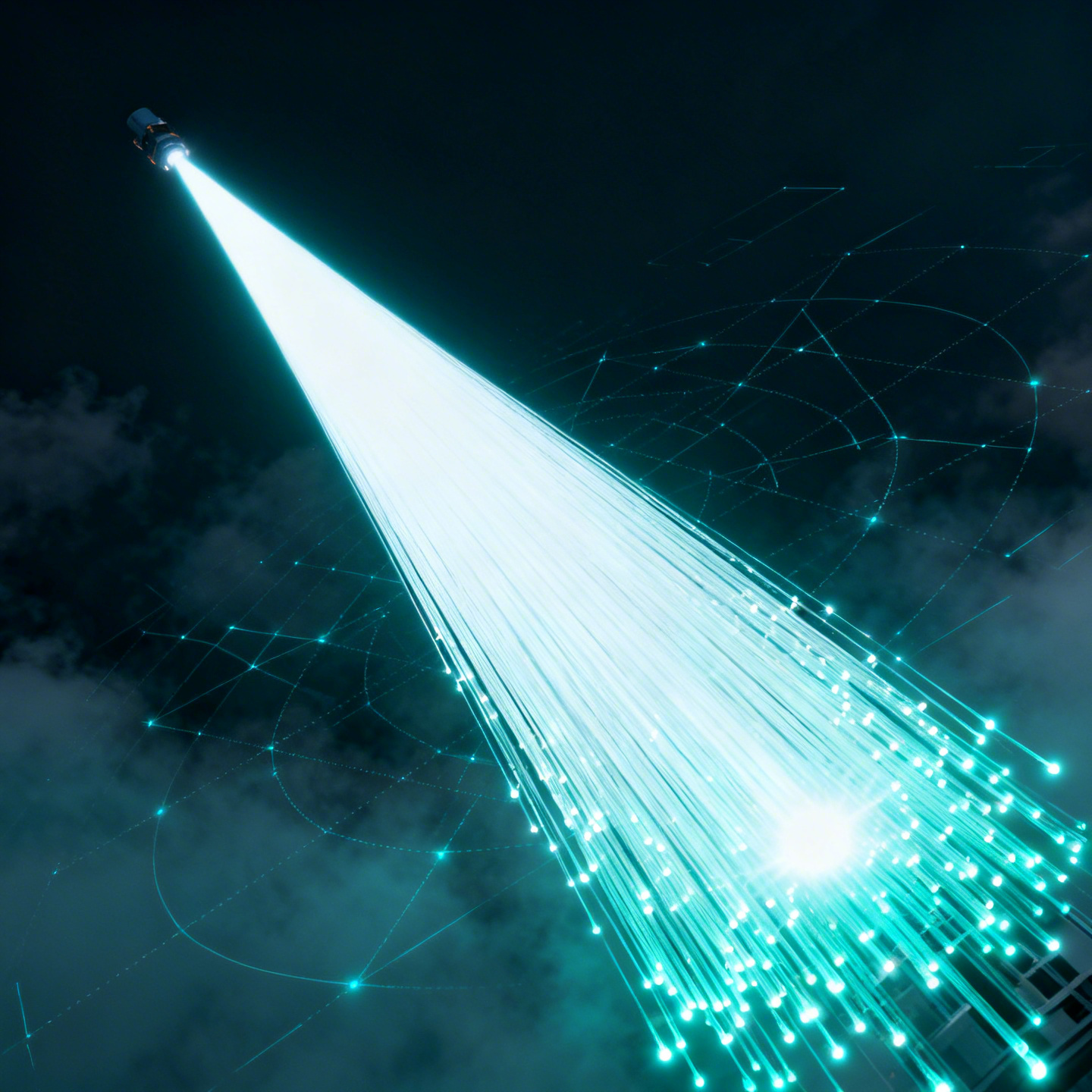
Yeah, it really is. Our housemate Daniel sent us a prompt about the Iron Beam technology. For those who haven't been following the local defense news, there was a major announcement toward the end of twenty twenty-five about the system being officially handed over to the Israeli Ministry of Defense. It is a one thousand kilowatt high-energy laser weapon, and Daniel wants us to dive into how it works, the history behind it, and that incredible claim that it costs only a few dollars per interception.
It is one of those technologies that feels like it belongs in a science fiction movie from the nineteen eighties, but it is very much our current reality. The Iron Beam is designed to complement the Iron Dome, not replace it, but the physics and the economics behind it are just mind-blowing. I have been digging into the recent white papers on this, and the jump to a one megawatt class laser is a massive technical hurdle that they seem to have cleared.
Before we get into the nuts and bolts of the megawatt laser, I think we should start with the history Daniel asked about. People think of laser weapons as this brand new twenty-first-century invention, but the concept has been around for decades. Herman, who actually started this? Was it the United States or the Soviets during the Cold War?
It was really a parallel race, Corn. Both the United States and the Soviet Union started pouring money into directed energy research almost as soon as the first ruby laser was demonstrated by Theodore Maiman in nineteen sixty. But if we are looking for the first country to actually achieve a successful shoot-down of an aerial target, the United States takes the title. In nineteen seventy-three, the United States Air Force used a large chemical laser to shoot down a drone. It was part of the Airborne Laser Laboratory program.
Nineteen seventy-three. That is over fifty years ago. Why has it taken until twenty twenty-six to see these systems actually being deployed in a meaningful way?
That is the million-dollar question, or in the case of defense budgets, the multi-billion-dollar question. The early systems were what we call chemical lasers. They used a chemical reaction to create the population inversion needed for the laser beam. Think of it like a giant jet engine that happens to spit out a beam of light instead of thrust. They were massive, they were dangerous because of the toxic chemicals involved, and they were incredibly difficult to maintain. The Mid-Infrared Advanced Chemical Laser, or MIRACL, which the United States developed in the eighties, was powerful enough to destroy a satellite in orbit during a test, but you could not exactly put it on the back of a truck and drive it around the desert.
Right, and that is where the shift to solid-state lasers comes in, I assume?
Exactly. The breakthrough that led to Iron Beam is the transition to fiber lasers and solid-state technology. Instead of using huge vats of toxic chemicals like ethylene and nitrogen trifluoride, you are using optical fibers doped with rare-earth elements like ytterbium. It is much more efficient, it is smaller, and it runs on pure electricity. But even then, getting the power density high enough to melt through a rocket or a mortar shell in mid-air within a couple of seconds is an enormous challenge.
So let us talk about that power. Daniel mentioned one thousand kilowatts, which is one megawatt. To give people a sense of scale, a typical industrial laser cutter for steel might be six to ten kilowatts. We are talking about something a hundred times more powerful. How do you even generate and focus that much energy without the weapon itself just melting?
It is a process called spectral beam combining. This is really the secret sauce of the Iron Beam. You do not just have one giant laser. Instead, you have dozens or even hundreds of smaller fiber lasers, each producing a slightly different wavelength of light. You then combine all of those individual beams into a single, coherent, massive beam using a specialized optical system. It is like taking a hundred different colored flashlights and focusing them so perfectly that they hit a single point with the combined energy of all of them.
And the focusing part has to be incredibly precise, right? Because we are not talking about a stationary target. We are talking about a Grad rocket or a mortar shell traveling at hundreds of meters per second.
Precisely. And that brings in another layer of technology called adaptive optics. This is something astronomers use to see through the turbulence of the atmosphere. The Iron Beam has to sense the atmospheric distortions between the laser and the target and then adjust the shape of its mirrors in real-time, thousands of times per second, to compensate. If you do not do that, the beam just scatters and loses its punch before it reaches the target. It is like trying to hold a steady pointer on a fly from across a football field while someone is blowing a hair dryer in your face.
That is a great analogy. But here is the part that really caught my eye in Daniel's prompt. He asked about the cost. The Iron Dome, which we have lived with for years, uses the Tamir interceptor missiles. Those cost, what, fifty thousand to a hundred thousand dollars per shot?
At least. Some estimates for the newer versions are even higher. And when you are intercepting a drone that costs five hundred dollars to build, the math of that war of attrition is devastating. You are essentially being bled dry financially.
Right. But the claim for Iron Beam is that it costs about two dollars per shot. How is that possible? Even with high electricity requirements, how do you get it down to the price of a cup of coffee?
Well, let us do the math, because I know you love the numbers, Corn. If you have a one-megawatt laser and you need to keep it on the target for, say, two seconds to achieve a kill, you have used two megajoules of energy. One kilowatt-hour of electricity is three point six megajoules. So, a two-second shot uses a little more than half a kilowatt-hour. In most places, including here, a kilowatt-hour costs maybe fifteen to twenty cents.
Wait, so the actual energy cost is less than ten cents?
Exactly. Even if you factor in the efficiency of the system—lasers are not one hundred percent efficient, more like thirty to forty percent for these types of systems—you are still looking at maybe fifty cents of electricity for the shot itself. The two dollars figure that the Ministry of Defense and Rafael often cite likely includes the cost of cooling systems, maintenance, and the wear and tear on the optics. But compared to a fifty-thousand-dollar missile, it is practically free. You have an infinite magazine as long as you have a generator or a connection to the grid.
That is the part that changes the game entirely. It flips the economic asymmetry of modern warfare. If an adversary launches a thousand cheap drones, and it costs you two thousand dollars to shoot them all down instead of fifty million dollars, the strategy of trying to overwhelm your defenses with volume just does not work anymore.
It is a total paradigm shift. But, and this is a big but that Daniel touched on in his prompt, it is not a magic wand. There are some very real physical limitations, specifically when it comes to weather.
Yeah, let us talk about the weather. We live in a place that is mostly sunny, but we do get heavy rain and occasionally fog or dust storms. What happens to a megawatt laser beam when it hits a cloud?
It loses. Physics is a harsh mistress, Corn. A laser is just light. And what happens to light when it hits fog or heavy rain? It scatters. The water droplets in the air act like tiny prisms and mirrors. They absorb some of the energy and reflect the rest in random directions. If the beam scatters too much, it will not have enough concentrated energy to burn through the target's casing.
So in a heavy downpour, the Iron Beam is basically a very expensive flashlight?
Essentially, yes. There is also a phenomenon called thermal blooming. When the laser beam is so powerful, it actually heats up the air it is passing through. That hot air then acts like a lens that defocuses the beam. So the laser ends up fighting against the very atmosphere it is trying to traverse. This is why the Iron Beam is being deployed as a complementary system. When the weather is clear, you use the laser because it is cheap and fast. When it is raining or foggy, you fall back on the Iron Dome's kinetic interceptors, which do not care about clouds.
That makes sense. It is a layered defense. But I am curious about the one thousand kilowatt part again. Most of the systems we have seen in testing over the last few years, like the United States Navy's HELIOS system or the United Kingdom's DragonFire, are in the fifty to one hundred and fifty kilowatt range. Jumping to a full megawatt is a massive leap. Why is that specific power level so important?
It is about time-on-target. A fifty-kilowatt laser might take ten or fifteen seconds of continuous tracking to heat up a rocket enough to make it explode. In a combat situation where you have multiple incoming threats, ten seconds is an eternity. You need to be able to zip from one target to the next. A one-megawatt laser can achieve the same structural failure in a fraction of a second. It allows the system to handle swarms rather than just single targets.
And that is really the new frontier of drone warfare, isn't it? The swarm. We have seen it in conflicts all over the world lately. If you cannot engage multiple targets rapidly, you are going to get overwhelmed.
Exactly. And the Iron Beam's ability to switch targets almost instantly—since you are moving a mirror, not a physical missile launcher—is what makes it so formidable against swarms. You can engage target A, destroy it in half a second, and be on target B fifty milliseconds later.
I want to go back to the history for a second because Daniel asked about the context of the first country to develop this. We mentioned the United States in seventy-three, but what about the Soviet Union? I remember reading about their Terra-three program.
Oh, the Terra-three was a fascinating piece of Cold War history. It was a massive complex at the Sary Shagan testing range in Kazakhstan. The Soviets were obsessed with the idea of using lasers for missile defense, much like Reagan's Strategic Defense Initiative, or Star Wars, in the eighties. There is a famous story that they actually used a laser from Terra-three to blind or at least track the Space Shuttle Challenger during a mission in nineteen eighty-four. The United States was furious, of course. But the Terra-three never really reached the level of a deployable weapon. It was more of a massive laboratory experiment.
It seems like the common thread throughout history is that everyone knew the potential, but the size, weight, and power constraints—what engineers call SWaP—always killed the project.
That is exactly right. Until the development of these high-power fiber lasers, you just could not make the system small enough to be practical. The fact that Rafael has managed to get a megawatt-class laser into a mobile unit that can be handed over to the military is a staggering engineering achievement. I suspect we are going to see a lot of other countries following suit very quickly now that the proof of concept is literally in the field.
So, let us talk about the practical takeaways. If you are a defense planner or even just a citizen interested in how this changes things, what are the big aha moments here? To me, it seems like the end of the era where cheap and many always beats expensive and few.
That is definitely the biggest takeaway. The cost-per-kill metric is being rewritten. But there is also a second-order effect here, which is the logistics. Think about what it takes to supply an Iron Dome battery. You have to manufacture these incredibly complex missiles, transport them in armored trucks, store them in climate-controlled bunkers, and manually reload the launchers. With a laser, your logistics is just a fuel truck for the generator or a robust power line. Your ammunition travels at the speed of light.
And you never run out of interceptors in the middle of a barrage.
Exactly. No more reloading while targets are still in the air. As long as your cooling system is working and your power is on, you keep firing.
You mentioned cooling. That seems like a non-trivial problem for a megawatt laser. If it is only thirty percent efficient, that means you have two megawatts of heat being generated inside the machine for every one megawatt of light going out the front. That is a lot of heat to get rid of.
It is a massive amount of heat. It is like having a dozen industrial furnaces running inside a small trailer. The cooling systems for the Iron Beam are likely as sophisticated as the laser itself. They probably use high-flow liquid cooling loops and massive heat exchangers. If the system overheats, the laser's frequency can shift, or the components can actually warp. So, the two dollars per shot also includes the maintenance of those very high-performance cooling systems.
This really brings up the point about misconceptions. I think most people hear laser and they think of a Star Wars blaster bolt that travels through the air and makes something explode instantly. But it is more like a very, very powerful blowtorch that you have to hold steady on a specific spot, right?
That is a perfect description. It is directed energy. You are transferring thermal energy to the target until the material fails. For a rocket, you are usually aiming for the fuel tank or the warhead. You want to cause a deflagration—basically making the rocket's own fuel explode. Or you aim for the control surfaces on a drone to make it crash. It is not an instant vaporization like in the movies. It is a very fast, very intense melting process.
And I imagine that different materials react differently. A plastic drone might melt in a tenth of a second, while a thick-walled steel mortar shell might take a bit longer.
Correct. And that is where the system's software comes in. The AI has to identify the target, determine what it is made of, and decide how much energy and how much time is needed to neutralize it. It is an incredibly complex dance of physics, optics, and computer science.
So, looking ahead, where does this go? If the Iron Beam is now being handed over to the Ministry of Defense, what does the world look like in five or ten years? Do we see these on every naval ship? On every airport roof?
I think the maritime application is the most obvious next step. Ships have massive engines that can generate plenty of electricity, and they have the ocean right there for cooling. Plus, the threats at sea—anti-ship missiles and drones—are exactly what lasers are good at stopping. We are already seeing the United States Navy installing sixty-kilowatt systems like HELIOS on destroyers. Jumping to a megawatt would make those ships almost invulnerable to current missile tech.
What about the dark side of this? Every time there is a new defensive technology, someone finds a way to counter it. How do you shield a rocket from a megawatt laser? Do you just paint it white? Or make it out of mirrors?
That is the classic countermeasure question. People always say, just make the rocket shiny! But in reality, at those power levels, shiny does not help as much as you would think. Even the best mirrors absorb a tiny fraction of light. If you hit a mirror with a megawatt of energy, even zero point one percent absorption is enough to heat the surface, which then ruins the mirror's reflectivity, which then leads to more absorption and then the whole thing melts anyway.
So the mirror defense is a bit of a myth.
Mostly, yes. A more effective countermeasure is ablative coating—basically a material that is designed to burn off and carry the heat away, like the heat shields on a space capsule. Or you can make the rocket spin very fast so the laser cannot focus on one single spot. But all of those things add weight and cost to the rocket, which again, plays into the defender's favor. You are making the enemy's cheap weapons more expensive and less effective.
It is a fascinating escalation. Herman, you mentioned earlier that we should check our archives. We have done five hundred and sixty-seven episodes of My Weird Prompts, and while we haven't done a deep dive on the Iron Beam specifically, we did talk about the ethics of autonomous weapons back in the four hundreds, didn't we?
We did. I think it was episode four hundred and twenty-two. We talked about the human in the loop requirement for automated defense systems. With a laser that reacts in milliseconds, the question of how much control a human actually has is really interesting. If you have a swarm of fifty drones coming in, a human cannot possibly click fire fifty times in two seconds. The system has to be at least partially autonomous.
That is a great point. The speed of the weapon almost mandates the autonomy of the system. We might have talked about something similar before—listeners can check out myweirdprompts dot com to search our archive and see if they can find that episode. It is worth a listen if you want to understand the moral side of this tech.
Definitely. And speaking of our listeners, we have had some great feedback lately about the technical depth we have been going into. If you are enjoying this kind of deep dive into the physics and the why behind the headlines, we would really appreciate a quick review on your podcast app or on Spotify. It genuinely helps the show reach new people who are as nerdy as we are.
Yeah, it really does. We love doing this, and knowing that there is a community out there that appreciates the difference between a chemical and a solid-state laser makes it all the more rewarding.
It really does. So, to wrap up Daniel's prompt—we have got the history from the seventies, the move from chemical to fiber lasers, the spectral beam combining that gives us that megawatt punch, and the incredible economics of a two-dollar intercept. But we also have to remember that we are still at the mercy of the weather.
It is a reminder that even our most advanced technology is still subject to the laws of nature. You can build a one-megawatt laser, but a thick enough cloud will still stop it cold.
It is a humbling thought, isn't it? The speed of light versus a bunch of water vapor.
Well, I think we have covered the what, the how, and the why for today. Daniel, thanks for the prompt—it is always good to talk about what is happening right here in our backyard.
Absolutely. It is an exciting time to be an observer of technology, especially when it is being deployed right under our noses.
Alright, that is it for this episode of My Weird Prompts. You can find us on Spotify and at our website, myweirdprompts dot com.
Thanks for listening, everyone. We will be back soon with another prompt from the house.
Stay curious. Bye!
Goodbye!