Hey everyone, welcome back to My Weird Prompts. I am Corn, and I am joined as always by my brother, the man who once tried to explain the Krebs cycle using only interpretive dance.

Herman Poppleberry, at your service. And for the record, Corn, that dance was a masterpiece of cellular respiration. But we have a much more practical heavy hitter today. Our housemate Daniel sent us a prompt that I think is going to resonate with a huge percentage of our listeners. He has been taking Omeprazole for acid reflux, which is one of the most common medications on the planet, but he is getting worried about the long-term baggage that comes with it.
Yeah, it is that classic medical catch-twenty-two. You take something to solve a very real, very painful problem like Gastroesophageal Reflux Disease, or G-E-R-D, but then you start seeing these headlines about kidney issues, bone density, and even dementia. And then, when you try to stop, your stomach basically stages a violent protest. Daniel mentioned that rebound acid, and I know exactly what he means. It is like the fire comes back twice as hot.
It really does. And that is actually a physiological reality, not just a feeling. We are going to dig into the actual mechanics of why that happens. But before we get into the tapering strategies, I want to really look at the current state of the science regarding those long-term risks. Because honestly Corn, the narrative around Proton Pump Inhibitors, or P-P-Is, has shifted quite a bit in the last few years. As of today, February third, two thousand twenty-six, we have much clearer data than we did even five years ago.
It really has. I remember a decade ago, P-P-Is were treated like candy. You could get them over the counter, people stayed on them for years without a second thought. Then the pendulum swung the other way, and every health blog was saying they were going to give you Alzheimer's. So, where does the data actually sit in early two thousand twenty-six?
Well, let's start with the big one Daniel mentioned, which is kidney disease. This is probably the most well-documented concern. There is a clear association between long-term P-P-I use and an increased risk of chronic kidney disease and acute interstitial nephritis. The mechanism isn't perfectly understood, but it is thought that the drugs might cause an immune-mediated inflammatory response in the kidneys. The risk isn't massive for any single individual, but when you look at a population of millions of people taking these drugs, the signal is definitely there.
And is that a dose-dependent thing? Like, if you are on twenty milligrams versus forty milligrams, does that change the risk profile significantly?
It seems to be more about duration than just the daily dose, though higher doses certainly don't help. The studies usually show the risk climbing after at least a year of continuous use. Now, compare that to the dementia concern Daniel brought up. This is a great example of how science evolves. Back in two thousand sixteen, there was a very famous German study that showed a significant link between P-P-Is and dementia. It sent shockwaves through the medical community.
I remember that. It was everywhere. People were panicking.
Right. But fast forward to more recent, larger, and better-controlled studies. In late two thousand twenty-three, a major study was published in the journal Neurology that followed over five thousand seven hundred people for over five years. They found that people who used P-P-Is for more than four point four years had a thirty-three percent higher risk of developing dementia. However, for people who used them for shorter periods, there was no significant association.
Thirty-three percent sounds like a lot, Herman. That is a third more likely.
It is, but you have to look at the absolute risk. If your baseline risk is low, a thirty-three percent increase is still a relatively small number. Also, other studies, like the A-S-P-R-E-E-X-T trial from around the same time, found no link at all after controlling for things like blood pressure and education level. The current consensus in twenty-six is much more nuanced. It is no longer a definitive "this causes dementia" situation. It is more of a "we should be cautious and only use these when necessary" situation because long-term acid suppression might affect how the brain processes certain proteins or how it absorbs Vitamin B-twelve, which we know is crucial for cognitive health.
That is an important distinction. It is the difference between a direct causal link and a correlation that might be confounded by the fact that people who need P-P-Is might also have other health issues that contribute to cognitive decline. But what about the heart disease aspect? Daniel mentioned that too.
That one is even more controversial. There was a theory that P-P-Is might reduce the production of nitric oxide in the blood vessels, which would impair endothelial function. Nitric oxide is what helps your vessels relax. However, the most recent meta-analyses haven't found a strong, consistent link between P-P-Is and major cardiovascular events in the general population. The exception is often people taking specific blood thinners like Clopidogrel, because some P-P-Is can interfere with the enzyme that activates that medication. If you are on a blood thinner, you definitely need to talk to your doctor about which P-P-I is safe.
Okay, so the kidney risk is real and needs monitoring. The dementia and heart risks are perhaps a bit more overblown in the headlines than they are in the clinical data, but still worth keeping an eye on. But let's talk about the nutrient deficiencies. That feels like a very direct, mechanical result of how these drugs work, right?
Exactly. This is where the physics of the stomach comes in. P-P-Is work by irreversibly inhibiting the H-plus K-plus A-T-P-ase pumps in your parietal cells. Those are the little pumps that spray hydrochloric acid into your stomach. Now, we think of stomach acid as a nuisance when it is burning our esophagus, but it is there for a reason. You need an acidic environment to ionize minerals so they can be absorbed.
Right, so if you turn off the acid, you can't break down the minerals effectively.
Precisely. Magnesium is the big one Daniel mentioned. Hypomagnesemia, or low magnesium, is a recognized side effect. It can lead to muscle cramps, heart palpitations, and fatigue. Then there is Vitamin B-twelve. You need stomach acid to release B-twelve from the proteins in your food. Long-term P-P-I users often end up with a deficiency there, which can actually cause neurological symptoms that people might mistake for cognitive decline. And finally, calcium. Low acid can lead to decreased calcium absorption, which is why long-term use is linked to an increased risk of bone fractures, especially in the hip.
And there is a newer concern I have been reading about, Herman. Something about gut bacteria? S-I-B-O?
Yes, Small Intestinal Bacterial Overgrowth. This has become a major focus in the last year or two. A systematic review from mid-two thousand twenty-five found that P-P-I use is associated with a significantly higher risk of S-I-B-O. In fact, some data suggests that for every additional month you are on a P-P-I, your risk of bacterial overgrowth increases by about four percent. Without that acid barrier, bacteria from your mouth or your lower gut can migrate and set up shop in the small intestine, leading to bloating, gas, and even more reflux. It is a vicious cycle.
So, looking at all of this, it makes total sense why Daniel wants to get off them. But he hit the wall that everyone hits: the rebound. Can you explain the science of why the stomach goes into overdrive when you stop?
It is a fascinating feedback loop. Your body has a hormone called gastrin. Gastrin's job is to tell your stomach to produce more acid. When you take a P-P-I, your stomach acid levels drop significantly. Your body senses this and thinks, hey, we are not acidic enough! So it starts pumping out massive amounts of gastrin to try and overcome the drug.
So you have this huge backlog of "produce acid" signals just waiting for the drug to wear off.
Exactly. And not only that, but your body actually grows more parietal cells, or the existing ones get more "hungry" for activity, to compensate for the suppression. This is called parietal cell hypertrophy. When you suddenly stop the medication, those signals finally get through to a stomach that is now primed and ready to produce a massive amount of acid. This is called Rebound Acid Hypersecretion. It can last for several weeks, and it is often much worse than the original reflux that led the person to start the medication in the first place.
This is why so many people get stuck. They try to quit, they feel like their chest is on fire for three days, and they assume their reflux is just "that bad" and they need the drug forever. When in reality, they are just experiencing a temporary physiological withdrawal.
That is exactly right. It is a withdrawal syndrome. And if you don't have a plan to manage that window, you are almost guaranteed to fail. A two thousand twenty-five study showed that up to seventy percent of long-term P-P-I users might not even have a valid medical reason to still be on the drug, but they stay on it because the rebound is so scary.
Okay, so let's get into the "how-to." Daniel wants a safe and effective taper plan. Obviously, we have to say that he should be doing this under a doctor's supervision, especially since he mentioned his gallbladder surgery complications. But what does a science-backed taper actually look like?
The goal is to slowly down-regulate that gastrin production and let those acid pumps return to a normal baseline rather than a hyper-active baseline. You can't just go from forty milligrams to zero. The first step, usually for the first two weeks, is a dose reduction. If you are on forty milligrams, you go down to twenty. If you are on twenty, you might need to find a ten-milligram version or use a different P-P-I that allows for lower dosing.
And then once you are at that lower dose for a couple of weeks, do you start skipping days?
That is the next phase. Step two is the "every other day" method. You take your dose on Monday, skip Tuesday, take it Wednesday. You do this for another two to three weeks. On the off days, your acid will start to creep up, but you are still suppressing it enough to prevent a total blowout.
But what happens on those off days? If the rebound starts hitting on Tuesday afternoon, what can Daniel use to put out the fire without restarting the P-P-I cycle?
This is where "step-down therapy" comes in. You use different classes of drugs that don't have the same rebound effect. The most common tool here is an H-two blocker, like Famotidine, which most people know as Pepcid.
How is an H-two blocker different from a P-P-I? I think a lot of people think they are basically the same thing.
They are very different in their mechanism. Think of a P-P-I like turning off the main water valve to the house. It stops the flow entirely. An H-two blocker is more like just turning off one specific faucet. It blocks the histamine receptors that trigger acid production. It is less potent, but it doesn't cause that massive gastrin spike. So, on Daniel's "off" days during his taper, he can take Famotidine. It will manage the symptoms of the rebound acid without feeding the beast that causes the rebound.
That makes a lot of sense. Use the weaker drug as a bridge while the body resets its internal thermostat. Are there other bridge options? What about simple antacids?
Absolutely. Standard antacids like Tums or Gaviscon are great for immediate, short-term relief. Gaviscon is actually particularly interesting because it contains alginate. When it hits your stomach acid, it forms a physical foam raft that floats on top of your stomach contents. It literally acts as a physical barrier to stop acid from splashing up into the esophagus.
Wait, I've heard about this. Isn't there something called the "Acid Pocket"?
Yes! That is a great "weird prompt" fact. The acid pocket is a layer of unbuffered, highly acidic gastric juice that forms right at the top of your stomach after you eat. It doesn't mix with the food; it just sits there like a pool of lava waiting for the door to open. Alginates like Gaviscon are specifically designed to sit on top of that acid pocket and neutralize it before it can reflux. For someone like Daniel, who is tapering, having that physical barrier can be a lifesaver, especially at night.
So the schedule might look like: Step one, reduce the dose for two weeks. Step two, every other day dosing for two to three weeks, using H-two blockers and alginates on the off days. Step three, switch entirely to H-two blockers daily for another two weeks. And then finally, move to using H-two blockers only as needed.
Exactly. It is a long game. We are talking about a six to eight-week process, not a six-day process. If you have been on a P-P-I for years, your body needs time to recalibrate. It is like training for a marathon in reverse. You have to let the muscles of your digestive system remember how to function without the crutch.
But we also have to talk about the lifestyle side. If Daniel is removing the chemical shield, he has to be much more careful about the actual fire, right?
Definitely. This is the part people hate to hear, but it is the most critical part of a successful taper. You have to be "boring" with your diet for those two months. No spicy food, no heavy citrus, no chocolate, and unfortunately, no caffeine or alcohol. These substances all either increase acid production or relax the lower esophageal sphincter, which is the trap door that is supposed to keep the acid down.
I have always found the "trap door" analogy helpful. If that sphincter is weak, it doesn't matter how much acid you have; it is going to go where it shouldn't. Are there physical ways to help that sphincter?
Gravity is your best friend. Daniel should definitely look into a wedge pillow or elevating the head of his bed by about six inches. Not just using extra pillows, which can actually crunch your stomach and make it worse, but tilting the entire mattress. If you are sleeping at a slight incline, the acid physically has a harder time moving uphill.
And isn't there a specific side you should sleep on?
Yes! Science actually backs this up. You should sleep on your left side. Because of the way the stomach is shaped, when you lie on your left, the opening to the esophagus is actually higher than the pool of acid. If you lie on your right, the opening is submerged, making it much easier for acid to leak out. It is a simple anatomical hack, but it works.
That is exactly the kind of weird detail we love. Left side for the win. Now, you know, it is interesting that Daniel mentioned he started this in the context of asthma. I don't think a lot of people realize the connection between acid reflux and respiratory issues.
Oh, it is huge. It is called "silent reflux" sometimes, or L-P-R, which stands for Laryngopharyngeal Reflux. Basically, tiny micro-droplets of acid can be inhaled into the lungs, or they can irritate the nerves in the esophagus that trigger a cough reflex. This can mimic or worsen asthma symptoms. This is why Daniel's doctor probably put him on the Omeprazole in the first place. If he tapers off, he needs to be very aware of whether his asthma starts flaring up again. That would be a sign that the reflux isn't just a "feeling" but is actually affecting his airway.
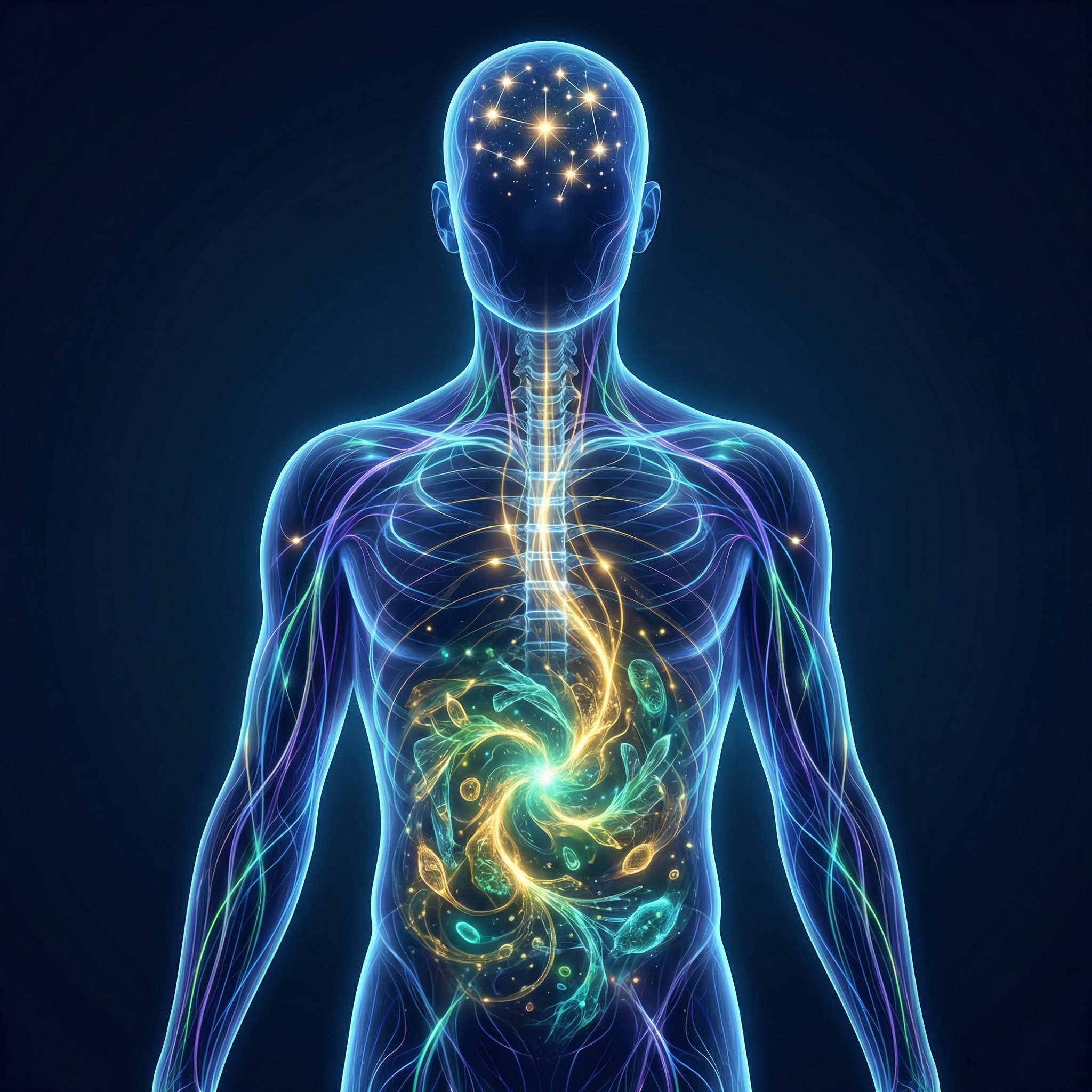
That is a really important point. It shows that these things aren't happening in isolation. The body is a system. If he fixes the kidney risk by stopping the P-P-I, but his asthma becomes unmanageable because of the reflux, he is just trading one problem for another. It really highlights why the lifestyle changes—the diet, the bed elevation—are not optional. They are the new "medication."
Exactly. And there is one more thing I want to mention for Daniel specifically, given his concerns about magnesium and bone health. While he is tapering, he should probably talk to his doctor about testing his levels. Don't just start slamming magnesium supplements, because some forms of magnesium can actually cause diarrhea, which is the last thing you want when your digestion is already in flux. But getting a baseline for B-twelve and magnesium can give him peace of mind.
That makes sense. Knowing the numbers takes the "weirdness" and the anxiety out of it. You aren't just guessing if your bones are okay; you are looking at the data. And Herman, I have to ask... since we are talking about stomach acid and parietal cells... did you actually have a favorite parietal cell diagram in med school? You seem unusually excited about the H-plus K-plus A-T-P-ase pumps.
Corn, you know me too well. There is this one diagram from a nineteen ninety-four physiology textbook that shows the pumps as little spinning revolving doors. It is a work of art. I will show it to you later. It perfectly illustrates how the cell swaps a potassium ion for a hydrogen ion. It is one of the most incredible feats of biological engineering. To have a fluid inside you that is acidic enough to dissolve metal, and yet your stomach lining usually stays perfectly intact? It is mind-blowing.
It really is. It makes you realize why the "trap door" failing is such a big deal. You are literally dealing with a contained chemical fire. Respect the fire. That is a good motto to end on.
I like it. Respect the fire. And for Daniel, the recap is simple: The long-term risks are real but manageable if you are informed. The rebound is a biological certainty if you quit cold turkey, so don't do that. Use the step-down method with H-two blockers and alginates, fix the sleep posture by sleeping on your left side, and be strict with the diet for two months. It is a project, but it is a doable one.
Well said. And keep us posted, Daniel. We live in the same house, so I guess I will just see you in the kitchen, hopefully eating some spinach and pumpkin seeds for that magnesium.
Good call on the spinach. It is low-acid and high-magnesium. Perfect for a taper diet.
Exactly. Alright, that is episode four hundred thirty-seven. If anyone listening wants to dive deeper into those studies we mentioned, check out the show notes at myweirdprompts.com. And if you have a weird prompt of your own, send it in. We love these deep dives into the mechanics of everyday life.
Absolutely. Take care of your kidneys and your stomachs, everyone. Goodbye!
See you in the next one!