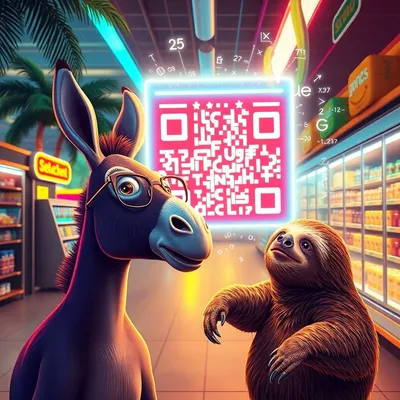
Welcome to My Weird Prompts. I am Corn, and I am joined as always by my brother, Herman. We are coming to you from our home in Jerusalem on this twenty-third day of December, two thousand twenty-five.

Hello everyone. I am Herman Poppleberry, and I am ready to get into the weeds today. We have a very specific, very technical challenge to solve.
Yeah, our housemate Daniel sent us a message earlier. He has been working on this massive home inventory project using an open-source tool called HomeBox. He is trying to organize all our stuff, which I appreciate, even if it feels a bit like living in a warehouse sometimes. But he is hitting a wall with the physical part of it. The labels he is putting on storage boxes outside are just... well, they are disintegrating.
It is the classic battle of man versus nature, Corn. Or in this case, adhesive-backed polymers versus the relentless ultraviolet radiation of the Middle Eastern sun. As a donkey, I can tell you that the sun out here is no joke, and it does a number on anything left outdoors.
And as a sloth, I generally prefer to stay in the shade, so I sympathize with those labels. But Daniel is really frustrated. He wants to use QR codes and NFC tags so he can just scan a box and know exactly what is inside without opening it. But if the QR code bleaches white in three months, the whole system breaks down.
Exactly. A QR code is only as good as its contrast. If the black squares turn into a faint gray or the white background yellows and cracks, the error correction built into the code can only do so much. We are looking at a failure of material science here.
So, Herman, you are the one who spends all night reading technical data sheets. Is there actually a way to make a label that does not just give up the ghost when it sees the sun?
Oh, absolutely. But you have to move away from the stuff you find at the local office supply store. Most people use what is called direct thermal printing. That is what your standard little handheld label maker uses. It is convenient because there is no ink, but the paper itself is chemically treated to react to heat. If you put a direct thermal label in the sun, the whole thing eventually turns black or fades away because the sun is basically a giant, slow-motion heat print head.
Okay, so no direct thermal. But Daniel said he was using weatherproof labels. I assume those are better than just regular paper?
Weatherproof is a very broad term, Corn. Usually, that just means they are made of a synthetic material like polyester instead of paper, so they do not turn into mush when they get wet. But being waterproof does not mean being UV-resistant. Those are two very different chemical battles.
I mean, I do not know if we need to go full industrial military grade here. It is just some boxes of tools and spare parts in the garden shed. Is there a middle ground?
I would argue that if you are going through the effort of cataloging every single item in HomeBox, you are already past the middle ground. You want this to last ten years, not ten weeks. To do that, you need to look at thermal transfer printing.
Wait, you just said thermal was bad. Now you are saying it is good?
No, pay attention. Direct thermal is bad for outdoors. Thermal transfer is different. In thermal transfer, the printer uses a heated ribbon to melt a wax or resin-based ink onto the label surface. It is like a permanent bond. If you use a high-quality resin ribbon on a polyester label, that ink is almost impossible to scratch off, and it is much more resistant to chemicals and UV light.
That sounds expensive. Do we really want Daniel spending hundreds of dollars on a specialized printer just to label a box of old power cords?
Well, hold on, it is not as expensive as you think. You can get used industrial-grade desktop printers for a reasonable price. But even if you do not want new hardware, the material choice is the biggest factor. You need labels specifically rated for outdoor use. Look for materials like silver or white polyester with a high-tack adhesive. Some brands even offer a clear laminate overlay you can stick on top of the label after it is printed. That acts like a sunscreen for the ink.
Mmm, I am not so sure about that. Adding an extra layer of plastic seems like it just gives the sun another thing to peel off. I have seen those clear stickers turn yellow and start curling at the edges within a month. Then the whole label looks even worse.
That is because people use cheap laminates. You need a UV-stable overlaminate. It is the same stuff they use on outdoor signage or car wraps. If you do it right, it seals the ink away from oxygen and moisture while blocking the specific wavelengths of light that break down the pigment.
Okay, but what about the QR codes specifically? Daniel mentioned the readability. If the label surface gets textured or bubbly from the heat, the scanner on a phone is going to have a hard time, right?
That is a fair point. If the substrate shrinks or expands at a different rate than the adhesive, you get that orange peel effect. That is why for really rugged applications, some people move away from stickers entirely and go to metal tags.
Metal tags? Like, for cows?
More like for industrial valves or telephone poles. You can get anodized aluminum tags that are laser-etched with a QR code. Since the code is actually etched into the metal or the oxide layer, there is no ink to fade. It will literally last decades.
Herman, that is definitely overkill. We are talking about a home inventory, not a deep-sea oil rig. I can already see Daniel's face if we tell him he needs a laser engraver. He just wants to know what box the extra light bulbs are in.
You asked for rugged, Corn! I am giving you rugged. But fine, let us stick to things that are actually practical for a house in Jerusalem. Let's take a quick break, and when we come back, I will give you a list of hardware and materials that won't require a second mortgage.
Good idea. Let's take a quick break for our sponsors.
Larry: Are you tired of your neighbors looking into your yard and seeing things? Just things? Are you sick of the sun shining on your property without your express written permission? Introducing the Solar-Shield Five Thousand. It is a revolutionary, patented aerosol spray that creates a localized, semi-permeable atmospheric distortion field right where you want it. Just point and spray towards the sky, and watch as a convenient, slightly gray cloud forms over your specific coordinates. Perfect for outdoor parties, protecting your delicate moss collection, or just making the world a little bit gloomier. Side effects may include localized drizzle, confused birds, and a sudden craving for clam chowder. The Solar-Shield Five Thousand. Because the sun has had it too good for too long. BUY NOW!
Alright, thanks Larry. I think I will stick to my umbrella, personally. Anyway, back to Daniel's disappearing labels. Herman, you were about to give us the realistic version of a rugged labeling system.
Right. So, if we are staying within the realm of what a normal person can do at home, there are three main components we need to talk about: the printer, the label stock, and the ink.
Let's start with the printer. Daniel has a standard label maker right now. Does he have to throw it away?
Probably. If it is one of those tiny handheld units that takes the little cassettes, those are almost always direct thermal. They are great for labeling spice jars in the kitchen, but they are the first thing to fail outside. If he wants to do this right, he should look for a desktop thermal transfer printer. Brands like Zebra or Brother make entry-level models that can handle both direct thermal and thermal transfer. The key is that it needs to have a spot for a ribbon.
Okay, so a thermal transfer printer. What about the labels themselves? You mentioned polyester earlier.
Yes, polyester is the gold standard for this. Specifically, you want a top-coated polyester. The top coat is a microscopic layer that helps the ink from the ribbon bond to the plastic. If you use a plain plastic label without a top coat, the ink might just smear off. For our climate in Jerusalem, I would recommend a silver or metalized polyester. The silver color actually reflects some of the heat away from the adhesive, which helps it stay stuck longer.
That makes sense. But what about the ink? You mentioned wax and resin. Which one is better for the sun?
Resin, hands down. Wax ribbons are cheap and they look great, but they are soft. You can scrape them off with a fingernail. Wax-resin blends are a step up, but for outdoor durability, you want a full resin ribbon. Resin is basically a plastic-based ink. When the print head melts it onto the polyester label, they essentially become one piece of plastic. It is incredibly resistant to fading, scratching, and even chemicals like gasoline or cleaning supplies.
So, silver polyester labels with a full resin ribbon. That sounds like a solid setup. But what about the NFC tags Daniel mentioned? He is putting those on the boxes too. Those are usually encased in plastic, right?
Most cheap NFC tags are just a tiny chip and an antenna embedded in a thin PVC sticker. PVC is terrible in the sun. It becomes brittle and cracks, and once moisture gets into the antenna, the tag is dead. If Daniel wants to use NFC outdoors, he needs to buy on-metal tags or ruggedized tags. These are usually encased in a hard ABS plastic shell or an epoxy resin. They look more like a small coin or a button than a sticker.
But wait, those are much thicker. Can you still print on them?
Usually no. You would stick the rugged NFC tag to the box, and then put your high-quality QR label next to it or even over it if the tag is flat enough. Actually, that is a great strategy. The hard plastic of the NFC tag can act as a stable base for the label.
I see a potential problem here, Herman. These boxes are plastic, right? And we are in Jerusalem. In the summer, those boxes can get hot enough to cook an egg. Even if the label doesn't fade, won't the adhesive just melt and let the label slide off?
That is a very real concern. Most standard adhesives start to fail around sixty degrees Celsius. In a storage shed in July, we could easily hit that. This is why you look for a high-tack, high-temperature acrylic adhesive. There are labels designed for the automotive industry that can stay stuck at temperatures well over one hundred degrees.
Okay, so we are building quite a list here. A Zebra-style thermal transfer printer, silver polyester labels, resin ribbons, and high-temp acrylic adhesive. This is starting to sound like a professional operation. Is there any simpler way? Like, could he just use a permanent marker and some clear tape?
No! Absolutely not. Permanent marker is the least permanent thing in the world when it comes to UV light. The black ink in a Sharpie is often made of organic dyes that the sun breaks down in weeks. It turns purple, then light blue, then it is gone. And clear packing tape? That is just a recipe for a sticky, yellow mess.
I figured you would say that. I'm just trying to think of the average person who doesn't want to buy an industrial printer. What if someone already has a laser printer? You know, the big ones for paper? Can you get outdoor labels for those?
You actually can. There are sheets of polyester labels made specifically for laser printers. Since laser printers use toner, which is essentially powdered plastic that is melted onto the page, it is actually quite durable. It is much better than an inkjet printer, which uses water-based dyes that will run the second they get damp. A laser-printed polyester label is a decent middle-ground option if you use a high-quality label sheet meant for outdoor use.
That sounds much more accessible. So Daniel could just print a whole sheet of QR codes on his laser printer, as long as he buys the right polyester sheets.
Yes, but there is a catch. Most home laser printers do not get the toner hot enough to truly fuse it into the polyester the way an industrial machine would. It might start to flake off after a year of expansion and contraction in the heat. If he goes that route, I would definitely recommend that UV-stable clear laminate I mentioned earlier. It provides that extra physical protection.
Okay, let me summarize what we have so far for Daniel. If he wants the absolute best, he goes with a thermal transfer printer using resin ribbons and silver polyester labels. If he wants to use what he has, he gets outdoor-rated polyester sheets for his laser printer and adds a UV-resistant clear coat or laminate.
Exactly. And for the NFC part, skip the stickers and buy the hard-shell epoxy-coated tags. They usually have a hole in the middle so you can even screw them or rivet them to the box if the adhesive fails.
Screw them into the box? Herman, we are trying to keep the boxes weatherproof too! If you poke holes in them, the rain gets in.
Use a tiny bit of silicone sealant, Corn! Honestly, you have to think about the whole system.
I am thinking about the system! I am thinking about the fact that Daniel is going to be out there in the heat trying to scan these things. Here is a question: what about the color of the QR code itself? Does it have to be black?
For a scanner, contrast is everything. Black on white or black on silver is best. Some people try to get fancy with colors, but red and yellow pigments fade the fastest in the sun. Carbon black, which is what is in most high-quality resin ribbons and toners, is actually very stable. It is basically just elemental carbon. The sun can't really break that down any further.
That is actually a really cool fact. So the blacker the ink, the more likely it is to survive because it is already at its most basic form.
In the case of carbon black, yes. It is one of the oldest pigments known to man, and for good reason.
Okay, let us talk about the practical steps for someone setting this up. If Daniel gets all this gear, how should he actually apply the labels to make sure they stay? I imagine just slapping them on a dusty box isn't going to work.
You are right. Surface preparation is eighty percent of the battle. Most of these storage boxes are made of polypropylene or polyethylene. These are what we call low surface energy plastics. They are naturally slippery. Adhesives hate them.
Like a non-stick pan?
Precisely. To get a good bond, you need to clean the surface with isopropyl alcohol first. Not just a quick wipe, but a real scrub to get the mold-release agents and dust off. And if the box has a textured surface, the label only touches the high points, which means you only have about fifty percent of the adhesive actually working.
So he should look for a smooth spot on the box. Or maybe sand it down?
Sanding can help, but it can also create more dust. The best thing is to find a smooth area or use a label with a very thick, aggressive adhesive designed for textured plastics. Some companies make what they call high-bond labels specifically for this.
This is a lot of work, Herman. Do you think it is actually worth it for a home inventory?
Well, look at it this way. Daniel is spending hours, maybe days, entering data into HomeBox. He is taking photos, writing descriptions, and organizing everything. If the physical link to that data—the label—fails, all that digital work becomes much harder to access. You end up having to open every box anyway to find the one you want. In my opinion, if you are going to do a project this big, you do it once and you do it right.
I guess so. It just feels like we are turning our backyard into a logistics center. But I suppose it beats having to dig through five boxes of old holiday decorations just to find a screwdriver.
Exactly. Efficiency is its own reward. And there is something very satisfying about a label that still looks brand new after a year in the sun. It shows you outsmarted the elements.
Okay, I think we have covered the hardware and the materials. Let's talk about the software side for a second. Daniel is using HomeBox, which is great. Is there anything he should do differently with the QR codes themselves to make them more durable?
Yes! This is a great point. QR codes have different levels of error correction. There are four levels: L, M, Q, and H. Level H, or High, can recover up to thirty percent of the data if the code is damaged or obscured.
Thirty percent? So you could literally rip a third of the label off and it would still scan?
Theoretically, yes. For outdoor labels, you should always generate your QR codes with the highest level of error correction possible. It makes the code look a bit more complex, with more little squares, but it gives you a huge safety margin if the label starts to fade or gets a scratch.
That is a great tip. It costs nothing to do that, it's just a setting in the software.
Exactly. Also, keep the QR code as large as is practical. The larger the individual pixels or modules in the code, the easier it is for a phone camera to distinguish them, even if the contrast has dropped a bit.
So, big, high-correction QR codes on silver polyester with resin ink on a clean, smooth surface.
Now you are thinking like a Poppleberry, Corn!
I am not sure if that is a compliment or a warning, but I will take it. What about the NFC tags? Any tips for those specifically?
Just make sure they are N-TAG two-thirteen or two-sixteen compatible. Those are the most universal and work with almost every smartphone. And again, get the ones in the hard plastic shells. If you can find the ones that are rated IP-sixty-eight, that means they are fully waterproof and dustproof. You can literally submerge them in water and they will still work.
I don't think our garden shed gets that wet, but it's good to know. So, what are the top three things Daniel should go buy right now?
One: A roll of silver polyester labels with high-tack acrylic adhesive. Two: A full resin thermal transfer ribbon. Three: A pack of hard-shell, epoxy-coated NFC tags. If he starts with those, he's already ahead of ninety-nine percent of people doing this.
And if he doesn't want to buy a new printer?
Then he gets the laser-printable polyester sheets and a can of UV-resistant clear coat spray from a craft store. It's not as good as the resin ribbon, but it's a massive upgrade from what he's doing now.
Perfect. I think Daniel will be happy with that. Or at least, he'll have a lot of shopping to do. It's funny, we started this talking about a simple home inventory and ended up discussing industrial material science.
That is the beauty of these prompts, Corn. Everything is more complicated than it looks on the surface, especially when the sun is involved.
True. Well, I think that just about wraps up our deep dive into the world of rugged labeling. I hope this helps Daniel and anyone else out there trying to keep their lives organized in harsh conditions.
Just remember, the sun is trying to destroy your work. Do not let it win.
Spoken like a true donkey. Thanks for the expertise, Herman. And thanks to Daniel for the prompt that got us here. If you want to hear more of our deep dives or want to send us a prompt of your own, you can find us at myweirdprompts.com. We have an RSS feed for subscribers and a contact form if you want to get in touch. We are also available on Spotify and all the other major podcast platforms.
We love hearing from you, even if your questions are about things as mundane as labels. Because as we saw today, nothing is truly mundane if you look close enough.
Well said. I'm going to go find a nice shady spot to think about all that carbon black. Until next time, I'm Corn.
And I am Herman Poppleberry.
And this has been My Weird Prompts. See you later!
Goodbye!