Hey everyone, welcome back to My Weird Prompts. I am Corn, and I am here with my brother and fellow Jerusalemite.

Herman Poppleberry, at your service. It is good to be back in the studio, Corn. We have had quite a week of discussions lately, especially after that deep dive into Jerusalem Syndrome.
We really did. And it seems that episode sparked some follow-up thoughts for our housemate Daniel. He sent us a prompt that moves from that specific, localized phenomenon into the much broader and, frankly, much more misunderstood world of psychosis and schizophrenia.
I am glad he did. Schizophrenia is one of those topics where the gap between public perception and clinical reality is just massive. It is often the boogeyman of mental health in popular culture, which does a huge disservice to the twenty-four million people living with it globally.
Exactly. Daniel mentioned watching Lauren Kennedy West’s YouTube channel, Living Well with Schizophrenia. It is a fantastic resource because she is so articulate about her own experience. It really challenges that trope of the person who is permanently out of control. Most of the time, the struggle is much more internal and quieter than people realize.
That stigma of being out of control is so damaging. In reality, people with schizophrenia are far more likely to be victims of violence than perpetrators. The media loves the narrative of the erratic, dangerous individual, but the clinical picture is often one of profound internal confusion, social withdrawal, and a struggle to organize one’s own thoughts. It is an exhausting condition to manage, not a constant state of external chaos.
I want to dig into the numbers first because Daniel pointed out some conflicting data. He mentioned seeing estimates ranging from zero point three percent to one percent. That is a pretty wide range when you are talking about the global population. Why is there so much variation in the statistics?
That is a great catch by Daniel. The discrepancy usually comes down to how you define prevalence. Are we talking about point prevalence, which is how many people have the condition right now, or lifetime prevalence, which is the likelihood of someone developing it at some point in their life? The World Health Organization’s most recent data lands on a point prevalence of about zero point three two percent. That is roughly one in three hundred people worldwide.
Okay, so one in three hundred at any given time. But that one percent figure is still very commonly cited in textbooks.
Right, and that usually refers to lifetime risk. If you look at the total population, about one out of every one hundred to one hundred and fifty people will meet the criteria for schizophrenia at some point. The reason the numbers might look different in different studies also involves diagnostic rigor. In some regions, schizophrenia is over-diagnosed because it is used as a catch-all for any prolonged psychosis. In others, it is under-diagnosed because of the intense social stigma. People just do not want that label on their medical record if they can avoid it.
That makes sense. Now, what about the trend over time? Daniel asked if the incidence is increasing. With all the talk about the modern mental health crisis, you would think the numbers might be climbing.
This is where it gets interesting. For a long time, the consensus was that schizophrenia occurred at a flat rate across all cultures and time periods. The idea was that it is a purely biological, genetic lottery. But more recent longitudinal studies suggest that while the core genetic vulnerability might be stable, the actual manifestation—the incidence—might be shifting slightly in certain environments.
When you say environments, are we talking about urbanization? I remember reading that living in a city significantly increases your risk.
It absolutely does. The urbanicity effect is one of the most well-documented findings in psychiatric epidemiology. If you grow up in a high-density urban environment, your risk of developing schizophrenia can be double what it would be in a rural area. We are not entirely sure why, but theories range from increased exposure to social stress and pollution to the lack of a tight-knit social buffer.
So, if the world is becoming more urbanized, then technically the total number of cases might be increasing even if the genetic baseline is the same.
Precisely. There is also the factor of migration. Immigrants, especially those moving to countries where they are a visible minority, show significantly higher rates of schizophrenia. It points to the Social Defeat Hypothesis—the idea that chronic social exclusion and the experience of being an outsider can actually trigger the underlying biological mechanisms of psychosis. It is not just a broken brain in a vacuum; it is a brain responding to a specific type of environmental pressure.
That is a powerful way to look at it. It moves us away from the idea that this is just a random lightning strike. But what about the geographic differences? Daniel asked if some countries have higher rates than others.
There is a famous set of studies by the World Health Organization called the International Study of Schizophrenia. They found something that initially baffled researchers. While the incidence was relatively similar across countries, the outcomes were significantly better in developing nations like India or Nigeria compared to developed nations like the United States or the United Kingdom.
Wait, really? You would think the better medical infrastructure in the West would lead to better outcomes.
You would think so, but it was the opposite. In many traditional societies, there is less of a tendency to permanently label and institutionalize someone. The community often keeps the individual involved in social roles, and there is less "expressed emotion"—which is a technical term for a specific type of critical or overinvolved family dynamic. High expressed emotion in a household is a major predictor of relapse. In the West, we tend to isolate people, which might actually make the long-term course of the illness worse.
That is a huge insight. It suggests that our social structure is as much a part of the treatment as the medicine is. Speaking of medicine, Daniel asked about the progress of psychiatry. He called pharmacotherapy particularly powerful. How has that evolved from the early days?
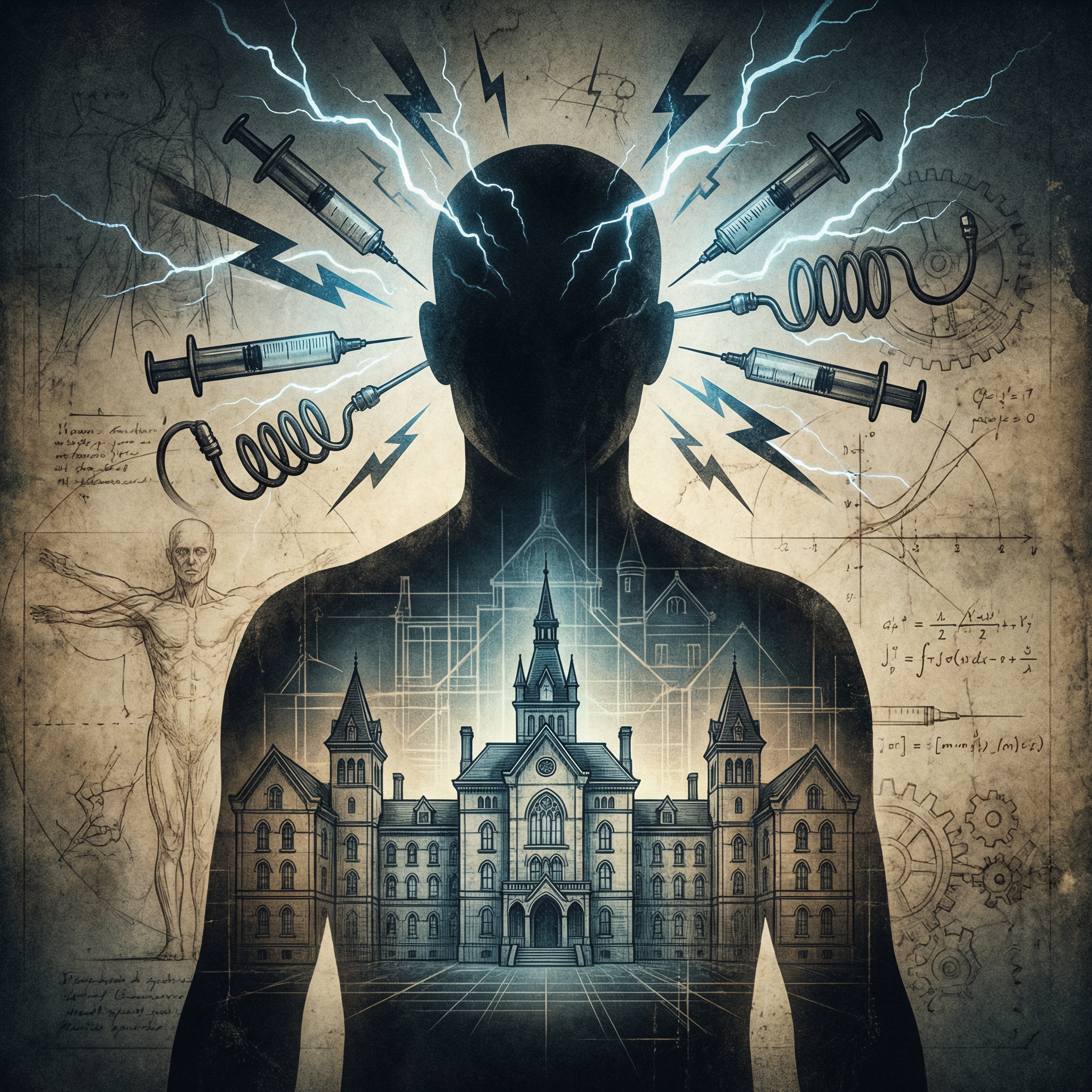
We have come a long way from the era of insulin shock therapy and prefrontal lobotomies, thank goodness. The real turning point was the nineteen fifties with the discovery of chlorpromazine, known as Thorazine. That was the first true antipsychotic. Before that, psychiatry was mostly about containment and sedation. Thorazine actually targeted the symptoms of psychosis.
And that led to the dopamine hypothesis, right? The idea that schizophrenia is just too much dopamine in the brain?
That was the first-generation theory. Those early drugs, the typical antipsychotics, were very effective at stopping hallucinations and delusions—what we call positive symptoms. But they were like a sledgehammer. They blocked dopamine receptors so thoroughly that people developed Parkinson’s-like tremors and a total flattening of their personality. They became what people called the "Thorazine shuffle."
I imagine that is where a lot of the stigma about people being zombies comes from. They were not zombies because of the illness; they were zombies because of the side effects.
Exactly. Then, in the nineteen nineties, we got the second generation, or atypical antipsychotics, like clozapine and risperidone. These are more nuanced. They still target dopamine, but they also interact with serotonin receptors. They tend to have fewer of those intense motor side effects, though they brought their own issues, like significant weight gain and metabolic changes.
Daniel mentioned that these drugs can make people very tired. I think that is a huge barrier to treatment. If the choice is between hearing voices or feeling like you are underwater twenty-four hours a day, that is a brutal trade-off.
It is. And that is why the current landscape is so exciting. For decades, every single drug we had worked by blocking dopamine receptors. But as of late twenty-twenty-four, the FDA approved a drug called KarXT, or Cobenfy. This is a massive breakthrough, Corn. It does not block dopamine receptors at all. Instead, it targets muscarinic acetylcholine receptors.
So it is a completely different mechanism?
Completely. By targeting these receptors, it indirectly regulates dopamine in a way that reduces psychosis without the heavy sedation or the motor side effects of the older drugs. It also shows promise in helping with those "negative symptoms"—the lack of motivation and cognitive fog—that the older drugs just could not touch. We are finally moving into an era of precision psychiatry.
It feels like we are finally starting to treat the person’s quality of life, not just silencing the loudest symptoms. But I want to pivot to Daniel’s final question about the connection between schizophrenia and bipolar disorder. He asked if there is a link, since psychosis can show up in both.
This is one of the biggest debates in modern psychiatry. For over a century, we followed the Kraepelinian dichotomy. Emil Kraepelin was the psychiatrist who separated dementia praecox—what we now call schizophrenia—from manic-depressive illness, which we now call bipolar disorder. He thought they were two totally different biological entities.
But that line is getting blurrier every year, isn't it?
It is practically disappearing. We now talk about a "psychosis continuum." On one end, you have pure bipolar disorder with no psychosis. In the middle, you have bipolar with psychotic features during mania. Then you have schizoaffective disorder, which is a mix of both. And on the other end, you have schizophrenia. Genetic studies show a massive overlap between the two. The same genetic risk factors that might make one person develop bipolar disorder could make their sibling develop schizophrenia.
So it is more like a spectrum of severity or a spectrum of how the brain handles emotional and sensory regulation?
That is exactly how many researchers see it now. Psychosis is not a disease in itself; it is a symptom that the brain’s reality-testing mechanism has gone offline. In mania, your mood is so elevated that your thoughts start racing out of control, and eventually, they can break away from reality. In schizophrenia, the break from reality is the primary feature, often without the extreme mood swings. But the underlying biological vulnerability—the fragility of those neural circuits—is very similar.
It makes me think about how we categorize these things. We love to put things in boxes, but the human brain does not always respect those boundaries. If you are a clinician, how do you even tell the difference if someone comes in during a psychotic break?
It is incredibly difficult. Often, the only way to tell is time. If the psychosis only happens when the person is incredibly high or incredibly low in mood, you lean toward bipolar. If the psychosis persists even when their mood is stable, you lean toward schizophrenia. But even then, the treatment often looks similar. We use many of the same antipsychotic medications to treat acute mania as we do for schizophrenia.
That is fascinating. It really reinforces the idea that we are treating symptoms and systems rather than a specific, isolated disease. I want to go back to the idea of misconceptions for a second. Daniel mentioned how Lauren Kennedy West’s videos challenged his views. What is the one misconception that you think is the most important to clear up for people?
For me, it is the idea that schizophrenia is a progressive, degenerative brain disease from which there is no return. We used to call it a "graveyard of the mind." But the data shows that about twenty-five percent of people who have a psychotic break will recover completely and never have another one. Another fifty percent will significantly improve with treatment and live very full, independent lives. Only about twenty-five percent have a chronic, difficult course. The idea that a diagnosis of schizophrenia is the end of your life is just statistically false.
That is such an important point. It is not a life sentence. And I think that connects to what Daniel was saying about people being out of control. If we view it as a manageable condition rather than a permanent state of insanity, the way we treat people in our communities changes. We stop fearing them and start supporting them.
Exactly. And that support is the biggest predictor of success. If you have a job, a place to live, and people who care about you, your brain is much more resilient. The medication provides the floor, but the social environment provides the ceiling.
I think that is a perfect place to start wrapping up the core discussion. We have covered the prevalence, the environmental factors like urbanicity, the history of the drugs—including the new muscarinic treatments—and this fascinating continuum between bipolar and schizophrenia. Herman, do you have some practical takeaways for someone like Daniel or any of our listeners who want to be better allies to people in this community?
I think the first thing is to educate yourself using primary sources from people with lived experience. Lauren Kennedy West is great, but there are many others, like the "Students with Psychosis" organization. When you hear someone talking about their symptoms, do not try to argue them out of their delusions. To them, those experiences are as real as the chair you are sitting on. Instead, focus on the emotion behind it. If they are scared, validate the fear, even if you do not validate the reason for the fear.
That is great advice. Validation of the feeling, not necessarily the fact. Also, I think we should all be mindful of the language we use. Using "schizophrenic" as a synonym for erratic or inconsistent—like saying the weather is "schizophrenic"—is something we should probably move away from. It trivializes a very serious and often painful condition.
Absolutely. It is about person-first language. A person with schizophrenia, not "a schizophrenic." It sounds like a small distinction, but it reminds us that the person is not their diagnosis. They are a human being who happens to be managing a complex neurological condition.
Well said, Herman. This has been a really enlightening talk. I feel like I have a much better handle on the nuance that Daniel was asking for. It is a complicated field, but the progress we are making—both medically and socially—is real.
It is. We are moving toward a much more compassionate and scientific understanding of the mind.
Before we go, I want to say a quick thank you to Daniel for sending this in. It is these kinds of prompts that really let us stretch our legs and dive into the research. And hey, if you are listening and you have been enjoying the show, we would really appreciate a quick review on your podcast app or a rating on Spotify. It genuinely helps other people find us and keeps the conversation going.
It really does. We love seeing the community grow.
You can find all our past episodes, including the one on Jerusalem Syndrome that Daniel mentioned, at myweirdprompts.com. We also have an RSS feed there if you want to subscribe directly.
And if you have your own weird prompt, there is a contact form on the site. We would love to hear from you.
This has been My Weird Prompts. Thanks for listening, and we will catch you in the next one.
Goodbye, everyone. Stay curious.