Hey everyone, welcome back to My Weird Prompts. I am Corn, and I am joined as always by my brother, the man who knows the orbital inclination of every piece of space junk over our heads.

Herman Poppleberry, reporting for duty. I have been looking forward to this one since breakfast, Corn. I actually spent my morning coffee tracking the latest telemetry from the Jilin-one constellation. It is a busy day up there.
Well, that is perfectly timed because our housemate Daniel sent us a really heavy, really timely prompt today. He was asking about those recent reports from earlier this month regarding that Chinese spy satellite. It captured those incredibly high resolution images of American Terminal High Altitude Area Defense deployments, or THAAD, over in the Middle East. It is a striking, and frankly a bit chilling, reminder of how much is happening above our heads that we just do not see with the naked eye.
It is incredible, really. Those images were circling around some of the more specialized defense circles and open source intelligence communities lately. We are talking about sub-thirty centimeter resolution here. You can practically see the serial numbers on the launchers. It really highlights that the era of secret troop movements is basically over if you are up against a near peer adversary. If you move a battery of missiles in the desert, someone in an office in Beijing or Washington knows about it within ninety minutes.
But Daniel is pushing past the surveillance aspect. He wants to know if we are actually seeing overt warfare in space. Are we talking about satellites being knocked out of orbit, or launches being sabotaged? Is the Star Wars scenario already here, or are we still just in the watching phase?
It is a heavy question, and to answer it, we have to look at the date. It is February eleventh, twenty twenty-six. The landscape has shifted massively even in the last twenty-four months. To answer Daniel's first point, we have not seen an overt, kinetic act of war in space yet. By kinetic, I mean one country physically launching a missile to destroy another country's active satellite during a hot conflict. That would be a massive escalation, almost certainly leading to a broader global war on the ground. However, if you look at what we call the grey zone, space is already a very active, very violent battlefield.
When you say grey zone, you are talking about things that are clearly hostile but do not quite cross the line into an act of war that triggers a conventional military response, right? It is the plausible deniability of the cosmos.
Exactly. It is the stuff that is hard to prove, easy to deny, and even harder to explain to the general public. Jamming is the big one. We see Global Positioning System jamming and spoofing almost constantly now. If you look at the data from the Baltic region or around the Black Sea over the last year, thousands of civilian flights have had to deal with GPS interference. If you can mess with the signal between the satellite and the receiver on the ground, you have effectively neutralized that space asset without ever touching the satellite itself. It is cheap, it is effective, and it is happening right now.
That is interesting because it shifts the focus. Most of us think about the satellite as the target, like a clay pigeon in the sky. But the target is really the utility of the satellite. If I am a commander on the ground and my GPS tells me I am in the middle of the ocean when I am actually in a desert, that multi-billion dollar satellite is useless to me.
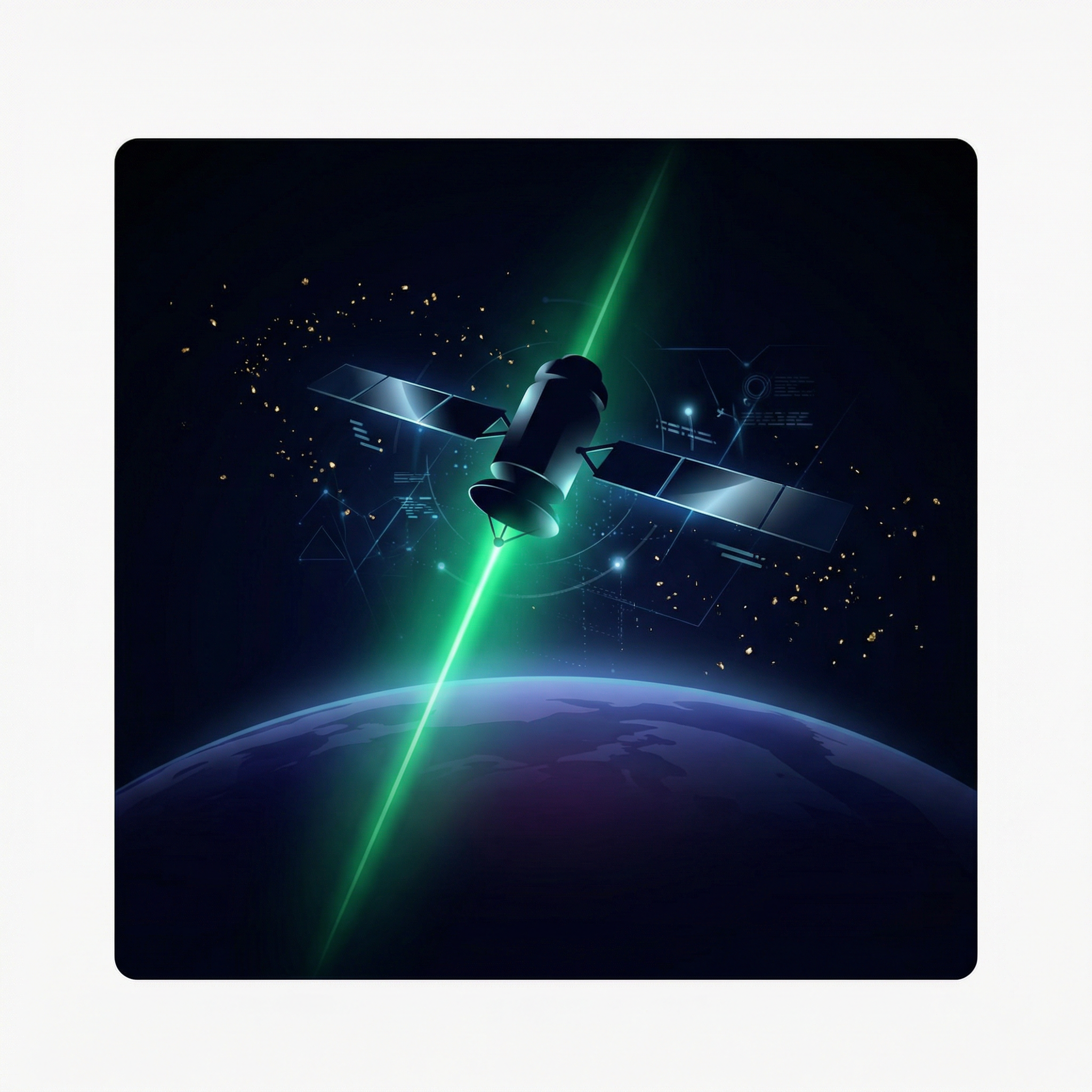
Right. And then you have the more exotic stuff, like dazzling. This is where you use a ground based laser, like the Russian Peresvet system, to basically shine a very bright, concentrated light into the optics of a surveillance satellite. It does not destroy the satellite, but it blinds the sensors temporarily so it cannot take pictures of whatever you are trying to hide. It is like trying to take a photo of someone who is pointing a high powered flashlight directly into your lens. Russia and China have been very open about developing these capabilities, and the United States Space Force has been countering with their own programs, like the Meadowlands system, which is a transportable jammer designed to temporarily blind enemy communications.
So, the surveillance that Daniel mentioned, like the Chinese satellite imaging the THAAD defense systems, that is the move. And the counter move is dazzling or jamming. But what about the actual hardware? We have seen these anti-satellite missile tests over the years. I remember Russia did one in late twenty twenty-one that caused a lot of international outrage because of the debris cloud it created.
That is the big nightmare scenario, Corn. It is called the Kessler Syndrome. This was a theory proposed by National Aeronautics and Space Administration scientist Donald Kessler back in nineteen seventy-eight. The idea is that the density of objects in low Earth orbit is high enough that a single collision between objects could cause a cascade. One satellite gets blown up, it creates thousands of pieces of shrapnel traveling at seventeen thousand miles per hour. Those pieces hit other satellites, creating more shrapnel, and eventually, you have a belt of debris that makes space completely unusable for generations. No more GPS, no more satellite internet, no more space exploration.
That feels like the ultimate deterrent. It is almost like a space version of mutually assured destruction. If you start blowing up your enemy's satellites, you might end up destroying the very environment your own satellites need to survive. It is like burning down the apartment building because you do not like your neighbor.
Precisely. That is why overt kinetic warfare is so rare and so dangerous. In that twenty twenty-one Russian test, they blew up one of their own retired satellites, a dead one called Cosmos fourteen zero eight. Even though it was their own satellite, the debris cloud forced the astronauts on the International Space Station to take cover in their escape pods. It was a clear demonstration of power, but it also showed how reckless that kind of warfare is. Since then, we have seen a push for a global ban on kinetic anti-satellite tests. The United States led the way on that, and many other nations have signed on, but notably, Russia and China have been more hesitant to commit to a formal treaty.
But Daniel also mentioned the idea of taking satellites out of orbit. We have seen some weird behavior from satellites lately, right? Things that look like they could be used for more than just repair. I am thinking of those inspector satellites.
Oh, absolutely. This is the world of dual use technology, and it is where things get really James Bond. Both the United States and China have launched satellites that have robotic arms or grappling hooks. Ostensibly, these are for satellite servicing, things like refueling a satellite to extend its life or moving a piece of space junk out of the way. But the military application is obvious. If you can use a robotic arm to fix a satellite, you can also use it to snip an antenna, spray paint over a lens, or give a satellite a little nudge that sends it tumbling out of its proper orbit.
That is much more terrifying in a way because it is so quiet. You do not get the big explosion or the debris cloud. A satellite just stops working or slowly drifts away, and the owning country has to figure out if it was a mechanical failure, a solar flare, or if someone's space tugboat just gave it a death hug.
A death hug is a great way to put it. China has a satellite called the Shijian twenty-one that actually performed a maneuver where it grabbed a dead navigation satellite and pulled it into a graveyard orbit. On paper, it was a successful test of space debris mitigation. But every military strategist in the world looked at that and realized that if you can do that to a dead satellite, you can do it to a live one. And the United States has the GSSAP satellites, the Geosynchronous Space Situational Awareness Program. These are basically neighborhood watch satellites that maneuver close to other satellites to take high resolution photos and see what they are up to. It is a constant game of orbital cat and mouse.
It feels like we are in this weird transition period. We have the Outer Space Treaty of nineteen sixty-seven, which says space should be used for peaceful purposes and forbids weapons of mass destruction in orbit. But it does not explicitly ban conventional weapons or these dual use robots. Does that treaty even mean anything in twenty twenty-six?
It is being tested every single day. The treaty is the foundation, but it is incredibly vague when it comes to modern technology. It does not cover cyber attacks, for example. And that is perhaps the most likely way we will see overt satellite warfare in the near future. Why build a multi-million dollar missile when you can just hack the ground station that controls the satellite? If you can take over the command and control link, you can tell the satellite to fire its thrusters until it runs out of fuel or re-enters the atmosphere.
We actually saw a version of that right at the start of the conflict in Ukraine in twenty twenty-two, didn't we? The Viasat attack?
Yes! That is a perfect example of what modern space warfare looks like. It was a massive cyber attack against the ground infrastructure of the Viasat satellite network. It bricked thousands of modems across Europe and, more importantly, it disrupted the communications of the Ukrainian military at a critical moment. That was a direct attack on a space based capability, but it happened through lines of code, not explosives. It shows that the ground segment of space architecture is often the most vulnerable part.
So, when Daniel asks if space is the battlefield of the future, the answer might be that it is already the battlefield of the present, we just have to redefine what battle looks like. It is not just dogfights in orbit; it is a struggle for data integrity, signal availability, and orbital positioning.
Exactly. And the landscape is changing because of the sheer number of satellites now. Ten years ago, if you took out a few key military satellites, you could blind a nation. But now, with constellations like Starlink, you have thousands of small satellites. Taking out one or two does almost nothing to the overall network. This is what the military calls resilience through proliferation.
That is a fascinating shift. It is the move from a few high value targets to a massive, distributed swarm. I imagine that makes the job of someone trying to disrupt those signals much harder. You cannot just dazzle one camera if there are five hundred other satellites in the same constellation passing over you.
It changes the math completely. To truly take down a constellation like that, you would need a level of electronic warfare that we have not seen yet, or a cyber attack that hits the entire control architecture. But it also creates a new kind of tension. If a private company like SpaceX provides the backbone for a country's military communications through their Starshield program, does that make those commercial satellites legitimate military targets?
That is a legal and ethical minefield. If a commercial satellite is being used for THAAD deployments or drone strikes, is it still a civilian object? These are the questions that international law is really struggling to keep up with. We are seeing private companies becoming combatants in a way that we have never seen before.
And it is not just about the big players anymore. Daniel mentioned that only a small number of nations have these capabilities, and that used to be true. But the barrier to entry is dropping. You have countries like India, which conducted its own anti-satellite test in twenty nineteen, and Israel with very sophisticated space programs. And then you have the commercial sector. If you have enough money, you can basically rent satellite intelligence or secure communication channels from companies like Maxar or BlackSky.
It democratizes space, but it also makes it more chaotic. When there were only two superpowers in space, they could generally agree on some basic rules of the road because they both had so much to lose. Now, you have dozens of actors, all with different interests and different levels of risk tolerance.
It is like a highway with no speed limit and no police force. Everyone is just hoping that nobody decides to drive the wrong way just to see what happens. But we are seeing more friction. There are constant reports of satellites maneuvering uncomfortably close to each other. The United States Space Force often complains about Russian inspector satellites, like the Luch or Olymp-K series, that seem to shadow American high value assets in geosynchronous orbit. They park themselves right next to a communications satellite and just listen.
I want to go back to the Star Wars idea for a second. In the eighties, the Strategic Defense Initiative was all about using space based lasers to shoot down incoming nuclear missiles. We are not quite there yet, but are we seeing a return to that kind of thinking?
In a way, yes. But the focus has shifted from intercepting missiles to protecting the satellites themselves. We are seeing the development of bodyguards for satellites. These would be smaller satellites that orbit near a high value asset and can detect or even intercept a threat, whether that is a kinetic kill vehicle, a robotic arm, or a cyber intrusion. The Space Force is looking into these defensive capabilities very seriously.
So, we are moving toward a world where satellites have their own defensive systems. That really does sound like a sci-fi scenario. If my satellite has a defensive drone, and your satellite has a robotic arm, and we are both trying to occupy the same orbital slot over a strategic location, it is only a matter of time before they bump into each other.
And that is where the risk of miscalculation is so high. If a collision happens, was it an accident? Was it a malfunction? Or was it a deliberate act of aggression? In space, it is incredibly hard to get a clear picture of what happened in real time. We are getting better at space situational awareness, using ground based radars and telescopes, but it is still like trying to reconstruct a car accident that happened at seventeen thousand miles per hour in total darkness while you are standing five hundred miles away.
That brings up a good point about the THAAD deployments Daniel mentioned. If China is using its satellites to track these systems, and the United States knows they are being tracked, there is this constant dance of deception. You move the systems, you use decoys, you wait for the satellite to pass before you do anything sensitive. It is a game of timing.
It is. But those Chinese satellites, like the Jilin-one constellation I mentioned earlier, are getting to the point where they have very high revisit rates. That means a satellite passes over the same spot every few hours, or even more frequently. The window for hiding is shrinking. And that is why the pressure to develop active countermeasures is growing. If you cannot hide, you have to find a way to stop the other person from looking. This is why we are seeing so much investment in electronic warfare and directed energy weapons.
So, what are the practical takeaways for someone listening to this? It feels like we are on the edge of something very significant. Is this something that could affect the average person, or is it strictly a military concern?
It absolutely affects the average person. Our entire modern economy is built on space assets. If a space conflict were to break out and we saw significant debris creation, it could end the era of satellite navigation, global telecommunications, and even accurate weather forecasting. Imagine if your phone's GPS just stopped working permanently, or if the global financial system, which relies on satellite timing for high frequency transactions, started to glitch. We are talking about a regression of decades in terms of technology and economic efficiency.
That is the hidden vulnerability. We have integrated space so deeply into our lives that we have forgotten how fragile that infrastructure actually is. We talk about the cloud as if it is this ethereal thing, but a huge part of it lives on ground stations that are linked to satellites.
Exactly. And that is why I think we will see more international pressure for new treaties. There is a lot of talk right now about a ban on kinetic anti-satellite tests. The United States has already declared a unilateral ban on these tests and is trying to get other nations to join. The idea is to at least stop ourselves from making the debris problem worse while we figure out how to handle the other types of warfare. We need rules of the road for how close satellites can get to each other and how they should communicate their intentions.
It is a bit like the early days of naval warfare or air warfare. At first, there were no rules, and it was just a free for all. Eventually, nations realized that they needed some standards to prevent every minor dispute from turning into a total disaster. But space is harder because you cannot just put a fence around your territory. Orbit is inherently global.
It is the ultimate global commons. And that is why Daniel's question about space as a battlefield is so poignant. If we treat it like a traditional battlefield, we risk destroying it for everyone. But the temptation to use that high ground for a military advantage is almost irresistible. We are seeing the militarization of the moon being discussed now, with the Artemis Accords and the competing Chinese-Russian lunar base plans. The high ground just keeps getting higher.
I wonder about the role of artificial intelligence in all of this. We are seeing AI being used to analyze satellite imagery in seconds, which is how we get these reports of THAAD deployments so quickly. But is AI also being used to manage the satellites themselves?
Oh, definitely. When you have thousands of satellites in a constellation, you cannot have a human pilot for each one. They have to be autonomous. They have to be able to detect a potential collision and move themselves without waiting for a command from Earth. But that autonomy also introduces new risks. What if an AI misinterprets a nearby satellite's maneuver as an attack? What if the software is hacked to make the satellite behave erratically?
That is the Flash Crash scenario but in orbit. A chain reaction of autonomous systems responding to each other in ways their creators never intended. It adds another layer of unpredictability to an already volatile situation.
It really does. And I think that is what we are heading toward. Not necessarily a Star Wars movie with big explosions and dogfights, but a very tense, high stakes game of automated systems and silent interference. The winner won't be the one with the biggest gun, but the one with the best software, the most resilient network, and the best ability to see what is happening in the dark.
That is a very Herman Poppleberry conclusion. It always comes back to the software, doesn't it?
Guilty as charged. But honestly, if you look at the history of technology, the hardware gets the headlines, but the software is what actually wins the day. In space, where you cannot easily go and fix something that is broken, the resilience of your code is your best defense.
I think you are right. And it is a good reminder that while we are looking at these amazing pictures from Chinese or American satellites, the real story is in the data being transmitted and the systems that protect it. Daniel, thanks for that prompt. It really forced us to look up and realize how much is changing in the silent world above us.
Yeah, it is a fascinating topic. And for our listeners, if you are interested in the technical side of this, I highly recommend looking into some of the papers on space situational awareness and the work being done by the Secure World Foundation. It is a field that is exploding right now, for obvious reasons.
And if you have been enjoying My Weird Prompts, we would really appreciate it if you could leave us a review on your podcast app or on Spotify. It genuinely helps other people find the show and keeps us going. We are trying to hit our goal of five hundred reviews by the end of the month, so every bit helps.
It really does. We love reading your feedback and your own weird prompts. And remember, you can find all our past episodes, including our deep dives into satellite intelligence and the future of orbital manufacturing, at myweirdprompts.com. We have a full archive there and an RSS feed if you want to subscribe directly.
We are also on Spotify, obviously. We have covered everything from the ethics of AI to the future of deep sea exploration, so there is plenty to dig into if you are new to the show.
Thanks for joining us today. This has been a great discussion, Corn. I think I am going to go check the satellite passover times for our neighborhood now, just to see if anyone is looking at my garden.
Just make sure you do not dazzle them with your brilliant insights, Herman. We do not want to start an international incident over your tomatoes.
I will try to keep the glare to a minimum.
Alright, that is it for this episode of My Weird Prompts. Thanks for listening, and we will talk to you next time.
Goodbye everyone. Stay curious, and keep looking up.