Hey everyone, welcome back to My Weird Prompts. I am Corn, and I am sitting here in our living room in Jerusalem with my brother. It is a beautiful, albeit slightly chilly, February evening in two thousand twenty-six, and we are looking out over the stone walls of the city, thinking about how much has changed in just the last few years.

Herman Poppleberry, here and ready to dive into the dirt, or maybe the lack thereof, depending on where this conversation goes. It is funny, Corn, looking out at Jerusalem, you see a city that has been built and rebuilt for thousands of years, mostly out of heavy, solid stone. It is the last place you would expect to see a high-tech agricultural revolution, yet here we are.
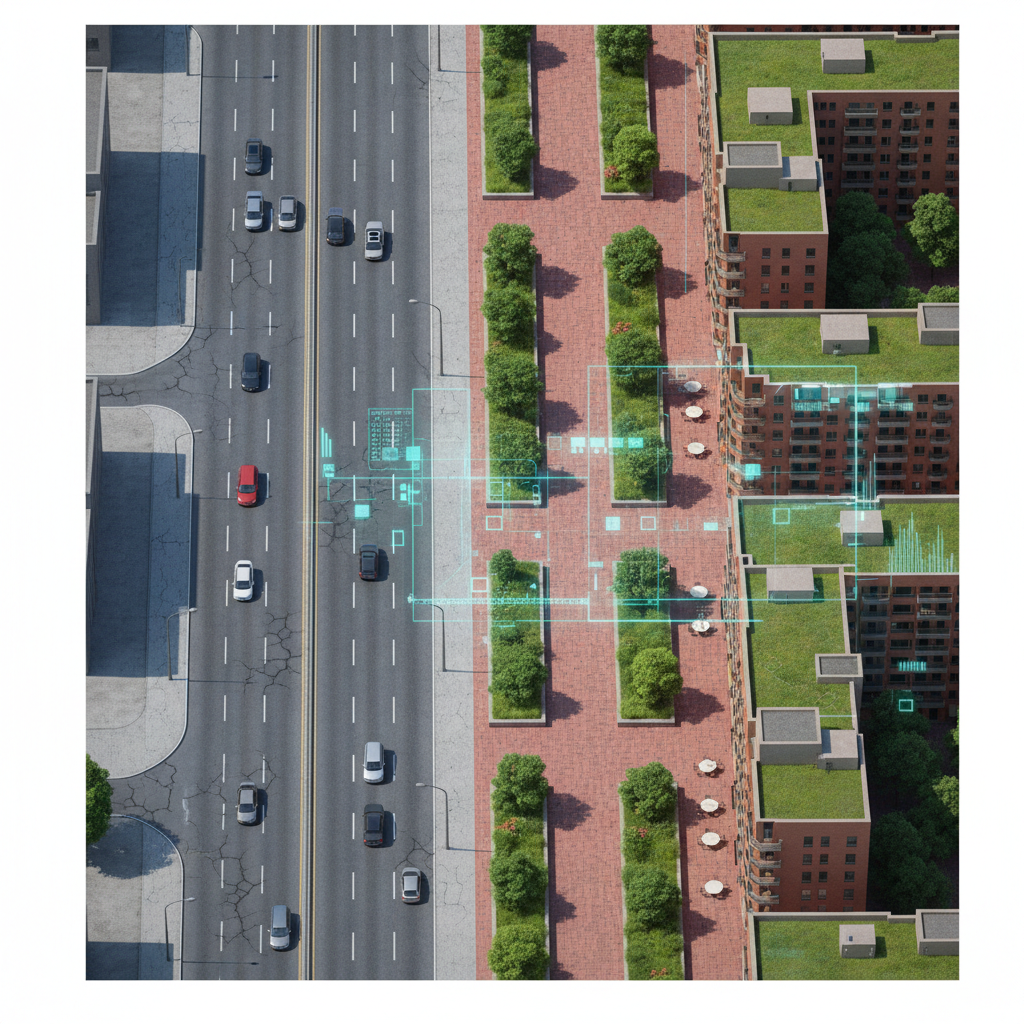
It is funny you say that because our friend Daniel was just talking to us about this. He has been going through a bit of an urban planning phase lately. I think he bought a stack of books during his last trip to the United States and has been trying to make his way through them. He mentioned some of the imagery on the covers, these futuristic skyscrapers filled with lush greenery and farms on every level. They look like vertical forests, almost like the Hanging Gardens of Babylon but with L-E-D lights and hydroponic tubes.
I know exactly the books he is talking about. They often look like something out of a science fiction movie, maybe a bit too optimistic. But it is interesting because Daniel brought up a real-world point about what is happening right here in Israel. He was mentioning the dairy farmers who have been protesting lately over the cost of imported dairy and the rising price of land. He joked that they haven't exactly responded by building a skyscraper full of cows yet.
Can you imagine the structural engineering required for a cow skyscraper? The weight alone would be a nightmare, not to mention the, uh, waste management. But it raises a really good point. We see these beautiful renderings of vertical farms, and we hear about small community gardens or rooftop pilots, but Daniel’s question is really about scale. Are there cities that have actually moved beyond the pilot phase? Is this a real industry yet, or is it just a niche hobby for wealthy urbanites who want five-dollar basil?
That is the big question. And the answer is actually quite surprising if you look at a few specific spots around the globe. We are in two thousand twenty-six now, and the "hype cycle" of the early twenty-twenties has settled into what I would call "hard-nosed reality." Singapore is probably the best example we have right now. Because they are a small island nation with almost no traditional farmland, they have made food security a matter of national defense. They have a goal called "thirty by thirty," where they want to produce thirty percent of their nutritional needs locally by the year two thousand thirty.
Thirty percent seems like a huge jump from where they were just a few years ago. I remember reading they were at less than ten percent.
It is massive. Historically, they imported over ninety percent of their food. So, to hit thirty percent, they have had to move far beyond community gardens. They have companies like Sky Greens, which has been around for a while but has scaled up significantly. It is essentially a vertical farming system that uses a water-driven pulley system to rotate troughs of vegetables. It looks like a giant A-frame structure, and it uses gravity and water to move the plants through different light levels. It is brilliant because it uses the weight of the water to power the movement, so the energy footprint is much lower than an elevator-based system.
So it is not just a static shelf. It is a machine.
Exactly. And that is the transition we are seeing. Urban farming is moving from biology into industrial engineering. Another great example is in the Netherlands. People often think of the Netherlands as a very rural place because of the windmills and tulips, but it is actually one of the most densely populated countries in the world. They are the second-largest exporter of food in the entire world by value, right after the United States. And they do almost all of it through high-tech, climate-controlled greenhouses that are increasingly integrated into urban or semi-urban fringes. In places like the Westland region, the greenhouses are so dense they look like a glowing city from space at night.
That is fascinating. But when we talk about the skyscrapers Daniel was mentioning, the ones with farms on intermediate floors, how does that actually work? If I am a developer in a place like New York or Tokyo, why would I give up high-priced office space or luxury apartments to grow lettuce? The math just doesn't seem to add up when you look at the rent per square foot.
Well, that is where the economics get tricky. Usually, you don't. Most of the successful large-scale urban farms right now are either on rooftops or in repurposed industrial buildings, not in the middle of a Grade A office tower. Take Lufa Farms in Montreal. They built the world's first commercial rooftop greenhouse back in two thousand eleven, and now they have four massive sites. Their latest one is over one hundred sixty thousand square feet. They are producing enough food to feed tens of thousands of people every week. But they are using rooftops that were otherwise just sitting there collecting heat and contributing to the "urban heat island" effect.
Okay, so let's talk about the mechanics of that. Daniel asked about the correlation between building size and the feasibility of farming. If you are on a rooftop, you have the sun, but you have weight issues. If you are on an intermediate floor, you have weight issues and no sun. How do they balance that?
The weight is actually the biggest hurdle that people underestimate. Most people think about a garden and think of dirt. But a foot of wet soil can weigh over a hundred pounds per square foot. Most modern office buildings are designed for a "live load" of maybe fifty to eighty pounds per square foot. So, if you just dump a bunch of dirt on a standard floor, the floor might literally collapse, or at the very least, you would see massive structural cracking.
So you can't just move into an old apartment building and start a farm.
Not without major structural reinforcement, which is incredibly expensive. This is why almost all serious urban farming uses hydroponics or aeroponics. In hydroponics, you are using nutrient-rich water instead of soil. In aeroponics, you are just misting the roots. This reduces the weight significantly. You are basically just supporting the weight of the water and the physical structure of the racks. Even then, you have to be careful about where you place the tanks. You usually want them over the structural columns or the elevator core where the building is strongest.
And what about the intermediate floors? If you are in a dense city like Jerusalem or New York, and you have a forty-story building next to you, you are in the shade half the day. How do you get enough light to grow anything significant?
This is where the technology gets really cool, and also really expensive. There are a few ways they handle it. The most common way now is total environmental control using L-E-D lighting. You aren't even trying to use the sun. You are using specific spectrums of light, mostly red and blue, which is why those indoor farms often have that weird pinkish-purple glow.
Right, I have seen photos of those. It looks like a neon disco for plants.
It kind of is! Plants don't actually need the full spectrum of sunlight to grow. They mostly need specific wavelengths for photosynthesis. By using L-E-Ds, you can give them exactly what they need twenty-four hours a day. You can actually make the plants grow faster than they would in nature because there are no cloudy days, no nights, and no seasons. You can have a harvest every few weeks, year-round.
But wait, if you are using electricity to power lights to grow food, doesn't that negate the environmental benefits? You are trading "food miles" for "kilowatt hours." If the goal is sustainability, using a coal-fired power plant to grow kale seems counter-productive.
You have hit the nail on the head. That is the central debate in the industry right now. If you are using fossil fuels to grow lettuce in a basement, you are arguably doing more harm to the environment than if you shipped that lettuce in a truck from a farm five hundred miles away. But, the math is changing. As the grid gets greener and L-E-D efficiency improves, the "energy-per-calorie" ratio is getting better. Also, you have to factor in water. Vertical farms use up to ninety-five percent less water than traditional agriculture because the water is recycled in a closed loop. In a world facing water scarcity, that is a huge deal.
I wonder if there is a middle ground with natural light. I remember reading about heliostats, those mirrors that track the sun and reflect light into dark spaces. Could you use those to light an intermediate floor?
People have tried. There is a project in London called "Growing Underground" where they are using old World War Two bomb shelters to grow microgreens. They are using L-E-Ds there, but there have been architectural proposals for "light pipes" or fiber optic cables that harvest sunlight from the roof and "plumb" it down into the middle of the building. The problem is efficiency. You lose a lot of the light's energy every time it reflects or travels through a cable. As of now, high-efficiency L-E-Ds are usually more reliable and cheaper than trying to pipe in the sun.
It seems like we are talking about two very different things here. On one hand, you have the "high-tech factory" model, like the bomb shelters or the Singaporean towers. On the other hand, you have the "rooftop community" model, like Lufa Farms. Which one do you think is actually the future of the city?
I think they serve different purposes. The rooftop model is great for community engagement and what we call "low-intensity" agriculture. It helps with the urban heat island effect, it manages stormwater runoff, and it provides fresh produce. But it is never going to feed a city. To actually produce a significant portion of a city's food, you need the factory model. You need verticality, automation, and total climate control.
Let's dig into that "feeding the city" part. Daniel asked if cities could ever produce a significant portion of their own food. If we look at the caloric needs of a city like Jerusalem, with nearly a million people, could we ever actually grow enough?
If we are talking about calories, like wheat, corn, and rice? Honestly, no. Not with current technology. Those crops require massive amounts of space, very specific soil conditions, and a lot of sun. To grow enough wheat for Jerusalem inside the city limits, you would have to turn every single building into a farm and move all the people out. It just doesn't scale for staples. A single acre of wheat only produces enough flour for about nine thousand loaves of bread a year. That sounds like a lot, but for a million people? You would need thousands of acres.
So the dream of the self-sufficient city is a bit of a fantasy?
For staples, yes. But for nutrition? That is a different story. We get our calories from grains, but we get our vitamins and minerals from perishables, like leafy greens, herbs, tomatoes, and peppers. Those are the crops that urban farming excels at. They have a high water content, they grow fast, and they are very sensitive to long shipping times. If an urban farm can provide one hundred percent of a city's leafy greens and herbs, that is a massive win for health, logistics, and food security.
That makes sense. I mean, think about how much of the "cost" of a head of lettuce is just the refrigerated truck that brought it here. If you can grow it two blocks away, you are cutting out a huge amount of waste. I have heard that some greens lose half their nutritional value within twenty-four hours of being harvested.
Exactly. And you are also cutting out food waste. About thirty percent of produce is lost in the supply chain because it spoils before it hits the shelf. If you harvest a salad in the morning and it is on someone's plate for lunch in the same zip code, your waste drops to almost zero. There is a company in Japan called Spread that operates a "Techno Farm" where robots handle everything from seeding to harvesting. They produce thirty thousand heads of lettuce a day in a single facility. That is the kind of scale that starts to move the needle.
You know, I was thinking about the building size thing again. If we are looking at these massive skyscrapers, like the ones Daniel saw in his books, is there an optimal height for a vertical farm? Like, does it get harder to farm the higher you go?
It actually gets harder because of the "stack effect" and air pressure. If you have a very tall building, the way air moves through it becomes a major engineering challenge. Plants need very specific humidity and C-O-two levels. If you are on the eightieth floor, maintaining that environment can be more expensive than on the second floor. Plus, you have the logistics of moving tons of water and nutrients up and down. Every floor you add is more weight and more energy spent on pumping.
So maybe the "skyscraper farm" isn't the best design. Maybe it is more about "mid-rise" integration?
I think that is the consensus among urban planners right now. Instead of one giant "Farm Tower," the idea is to integrate "Grow Zones" into existing infrastructure. Think about a parking garage. As we move toward more autonomous vehicles and better transit, many cities are finding they have too much parking. Those structures are perfect for urban farming. They are already built to handle heavy weight—cars are heavy!—they have high ceilings for airflow, and they are usually located right in the heart of the city.
That is a brilliant reuse of space. You already have the concrete slabs that can handle the load of hundreds of cars. A few hydroponic racks would be nothing for those floors. And you don't have to worry about the "luxury apartment" rent prices because it is a parking garage.
Precisely. There is a company called Infarm that was doing something even more granular. Instead of a whole building, they put modular growing units directly inside grocery stores. You are literally picking your cilantro from the machine it grew in. It is the ultimate "zero-mile" food. Now, Infarm had some financial struggles a few years ago—they had to restructure in two thousand twenty-three—but the concept of "point-of-sale" farming is still very much alive. It is just about finding the right economic model.
It is funny how we have gone from these massive, sci-fi visions of farm-scrapers down to a box in a grocery store. It feels like the technology is finding its level.
It usually does. The "hype cycle" always starts with the most extreme version of an idea. But the practical application is often more subtle. But let's go back to something Daniel mentioned about the "perspective" of these buildings. He was worried about the sunlight for intermediate floors. One thing we haven't talked about is the "double-skin facade."
Is that like a thermos for a building?
Sort of! It is two layers of glass with a space in between. Architects are starting to design buildings where that gap—which can be several feet wide—is used to grow plants. It acts as a natural insulator for the building, it cleans the air, and it provides a bit of food. It doesn't require a whole floor, just a few feet of space around the perimeter. The plants get the natural sunlight, and the building gets a "living skin" that reduces cooling costs.
That sounds like it would be great for office morale, too. Having a literal wall of green right next to your desk.
Oh, definitely. There is a lot of research on "biophilia," the idea that humans are naturally happier and more productive when they are around plants. So, even if the farm isn't producing enough food to feed the whole office, the psychological benefits might be worth more than the vegetables. In Tokyo, the Pasona Group headquarters has an urban farm integrated into their office. They have tomato vines hanging over conference tables and rice paddies in the lobby. It is as much about the environment as it is about the food.
I can see that. But I want to push back on the viability part. If I am an investor, and I see the high cost of L-E-Ds, the high cost of urban real estate, and the complexity of these systems, is urban farming actually profitable yet? Or is it still living on venture capital and dreams?
That is the elephant in the room. A lot of the early vertical farming startups have actually struggled lately. Companies like AeroFarms and AppHarvest had some very public financial troubles in two thousand twenty-three and twenty-four. The problem was that they tried to scale too fast without perfecting the energy costs. They were building these massive, hundred-million-dollar facilities and then trying to sell lettuce for two dollars a head. The math didn't work.
So the "factory" model is hitting a wall?
It hit a "reality check." The next generation of urban farms—the ones we are seeing succeed now in two thousand twenty-six—is much more focused on automation and "specialty" crops. Instead of just "lettuce," they are growing high-end herbs for restaurants, or even pharmaceutical plants. If you are growing a specific type of basil that a chef will pay top dollar for, or a plant used in medicine, the high overhead of a vertical farm becomes much easier to justify. We are also seeing more integration with "waste heat."
Waste heat? Like from a factory?
Or a data center! Data centers produce an incredible amount of heat. Usually, they spend a fortune on cooling to get rid of that heat. But if you build a vertical farm next to a data center, you can use that "waste" heat to keep the plants warm. It is a perfect synergy. The data center gets cheaper cooling, and the farm gets free heat.
That is the kind of "circular economy" thinking that makes this feel more viable. It is not just about the farm in isolation; it is about how the farm fits into the city's existing systems.
Exactly. There is a project in Stockholm where they are doing exactly that. They are using the excess heat from a data center to provide energy for a large-scale greenhouse. This kind of industrial symbiosis is the only way the "factory" model works long-term.
That makes sense. It is the "high-value" strategy. But does that mean urban farming will always be a "luxury" thing? Will it ever help with food insecurity in lower-income areas? Because if it is just "designer basil" for fancy restaurants, it doesn't really solve the problem of how we feed a growing, urbanized population.
That is the real challenge. To make it work for food security, you need to lower the cost of the technology. We are starting to see some interesting "low-tech" urban farming in places like Nairobi or Mexico City. They aren't using L-E-Ds and climate control. They are using "vertical sacks" or simple hydroponics on rooftops with natural sunlight. It is not as "efficient" in terms of yield per square foot as a Singaporean tower, but the cost is almost zero. In many ways, the "low-tech" version is more resilient because it doesn't depend on a complex power grid.
So maybe the answer to Daniel's question is that "urban farming" isn't one thing. It is a spectrum. On one end, you have the high-tech, L-E-D-powered "plant factories" in Singapore, and on the other, you have a family in a dense neighborhood using a vertical garden to grow their own peppers and tomatoes.
Exactly. And both are important. The high-tech version provides the volume and the stability for the supply chain, while the low-tech version provides the resilience and the community connection. One of the most interesting developments in the last two years has been the rise of "Agri-hoods." These are housing developments built around a central farm. Instead of a golf course or a swimming pool, the main amenity is a professionally managed farm that provides food for all the residents.
I would much rather have fresh tomatoes than a golf course.
Me too! And it turns out, it is a great selling point for developers. It creates a sense of community and it actually lowers the "food footprint" of the entire neighborhood.
I am curious about the "cows in the skyscraper" joke again. We have talked a lot about vegetables, but what about protein? We have talked about lab-grown meat in the past, but is there such a thing as "urban ranching"?
Not with cows, thankfully. The methane and the waste would be an absolute disaster in a city. But aquaponics is a real contender. That is where you combine fish farming with hydroponics. The fish waste provides the nutrients for the plants, and the plants clean the water for the fish. It is a closed-loop system.
I have seen some of those systems. They can be quite compact, right?
Very compact. You can have a tank of tilapia in the basement and a greenhouse on the roof. It is a very efficient way to get protein in a small footprint. And because fish are cold-blooded, they are much more efficient at converting feed into protein than a cow or a pig. A cow needs about ten pounds of feed to produce one pound of beef. A tilapia needs less than two pounds of feed to produce one pound of fish.
So the "urban farm" of the future might be a parking garage with fish in the basement and kale on the upper floors.
It sounds weird, but it is actually one of the most logical ways to use urban space. Think about the "circular economy" aspect. A city produces huge amounts of heat and C-O-two. Plants love heat and C-O-two. If you can hook up an urban farm to the exhaust system of an office building, you are literally turning waste into food. There is a project in Sweden where they built a "Plantagon," which is a giant glass dome attached to an office building. The heat from the computer servers in the office is used to warm the greenhouse, and the plants provide oxygen and humidity back into the office. It is a symbiotic relationship.
That is the kind of "second-order effect" we love on this show. It is not just about the food; it is about the "metabolism" of the city. The city becomes a living organism that processes its own waste and feeds itself.
Precisely. And we are seeing cities start to change their zoning laws to allow for this. For a long time, "farming" was classified as an industrial or agricultural activity that wasn't allowed in residential or commercial zones. But cities like New York and Chicago have updated their codes to encourage rooftop and indoor farming. They are realizing that a farm isn't a nuisance; it is an asset.
Okay, let's look at the "big picture" to wrap this up. If we fast-forward twenty years, do you think we will look back at this era as the beginning of a "green revolution" for cities? Or will these books Daniel is reading just be seen as beautiful, impractical art?
I think we will see a "hybrid" reality. We won't have "farm-scrapers" on every corner. But I think it will become standard for new buildings to have some kind of productive greenery integrated into them. Maybe it is just a "herb wall" in the cafeteria or a shared rooftop garden, but the idea of a building being a "passive consumer" of resources is going to change. We are moving toward "regenerative architecture."
I like that. The building as a "producer." It is a shift in mindset.
It really is. And as the technology for L-E-Ds and automation gets cheaper, the "factory" farms will become more common on the edges of the city. You might not see them, but your salad will be fresher because of them. We are also seeing a rise in "Personalized Nutrition," where your home hydroponic system grows exactly the nutrients your body needs based on your health data.
That sounds a bit "Brave New World," but also very efficient.
It is the ultimate "Weird Prompt" future! But at its core, it is just about getting back to basics. For most of human history, people lived close to their food. It is only in the last hundred years that we have separated the two so completely. Urban farming is just our way of trying to bridge that gap again, using the best technology we have.
It is a fascinating evolution. It makes me want to go look at those books Daniel has. Even if they are a bit "visionary," they are pointing toward a real need. As we become an increasingly urban species—I think the stat is that seventy percent of the world will live in cities by two thousand fifty—we have to figure out how to stay connected to the things that sustain us.
Absolutely. And if we can do that while also making our cities more beautiful and resilient, then everyone wins. Even if we never get that skyscraper full of cows.
Yeah, I think the neighbors might complain about the mooing anyway. Not to mention the logistics of getting a cow into an elevator.
Probably for the best. Stick to the tilapia and the kale.
Well, this has been a great deep dive. I think we have covered everything from the structural loads of dirt to the "neon disco" of L-E-D farming. It is clear that while we might not be "self-sufficient" anytime soon, the "urban farm" is moving out of the pilot phase and into the fabric of the city.
It is an exciting time to be watching this space. There is so much innovation happening, and I think we are going to see some really creative solutions in the next decade. We are moving from the "What if?" phase to the "How do we make it pay?" phase, and that is where the real progress happens.
Definitely. And hey, if you are listening and you have seen a cool urban farming project in your city, we would love to hear about it. Maybe you have a "parking garage farm" near you or a grocery store with a "cilantro machine." You can get in touch with us through the contact form at myweirdprompts.com.
And if you are enjoying the show, we would really appreciate a quick review on your podcast app or on Spotify. It genuinely helps other people find us and helps the show grow. We are a small, independent operation, and every review makes a difference.
It really does. Thanks to Daniel for the prompt and for the excuse to talk about cow skyscrapers. This has been My Weird Prompts. I am Corn.
And I am Herman Poppleberry.
We will see you next time. Goodbye!
Goodbye everyone! Keep growing!