The Science of Sound: Audio, Perception, and Why Your Brain Shapes What You Hear
Sound is the original immersive medium. Before screens, before photographs, before the printing press, humans used sound to communicate, to orient themselves in space, and to regulate their emotional states. These six episodes explored audio from multiple angles: the physics of how spatial sound works, the neuroscience of how environments affect mood and cognition, the cultural stubbornness of analog formats, and the surprisingly contentious science of how we perceive and learn.
The Physics of Spatial Sound
-
The Math of Immersion: How 360-Degree Sound Actually Works peeled back the curtain on spatial audio — the technology behind Dolby Atmos, Apple’s Spatial Audio, and binaural headphone experiences. The episode explained the physical and perceptual mechanisms: how the shape of your ears (the pinna) creates tiny delays and frequency modifications that your brain uses to localize sound in three dimensions, what head-related transfer functions (HRTFs) are and why personalized HRTFs sound dramatically better than generic ones, and the computational approaches that simulate spatial hearing through stereo headphones. The hosts examined the gap between the marketing and the actual perceptual experience.
-
The Science of Sound: Choosing the Best Podcast Speaker applied acoustic science to a practical question: what makes a speaker voice actually comprehensible, rather than just loud? The episode covered the frequency range of the human voice, the role of vocal fundamental frequency and formants in intelligibility, how room acoustics interact with speaker reproduction, and the specific technical specifications that matter for voice-forward listening (versus music). The hosts examined why the podcast speaker market has different requirements than the audiophile market, and the often-overlooked importance of room treatment versus equipment quality.
The Analog Persistence
- The Vinyl Paradox: Why Analog Survives a Digital World examined one of the genuine puzzles of the digital era: vinyl record sales have grown every year since 2006. The episode explored the competing explanations — audiophile preference for analog warmth, the tactile and ritual appeal of physical media, the collector mentality, and the genuine argument that vinyl mastering often sounds better than streaming because it’s mastered differently, not because analog is inherently superior. The hosts presented the frequency response measurements and the psychoacoustic arguments on both sides with appropriate nuance.
Perception and the Eye
- Beyond Blue Light: The Real Science of Display Eye Strain investigated whether the blue light blocking glasses and screen filters marketed to knowledge workers actually do anything. The episode reviewed the actual research: blue light does disrupt circadian rhythm when the source is bright enough and exposure happens late at night, but the evidence for blue light causing eye strain during day use is weak. The real causes of computer vision syndrome are primarily blink rate reduction, fixed focus at intermediate distance, and screen glare. The episode examined what interventions are actually supported by evidence.
The Brain and Learning
- The Learning Styles Myth: Mastering Visual Skills via Audio tackled the popular but empirically unsupported concept of “learning styles” — the idea that some people are visual learners, others auditory, and instruction should be matched to style. The research consistently fails to support this. The episode examined what the evidence actually shows, explored the genuine differences in how information formats affect learning (some content genuinely is better suited to diagrams, other content to narrative), and then pivoted to a genuinely interesting practical question: can you learn visual and spatial concepts effectively through audio? The answer, involving the right scaffolding and mental imagery techniques, was more optimistic than expected.
Space and the Mind
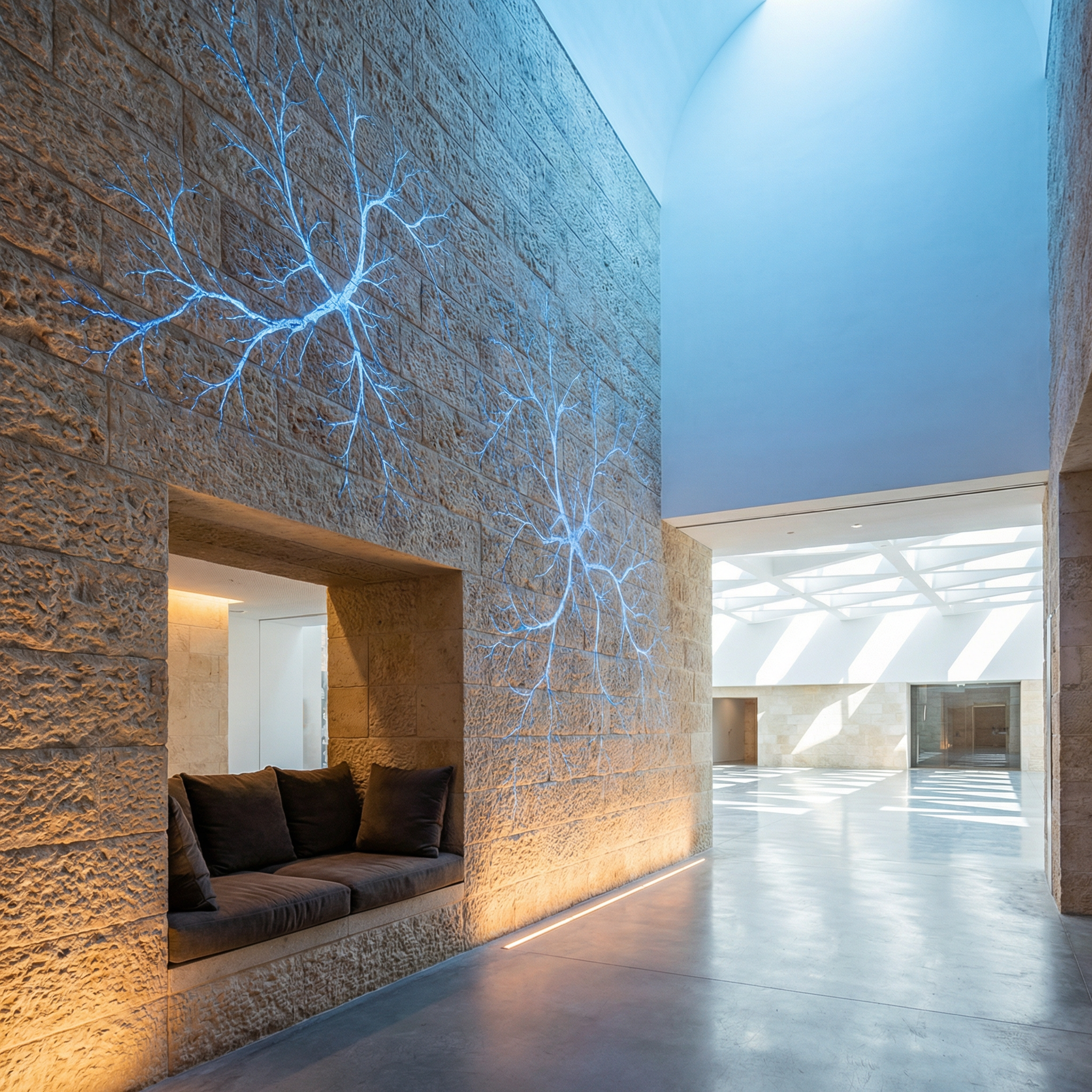
- The Healing Power of Neuro-Design explored the emerging field of neuroarchitecture — the study of how built environments affect brain function and mental health. This goes beyond aesthetics: ceiling height measurably affects abstract thinking, exposure to natural light affects serotonin production, acoustic environments affect stress levels, and spatial layouts affect social behavior. The episode examined the research, the hospital and school design applications, and the practical implications for anyone designing or choosing a workspace or home. The hosts were careful to distinguish well-supported findings from the more speculative end of the field.
Hearing and perception are so fundamental to human experience that their mechanisms are easy to take for granted. These episodes make the invisible visible — or rather, make the inaudible audible: the physics, neuroscience, and cultural history that shape what you hear and how you experience sound.
Episodes Referenced