Beyond Egg Cartons: The Science of Sound, Noise, and Acoustic Design
Sound is the most underrated factor in how we live and work. Five episodes explored the science of acoustic environments — from blocking unwanted noise to designing spaces where audio actually works.
The Urban Noise Problem
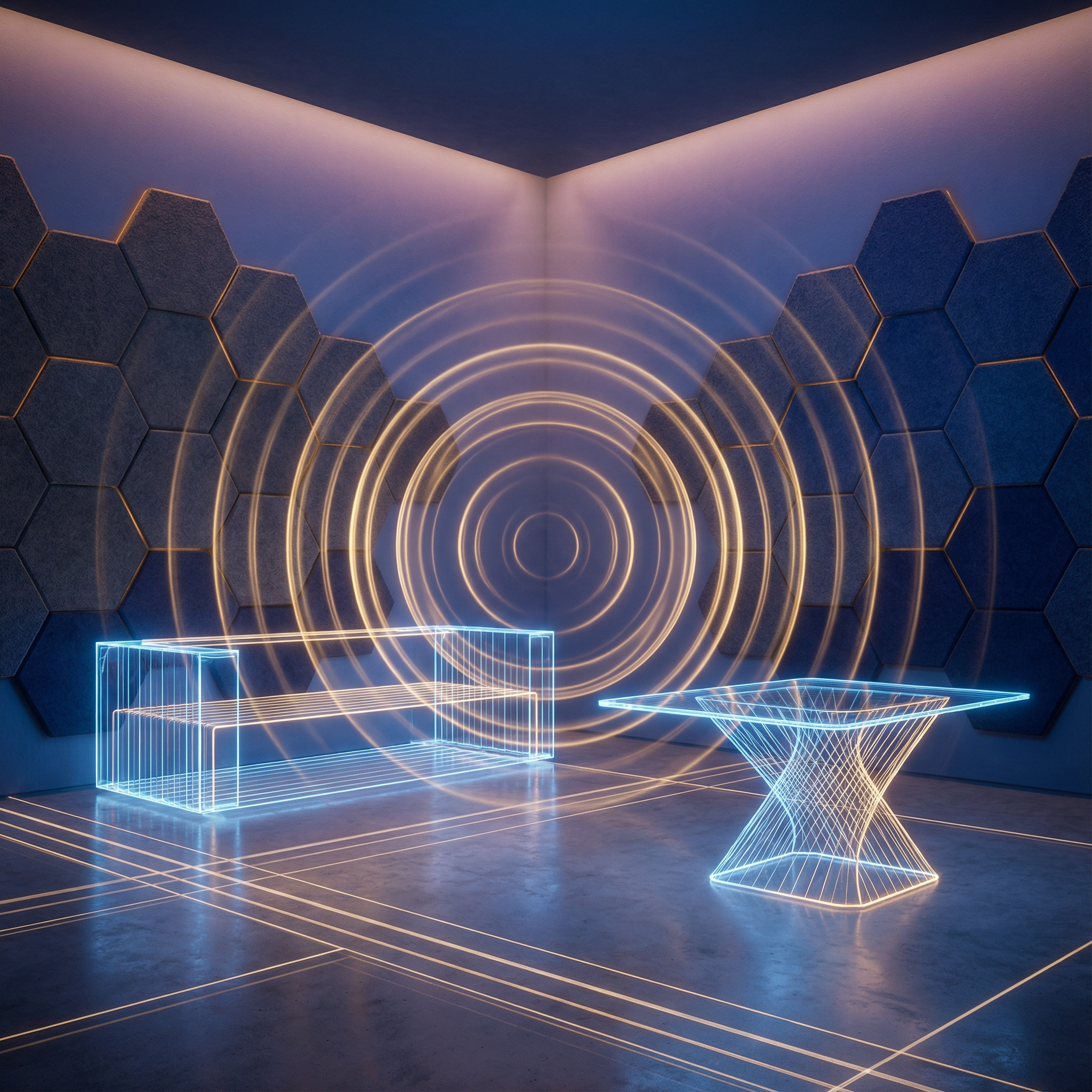
- Beyond Egg Cartons dismantled common soundproofing myths. Egg cartons do nothing. Foam panels reduce echo but don’t block sound. Real soundproofing requires mass, decoupling, and damping — and the episode explained each principle with practical applications for apartments, home offices, and studios. The key insight: sound isolation and sound treatment are completely different problems.
Designing for Voice
- Designing the Voice-First Workspace addressed a problem that’s becoming urgent as more people use voice AI for dictation and control: rooms that work well for voice interaction. This means low reverberation time (RT60), minimal background noise, and microphone-friendly furniture placement. The hosts proposed a checklist for evaluating and improving any room’s voice performance.
Spatial Audio
-
Sonic Sorcery explored how spatial audio systems map room acoustics in real time. Modern AV receivers and smart speakers use measurement microphones to calibrate output to room geometry, compensating for reflections, standing waves, and speaker placement compromises.
-
Mastering Multi-Room Audio tackled the multi-zone challenge: getting consistent audio quality across rooms with different sizes, shapes, and furnishings. The hosts covered EQ profiling per zone, avoiding “EQ lasagna” (over-processing), and the network latency requirements for synchronized playback.
The Human Factor
- Tuning Out the Noise shifted focus to the listener. For people with sensory processing differences, ADHD, or autism, acoustic environments aren’t just uncomfortable — they’re debilitating. The episode reviewed adaptive noise cancellation, brown noise generators, and hearing-aid-adjacent technology designed for sensory regulation rather than hearing loss.
Sound is invisible but ever-present. These episodes make the case that designing for acoustics is as important as designing for light, temperature, or ergonomics — and far more commonly neglected.
Episodes Referenced