Daniel's been on a belt journey. He found the nylon EDC tactical belt, loved the durability, but he's circling back to leather for that classic look. And he's asking the right question: what actually makes a leather belt well-made? Because most of what's sold as a leather belt is structurally doomed from the moment it leaves the factory. Bonded leather, single rivet buckles, edge fraying within months. He wants the hallmarks of quality, the buckle engineering that matters when you're carrying gear, and the manufacturers who get it right.

And what I love about this question is that Daniel's already done the hard part. He figured out that his two-year custom leather belt outperformed every fashion belt he'd ever owned, and it wasn't more expensive. The variable wasn't price. It was knowing what to look for. That's the whole buy-it-for-life methodology in a single data point.
The belt that answers questions, not asks them.
Right. And a leather belt that's built properly answers the same questions a nylon EDC belt does. Can it hold weight without stretching? Will the buckle fail before the leather does? Can I repair it instead of replacing it? The answers come from material science, not brand names.
So let's start with my own trajectory here, because it mirrors Daniel's almost exactly. Before I knew anything about leather, I bought whatever looked decent at the mall. Those belts disintegrated in about a year. Every time. The edges frayed, the buckle loosened, and by month ten I was cinching it tighter to compensate for the stretch. Then I walked into a custom leather shop, got a belt cut to my waist, and it lasted two years. I thought I'd arrived. Turns out I'd only reached the mezzanine.
What failed on that two-year belt?
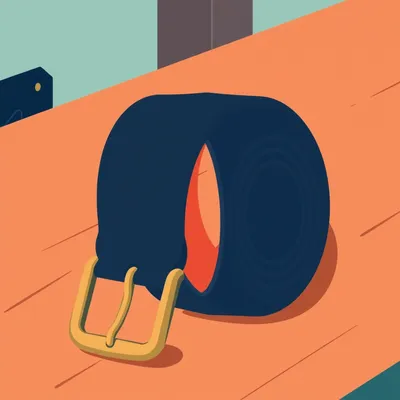
The leather itself held up, but the buckle attachment was a single rivet. When that rivet started to loosen, the whole belt became a liability. Couldn't repair it without drilling out the rivet and replacing it with something better, and at that point you're doing surgery on a patient who probably wasn't worth saving.
And that rivet is the perfect entry point for this whole discussion. Because a leather belt is a system. The hide, the tannage, the edge finishing, the buckle, and the attachment method all have to work together. If any one of them is compromised, the belt fails. And most belts on the market compromise on all five.
So the thesis here is that a leather belt is a microcosm of the entire genuine versus false leather problem. Understand belt construction and you understand how to evaluate any leather good. Wallets, holsters, boots. Same principles, same failure modes.
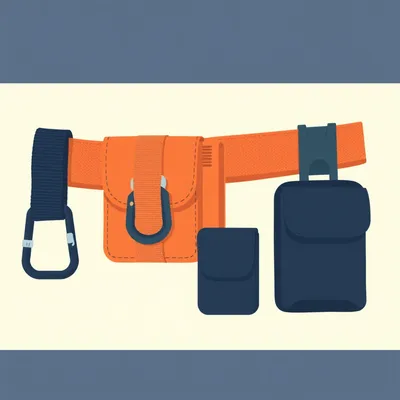
And for the EDC audience, this isn't about abandoning nylon. It's about expanding the toolkit. Leather and nylon serve different contexts. Concealed carry versus overt load-out. Formal versus field. But both deserve the same scrutiny of material science and construction. The question isn't which material is better. It's whether the thing you're buying was built by someone who understood the forces it would face.
So to understand why my first decent belt lasted two years instead of one, we need to talk about what leather actually is, and what most so-called leather belts are made of.
Let's start with the hide itself. When you take an animal skin and prepare it for use, the hide has layers. The outermost layer, the one that faced the world when the animal was alive, has the tightest collagen fiber structure. Those fibers are densely packed, interwoven, and incredibly strong. That's full-grain leather. You leave that top layer intact, with all its natural imperfections. Scars, insect bites, grain variation. Those aren't defects. They're proof that you're looking at the strongest part of the hide.
And top-grain?
Top-grain is full-grain that's been sanded. They remove the outermost surface to eliminate those natural imperfections, and in doing so they remove the strongest layer. The collagen fibers underneath are looser, less organized. Top-grain looks more uniform, which is why fashion brands love it, but it's structurally inferior. It stretches more, wears faster, and doesn't develop the same patina. It's leather that's been optimized for appearance at the expense of function.
And then there's genuine leather.
Genuine leather is the greatest triumph of marketing over truth in the history of consumer goods. The term sounds like it means real, authentic, high-quality leather. What it actually means is the lowest grade that can legally be called leather. It's typically split leather, which is the inner layer left after the top grain has been separated, or it's bonded leather, which is leather scraps ground into a pulp, mixed with adhesives, and pressed onto a fiber backing. It's the particle board of leather.
So when Daniel's fashion belts were fraying and disintegrating within a year, what was actually happening?
Delamination. A bonded leather belt is a thin veneer of leather particles glued to a fabric or fiber core. Every time you flex it, every time you pull it through a belt loop, you're stressing that glue bond. Eventually the edge starts to separate, moisture gets in, and the whole thing comes apart like wet cardboard. The fraying at the edges isn't wear and tear. It's the product revealing what it actually is.
And this is why the bend test works. I've heard you describe this before. A quality full-grain belt resists bending along its length but flexes easily across its width. A cheap belt bends easily in both directions.
Because the fiber structure is compromised. Full-grain leather has directionality. The collagen fibers run in a particular orientation, and when you try to bend against that grain along the length, the material resists. That resistance is what gives the belt its load-bearing capacity. When you load pouches or a holster onto a belt, the weight pulls downward, which tries to bend the belt along its length. A full-grain belt says no. A bonded belt says sure, and then it sags, stretches, and fails.
So the bend test is a field diagnostic. You pick up a belt in a store, you try to fold it lengthwise like a hot dog bun. If it folds easily, put it back.
Put it back immediately. A proper full-grain belt should feel almost like you're trying to fold a thin piece of wood along the grain. It'll flex across the width, which is what lets it wrap around your waist comfortably, but along the length it should fight you.
Now, tannage. This is where I get hazy. Vegetable-tanned versus chrome-tanned. Why does it matter for a belt?
Tannage is the chemical process that converts raw animal hide into stable, usable leather. Vegetable tanning uses natural tannins from tree bark, leaves, and other plant sources. It's slow. It can take weeks or months. The result is a leather that's stiff, dense, and holds its shape under load. It develops a patina over time. The oils from your hands, exposure to sunlight, the friction of daily wear. All of that darkens and enriches the leather in a way that's unique to your use pattern.
And chrome tanning?
Chrome tanning uses chromium salts. It's fast. Hours instead of weeks. The result is softer, more pliable, and more uniform in color. It's great for jackets, upholstery, things that need to drape. But for a belt that's going to carry weight, softness is a liability. Chrome-tanned leather stretches more under tension. Over time, a chrome-tanned belt that's loaded with pouches will elongate, the holes will distort, and you'll find yourself cinching it tighter to compensate.
So vegetable-tanned is the standard for gun belts and heavy-duty EDC use.
It's non-negotiable. Every serious belt maker in the gun belt and EDC space uses vegetable-tanned leather, usually from specific tanneries with reputations for consistency. Hermann Oak in the U.S. is one of the big names. Wickett and Craig. These tanneries have been doing this for over a century, and their leather behaves predictably under load. That predictability matters when you're engineering a product meant to last decades.
Edge finishing. You mentioned this as a quality signal. What am I looking at?
The edge of a leather belt tells you everything about the construction. A quality belt will have burnished edges. That means the edges have been sanded smooth, then treated with wax or gum tragacanth and burnished with friction until they're hard, smooth, and sealed. It takes time and labor. A cheap belt will have raw cut edges, maybe painted over with edge paint to hide the fact that it's bonded leather. That edge paint will crack and peel within months, and once it does, the delamination starts.
So if I see a belt with a painted edge, that's not necessarily a dealbreaker, but I should be suspicious.
Painted edges on a full-grain belt are fine if they're done well. The problem is that edge paint is also the go-to solution for hiding bonded leather edges. You need to combine the edge inspection with the bend test and the labeling. If the edge is painted, the belt bends easily lengthwise, and the label says genuine leather, you're holding a bonded belt with a costume.
So we know what good leather looks like. But for the EDC crowd, people who actually load their belts with gear, the buckle and the overall system matter just as much as the hide.
And this is where a lot of otherwise decent leather belts fall short. They'll use good leather but attach the buckle with a single rivet, and that rivet becomes the failure point. A standard roller buckle attached with one rivet can fail under fifty-plus pounds of continuous pull. Not because the leather tears, but because the rivet loosens, the hole elongates, and suddenly the buckle is wobbling and the belt is unreliable.
So what's the fix?
Two things. First, the attachment method. Chicago screws are the standard among quality makers. A Chicago screw is essentially a threaded post and screw that clamps the leather between two metal surfaces. It's removable, replaceable, and distributes the load across a wider area than a rivet. If the buckle fails, you unscrew it and put on a new one. If the leather around the screw hole eventually wears, you can often trim the belt and re-punch the hole. The belt is repairable.
And a rivet makes the belt disposable.
A rivet is permanent. When it fails, you're drilling it out or throwing the belt away. For a buy-it-for-life product, repairability isn't a nice-to-have. It's the difference between a ten-year belt and a two-year belt with good leather.
The second thing?
The buckle itself. For EDC-style load-out, with holsters and pouches, the buckle needs to handle tension without deforming. A standard cast zinc buckle from a fashion belt will crack under load. You want a solid brass or stainless steel roller buckle with a reinforced center bar. The roller reduces friction on the leather, which reduces wear at the buckle hole. The reinforced center bar prevents the buckle from bending under tension.
And then there's the option of putting a Cobra buckle on leather.
Which is the best of both worlds for some people. AustriAlpin's Cobra buckle, the same one used on high-end nylon EDC belts, can be mounted on a leather belt. But it requires a reinforced leather strap section at the attachment point because the Cobra buckle concentrates stress differently than a roller buckle. You can't just sew a Cobra buckle onto a thin leather strap and expect it to hold. The leather has to be thick enough, usually fourteen ounces or more, and the stitching has to be heavy-duty nylon or polyester thread, not cotton.
So let's talk specific manufacturers. Daniel asked who the most well-respected durable makers are in the U.S. and elsewhere.
Hanks Belts, out of Alabama, is probably the best entry point for someone who wants to buy one belt and be done. They use fourteen-ounce full-grain steerhide, vegetable-tanned, with a hundred-year warranty. A hundred years. They'll replace any belt that fails, no questions asked. Their belts are priced in the fifty to seventy dollar range, which is absurd for what you're getting. The warranty alone is a concrete signal of confidence in their construction.
A hundred-year warranty on a belt. That's either hubris or absolute certainty.
With fourteen-ounce steerhide and proper construction, it's certainty. Steerhide at that thickness has enormous tensile strength. We're talking comparable to nylon webbing in terms of load-bearing capacity, though the failure pattern is different. Nylon will abrade and eventually tear. Leather will stretch slightly over years and then stabilize. It doesn't catastrophically fail if it's full-grain and properly tanned.
Who else?
Thirteen fifty Leather in Texas uses ten-ounce Hermann Oak vegetable-tanned leather with Chicago screw buckle attachments. They're a smaller operation, very focused on the craft. Their belts are in a similar price range, and the Hermann Oak leather is some of the best domestic leather you can get. The ten-ounce thickness is slightly lighter than Hanks, which some people prefer for everyday wear. Fourteen ounces is a serious belt. You feel it. Ten ounces is substantial but more comfortable for all-day wear without a load.
And for someone who specifically wants a gun belt?
Beltman, out of Kansas, is the name that comes up repeatedly. They offer an internal polymer stiffener sandwiched between layers of leather. So you get the look and feel of leather on the outside, but a synthetic stiffener inside that prevents the belt from sagging under the weight of a holster and firearm. That's an eighty to hundred dollar belt, and it's purpose-built for concealed carry. The stiffener also prevents the belt from curling, which is a common failure pattern for leather gun belts without reinforcement.
Curling being when the belt starts to form a U-shape in cross-section from the weight pulling down on it.
Right. Over time, the weight of a holster pulls the top edge of the belt outward and the bottom edge inward. The belt curls, it becomes uncomfortable, and it no longer distributes weight evenly. An internal stiffener prevents that entirely. It's an elegant engineering solution. Leather for aesthetics and comfort against the body, polymer for structural integrity.
Are there equivalents outside the U.S.?
Several. In the UK, there's a maker called Equus Leather that does bespoke belts with bridle leather, which is a specific type of vegetable-tanned leather that's been stuffed with waxes and oils during tanning. Very dense, very weather-resistant. In Japan, there's a whole tradition of leather craft that produces extraordinary belts, though they tend to be more fashion-focused than load-bearing. For EDC purposes, the American makers are hard to beat because they're building for the gun belt market, which has the most demanding requirements.
Let's talk about the buy-it-for-life math, because this is where Daniel's experience really clicks. He was buying fashion belts that disintegrated in a year. Then a custom leather belt that lasted two years. Now he's looking at belts that could last a decade or more.
The math is brutal. A twenty-five dollar fashion belt that lasts twelve to eighteen months. Over ten years, you're buying six to eight belts. That's a hundred and fifty to two hundred dollars, and you're generating waste with every replacement. A seventy-dollar full-grain leather belt that lasts ten-plus years costs less than half as much over the same period and performs better the entire time. And that's before you factor in the annoyance of having a belt fail when you're not expecting it.
The failure always happens at the worst moment. You're at an event, you stand up, and suddenly your belt feels loose. You look down and the buckle is hanging at an angle.
And you spend the rest of the day cinching it tighter, tucking in your shirt to hide the frayed edge, and making a mental note to buy another disposable belt. The buy-it-for-life approach eliminates that entire category of annoyance.
There's an environmental dimension here too that Daniel touched on. If you're going to use animal leather, which has its own set of ethical and environmental considerations, the worst thing you can do is treat it as disposable. A full-grain leather belt that lasts a decade honors the resource. A bonded leather belt that lasts a year is leather cosplay. It's plastic and glue with a leather veneer, and it ends up in a landfill just as fast as anything synthetic.
And the tanning matters here too. Vegetable tanning is more environmentally benign than chrome tanning, which produces chromium-laden wastewater that has to be carefully managed. Vegetable tanning uses natural tannins, and the wastewater is biodegradable. It's slower and more expensive, which is why most cheap leather is chrome-tanned, but the environmental calculus favors vegetable tanning if you care about the full lifecycle.
So the same research skills that let someone evaluate a nylon EDC belt apply to leather. Material, construction, warranty, manufacturer reputation. The buy-it-for-life mindset is a methodology, not a product category.
And the methodology is transferable. Once you learn to identify full-grain leather, check buckle attachments, and read warranties as signals of manufacturer confidence, you can apply that to wallets, boots, watch straps, holsters. The whole leather goods market becomes legible.
Let's address some misconceptions. The biggest one is probably that genuine leather means real, high-quality leather.
It's the most successful consumer deception in the leather industry. Genuine leather sounds premium. It's not. It's the legal minimum. If a product says genuine leather, assume it's bonded or split leather until proven otherwise. The term you want is full-grain. If the listing doesn't say full-grain, ask. If they won't answer, walk away.
Another one: all leather belts are basically the same, price differences are just branding.
Construction methods create massive durability differences. A full-grain vegetable-tanned belt with Chicago screws and a solid brass buckle is a different category of product from a bonded leather belt with a single rivet and a cast zinc buckle. They happen to share the word belt, but that's where the similarity ends. It's like comparing a nylon EDC belt with a Cobra buckle to a strip of elastic with a plastic clip. Both go around your waist. One is engineered.
And leather is always less durable than nylon for load-bearing.
Not true. A fourteen-ounce full-grain leather belt has comparable tensile strength to nylon webbing. The difference is in behavior. Nylon has some stretch and recovery. Leather has almost no stretch if it's vegetable-tanned and thick enough. That stiffness is actually an advantage for carrying. A holster on a nylon belt can bounce slightly as you move. On a stiff leather belt, it stays put. The tradeoff is that leather requires more care. You need to condition it occasionally. You can't soak it in saltwater and expect it to be fine. But in terms of pure load-bearing capacity, leather holds its own.
And thicker is always better.
That's the fourth misconception. Thickness has to match the use case. Ten to twelve ounces for everyday carry. Fourteen ounces or more for heavy load-bearing with holsters and multiple pouches. But a sixteen-ounce belt is going to be uncomfortable for all-day wear and will chew through belt loops. The leather doesn't give, so the friction concentrates on the fabric of your pants. There's a sweet spot, and more isn't always better.
All of this is useful knowledge, but it's useless if you don't know where to spend your money. Let's make it concrete.
Here's the actionable checklist. One, confirm it's full-grain. Not genuine leather, not top-grain. The listing should say full-grain explicitly. Two, check the thickness. Ten to fourteen ounces, which is about four to five millimeters, for load-bearing use. If the listing doesn't specify the weight in ounces, that's a yellow flag. Three, verify the buckle attachment. Chicago screws or heavy stitching. Not a single rivet. Four, prefer vegetable-tanned leather. It'll be stiffer out of the box and it'll stay that way. Five, look for a warranty. It's a proxy for manufacturer confidence. A company that offers a hundred-year warranty knows their belts aren't coming back.
And where to start?
Hanks Belts for the best warranty-to-price ratio. Fifty to seventy dollars, a hundred-year guarantee, fourteen-ounce full-grain steerhide. That's the no-brainer entry point. If you want a dedicated gun belt with an internal stiffener, Beltman in the eighty to hundred dollar range. If you want to support a smaller shop and get something with a bit more craft character, Thirteen fifty Leather. And if you have a local custom leather worker, that's worth exploring too. You'll pay more, but you'll get a belt cut exactly to your measurements with the buckle of your choice.
The custom route is what Daniel tried first, and it got him two years instead of one. The next step is getting ten years instead of two.
And the difference between a two-year custom belt and a ten-year custom belt is the same checklist. Full-grain, vegetable-tanned, proper buckle attachment. A custom leather worker who knows their craft will use those materials by default. One who doesn't will sell you a bonded belt with a rivet and call it handmade.
So you've got your checklist and your shortlist of manufacturers. But there's one more question worth asking. What comes next for leather itself?
This is the open question I find genuinely interesting. We're seeing alternatives emerge. Mushroom leather, cactus leather, lab-grown leather. These are being marketed as sustainable alternatives to animal leather, and they're improving rapidly. But right now, none of them match the structural performance of full-grain cowhide for load-bearing applications. The collagen fiber structure in animal hide is the result of millions of years of evolution. Replicating that in a lab or growing it from mycelium is an enormous materials science challenge.
So the EDC world may always need animal leather for maximum durability.
For the foreseeable future, yes. The alternatives are fine for fashion accessories, watch straps, things that don't bear weight. But a belt that's going to carry a holster and pouches needs the tensile strength and dimensional stability of full-grain leather. Maybe that changes in a decade. Maybe someone cracks the code on lab-grown leather with the same fiber structure. But I wouldn't bet my pants on it yet.
Betting your pants on it is exactly the risk.
And that's the thing. A belt is infrastructure. It's holding up your trousers and your gear. If it fails, you're having a bad day. The buy-it-for-life approach isn't about being precious. It's about eliminating a failure pattern from your daily life.
So if you've been wearing a fashion belt that's already showing edge fraying, replace it with a full-grain belt and track how long it lasts. Daniel's data point was two years for his first decent belt. I'd be curious what the next one delivers now that he knows what to look for.
And the same discernment that separates a nylon EDC belt from a gas station special separates a full-grain leather belt from a mall kiosk impulse buy. Know what you're buying, and buy it once.
This has been My Weird Prompts. Thanks to our producer Hilbert Flumingtop.
If you've got a belt data point or a manufacturer we didn't mention, email the show at show at my weird prompts dot com.
We'll be back soon.