Hey everyone, welcome back to My Weird Prompts. I am Corn, and I am sitting here in a very chilly Jerusalem today. It is mid-February, and if you have ever lived in one of these old stone houses, you know that the cold does not just sit outside—it settles into the very marrow of the walls. I have got a thick wool blanket over my lap and a steaming mug of tea that is losing heat way too fast.

And I am Herman Poppleberry, reporting for duty. I am currently wearing three layers, Corn, and I am still considering a fourth. It is definitely sweater weather. I think we are all feeling a bit sluggish in the house today. Our housemate Daniel actually sent us a prompt while he was nursing a bit of a cold from his bed, and it is a topic that hits home for a lot of us who struggle with the snooze button, especially when the sun is taking its sweet time to come up.
Yeah, Daniel was talking about his recent shift from being a habitual night owl to trying out an earlier bedtime. He has been a four-in-the-morning kind of guy for years—that is when he says his creative juices really start flowing. But lately, he has been trying to flip the script. He noticed something that feels almost counterintuitive to him. He is waking up after six or seven hours of sleep feeling more refreshed and alert than he used to feel after eight or nine hours when he went to bed in the pre-dawn hours.
It is a classic observation, Corn, and it is one that science has actually started to validate in some really fascinating ways over the last few years. We used to think of sleep as a simple bank account—you just need to deposit eight hours whenever you can. But the research coming out in twenty-twenty-four and twenty-twenty-five is showing us that the "when" is just as vital as the "how long." Today we are diving into the deep end of circadian biology. We are asking the ultimate question for the modern age: is sleep before midnight actually worth more than sleep after midnight? Or is the sun just a judgmental bystander in our sleep schedules?
I love this because it challenges that idea of sleep as just a commodity. Most people think of sleep like a battery. You need eight hours of charge, and it does not matter if you plug it in at ten in the evening or four in the morning, as long as the total time is the same. But Daniel is finding that the timing might be just as important as the duration. He feels like he is getting a "higher quality" charge when he aligns with the dark.
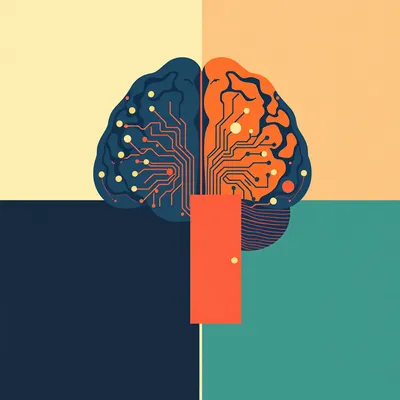
Exactly. And to understand why Daniel feels like a new man, we have to talk about the master clock. Inside your brain, specifically in the hypothalamus, there is a tiny structure called the suprachiasmatic nucleus. We usually just call it the S C N. This is the conductor of your entire biological orchestra. It is about the size of a grain of rice, but it contains about twenty thousand neurons that are responsible for keeping your body in sync with the twenty-four-hour solar cycle. It takes cues from the environment, primarily light, to tell every cell in your body what time it is and what it should be doing.
So when Daniel is staying up until four in the morning, he is essentially telling his conductor that the sun is still up, or at least he is ignoring the conductor's signals. But the rest of the orchestra—the hormones, the organs, the metabolic processes—they are still trying to follow the original score, right?
Precisely. This leads to what researchers call circadian misalignment. Think of it like a theatrical play where the lighting guy is on a different script than the actors. The actors are trying to perform a quiet, intimate nighttime scene, but the spotlight is at full blast and the stage hands are moving furniture around. In the case of sleep, our bodies have evolved over millions of years to perform specific maintenance tasks at specific times relative to the solar cycle. We are not just "sleeping"; we are undergoing a highly choreographed sequence of biological repairs.
Let us get into the specifics of that maintenance. Daniel mentioned feeling more refreshed with less sleep when he goes to bed earlier. Is there a specific type of sleep he is getting more of between ten in the evening and midnight?
There absolutely is. This is where we talk about sleep architecture. Sleep is not one monolithic state. We cycle through non-rapid eye movement sleep, or N REM, and rapid eye movement sleep, which is REM. N REM is further divided into stages, with stage three being that deep, slow-wave sleep. That is the restorative stuff. That is when your body repairs tissue, builds bone and muscle, and strengthens the immune system. It is also when the brain does its most intense "housekeeping."
And the timing of these stages is not evenly distributed throughout the night, is it? I remember you mentioning once that the first half of the night is different from the second half.
That is the key to Daniel's discovery. Your brain's desire for deep, slow-wave sleep is strongest in the early part of the night. Generally, between the hours of ten in the evening and two in the morning, your sleep cycles are heavily weighted toward that deep N REM sleep. As the night progresses toward dawn, the balance shifts. The second half of the night is dominated by REM sleep, which is more about emotional processing, dreaming, and memory consolidation.
So if Daniel goes to bed at four in the morning, he is essentially jumping into the sleep cycle right when the body is naturally pivoting toward REM sleep. He is missing that prime window for the deep, physically restorative sleep that happens earlier.
That is exactly right. Even if he sleeps for eight hours from four in the morning until noon, his brain is fighting against a rising tide of core body temperature and cortisol. See, your body temperature starts to drop in the evening, reaching its lowest point around four in the morning. At the same time, cortisol, which is our alertness hormone, starts to climb to prepare us for the day. If you are just starting your sleep at four in the morning, you are trying to descend into deep sleep just as your internal biology is revving the engine to wake you up. You might be unconscious, but your cells are getting "daytime" signals.
That explains why daytime sleep often feels so fragile. You know that feeling where you sleep in late on a Saturday, maybe you get ten hours total, but you still wake up feeling like a zombie? It is like the sleep was "thin" or "hollow."
It really is. There was a significant study published in early twenty-twenty-four that looked at shift workers versus people on a standard schedule. They found that even when the total sleep time was matched exactly, the shift workers had significantly less slow-wave sleep and higher levels of systemic inflammation. Their bodies were physically stressed by the act of sleeping at the wrong time. Their immune systems were essentially confused, wondering why the "repair crew" was showing up while the "factory" was supposed to be running.
That is fascinating. It makes me think about the glymphatic system. We have talked about this briefly in past episodes, but for anyone who missed it, the glymphatic system is basically the brain's waste management system. It flushes out metabolic toxins like amyloid beta, which is linked to Alzheimer's disease. Does the timing of sleep affect that cleaning process too?
It does, because the glymphatic system is most active during deep, slow-wave sleep. Recent research from twenty-twenty-five has shown that the "pulsatile flow" of cerebrospinal fluid—which is what washes the brain—is most efficient when it is synchronized with the lowest points of our core body temperature. If you are cutting your deep sleep window short by going to bed late, you are essentially giving the cleaning crew two hours to do an eight-hour job. Over time, those metabolic byproducts can accumulate. So when Daniel says he feels more refreshed after six hours of early sleep, it is likely because his glymphatic system actually had a full, uninterrupted shift in sync with his body's natural rhythms. He is literally waking up with a cleaner brain.
So the old wives' tale that every hour of sleep before midnight is worth two after midnight actually has some biological truth to it. Maybe not exactly a two-to-one ratio in every case, but the value of those early hours is objectively higher for physical restoration.
It is one of those rare cases where the folk wisdom actually lines up with the neurobiology. Now, we should mention that there is some individual variation. You have probably heard of chronotypes—the idea that some people are naturally "larks" and others are naturally "owls." There is a genetic component to this involving the P E R three gene. Some people really do have a slightly longer or shorter internal clock.
Right, but even for a natural night owl, the modern world is a bit of a trap, isn't it? Because even if your genes say you prefer to stay up late, the sun and the rest of society are still operating on that solar cycle.
Exactly. This is what scientists call "social jetlag." It is the discrepancy between your biological clock and your social clock. Even if you consider yourself an owl, your metabolic processes, like insulin sensitivity and hormone regulation, are still deeply tied to the light-dark cycle. When you stay up until four in the morning under bright artificial lights, you are suppressing melatonin and confusing those systems. A study from late twenty-twenty-four showed that "night owls" who forced themselves to align more closely with the sun for just three weeks reported significantly lower levels of stress and depression.
Let us talk about that light aspect for a second. Daniel mentioned he has been trying to move his bedtime earlier. One of the biggest obstacles to that is the blue light from our screens. How does that interact with this whole circadian rhythm question?
Blue light is the most potent signal to the S C N that it is daytime. It specifically suppresses the production of melatonin, which is the hormone that tells your body it is time to wind down. If you are looking at a smartphone at eleven in the evening, you are effectively telling your brain that the sun is still up. This pushes your entire sleep architecture later, making it harder to get those restorative hours before midnight. But it is not just blue light anymore—researchers are now talking about "melanopic lux," which is a measure of how much a light source stimulates the circadian system. Even bright white or "warm" lights, if they are intense enough, can trick the brain.
I read something interesting recently about the temperature of light as well. It is not just the blue light, but the intensity and the angle. In nature, as the sun goes down, light becomes warmer, dimmer, and it comes from a lower angle. Our ancestors spent their evenings around firelight, which has almost no blue light and sits low on the horizon.
That is a great point. Firelight and candlelight actually do not disrupt melatonin production the way an L E D screen does. When we replace the sunset with high-intensity overhead lighting and bright screens, we are essentially creating a state of "perpetual noon" in our living rooms. It is no wonder our bodies are confused. We are living in a biological twilight zone.
So, if Daniel is trying to maintain this new, earlier schedule, he probably needs to be very careful about his light environment in the hours leading up to ten in the evening.
Absolutely. And he should also look at morning light. This is something that many people overlook when they focus on bedtime. To have a good night's sleep, you need to "anchor" your clock in the morning. Getting bright, natural sunlight into your eyes within thirty minutes of waking up tells the S C N that the day has started. This sets off a biological timer for melatonin production to start about twelve to fourteen hours later. It is like setting a countdown clock.
It is like winding a watch. If you do not wind it in the morning, it starts to drift. I think this explains why Daniel is feeling so much better. By waking up earlier, he is likely getting more morning light, which is reinforcing his circadian rhythm and making his evening sleep more efficient. He has stopped the drift.
It is a virtuous cycle. Better morning light leads to earlier melatonin, which leads to better deep sleep, which makes it easier to wake up and get morning light again. It is the opposite of the "night owl spiral," where you stay up late, sleep in, miss the morning light, and then find yourself wide awake at midnight again because your body never got the "day has started" signal.
I want to push back on one thing though, Herman. What about the people who say, "I am just more productive at night"? I have always felt that way. My brain feels more creative when the world is quiet. Is that just an illusion, or is there a cognitive trade-off?
That is a very real phenomenon, and it is something researchers have looked into quite deeply. There is a theory called the "wake effort hypothesis." Essentially, as you stay awake longer, your brain has to work harder to maintain focus. For some people, that extra effort actually leads to a state of hyper-focus or creative flow. You are essentially "overclocking" your frontal lobe. However, the cost is often paid the next day in terms of executive function, emotional regulation, and even physical health.
So you might get that burst of creativity at two in the morning, but you are effectively borrowing that energy from your future self. It is a high-interest loan.
Precisely. You are high on adenosine and stress hormones. Adenosine is the chemical that builds up in your brain the longer you are awake—it creates "sleep pressure." When you push through that pressure, your body often releases a hit of cortisol and adrenaline to keep you going. That is that "second wind" people talk about. But it is a stress response. It is not a sustainable state for the body. Long-term, this "overclocking" can lead to burnout and a weakened immune system, which might be why Daniel was nursing a cold when he sent us this prompt!
It is like running a car in the red zone of the tachometer. You get better performance for a short period, but you are generating a lot of heat and wearing out the hardware faster.
That is a perfect analogy. And speaking of hardware, we should mention the metabolic effects. When you sleep out of sync with the sun, your body's ability to process glucose is compromised. There is a reason why late-night snacking is so much more damaging than eating the same calories during the day. Your insulin sensitivity naturally drops in the evening because your body expects to be sleeping, not digesting. A study from twenty-twenty-five showed that people who eat late at night have a significantly higher risk of developing metabolic syndrome, even if they exercise and eat "healthy" foods.
Wow, so Daniel's earlier bedtime might actually be helping his waistline and his blood sugar as much as his brain. It is a total system upgrade.
It almost certainly is. There was a famous study from the University of Colorado that showed that just one week of camping, with no artificial light, shifted people's biological clocks by an average of two hours. Their melatonin started rising at sunset instead of midnight. They found that these people also had better metabolic markers and felt more alert during the day. We are built for the campfire, not the smartphone.
That is incredible. It shows how plastic our systems are, but also how much we have drifted from our natural state. I think this is a great place to transition to some practical advice for Daniel and for our listeners who might be in that same boat. If someone wants to reclaim those "golden hours" before midnight, where do they start?
Definitely. If you want to capture those hours of sleep before midnight, the first step is the light anchor. Like we said, get that morning sun. Even if it is cloudy in Jerusalem or London or Seattle, the lux levels outside are significantly higher than anything you get from an indoor light bulb. Spend ten to fifteen minutes outside without sunglasses.
And what about the evening transition? If Daniel wants to be asleep by ten in the evening, when should he start his "digital sunset"?
Ideally, two hours before. At eight in the evening, he should dim the overhead lights and switch to warm, low-level lamps. If he has to use a screen, he should use those orange-tinted blue-light-blocking glasses. They look a bit silly, but they really do help prevent that melatonin suppression. Also, stop eating at least three hours before bed. Digestion raises your core body temperature, which is the exact opposite of what you want.
You mentioned temperature earlier. You said the body temperature needs to drop for deep sleep. How can we hack that?
A cool room is essential. Most experts recommend around eighteen degrees Celsius, which is about sixty-five degrees Fahrenheit. A warm bath or shower about an hour before bed can actually help too. It seems counterintuitive, but the warm water brings blood to the surface of your skin—it is called vasodilation. When you get out of the bath, that heat dissipates quickly, causing your core temperature to drop, which is a powerful signal to the brain that it is time for deep sleep.
That is a great tip. I also think we should mention the role of consistency. Daniel mentioned he is doing this a few nights a week. Is that enough, or does the S C N need a seven-day-a-week schedule to really lock in?
The S C N definitely prefers a seven-day schedule. We have this habit of having a "work schedule" and a "weekend schedule," but your biological clock does not know what a Saturday is. When you sleep in until noon on Sunday, you are essentially giving yourself two hours of jetlag that you then have to recover from on Monday and Tuesday. This is what we call "social jetlag." It is much better to keep your wake time consistent, even on the weekends. If you are tired, take a short twenty-minute nap in the early afternoon, but do not shift your wake-up time by more than an hour.
That is the hardest part for most people. The lure of the weekend sleep-in is very strong. But if you realize that it is actually making your Monday feel like you just flew back from London to New York, it becomes less appealing. You are basically torturing your internal conductor.
Exactly. It is about shifting your perspective. Instead of seeing an early bedtime as a chore or a loss of free time, see it as an investment in the quality of your waking hours. If Daniel can get more out of six hours of sleep than he used to get out of nine, he is actually gaining three hours of high-quality life every single day. That is twenty-one hours a week!
That is a powerful way to look at it. You are not losing your night; you are gaining your day. I am curious about the second-order effects here, Herman. If everyone shifted their schedules to be more in sync with the sun, what would that do to our society? We are so used to being a twenty-four-seven culture now.
It would be a massive public health shift. We would probably see a significant drop in chronic diseases like type-two diabetes and heart disease, which are both linked to circadian disruption. We might also see a change in mental health. There is a very strong correlation between sleep timing and depression. People who are naturally morning types tend to report higher levels of life satisfaction and lower levels of anxiety. A society that sleeps with the sun is a society that is literally more "in tune."
It makes sense. If you are constantly fighting your biology, you are living in a state of low-level chronic stress. Aligning with the sun is essentially choosing the path of least resistance for your cells. It is letting the orchestra play the music it was written to play.
Well put. And for those who are worried that they will lose their creative edge by going to bed early, remember that many of history's greatest thinkers were early risers. Benjamin Franklin is the obvious example, but people like Maya Angelou and Ernest Hemingway were famous for starting their work at dawn. They used that early morning clarity—that "clean brain" feeling from the glymphatic system—as their creative window instead of the late-night haze.
I think that is a really important point. The quiet of the morning is just as profound as the quiet of the night, but it comes with a much better hormonal profile. You are working with your cortisol spike instead of against your adenosine buildup.
Precisely. You are riding the wave instead of trying to swim against it.
So, to summarize for Daniel: the science is on your side. That feeling of being more refreshed is real. You are getting more of that deep, slow-wave sleep that your body craves for physical repair and brain cleaning. The hours before midnight really are the "golden hours" for restoration.
Absolutely. Keep anchoring that morning light, keep the evenings dim and cool, and try to stay consistent. Your body is clearly thanking you for finally listening to its conductor. And Daniel, get some rest—the right kind of rest—so you can kick that cold.
This has been such a deep dive, Herman. I think I am going to be a lot more mindful of my own light exposure tonight. It is easy to forget how much power those little devices in our pockets have over our biology. I might even try the "warm bath" trick tonight to see if I can trigger that temperature drop.
It really is. We are living in a giant biological experiment, and most of us do not even realize we are the test subjects. But once you know the rules of the game, you can start to play it better.
Well, if you have been listening to this experiment and enjoying the show, we would really appreciate a quick review on your podcast app. It genuinely helps other people find us and join the conversation. We are growing every week, and it is all thanks to you guys.
Yeah, and we love hearing from you. If you have your own weird prompts or questions about the science of daily life, you can get in touch with us through the website at my-weird-prompts-dot-com. You can also find our full archive of episodes there, and the R S S feed if you want to subscribe.
Huge thanks to Daniel for sending this one in while he was under the weather. We hope you are feeling better and that your new sleep schedule helps with the recovery. It sounds like you are on the right track.
Definitely. Sleep is the best medicine, especially when it is timed right.
Thanks for listening to My Weird Prompts. We are on Spotify and all the major platforms.
Until next time, I am Herman Poppleberry.
And I am Corn. Sleep well, everyone. Or, if you are listening to this in the morning, go get some sunlight! Goodbye.