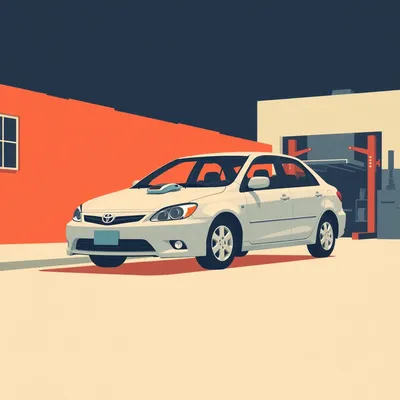
So Daniel sent us this one — he and Hannah need a car but the new market is basically a financial crime scene. Eighty-three percent purchase tax, seventeen percent VAT, and by the time you're done a twenty-five thousand euro car costs over fifty thousand. He's not a car guy, doesn't want anything flashy, just wants something that won't strand him on the Ayalon Highway at rush hour. Reliability is the whole thing. But he's buying used, which is inherently a gamble. His question is: how do you optimize for reliability within those constraints? He wants specifics — not just brands, but inspection protocols, marketplace tactics, and whether buying from leasing companies actually works.

This is one of those questions where the Israeli market is so distorted that conventional car-buying advice from the US or Europe just doesn't apply. The tax structure alone — eighty-three percent on new cars — means the depreciation math is completely different. A three-year-old Corolla in Israel holds its value in ways that would look insane to someone in Ohio.
The tax is doing something weird to the whole ecosystem. It's like a tariff wall around a tiny country, and the used market is the only door that isn't guarded by a guy with a clipboard asking for your life savings.
And that means the used market is hyper-competitive. Good cars sell in hours, not days. So Daniel's question is really: how do you build a system that lets you move fast without getting burned?
Which is what we're going to lay out today. Three pillars. One — brand and model selection based on what actually works in Israel, not what Car and Driver says. Two — a pre-purchase inspection protocol that catches the expensive stuff before you own it. Three — where to find the cars and how to negotiate, including the leasing company angle. Let's start with the brands.
So here's the list that every mechanic in Tel Aviv will give you without blinking. Toyota Corolla, Mazda 3, Suzuki Swift, Honda Civic. Those four are the gold standard for reliability in Israel, and the reason isn't just that they're well-built cars. It's that the parts ecosystem is fully built out. Every auto parts shop in Tel Aviv, Haifa, and Jerusalem stocks filters, brake pads, alternators, you name it for these models. If something breaks on a Corolla, your mechanic has the part by the end of the day.
Which is a huge deal here. Israel's not a big country — you can drive from Metula to Eilat in about six hours — but the parts supply chain is surprisingly fragile for anything that isn't mainstream. You order a part for the wrong car and you're waiting three to six weeks for it to arrive from Europe.
And that's exactly why French brands — Renault, Peugeot, Citroën — are the ones to avoid. The parts availability is genuinely bad. I've heard from multiple mechanics that ordering a Renault part can take a month or more, and that's not counting the times the wrong part shows up. Plus, French electrical systems have a reputation for developing gremlins in Israel's climate. The heat and dust are not kind to finicky electronics.
The French cars have a specific failure mode here that's almost poetic. You buy a used Megane because it's forty-five thousand shekels and looks like a deal, and six months later the air conditioning dies in August and the part is somewhere in a warehouse in Lyon.
And you're sitting in traffic on the Ayalon with the windows down, rethinking your life choices. So let me get specific about what to actually target. The sweet spot for model years is two thousand seventeen to two thousand twenty. These cars have already taken the big depreciation hit — they've lost forty to fifty percent of their new value — but they still have five to eight years of reliable life left. Pre-two thousand fifteen cars start running into rust issues, especially if they lived near the coast. Tel Aviv's humidity and salt air are not kind to underbodies.
And the safety tech gap is real. Pre-two thousand fifteen you're missing things like lane departure warning, adaptive cruise control, sometimes even side airbags depending on the trim level. It's not just about reliability — it's about not dying.
Right. Now let's talk engines. The one point six liter Toyota engine used in the Corolla until two thousand twenty is legendary. Mechanics call it bulletproof and they mean it literally — it's not unusual to see these engines hit three hundred thousand kilometers with just oil changes and timing belts. The one point five liter Mazda Skyactiv-G is in the same category. Both are naturally aspirated, no turbo, no direct injection complications on the earlier ones.
And that's the thing to hammer home — avoid turbocharged engines in older used cars. The turbo itself is a wear item, and when it fails, which it eventually will, the replacement cost is brutal. We're talking five to eight thousand shekels for the part alone, and finding a used turbo in good condition in Israel is like finding a parking spot in central Jerusalem on a Friday afternoon.
The other thing to flag is transmissions. And this is where I need to name a specific villain. Nissan CVT transmissions, especially in the Qashqai and Juke, have a known failure rate in Israeli stop-and-go traffic. The CVT uses a belt-and-pulley system instead of gears, and constant low-speed crawling generates heat that degrades the belt. When it fails, the whole transmission needs replacement — fifteen to twenty thousand shekels.
Which is why the advice is: stick to traditional automatic or manual transmissions. The Toyota and Mazda torque-converter automatics are nearly as reliable as their engines. Honda's CVT is actually better engineered than Nissan's, but if you want maximum peace of mind, the traditional automatic is the play.
So to put a concrete number on this: a twenty eighteen Toyota Corolla one point six liter with eighty thousand kilometers should run you about sixty-five thousand shekels. Expected remaining life is easily another hundred and fifty thousand kilometers with basic maintenance. Compare that to a twenty sixteen Renault Megane with seventy thousand kilometers at forty-five thousand shekels. It looks cheaper, but the first time the electrical system acts up or you need a part that takes six weeks, that ten thousand shekel savings evaporates in rental cars and frustration.
And that's the trap people fall into. They see the lower sticker price and don't price in the downtime. A car that's in the shop for three weeks is not a car — it's a very expensive paperweight that you're still paying insurance on.
One thing worth mentioning: German cars. BMW, Mercedes, Audi. They're not unreliable in the abstract, but in Israel they have a specific problem. Parts are expensive and often need to be ordered. Labor rates at shops that specialize in German cars are higher. And the used ones that fall into the sixty to eighty thousand shekel range are usually high-mileage examples that are about to need expensive maintenance — timing chains, suspension work, electronic modules. A cheap used BMW is the most expensive car you'll ever buy.
The German luxury tax doesn't stop at the border. It follows you into the mechanic's shop for the rest of the car's life.
So that's pillar one. Target Toyota, Mazda, Suzuki, or Honda from two thousand seventeen to two thousand twenty. Naturally aspirated engines. Traditional automatics. Now let's talk about pillar two — how to inspect a car before you buy it so you don't inherit someone else's neglected maintenance.
This is the part where I've seen people make the dumbest decisions. They'll spend sixty thousand shekels on a car and skip the five hundred shekel inspection because they're excited or the seller seems nice or the car looks clean. A clean car with a dying transmission looks exactly like a clean car with a healthy transmission. Until it doesn't move.
The pre-purchase inspection is non-negotiable. Four to six hundred shekels at an independent garage — not the seller's mechanic, not a friend of the seller, not a garage the seller recommends. Your garage. Someone who has no incentive to give you anything but the truth.
And you want four specific things checked. First, a compression test. This measures how well each cylinder holds pressure. If one cylinder is significantly lower than the others, you've got engine wear — worn piston rings, a valve problem, a head gasket issue. Any of those is thousands of shekels to fix. The compression test takes twenty minutes and tells you more about engine health than anything else.
Second, an OBD2 scan. This is the diagnostic port that every car since the late nineties has. A mechanic plugs in a scanner and reads any stored error codes. The key thing here is not just the codes that are active — it's the ones that were recently cleared. If the car's computer shows that codes were reset right before you came to see it, the seller is hiding something.
Third, an underbody inspection for rust. This is especially critical for cars that lived in coastal cities — Tel Aviv, Haifa, Ashdod, Netanya. Surface rust on the underbody is manageable. Rust that's eaten through structural components is a death sentence for the car. You can't see this without getting the car on a lift.
Fourth, the AC system. This might sound trivial, but AC failure is the number one complaint in Israeli used cars. The compressor works hard in this climate, and a replacement runs two to three thousand shekels. The inspection should check refrigerant pressure, compressor function, and look for leaks. If the AC blows lukewarm in July, you're not buying a car — you're buying a mobile sauna.
And the AC thing is a safety issue here. August in the Jordan Valley, you're looking at forty-plus degrees. An AC failure isn't just uncomfortable — it's dangerous if you're stuck in traffic with kids in the back.
So those are the four must-haves. Compression test, OBD2 scan, underbody rust check, AC system check. Any garage that does pre-purchase inspections in Israel will know this protocol — just ask for a "bedikat kniya mekifah," a comprehensive purchase inspection. And get the report in writing. The written report is your negotiation tool.
Which brings us to pillar three — where to find the cars and how to actually buy them. Let's start with the platforms.
Yad2 dot co dot il is the dominant marketplace. It's where probably eighty percent of used car transactions in Israel start. CarZone dot co dot il is the second player, and it's worth checking both because some sellers only list on one. The key tactic here is alerts. Don't browse casually. Set up saved searches for the exact models and year ranges you want — "Toyota Corolla two thousand seventeen to two thousand twenty" — and check daily. The good cars, the ones priced fairly with reasonable mileage and service history, sell within hours.
I've seen a clean Corolla get listed at eight in the morning and be gone by ten. If you're checking Yad2 once a week, you're looking at the leftovers — the overpriced dealer listings and the cars with something wrong that everyone else passed on.
Filter by private seller versus dealer. Private sellers are typically ten to fifteen percent cheaper because there's no dealer markup. But they require more due diligence. A private seller might not have full service records. They might not even know what maintenance the car needs. You're trading price for uncertainty.
And then there's the leasing company strategy. This is something Daniel specifically asked about, and it's one of the smarter moves in the Israeli market.
Here's how it works. Leasing companies like Hertz, Avis, Shlomo Sixt, and Eldan buy fleets of new cars, lease them out for three years or sixty thousand kilometers, then sell them. When they sell, the cars come with full service histories because the leasing companies maintain them on schedule — they have fleet contracts with dealerships and it's in their interest to keep the cars running. You're not guessing whether the oil was changed on time. It was.
The trade-off is that these cars were driven by multiple people who had no long-term stake in treating them gently. The phrase "drive it like a rental" exists for a reason. A leasing car with sixty thousand kilometers might have more transmission and suspension wear than a privately owned car with the same mileage.
Which is why the inspection is even more critical for leasing company cars. Focus the inspection on transmission behavior — does it shift smoothly when cold and hot? — and suspension components. Listen for clunks over bumps. Check for uneven tire wear that indicates alignment issues from curb strikes. The service history is pristine, but the mechanical sympathy from drivers is not.
The pricing on leasing cars is interesting. They're typically priced somewhere between private sellers and dealers — you pay a premium over a private sale for the documented history, but you're not paying the full dealer markup. And the leasing companies are motivated to move inventory. They're not emotionally attached to the cars. They have quarterly targets.
Let me walk through a realistic buying scenario. Say you find a twenty nineteen Mazda 3 on Yad2 for seventy thousand shekels. Private seller in Holon. You call, the car sounds promising, you arrange to meet at a garage you've chosen — there's a place called Mazda Expert in Holon that specializes in these cars. The inspection costs you five hundred shekels and finds worn brake pads and a cracked windshield. Together those repairs would run about two thousand shekels.
So now you've got leverage. You show the seller the written inspection report and the repair quote from the garage. You ask for three thousand off — more than the repair cost because you're also compensating for the hassle of doing the repairs yourself. The seller counters. You settle at sixty-six thousand. You've just saved four thousand shekels by spending five hundred on an inspection.
And that's the math that makes the inspection the single highest-return investment in the whole process. A five hundred shekel inspection that saves you four thousand shekels is an eight hundred percent return. Name another investment that pays eight hundred percent in one afternoon.
Leaf medicine futures.
I'm going to pretend I didn't hear that. Now, cash buyers have an additional advantage. In Israel, a cash offer — and by cash I mean a bank transfer, not a literal suitcase of shekels — can typically negotiate five to ten percent off the asking price. Sellers value the certainty of a clean transaction with no financing contingencies. If you've got the money ready, make that clear early in the negotiation.
There's also the registration and tax piece that people forget to budget for. When you buy used, you pay an agreement fee of about fifteen hundred shekels plus a transfer tax of zero point five percent of the car's value. On a sixty-five thousand shekel car, that's about eighteen hundred shekels total in transfer costs. It's not included in the asking price, and if you don't plan for it, you're suddenly short at the registration office.
Good catch. And you'll need to do the transfer at the Misrad HaRishui — the licensing authority — or through a licensed proxy. Most people use a proxy service that charges a small fee but handles the paperwork. Worth it to avoid spending a morning in a government office.
Let's compare the two sourcing strategies side by side. Private seller: you save five to ten thousand shekels on the purchase price, but you might have incomplete service records and you're relying entirely on the inspection to surface problems. Leasing company: you pay more, but you get full service history and a seller that isn't going to ghost you if something goes wrong the week after purchase.
Neither is universally better. If you're willing to be patient, check listings daily, and move fast when a good private sale appears, you'll save money. If you want a more predictable process with fewer unknowns, the leasing company route is worth the premium. The inspection is mandatory either way.
So let's pull this together into something Daniel can actually use tomorrow morning. The checklist.
Step one: choose Toyota, Mazda, Suzuki, or Honda from model years two thousand seventeen to two thousand twenty. Naturally aspirated engine, traditional automatic transmission. Budget sixty to seventy-five thousand shekels depending on the model and mileage.
Step two: set up alerts on Yad2 and CarZone for your target models. Check daily. When a promising listing appears, call immediately. Good cars don't wait.
Step three: before you hand over a single shekel, get a pre-purchase inspection at an independent garage. Compression test, OBD2 scan, underbody rust check, AC system check. Four to six hundred shekels. Get the report in writing.
Step four: consider leasing company inventory — Hertz, Avis, Shlomo Sixt — for cars with full service histories. The inspection is still mandatory. Focus extra attention on transmission and suspension wear.
Step five: negotiate using the inspection findings. If the report identifies two thousand shekels in needed repairs, ask for three thousand off. Cash buyers should aim for five to ten percent below asking price.
Step six: budget an extra two thousand shekels for transfer costs — the agreement fee and the transfer tax. That's on top of the purchase price.
And the one thing you never compromise on: the inspection. A five hundred shekel inspection that saves you ten thousand shekels in hidden repairs is not an expense. It's insurance that pays for itself twenty times over.
One more thing worth mentioning. After you buy the car, join a Facebook group for that specific model in Israel. There's a Toyota Corolla Israel Owners group, a Mazda 3 Israel group, and so on. These groups are gold mines. They share mechanic recommendations, they know which parts shops have the best prices, they document common issues and fixes. It's like having a few hundred people who already own your car and have made all the mistakes you don't need to make.
That's excellent advice. The collective knowledge in those groups is better than any single mechanic's opinion because you're getting pattern recognition across hundreds of owners. If a particular model year has a known issue with the water pump failing at eighty thousand kilometers, the group will tell you before your water pump fails.
So that's the system. It's not complicated, but it requires discipline. The Israeli used car market is punishing if you're casual about it and entirely navigable if you're methodical. The difference between buying a twenty eighteen Corolla that runs for another decade and buying a twenty sixteen Megane that lives in the shop is mostly about doing the homework before you see the car.
And I want to leave listeners with one open question. As electric cars start showing up in the used market — the Tesla Model 3 and the BYD Atto 3 are the two that are growing fastest in Israel — the reliability calculus is going to shift. An electric car has no transmission, no turbo, no timing belt, far fewer moving parts overall. But battery health checks are not yet standard in pre-purchase inspections. There's no equivalent of a compression test for a battery pack that tells you how much capacity it's lost and how much faster it'll degrade. That's going to be the next frontier for used car buying in Israel.
The system we laid out today works for internal combustion cars. The electric version of this system hasn't been built yet. Someone's going to build it, and when they do, we'll probably do another episode.
And now: Hilbert's daily fun fact.

In the nineteen thirties, Soviet scientists transported axolotls to a research station on Sakhalin Island to study their limb regeneration. The axolotls escaped into local waterways and established a breeding population that persists to this day — one of the only wild axolotl colonies outside Mexico, created entirely by accident.
So somewhere off the coast of Siberia there are Mexican salamanders regenerating limbs and wondering how they got there.
Relatable, honestly.
This has been My Weird Prompts. Thanks to our producer Hilbert Flumingtop. If you found this useful, leave us a review wherever you listen — it helps more than you'd think. We'll be back soon.