
AI Safety & Ethics
Security, alignment, and responsible AI
64 episodes · Page 3 of 3

#1996: Why Leaders Broadcast Victory While Citizens Hear Sirens
A gap opens between official statements and reality, as curated videos clash with live data streams.

#1995: The Human Curriculum Machine
The current education standard isn't neutral—it's a political machine.

#1911: Crowdfunding Open Source: Savior or Trap?
The web is built on code funded by tips. Can platforms like Patreon stop extremists from hijacking the money?

#1890: Forensic Cameras vs. the 'It's Just AI' Defense
If a photo can be faked in seconds, how does law enforcement prove their surveillance footage is real?

#1803: Why Hostages Defend Their Captors
A tech exec was brainwashed in 2025. The neurochemistry is the same as Stockholm Syndrome.

#1796: The Encryption Mirage: Are Your Keys Really Safe?
End-to-end encryption promises privacy, but hidden backdoors and metadata leaks can betray your trust.

#1780: The Danger Zone: Your Browser Extensions
Your encrypted data is safe until it hits your browser. Here's how extensions turn your "secure" browsing into a data leak.

#1775: Why Some Cultures Guard Privacy and Others Share Everything
We explore why privacy feels like a human right to some cultures but a modern luxury to others.
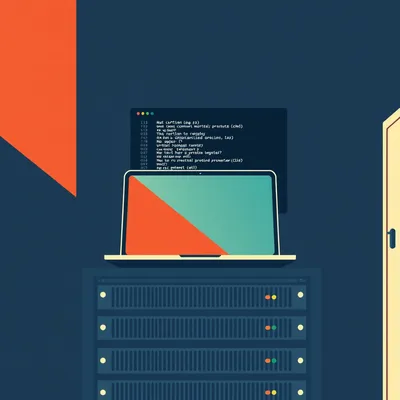
#1773: AI's "Hacky" Command-Line Fixes Are a Security Nightmare
Giving AI agents terminal access speeds up fixes but creates invisible security holes and configuration drift.

#1772: PGP vs. Gmail: Who Really Holds Your Keys?
You see a padlock icon and think your email is safe. But does end-to-end encryption actually protect you, or just create a false sense of security?

#1771: Why Your Docker Images Depend on a 1990s Crypto War
PGP or GPG? We break down the alphabet soup of signing Docker images and AI models, and why it matters for supply chain security.
#1738: Hyperstition Engines: When AI Writes Reality
LLMs aren't just predicting the future; they're generating the narratives that force it into existence.

#1721: AI Doxxing: Why Your Writing Style Is a Liability
AI tools now identify anonymous users by analyzing their unique writing patterns, making traditional privacy measures less effective.
#1720: Why Hackers Use Lego Instead of Hand-Forged Exploits
Metasploit isn't just a tool; it's the industrial standard for digital break-ins. Here's how it works.
#1719: Why Pattern Matching Fails for PII at Scale
Regex alone is brittle; NER is expensive. See how hybrid frameworks like Presidio balance speed and accuracy to stop data leaks.

#1712: Five AIs, One Question: A Tiananmen Square Test
We asked five AI models the same question about Tiananmen Square. Their answers reveal a stark divide between Chinese and Western AI.