
Science
Scientific topics, research, and discoveries

#5433: Thermostats, Thermal Mass, and the Buildings That Fight Back
A thermostat is a sensor, a set point, and a switch — until thermal mass, bad models, and sustainability mandates get involved.

#5427: Why Atheists Still Knock on Wood
Religion and superstition aren't the same thing — and the data says they might even pull in opposite directions.

#5418: Why Dehydration, Not Hunger, Is the Real Risk of a 25-Hour Fast
Twenty-five hours without water is a different problem than twenty-five hours without food. Here's the physiology of dehydration — and how to prepare.

#5395: Six Colors, One Hospital Corridor
A pediatric ward's six-color corridor system reveals what good interface design looks like when people are scared and lost.

#5370: The Spotlight Effect and the Heckler's Playbook
Why a waiting room feels scarier than a stage — and how performers handle hostile crowds without losing the room.

#5360: Ful Medames: Slow Cooker vs Pressure Cooker
Dried fava beans, a slow cooker, and one overnight soak — the idiot-proof path to Egyptian street-style ful medames.

#5358: Ivy League Is a Sports Conference
The Ivy League is an athletic conference, not an academic body — and that tells you everything about how university rankings actually work.

#5345: Forecasting for Cranes, Fires, and 15-Minute Decisions
The public five-day forecast is a loss leader. Here's what bespoke weather looks like when money and lives ride on it.
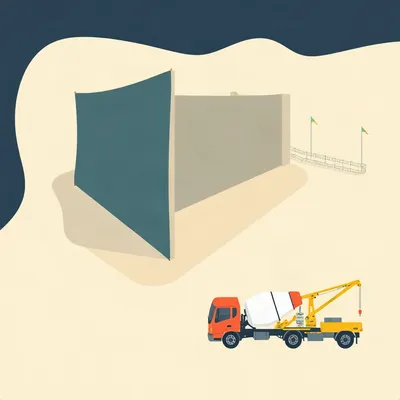
#5338: Iran Is Rebuilding Parchin. Again.
Satellite imagery shows Iran rebuilding the Taleghan Two site at Parchin for the second time in 18 months — this time under a tarp.

#5337: The World's Weirdest Museums: Poop, Parasites, and Broken Hearts
From a Poozeum in Arizona to Tokyo's parasite museum, we explore the world's most oddly specific collections and the obsession behind them.
#5336: Cholera and the 3.4 Billion Without Safe Sanitation
Cholera is fast, cheap to treat, and entirely preventable — yet 3.4 billion people lack safe sanitation. Here's why the numbers don't add up.

#5324: Retention by the Numbers: Who Actually Trains Their People?
Most small organizations run training programs — they just don't call them that. What the data says about who invests in talent, and why it pays.
#5322: How New Is the Air You're Breathing?
A sealed air pillow from AliExpress leads to a genuinely strange question: how old are the molecules you're breathing right now?
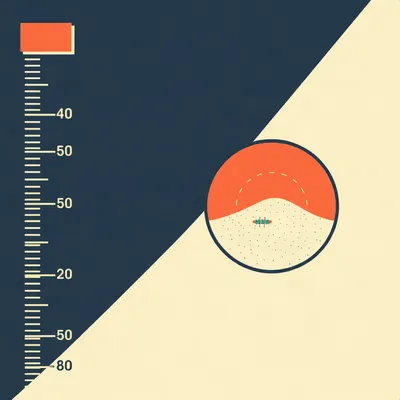
#5321: From Millimeters to Atoms: The Units of Small
A millimeter is the last unit you can feel. Below it, the trades borrow microns, mils, and angstroms — and the atom is a different regime entirely.
#5320: Where Does Micro-Engraving Actually Begin?
The naked eye's real resolution limit isn't what textbooks say — and it changes everything about micro-engraving and micro-soldering.

#5304: The Skill of Expecting Less (But Not the Worst)
Realists beat optimists and pessimists on long-term well-being. Here's what the research says about keeping expectations accurate.
#5302: Grass, Road, or Water: Where Does a Crippled Jet Land?
An A320 is in trouble with three options left: a grass runway, a road with traffic, or open water. The data on which one crews actually pick.
#5299: Why Bright Lights Make Fog Worse
More light isn't safer light. Why fog, glare, and the moth effect turn your emergency flares against you.

#5298: The Mountain, the Message: Nuclear Tests as Diplomacy
Nine states. Two thousand detonations. Why a nuclear test is often a sentence in a conversation, not a lab result.
#5279: Heavy Metals: Real Syndromes vs. Online Noise
Lead, arsenic, mercury, cadmium — each metal has its own syndrome, route, and treatment. The vague online version misses all of it.