Daniel sent us this one, and it's personal — he's talking about a paradox a lot of people on ADHD medication live with but rarely name out loud. A pill that helps you focus in the morning can have you feeling genuinely despondent by evening, and the crash state is so convincing that it doesn't feel like a drug effect. It feels like the truth about your life. His question is: when depression hits someone taking stimulants, how do clinicians figure out whether they're looking at a medication side effect or an actual mood disorder? And what tools exist — for both doctors and patients — to track patterns and get to the bottom of it?

This is one of those clinical puzzles where getting the answer wrong has real consequences. If you mistake a stimulant crash for major depression, you end up prescribing an SSRI to someone who actually just needs a formulation switch or a dose adjustment. And if you mistake genuine depression for a medication effect, you keep tweaking the stimulant regimen while the underlying mood disorder gets worse. Neither path is harmless.
Daniel's point about self-detection being surprisingly hard — even when you're the one living inside the experience — that's not a failure of attention. There's neurochemistry behind why the crash feels permanent while it's happening.
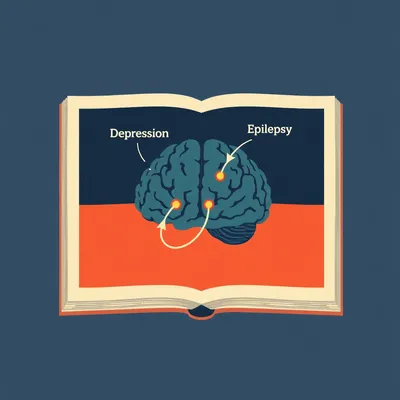
So let's get specific about what we're actually trying to tell apart here, because the two kinds of depression don't just feel different — they come from different places in the brain.
Walk me through it. What's actually happening in a stimulant crash versus what's happening in a primary depressive episode?
The crash depression — and I want to be precise here — is fundamentally a dopamine and norepinephrine depletion state. Stimulants work by blocking the reuptake of both neurotransmitters, which means they hang around in the synapse longer, and that's your focus, your motivation, your sense that tasks are worth doing. But the brain is a homeostatic machine. It doesn't like being pushed off its set point. So with chronic stimulant use, it compensates — it downregulates dopamine receptors, it increases dopamine transporter expression, it basically turns down the volume knob on its own signaling to counteract the drug.
You're borrowing focus from the future.
That's actually not a bad way to put it. When the drug clears — and this is where the pharmacokinetics matter enormously — you're left with less dopamine signaling than you started with. Not just a return to baseline. Your mesolimbic pathway, which is the reward and motivation circuitry, suddenly finds itself in a state of acute hypodopaminergia. And the subjective experience of that is anhedonia, hopelessness, sometimes genuine despair. It's neurochemically real. It's just not the same mechanism as major depressive disorder.
Which is more serotonergic, right? And involves different circuits?
Major depression is messier, but yes — it typically involves serotonergic dysfunction, HPA axis dysregulation with elevated cortisol, and hyperactivity in the default mode network, which is the brain circuit associated with rumination and self-referential thinking. That's why primary depression tends to be more persistent, less tied to specific clock times, and it often comes with cognitive content — guilt, worthlessness, a narrative about why you feel bad. The crash is more raw and physiological. It's emptiness without a story.
Yet it convinces you there's a story. That's the insidious part Daniel's pointing at. The state-dependent memory piece — when you're in the crash, your brain reaches for explanations and finds them, because that's what brains do.
There's research on this. Ecological Momentary Assessment studies — EMA — where patients log their mood in real time through smartphone prompts at random intervals, and then later give retrospective reports. The retrospective reports of when the crash happened and how long it lasted are typically off by two to four hours compared to the real-time data. The crash feels longer than it actually is, and patients often misattribute the onset to whatever was happening at the time — a work conflict, a sad thought — rather than to the pharmacokinetic curve they're riding.
Two to four hours is a meaningful gap. That's the difference between identifying a pattern and completely missing it.
ADHD itself impairs the metacognitive ability to track patterns over time. So you're asking someone with an executive function disorder to notice a subtle temporal relationship between a morning pill and an evening mood, while the mood state itself is distorting their perception of how long it's been going on. It's not that patients are careless. The deck is stacked.
Let's get into the mechanics of the curve itself, because Daniel used this phrase — "an ascent that's too steep and a drop that's too much like a cliff" — and that's not just a metaphor. That's actually describing different pharmacokinetic profiles.
It is, and this is where the formulation really matters. Immediate-release stimulants — think methylphenidate or amphetamine salts in their standard form — have a half-life of about three to six hours. You take the pill, plasma concentration rises sharply, you get a peak around two to three hours in, and then it drops fast. That's the cliff. Extended-release formulations use various delivery mechanisms — beads that dissolve at different rates, osmotic pumps — to stretch the half-life to ten to fourteen hours. The peak is broader, the descent is gentler. And then you have prodrugs like lisdexamfetamine, which is Vyvanse, where the molecule itself is inactive until enzymes in your blood cleave off a lysine group, which happens gradually. So you get a metabolic conversion that smooths the curve even further.
The cliff isn't inevitable. It's partly a design choice.
It's a trade-off. Immediate-release gives you more control over timing — you can take a second dose in the afternoon to extend coverage — but you get sharper transitions. Extended-release and prodrugs give you smoother curves but less flexibility. And here's the thing Daniel might be pointing at without saying it directly: the smoother comedown from extended-release can actually be harder to detect. It doesn't feel like a cliff. It feels like a slow fade that you might not connect to the medication at all. You just think you're gradually getting more tired and sad as the day goes on, which is also what depression looks like.
The immediate-release crash announces itself — you know something happened. The extended-release comedown whispers.
The whisper is harder to trace. There was a study in the Journal of Clinical Psychiatry last year — twenty twenty-four — that looked at adults with ADHD on stimulant monotherapy. About thirty percent reported significant depressive symptoms. That's a lot. But when they ran structured clinical interviews, only about half of those people met criteria for a separate mood disorder. The other half had medication-induced mood changes that resolved when they adjusted the dose or switched formulations.
Half the people walking around thinking they might have clinical depression actually just need a different pill schedule. That's a staggering number.
It cuts both ways. Some of the people who did meet criteria for a mood disorder probably had it all along, and the stimulant was either unmasking it or making it worse. Stimulants can destabilize mood in people with underlying bipolar or anxiety disorders. So you can't just assume every crash is a pharmacology problem.
Let's make this concrete. Walk me through a typical day on immediate-release methylphenidate versus extended-release lisdexamfetamine, so listeners can hear what the curves actually feel like.
Immediate-release methylphenidate — say Ritalin. You take it at eight in the morning. By nine thirty, ten o'clock, you're at peak plasma concentration. Focus is sharp, motivation is online, the world feels manageable. By one o'clock, you're noticing the fade. Maybe you take a second dose at noon to bridge the afternoon. That second dose peaks around two, and by five or six in the evening, both doses have largely cleared. Your dopamine signaling drops below baseline. And suddenly — and I mean suddenly — you feel empty, irritable, hopeless. Everything that seemed fine an hour ago now seems pointless. You might snap at your family. You might sit on the couch and feel like crying for no reason you can name.
If you don't know what's happening, you attribute it to your life.
Now contrast that with lisdexamfetamine. You take it at eight. The prodrug is absorbed and your blood enzymes start cleaving off lysine groups, gradually releasing active dextroamphetamine. The rise is slow — you might not even notice it kicking in. Peak concentration doesn't hit until about three and a half to four hours. The therapeutic window stretches through the afternoon. By evening, the decline is gradual — you're not falling off a cliff, you're walking down a long slope. You might feel tired, a bit flat, but it doesn't hit you like a wave. The problem is, because it's subtle, you might not connect it to the medication at all. You just think evenings are hard.
The extended-release crash is stealthier. Which brings us back to Daniel's core question: how do clinicians actually tease this apart? What tools exist?
If the neurochemistry makes self-detection hard, what tools do clinicians actually have to cut through the noise? This is where the practical work begins.
I want to hear about what clinicians do, but I also want to hear about what patients can do themselves, because Daniel's asking about both sides of that equation. The person living it and the person trying to diagnose it.
Let's start with the clinical interview, because the single most useful question is not "Are you depressed?" It's "When, in the course of a typical day, do you feel worst?
That's almost too simple.
The answer is diagnostic. If the patient says "mornings are terrible, I can't get out of bed, but by evening I feel a bit better," that's actually more consistent with melancholic depression, where mood is typically worse in the morning. If they say "I'm fine in the morning, productive through the afternoon, and then around five or six I crash and everything feels hopeless," that's a pharmacokinetic curve. The timing tells you the story.
The follow-up questions would be about the shape of the day.
A good clinician will ask: Does the low mood follow a predictable daily pattern? Do you feel worse four to six hours after your last dose? What happens on weekends or days you skip the medication? That last one is especially revealing. If the crash pattern disappears on medication holidays, you're looking at a drug effect. If the depression persists regardless, you're probably dealing with something endogenous.
You mentioned a caveat earlier about medication holidays being tricky.
Yes, and this is one of the misconceptions I want to flag. People think a medication holiday will always reveal the truth. In reality, stimulant withdrawal can itself produce depressive symptoms. If you stop cold turkey after chronic use, your dopamine system is still downregulated — it takes days to weeks for receptor density and transporter expression to normalize. So a short holiday, like a weekend off, might make you feel worse, and that doesn't prove you have a mood disorder. It proves your brain is still adapting. Proper washout for diagnostic purposes requires at least five to seven days, and it should be done under clinical supervision. And even then, there are contraindications — if someone has comorbid bipolar disorder, withdrawing stimulants can trigger a depressive episode that has nothing to do with the medication per se.
The weekend test is suggestive but not definitive.
It's a data point. You need multiple data points. Which brings us to the mood diary, and I want to spend some real time here because this is the most practical tool available.
Daniel specifically asked about diary methods. What actually works?
The gold standard adaptation comes from the NIMH Life Chart Method, which was originally developed for tracking bipolar mood episodes. Researchers have adapted it for stimulant users, and the key finding is that you need at least fourteen days of data to reliably distinguish medication-induced from endogenous mood patterns. Less than two weeks, and you're basically looking at noise.
Fourteen days feels like a lot to ask of someone with ADHD.
It is, which is why the method matters. You're not asking for a journal entry about feelings. You're tracking three specific things: time and dose of medication, mood rating on a simple one-to-ten scale, and context — what was happening, did you eat, how did you sleep. The three-column method. It takes thirty seconds per entry. You do it three or four times a day at set intervals — say, nine AM, one PM, five PM, nine PM. After two weeks, you plot the numbers, and the pattern either emerges or it doesn't.
What does the pattern look like when it's a crash versus when it's depression?
Let me walk through what you'd actually see. In a crash pattern, the mood ratings consistently drop five to seven hours after each dose. If you take your medication at eight AM and your mood tanks at two PM every day, that's a signal. On weekends when you skip or reduce the dose, the curve flattens — you don't get the same sharp drop. In an endogenous depression, the mood ratings are more consistently low across the day, or they follow a different rhythm — worse in the morning, better in the evening, or just persistently flat regardless of medication timing.
I can imagine someone keeping this diary, seeing the pattern, and having this moment of clarity — "oh, it's not that my life is falling apart at two PM every day. It's that my medication is wearing off at two PM every day.
That reframe is therapeutic in itself. It doesn't make the feeling less real, but it changes your relationship to it. You can plan around it. You can adjust the dose timing. You can talk to your doctor about switching formulations. You stop treating it as a psychological crisis and start treating it as a pharmacological event.
Are there more objective ways to track this beyond the diary? Something that doesn't rely on self-report?
Ecological Momentary Assessment is the next step up. These are smartphone apps that prompt you to rate your mood at random intervals throughout the day. The randomness is key — it eliminates the anticipation effect where you brace yourself for the crash and potentially amplify it. Some of these apps also pull in passive data. Heart rate variability, for instance, tends to drop during the stimulant comedown phase, which correlates with the subjective experience of stress and low mood. Wearables can track sleep patterns, and poor sleep is both a consequence of the crash and a contributor to it — it creates a feedback loop.
Let's talk about that feedback loop, because I think it's one of the more insidious knock-on effect. The crash doesn't just happen in isolation.
This is where it gets clinically complex. The crash hits in the evening. You feel terrible. You cancel plans with friends because you can't face social interaction. You stay up late because you're restless and dysphoric, or you go to bed early but sleep poorly because your autonomic nervous system is still recalibrating. You wake up tired. The ADHD symptoms are worse because you're sleep-deprived. So you take your stimulant, maybe a slightly higher dose because you really need it to work today. It does work, but the crash that evening is steeper because the dose was higher. You sleep worse. The cycle tightens.
At some point, that cycle looks indistinguishable from a genuine depressive episode. The sleep deprivation alone can cause depressive symptoms.
And the social withdrawal removes the very things that buffer against depression — connection, activity, meaning. So the crash can absolutely trigger a real depressive episode through behavioral pathways, even though it started as a purely pharmacological event. Cause and effect get tangled.
Which is why Daniel's question about distinguishing them is so important but also so hard. You're not always looking at one or the other. Sometimes you're looking at both, in sequence, feeding each other.
That's the clinical reality. The thirty percent number I mentioned — that's people reporting depressive symptoms. Some of them have a mood disorder that predates the stimulant. Some have a mood disorder that the stimulant unmasked. Some have a mood disorder that the crash cycle triggered. And some have no mood disorder at all — just a medication effect that looks exactly like one. Teasing those apart is not a one-visit diagnosis. It's a process.
Let me ask about the formulation switch as a diagnostic tool. Daniel mentioned that good ADHD management involves making the curve viable. Can changing the formulation itself help answer the question?
This is one of the more elegant approaches in clinical practice. If you suspect the depression is crash-related, you switch the patient from an immediate-release formulation to a prodrug like lisdexamfetamine, or from a shorter extended-release to a longer one, and you watch what happens. If the depressive symptoms resolve within a week or two, you have your answer — it was pharmacokinetic. If they persist despite a smoother curve, you start looking harder at a primary mood disorder.
The prescription change is both treatment and diagnosis simultaneously.
It's a therapeutic trial. And it's often faster and more informative than waiting for mood diary data or running structured interviews. The risk is that you might delay treating a genuine depression while you experiment with formulations, which is why good clinicians do both tracks in parallel — they adjust the stimulant regimen while also screening for mood disorders, and they don't assume one explanation until the evidence points clearly in that direction.
You mentioned structured clinical interviews earlier. What does that actually look like in practice?
It's a systematic set of questions that probe for temporal relationships. Beyond "when do you feel worst," you're asking about the quality of the depression. Crash-related depression tends to be more about emptiness, anhedonia, irritability — the "I don't want to do anything" flavor. Primary depression often includes more cognitive content — guilt, worthlessness, hopelessness about the future, sometimes suicidal ideation with a narrative attached. The crash can produce suicidal thoughts too, but they tend to be more impulsive and less elaborated — "I can't stand this feeling, I want it to stop" versus "my life is a failure and my family would be better off without me.
That distinction feels important. The crash suicidal ideation is about escaping the state. The depressive suicidal ideation is about a story you're telling yourself.
Both are serious. One of the misconceptions I want to address head-on is the idea that if the depression is "just" a medication effect, it's not real depression. That's wrong. Stimulant-induced depressive symptoms are neurochemically real and can be severe, including suicidal ideation. The distinction is about cause, not validity or severity. A crash can be every bit as painful as a major depressive episode. It just has a different origin and a different treatment.
Let's pull this together into something actionable. If someone listening is on stimulants and they're experiencing depressive symptoms, what should they actually do? Daniel's asking for practical tools.
I'd offer what I think of as the three-day rule. If you feel depressed — low, empty, hopeless — ask yourself one question: does this feeling follow a consistent daily pattern tied to when you take your medication? If the answer is yes for three consecutive days, it's worth bringing to your prescriber as a potential medication effect, not assuming you've developed a mood disorder. Track the lag time between your dose and the mood shift. Write down the times. Bring that data to your appointment.
Three days is a low enough bar that someone with ADHD might actually do it.
That's the idea. You're not committing to a two-week mood diary upfront. You're just noticing for three days. If the pattern is there, the motivation to track more formally will follow, because you'll want to understand what's happening.
For clinicians — what's the one thing you'd want them to take from this?
The single most useful question is not "Are you depressed?" It's "When, in the course of a typical day, do you feel worst?" The answer reveals the curve. Follow up with "Does skipping a dose change that pattern?" Those two questions will catch most medication-induced mood effects. And then remember the twenty twenty-four finding: half the people reporting depressive symptoms on stimulants don't need an antidepressant. They need a medication adjustment. Don't reach for the SSRI until you've ruled out the pharmacokinetic explanation.
There's a paradox at the center of this that I keep coming back to. Stimulant-induced depression is in some ways easier to treat than primary depression — the solution might be as simple as switching from immediate-release to a prodrug, or adjusting the dose timing. But it's harder to identify, because it requires the very metacognitive awareness that ADHD impairs. You're asking someone with an executive function disorder to track patterns over time, while the mood state distorts their perception, and the crash convinces them it's permanent.
That's exactly the bind. And it's why the tools matter so much — the mood diary, the EMA apps, the structured questions. They externalize the pattern recognition. They do the metacognitive work that the ADHD brain struggles to do on its own. You don't have to notice the pattern in your head. You just have to write down the numbers and let the pattern emerge on the page.
Which is a kind of cognitive prosthetic. The diary is doing for pattern recognition what the stimulant does for focus.
I like that framing. And the takeaway for patients is: you don't need to figure this out through introspection. You need data. Three data points a day for two weeks. That's it. The data will tell you what your brain can't.
Let's distill this down to the essentials. For patients, the three-day rule — if depressive symptoms follow a daily pattern tied to medication timing for three consecutive days, talk to your prescriber about a medication effect. Track the lag time. For clinicians, the question is "when do you feel worst," and the follow-up is "what happens on days you skip." And the overarching finding from the research: about half of people with depressive symptoms on stimulants don't have a separate mood disorder. They have a formulation problem.
I'd add one more: the crash is real. It's not "just" a side effect, it's not weakness, it's not failure. It's dopamine depletion below baseline in the reward circuitry of your brain. It has a mechanism. Understanding that mechanism doesn't make the feeling go away, but it changes how you respond to it. You stop asking "what's wrong with me" and start asking "what's happening in my brain, and what can I do about it.
That reframe — from character to chemistry — is probably the most important thing Daniel's question points toward.
Now: Hilbert's daily fun fact.

In nineteen eighty-five, a hurling match in Hargeisa, Somaliland, was played with a ball made from a tightly wound camel-hair core wrapped in goatskin, which measured roughly nine inches in circumference — about the same as a modern FIFA-regulation football, which is twenty-seven to twenty-eight inches. The Somaliland ball was less than a third the size.
That is a very small ball to be swinging a stick at.
I have so many questions about the camel hair. But I'm going to sit with them quietly.
Here's the open question I'm left with. As long-acting formulations and prodrugs get more sophisticated, does the crash become a historical problem? Or is there something fundamental about dopaminergic enhancement that means some comedown is inevitable — a trade-off built into the neurochemistry itself?
I suspect some comedown is unavoidable. The brain's homeostatic mechanisms are too robust. You push dopamine up, the brain pushes back. The question is whether we can make the descent gentle enough that it doesn't register as suffering. We're getting better at that. But I don't think we'll ever eliminate it entirely.
Which means the tools we've talked about — the mood diary, the structured questions, the formulation switches — those aren't temporary workarounds until the perfect drug arrives. They're permanent features of managing this condition well. The difficulty of distinguishing medication effects from "real" mood states is a microcosm of a larger question in psychiatry: where does the drug end and the person begin? The answer is never clean. But the tools for asking the question are getting better.
Thanks to our producer Hilbert Flumingtop. This has been My Weird Prompts. If you want to reach us, email the show at show at my weird prompts dot com.
We'll be back next week. Until then, track the data, not the story.