Imagine this: you are sitting there with a brilliant idea for an Android app—maybe it is a niche tool for your local community or a specialized dashboard for your smart home. You describe the logic to Claude, it spits out the code, and within fifteen minutes, you have a working APK file on your physical phone. But here is the kicker: you never opened Android Studio. You never touched a line of Java. You did not even have to look at a Gradle build file.

It sounds like a fever dream for anyone who has spent the last decade wrestling with the traditional Android toolchain. Honestly, Corn, we are seeing the birth of the "zero-infrastructure" mobile developer. Today's prompt from Daniel is about exactly that—how agentic AI like Claude is teaming up with cloud-based tools like Expo to completely bypass the heavy-duty, locally-installed IDEs we used to think were mandatory.
It is a massive shift. I mean, Android Studio is a beast. It is powerful, sure, but it is also a fifteen-gigabyte commitment that wants to eat your RAM for breakfast. For the new generation of "vibe coders" who live in VS Code or Cursor, the thought of downloading a massive IDE just to compile a project feels like stepping back into the stone age. By the way, speaking of modern tools, today's episode is powered by Google Gemini three Flash. It is helping us navigate this world where the "vibe" is often more important than the compiler.
Herman Poppleberry here, and I have been diving deep into the technical shift behind this. The reality is that the barrier to entry for mobile development has always been the environment setup. You need the Java Development Kit, specific versions of the Android SDK, build tools, platform tools—and if one version is off, your build fails with a cryptic error message that takes three hours to debug on Stack Overflow.
The "Gradle version hell." I have seen you lose entire weekends to that, Herman. It is the stuff of nightmares. But now, we are seeing people who do not even know what Gradle is shipping production-quality apps. How are they actually pulling that off without the local heavy lifting?
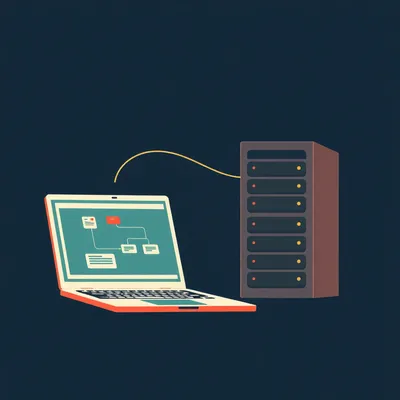
It comes down to a fundamental decoupling of the coding environment from the build environment. In the traditional world, your computer is the factory. You write the blueprints, and your CPU slaves away to assemble the car. In this new AI-first workflow, your computer is just a thin client for the blueprints—the "vibe"—and the factory is a high-performance cluster in the cloud. Specifically, we are looking at the rise of Expo and its EAS Build system, which is essentially the "secret sauce" making this possible for the Claude-wielding developer.
So, for the uninitiated—and I count myself among the "vibe-curious" here—what is the actual day-to-day workflow? If I am not in Android Studio, where am I, and what is Claude doing that a regular autocomplete tool isn't?
You are likely in VS Code or an AI-native editor like Cursor or Windsurf. Instead of writing Kotlin or Java, you are writing React Native, which is JavaScript or TypeScript. Claude three point five Sonnet is currently the gold standard for this because it understands the React Native ecosystem so well. You tell the AI, "Build me a fitness tracker with a dark mode and Firebase integration," and it generates the entire project structure. But the magic happens when you want to see it on a phone. Instead of hitting a "Run" button that triggers a local build, you use a terminal command for Expo Application Services. You type "eas build --platform android," and your code is zipped up and sent to Expo's servers.
And then you just... wait?
You wait for about ten minutes. Their servers, which are already perfectly configured with the right JDK and SDK versions, do the heavy lifting. They compile the code, sign it, and give you a download link or a QR code. You scan that code with your phone, and boom—the APK installs. No local configuration required.
It is wild because it turns the developer into more of a creative director. I can see why this appeals to the "vibe coding" crowd. If you are a web developer who knows some TypeScript, the prospect of learning the intricacies of the Android lifecycle just to get a button to click correctly is a huge deterrent. But if Claude can handle the boilerplate and Expo can handle the infrastructure, the "last mile" of mobile development suddenly disappears.
That "last mile" is exactly where people used to give up. Think about the overhead of managing certificates and signing keys. Traditionally, you had to generate a keystore file, keep it secret, keep it safe, and configure your build properties to point to it. If you lost that file, you could never update your app again. Expo's cloud service manages all of that for you. It can generate the keys, store them securely in their cloud, and apply them during the build process. It is automation at a level that makes the traditional Android Studio workflow look like manual labor.
I love the idea of you, the guy who reads white papers for fun, calling traditional coding "manual labor." But you're right. It is about cognitive load. If I have to spend fifty percent of my brainpower worrying about why my emulator is flickering or why the bridge between my JavaScript and the native layer is broken, I have less energy for the actual app logic.
And that is where the agentic part of the AI comes in. We aren't just talking about a chatbot that writes code snippets anymore. We are seeing agents that can actually interact with the file system and the terminal. Some of these newer tools, like the Expo Agent that is currently in beta, are designed specifically to work with Claude. You don't just ask for code; you ask for an app, and the agent sets up the configuration files, handles the library dependencies, and prepares the project for the cloud build.
Does this actually hold up for complex apps, though? I can see it working for a "To-Do" list or a basic calculator, but what happens when you need something deep? Like, if I need to access the accelerometer or the Bluetooth stack? Does the "vibe" run out of steam when you hit the metal?
That is a common misconception. People think that because it is "cloud-based" or "abstracted," it must be limited to basic features. But React Native has matured significantly. Most native features have well-maintained "Expo Modules" that act as a bridge. If you need Bluetooth, there is a module for that. The AI knows how to implement the module, and the cloud build knows how to include the native code for that module in the final APK. The only time you really hit a wall is if you are doing something incredibly bespoke, like writing a custom high-frequency trading algorithm that needs to sit directly on the kernel. For ninety-nine percent of apps, this workflow is more than sufficient.
It feels like the "democratization" of the App Store. For years, the barrier wasn't just knowing how to code; it was the sheer technical debt of the environment. Now, if you have a subscription to Claude and a free Expo account, you are a mobile developer. It is almost scary how much power that puts in the hands of someone who might not even understand how a compiler works.
It is a shift from "how to build" to "what to build." And we should talk about the second-order effects of that. When you lower the cost of failure to near zero, the way you iterate changes. In the old days, you would spend weeks planning because a build error could set you back a day. Now, you can "fail fast" in the cloud. If a build fails on Expo's servers, it gives you a clean log. You feed that log back into Claude, and the AI says, "Oh, I forgot to add this permission to your app-dot-json file," fixes it, and you try again. It is a tight feedback loop that was impossible when you were wrestling with local toolchains.
I have to wonder what this does to the "professional" Android developer. You know, the guys who have "Gradle Expert" on their LinkedIn. If the AI and the cloud are handling the plumbing, does the plumber go out of business? Or does he just move into a different kind of architecture?
I think the role evolves. We saw this with web development when tools like Vercel and Netlify came along. You didn't stop needing web developers; they just stopped spending time configuring Nginx servers and started focusing on the frontend experience and serverless logic. For Android, the "plumbing" is becoming a commodity. The real value now lies in "Prompt Engineering" and "System Architecture"—ensuring that the AI is building something scalable and secure, rather than just something that "vibes."
"System Architecture" sounds like a fancy way of saying "keeping the AI from hallucinating a mess." I have noticed that when I use Claude for longer projects, it starts to get a bit... loose. It forgets where it put certain functions or starts suggesting libraries that don't exist. How do these "AI-first" developers keep the project from collapsing under its own weight if they aren't using a heavy IDE to track everything?
That is a huge part of the "agentic" workflow. You don't just "chat" with the AI; you use specific rules and structures. A lot of these developers are using things like "dot-cursor-rules" files or "config-dot-json" files that act as a "Source of Truth" for the AI. It is basically a manual for the agent that says, "Here is our architecture, here are the libraries we use, do not deviate from this." It keeps the "vibe" grounded in reality. Also, because they are using TypeScript, the type-checking acts as a guardrail. Even if you aren't in Android Studio, the code itself has a layer of self-validation.
It is funny, we always talk about AI making things simpler, but it actually feels like it is just shifting the complexity. We swapped the complexity of "how do I install the SDK" for the complexity of "how do I prompt this agent to not break my navigation stack." It is a different kind of skill set, but it is no less rigorous if you want to ship something high-quality.
Wait, I promised I wouldn't say that word. It is exactly that type of rigor that defines the modern developer. You are managing a fleet of agents instead of a fleet of local tools. And the hardware requirements are fascinating too. You can do serious Android development on a five-hundred-dollar MacBook Air or even a high-end Chromebook now because the heavy lifting isn't happening on your lap. It is happening on a rack of servers in a data center.
That is a huge point. If you are in a part of the world where a three-thousand-dollar developer laptop is a year's salary, but you have an internet connection and a decent browser, the "Claude plus Expo" workflow is a literal game-changer. It levels the playing field in a way that local-first development never could.
It really does. And I want to touch on the "agentic" aspect of the current crop of tools. We are seeing things like Windsurf and Cursor's "Agent Mode" where the AI can actually execute terminal commands. Imagine you are building your app, and you realize you need a library for image cropping. You don't go search for it; you tell the agent, "Add a high-performance image cropper." The agent searches NPM, finds the right React Native library, runs the install command, updates your code to use it, and then triggers an EAS build in the cloud. You just watch the terminal scroll and then scan the QR code when it is done.
It is like having a very fast, very obedient junior developer who lives in your computer. But I suppose the danger is that if the junior developer makes a mistake in the "native" part of the code—the part that the cloud build has to compile—you might be stuck if you don't know how to read those logs.
That is the "Last Mile" problem again. If the cloud build fails because of a conflict between two native modules, the logs can be thousands of lines of Gradle output. If you are just "vibe coding," that looks like the Matrix code. But this is where the AI's reasoning capabilities are getting scary good. You can take that entire five-thousand-line error log, dump it into Claude, and say, "The build failed, tell me why." Nine times out of ten, Claude will identify that 'Library A' requires a different version of 'Library B' and will provide the exact line to change in your configuration file.
So the AI is the developer, the debugger, and the middle-manager. It is a full-stack operation. But let's talk about the cost. Android Studio is free. Gradle is free. Java is free. This new stack... isn't. You are paying for Claude, you are probably paying for a pro IDE like Cursor, and eventually, you will probably hit the usage limits on Expo's free tier for cloud builds. Is this a "pay-to-play" model for mobile development?
To an extent, yes. But you have to weigh that against the value of your time. If a "free" toolchain takes you twenty hours to set up and debug, and a "paid" cloud workflow takes you twenty minutes, what is your hourly rate? For a startup or an independent dev, the subscription costs are a rounding error compared to the speed of shipping. Expo's EAS Build gives you a certain number of free builds per month, but if you are shipping constantly, you'll want the "On-Demand" or "Production" plans. It is the "Vercel-ification" of mobile. You pay for the convenience of not having to think about the infrastructure.
"Vercel-ification." I like that. It is the commoditization of the "boring" parts of dev-ops. But it also creates a dependency. If Expo goes down, or if they change their pricing model, your entire "build pipeline" is at their mercy. You are locked into their ecosystem.
You are, but Expo is built on top of React Native, which is open source. You can always "eject." That is the safety valve. If you decide you hate Expo or their prices double, you can run a command that turns your project into a "bare" React Native project. At that point, though, you have to download Android Studio and go back to the "manual labor" we talked about. Most people find that the "lock-in" is a price they are very willing to pay to avoid the alternative.
I guess it is like owning a car versus using a ride-sharing app. Sure, the ride-sharing app is more expensive per mile, and you are at the mercy of their availability, but you never have to change the oil or worry about the transmission falling out in your driveway. For most people, the convenience wins.
Especially when the "transmission" is a Gradle script that hasn't been updated since twenty-twenty-two and won't compile because you updated your Mac's operating system. The cloud environment is "evergreen." Expo maintains the build images, so they are always using the latest stable versions of everything. You don't have to worry about "it works on my machine" because the "machine" is a standardized cloud instance.
It is a fascinating evolution. I am thinking about the "AI-first" developer who starts a project today. They have never seen a "NullPointerException" in Java. They have never had to manually manage an Android Manifest file. They just have a vision and an agent. What does that do to the quality of the apps? Do we end up with a million "vibe-coded" apps that are all slightly broken in the same way?
We might see a lot of "cookie-cutter" apps initially, but the ceiling is rising. Because the AI is being trained on the best practices of the entire open-source community, it often suggests better architectural patterns than a beginner would come up with on their own. It is like having a mentor looking over your shoulder. It says, "Hey, don't put all your logic in one file, let's use a custom hook for that." So the baseline quality might actually go up, even if the "soul" of the code is being generated by a machine.
I suppose that is the "Death of Vibecoding" we have talked about before—the idea that eventually, the "vibe" isn't enough, and you have to actually understand what is happening. But these tools are pushing that "point of reckoning" further and further down the road. You can get a long way on just vibes and a good cloud build.
You can get all the way to the Play Store. And that is what is so disruptive. We are seeing people bypass the traditional gates. You don't need a computer science degree; you just need a problem to solve and the persistence to prompt through the errors.
It is a brave new world for the Android ecosystem. I think we should take a look at some of the practical implications here—like, if someone listening wants to actually try this this weekend, where do they start? Because it sounds almost too good to be true.
The starting point is surprisingly simple. You install Node-dot-js, you get a VS Code window open, and you install the Expo CLI. But the real "pro tip" is how you interact with Claude. You don't just ask it to "write an app." You ask it to "initialize an Expo project using the tabs template." You keep it focused on the Expo ecosystem from minute one.
And what about the "agentic" part? Should they be using a specific IDE?
Cursor is the big one right now. It has a "Composer" mode where you can literally say, "Create a new project in this folder and add these three screens," and it will execute the terminal commands to make it happen. It bridges the gap between the "chat" and the "code." Then, once you have something that looks decent in the "Expo Go" app—which is a sandbox that lets you preview your app instantly—you run that "eas build" command.
"Expo Go" is a key part of this too, right? It is like the "instant preview" for mobile.
It is. It is an app you download from the Play Store that acts as a container. You scan a QR code on your computer, and your app-in-progress loads inside the Expo Go wrapper. You can test ninety percent of your functionality right there without ever building an APK. It is only when you need to test custom native code or when you are ready to ship that you need the full cloud build. It makes the iteration speed feel like web development. You save a file, and the app on your physical phone refreshes instantly.
That is the "aha" moment for a lot of people. When they realize they can change a hex code on their computer and see the button change color on their phone two seconds later, without a single "compiling" progress bar. It makes mobile development feel... fun? Which is a word I haven't heard associated with Android in a long time.
It turns it into a playground. And because you aren't afraid of breaking your environment, you explore more. You try that weird animation library. You experiment with a different navigation pattern. The fear of "breaking the build" is gone because the build isn't your problem—it is Expo's problem.
We should probably address the "ejecting" thing again, though. Because I can hear the purists screaming in their cars right now. "But what about performance? What about binary size?"
Okay, let's talk numbers. Yes, an Expo APK is going to be larger than a hand-coded, ProGuard-optimized Kotlin APK. You are carrying around the React Native runtime and the Expo modules. But we are talking about the difference between a fifteen-megabyte app and a twenty-five-megabyte app. In twenty-twenty-six, with modern 5G speeds and phone storage in the hundreds of gigabytes, that difference is negligible for the vast majority of use cases. And as for performance, the "Hermes" engine—which is the JavaScript engine Facebook built specifically for React Native—is incredibly fast. It pre-compiles your JavaScript into bytecode during that cloud build process.
So it is not just "interpreting" the code on the fly like a browser; it is actually optimized for the mobile chip.
The performance gap has narrowed to the point where, unless you are building a high-end 3D game or a real-time video editor, the user will never know the difference. The "trade-off" is almost entirely on the developer side in terms of build time and service costs, not on the user side in terms of experience.
It feels like the "Vibe Coding" movement is really just the final realization of the "Cross-Platform" dream. We have been trying to do this since PhoneGap and Cordova, but those always felt like "web pages in a box." This feels like a "native app with a remote brain."
That is a great way to put it. And the "agentic" side is the "remote brain." We are moving toward a world where the code itself might be transient. You might not even "maintain" a codebase in the traditional sense. You might just maintain a set of "Vibes" and "Requirements" and let the AI regenerate the app every time a new version of Android comes out.
That is a wild thought. "Code as a disposable asset." If the AI can rebuild the app from scratch in ten minutes using the latest best practices, why bother with the technical debt of a five-year-old codebase? You just "re-vibe" it into existence every year.
It sounds radical, but we are already seeing the beginnings of it. When a major library has a breaking change, instead of manually refactoring, people are feeding the entire folder to Claude and saying, "Update this to version four point zero." The AI does the heavy lifting, the cloud build verifies it, and the developer just checks the "vibe" on their phone.
It makes me think about the "Android Studio" team at Google. They must be watching this and wondering how to integrate these "agentic" flows into the IDE. Because if the IDE doesn't become the agent, the agent will just replace the IDE.
We are already seeing "Studio Bot" and "Gemini in Android Studio," but they are still tethered to that "heavy" local workflow. They want to help you write Kotlin, but they still want you to manage the Gradle files and the local SDKs. The "Expo plus Claude" workflow is a lateral move. It doesn't try to make the old way better; it just ignores the old way entirely.
It is the "innovator's dilemma" for IDEs. How do you simplify a tool that was built for maximum complexity? You probably can't. You just have to build a new tool.
And for now, that "new tool" is a combination of a text editor, an AI subscription, and a cloud build service. It is a modular IDE. You pick your favorite brain, your favorite editor, and your favorite factory.
So, if I am a listener and I have an idea for an app that helps me track my collection of vintage sloth figurines—purely hypothetical, obviously—what is my first move?
Your first move is to go to the Expo website and sign up for an account. Then, open Claude and say, "I want to build a React Native app with Expo for tracking figurines. Give me a file structure and the initial code for a list view." Once you have that code, you save it, you install the "eas-cli," and you run your first build. Don't even worry about an emulator. Just build the APK, download it to your phone, and see it in the real world. That "first run" on a physical device is the hook. Once you see it working, you'll never want to go back to the "manual labor" of traditional dev.
I think I am going to try that. I have a few "vibes" I've been wanting to turn into apps, but I have been dreading the Android Studio update process. If I can just "bypass" that whole headache, I might actually ship something.
That is the goal. "More time shipping, less time wrestling." The technology has finally caught up to the intent.
It is a good place to be. We have covered a lot of ground here—from the "vibe coding" shift to the technical plumbing of EAS builds and the agentic future of mobile dev. Let's wrap this up with some final takeaways for the folks at home.
The biggest takeaway is that the "barrier to entry" is a choice now. You don't have to be a "Native Developer" to ship a "Native App." If you are comfortable in a web-like environment and you know how to talk to an AI, the mobile world is open to you.
And don't be afraid of the "cloud lock-in" initially. The speed you gain is worth the dependency while you are finding your footing. You can always learn Gradle later if you really, really want to—though I don't know why you would.
Leave the Gradle wars to the historians. We have apps to ship.
Well, this has been a fascinating deep dive. I feel like my "vibe" is fully calibrated now. Thanks for the technical breakdown, Herman. I know you've been itching to explain EAS builds for a while.
Guilty as charged. It is just such a elegant solution to a very messy problem.
Well, if you enjoyed this look into the future of "zero-infrastructure" mobile development, we would love to hear from you. Have you ditched Android Studio for a Claude-powered workflow? Or are you a native purist who thinks we are all headed for a "vibe-coded" disaster?
Let us know. We are always curious to see how these tools are actually being used in the wild.
Big thanks to our producer, Hilbert Flumingtop, for keeping the gears turning behind the scenes. And a huge thank you to Modal for providing the GPU credits that power this show and allow us to explore these AI-driven frontiers.
This has been My Weird Prompts. If you are finding these discussions useful, a quick review on Apple Podcasts or Spotify helps us more than you know. It helps the "algorithm" realize we have the right vibes.
Find us at myweirdprompts dot com for the full archive and all the ways to subscribe. We will be back soon with another prompt from Daniel. Until next time, keep your builds in the cloud and your prompts sharp.
Goodbye, everyone.
See ya.