Daniel sent us this one — and it's the kind of question that keeps microbiologists up at night. The core of it is: antibiotics revolutionized medicine, made modern surgery possible, saved millions of lives. But we're told constantly that antibiotic resistance is a looming catastrophe. If bacteria just evolve around every drug we invent, how do we ever win? Is there a definitive way out, or are humans and bacteria locked in a permanent arms race where we're always one step behind?

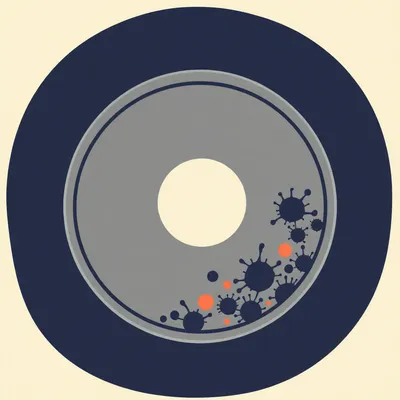
Picture a petri dish. In the center, a paper disk soaked with penicillin. Around it, a clear zone where bacteria can't grow — the zone of inhibition. Now imagine watching that clear zone shrink, day by day, as the bacteria creep inward. That's not a hypothetical. That's happening right now in hospitals across the world, and it's happening faster than most people realize.
A shrinking halo of safety. That's the visual.
It gets at the fundamental problem. Every time we deploy an antibiotic, we're not just killing bacteria — we're running a selection experiment. The drug wipes out the susceptible cells, but if there's even one bacterium in that population with a random mutation that lets it survive, that cell's descendants inherit the advantage. We're breeding for resistance every time we prescribe.
The paradox is baked in. The act of treating an infection creates the conditions for the treatment to eventually fail.
And the scale of this is staggering. The Lancet published a comprehensive analysis in 2022 looking at 2019 data — one point twenty-seven million deaths directly attributable to antimicrobial resistance. That's more than HIV slash AIDS or malaria that year. And the projections are grim: ten million annual deaths by 2050 if current trends continue. For context, cancer currently kills about ten million people a year worldwide. AMR would match that.
We're not talking about a future hypothetical. We're talking about a present-tense crisis that's accelerating.
What makes it fundamentally different from, say, cancer or heart disease is the evolutionary dimension. Cancer cells evolve within a single patient. Bacteria evolve across the entire planet, and they share their survival strategies with each other across species lines. That's the key mechanism — horizontal gene transfer. It's what turns a problem in one patient into a problem everywhere.
Which is a good place to dig in. How do bacteria actually share notes?
There are three main routes. The first is conjugation — that's the one scientists sometimes call bacterial sex, though it's more like a handshake that transfers a briefcase. Two bacteria connect via a physical bridge called a pilus, and one passes a plasmid — a small circular piece of DNA — to the other. Plasmids often carry multiple resistance genes. One transfer event, and suddenly a previously susceptible bacterium is resistant to three or four different drug classes.
It's not like they need to inherit resistance from a parent. They can acquire it from a stranger mid-life.
And the second mechanism is transformation — bacteria can simply scoop up loose DNA from their environment. When a resistant bacterium dies and bursts open, its genetic material floats around. Competent bacteria can absorb those fragments and incorporate them into their own genome.
I appreciate the judgment built into that term. The ones that can pull this off are competent. The rest are just...
The third route is transduction — bacteriophages, which are viruses that infect bacteria, sometimes accidentally package bacterial DNA instead of their own viral genome when they're replicating. When that phage infects the next bacterium, it delivers the previous host's DNA. Including any resistance genes.
Bacteria have three separate channels for acquiring resistance — physical contact, environmental scavenging, and viral delivery. That's not one loophole. That's a fully networked information-sharing system.
It gets deeper. There's this concept called the resistome. Soil bacteria — organisms that live in dirt, never interact with humans — have been evolving antibiotic resistance genes for millions of years. Because bacteria have been fighting each other with chemical weapons long before we showed up. Streptomyces, the soil bacteria that gave us streptomycin, produces antibiotics naturally to compete with its neighbors. And its neighbors evolved resistance in response.
The resistance genes predate us. We didn't create them — we just gave them a reason to move into our pathogens.
Clinical resistance is often a recruitment event from these environmental reservoirs. A resistance gene that spent the last fifty million years in some soil bacterium in Borneo gets picked up on a mobile genetic element, hops into something that can infect humans, and suddenly it's in a hospital in Berlin.
Which makes it sound like we're not so much fighting an enemy as we are opening doors for existing capabilities to walk through.
Let me give you the case study that illustrates this perfectly. NDM-one — New Delhi metallo-beta-lactamase. It's an enzyme that destroys carbapenems, which are our broadest-spectrum, last-line antibiotics.
The big guns.
The very biggest. NDM-one was first identified in 2008 in a Swedish patient who'd been hospitalized in India. The gene was found on a plasmid in Klebsiella pneumoniae. Within a decade, it had spread to more than seventy countries. The enzyme doesn't just break down one drug — it hydrolyzes nearly all beta-lactam antibiotics. Penicillins, cephalosporins, carbapenems — all of them.
One enzyme, one gene, collapses an entire drug class.
The gene's origin was traced back to environmental bacteria — likely from water samples in Delhi. It existed in the environment, probably for eons, and a single horizontal transfer event put it into a human pathogen. From there, conjugation and clonal spread did the rest.
Clonal spread meaning the resistant strain itself just... Person to person, hospital to hospital, continent to continent.
Here's where the tragedy of the commons comes in. When I prescribe an antibiotic for a patient with a respiratory infection, I'm making a decision that benefits that individual. But the societal cost — the increased selection pressure for resistance — is distributed across everyone. And seventy percent of global antibiotic use isn't in humans at all. It's in agriculture.
According to WHO data. Livestock are fed sub-therapeutic doses of antibiotics to promote growth and prevent disease in crowded conditions. That creates a massive reservoir of resistant bacteria and resistance genes that can transfer to human pathogens through food, water, and direct contact.
We're running a global selection experiment, not just in hospitals, but in every factory farm on the planet. And bacteria are sharing the results of that experiment across species lines in real time.
Here's the thing that really keeps me up. In 2015, researchers in China discovered the mcr-one gene — it confers resistance to colistin. Colistin is our absolute last resort antibiotic. It's toxic — it damages kidneys and nerves — so we only use it when nothing else works. And mcr-one was found on a plasmid.
On a plasmid. Meaning it's mobile. It can spread.
Found in pigs. Colistin had been used extensively in Chinese agriculture. The resistance gene had evolved in livestock and was poised to jump into human pathogens. And it did. mcr-one has since been detected in more than fifty countries across five continents.
The last resort drug, and resistance to it was circulating in pig farms before most people even knew it was a problem.
There's a more recent example too. In 2023, the UK saw an outbreak of extensively drug-resistant Shigella sonnei. Shigella causes dysentery — severe, bloody diarrhea. This strain was resistant to pretty much everything. And the outbreak was concentrated among men who have sex with men, transmitted through sexual networks. What that shows is that resistance doesn't just spread through hospitals and farms — it exploits any dense social network. The bacteria don't care about the transmission route. They just need hosts in close contact.
The resistance problem is layered. You've got the molecular layer — horizontal gene transfer, plasmids, the resistome. You've got the clinical layer — overprescription, incomplete treatment. You've got the agricultural layer — seventy percent of global use. And you've got the social layer — dense networks accelerating spread. Any one of these would be hard to solve. We're dealing with all of them simultaneously.
Which brings us to the innovation gap. Between 2017 and 2024, only twelve new antibiotics were approved globally. And most of those are derivatives of existing classes — meaning resistance mechanisms may already exist for them.
In seven years. For a crisis that kills over a million people annually.
The economics are brutal. An antibiotic is taken for seven to fourteen days and cures the patient. A cholesterol drug or a diabetes drug is taken for life. From a pharmaceutical company's perspective, the return on investment for antibiotics is terrible. You spend a billion dollars developing a drug, you get it approved, and then stewardship guidelines tell doctors to use it as sparingly as possible to preserve its effectiveness.
The better your antibiotic works and the more responsibly it's used, the less money you make. That's a market failure of spectacular proportions.
The PASTEUR Act, passed in the US in 2024, attempts to fix this. It creates a subscription model — the government pays between seven hundred fifty million and three billion dollars for access to a new antibiotic, decoupling revenue from volume sold. The drug company gets paid regardless of how many prescriptions are written.
It's like Netflix for antibiotics. Pay for access, not per view.
That's exactly the analogy. And it's a genuinely innovative policy approach. But it's still early — we don't know yet whether it'll be enough to revive the antibiotic pipeline.
Let's step back to the core question from the prompt. If bacteria evolve around everything we throw at them, can we ever actually win?
I think the framing of "winning" might be the problem. We're not going to defeat evolution. Evolution is a physical law operating on biological systems — it's not something you beat. But we might be able to change the rules of the game so that the race favors us more than it currently does.
There's a concept called evolutionary traps. The idea is to design antibiotics that target something so essential and so structurally constrained that resistance mutations carry a severe fitness cost. If becoming resistant to the drug makes the bacterium worse at everything else — slower growth, reduced virulence, impaired reproduction — then resistance doesn't spread through the population even if it emerges.
It's not that resistance is impossible. It's that resistance is self-defeating.
And the most exciting work in this space right now is on LpxC inhibitors. LpxC is an enzyme in the lipid A biosynthesis pathway — lipid A is an essential component of the outer membrane in Gram-negative bacteria. Without it, the membrane falls apart and the bacterium dies.
Gram-negative being the harder-to-treat class — they have that double membrane that keeps a lot of drugs out.
Pseudomonas aeruginosa, Acinetobacter baumannii, Klebsiella pneumoniae — these are all Gram-negative, and they're all on the WHO's critical priority list. LpxC is a zinc-dependent metalloenzyme, and its active site is deeply conserved. The structure is so constrained by its catalytic function that there are very few mutations it can tolerate and still work.
Constrained by physics, basically.
A 2025 paper in Nature showed that resistance to LpxC inhibitors requires three to four simultaneous mutations. That makes resistance about a million times less likely to emerge than for a typical antibiotic where a single point mutation does the job.
Three to four simultaneous mutations. That's not impossible — evolution can do remarkable things given enough time and population size. But it's improbable enough to dramatically extend the useful life of the drug.
That's the shift in thinking. We're not asking "can bacteria ever evolve resistance to this." Given enough time and selection pressure, the answer is almost always yes. We're asking "how many evolutionary hurdles do they need to clear, and what does each hurdle cost them.
Instead of an arms race of novel mechanisms — new drug, new resistance, newer drug, newer resistance — we're designing drugs where the resistance pathway itself is a dead end.
Or at least a very expensive detour. And LpxC inhibitors aren't the only approach. There are several novel strategies in development that try to break the cycle entirely.
Walk me through the ones that actually have clinical data behind them.
Bacteriophage therapy is the one getting the most attention. Phages are viruses that specifically infect and kill bacteria. They've been used therapeutically since the 1920s — the Soviet Union and the country of Georgia have continuous clinical experience going back a century.
This is the one where people say "oh, that's that new experimental thing," and it turns out it predates most of modern medicine.
The Eliava Institute in Tbilisi has been treating patients with phage cocktails since 1923. They never stopped. The West abandoned phages when antibiotics came along because antibiotics were easier — broad-spectrum, stable at room temperature, patentable. Phages are exquisitely specific, which is both their strength and their commercial challenge.
Specific meaning a phage that kills Pseudomonas won't touch Klebsiella. You need to match the phage to the infection.
Which means you need either a diagnostic that identifies the pathogen in under thirty minutes, or you need a cocktail of multiple phages that covers the likely suspects. The University of Pittsburgh has been running a program using phage cocktails in cystic fibrosis patients with chronic Pseudomonas infections — infections that had persisted for years despite every antibiotic available. They've been clearing them.
These are patients who had basically run out of options.
And in 2025, we saw phase two clinical trial results for LBP-EC01 — that's a CRISPR-Cas3 engineered bacteriophage targeting E. coli urinary tract infections. Eighty percent efficacy. The CRISPR component is designed to specifically shred the bacterial chromosome.
It's a phage that delivers a gene-editing system that destroys the bacterium's own DNA. That's not an antibiotic. That's a targeted assassination drone.
Because it's sequence-specific, it only kills the pathogen. It leaves the rest of the microbiome intact. That's a huge advantage over broad-spectrum antibiotics, which are the microbiome equivalent of napalm.
The microbiome angle is under-discussed in this whole conversation. When you take a broad-spectrum antibiotic, you're not just killing the pathogen — you're carpet-bombing your gut ecosystem. And we know the gut microbiome affects everything from immune function to mental health.
Narrow-spectrum approaches — whether phages, CRISPR antimicrobials, or highly targeted small molecules — spare the microbiome. And there's a second benefit: if you're not killing off the commensal bacteria, you're not creating empty niches for resistant pathogens to colonize. Broad-spectrum antibiotics actually make you more vulnerable to resistant infections in the weeks after treatment.
Narrow-spectrum isn't just precision medicine — it's resistance management.
Let me talk about one more approach that's different: anti-virulence drugs. Instead of killing bacteria, you disarm them. You block the toxins, the adhesion factors, the secretion systems that make them harmful, but you leave them alive.
The bacteria are still there, but they're no longer pathogenic. They're just...
The theoretical advantage is that there's no selective pressure for resistance. If you're not killing the bacteria, there's no survival advantage to evolving a countermeasure. The bacterium doesn't "care" whether it's making you sick or not — it's just trying to replicate.
Although if being virulent costs energy, and you block the virulence factor, wouldn't the non-virulent strains actually have a growth advantage?
That's exactly the hypothesis, and there's some evidence for it. In animal models, anti-virulence approaches against Pseudomonas and Staphylococcus have shown that blocking virulence factors can actually select for less harmful strains over time. The evolutionary pressure pushes them toward commensalism rather than resistance.
You're not fighting evolution — you're redirecting it. Instead of selecting for bacteria that can survive the drug, you're selecting for bacteria that are harmless.
The challenge is that anti-virulence drugs don't work as monotherapy for severe infections. If someone is septic, you need to kill the bacteria, not just disarm them. So these would likely be used in combination with antibiotics, or for milder infections, or for decolonization — clearing a resistant strain from a carrier before it causes disease.
We've got LpxC inhibitors that make resistance evolutionarily expensive, phage therapy that's exquisitely specific, CRISPR antimicrobials that shred bacterial DNA, and anti-virulence drugs that redirect evolution toward harmlessness. And the PASTEUR Act is trying to fix the economic incentive problem. actually a lot of irons in the fire.
There's one more piece I want to add, and it's the least glamorous but possibly the most impactful: rapid diagnostics.
The unsexy infrastructure play.
Right now, when a patient shows up with a serious infection, the doctor typically starts broad-spectrum antibiotics empirically — meaning they guess at the pathogen and the likely susceptibilities. The definitive culture and sensitivity results take forty-eight to seventy-two hours. That's two to three days of broad-spectrum selection pressure before you know what you're actually treating.
You're running a resistance experiment in your patient while you wait for the lab.
If we could get turnaround times under thirty minutes — point-of-care diagnostics that identify the pathogen and its resistance profile while the patient is still in the exam room — we could use narrow-spectrum drugs from the start. That alone would dramatically reduce the selective pressure driving resistance.
It's the difference between a sniper rifle and a shotgun.
These diagnostics are improving rapidly. MALDI-TOF mass spectrometry can identify bacteria in minutes from a colony. PCR-based resistance gene panels are getting faster and cheaper. There are microfluidic devices in development that can do phenotypic susceptibility testing — actually growing the bacteria in the presence of antibiotics and watching what happens — in under an hour.
The practical path forward isn't one silver bullet. It's a stack: rapid diagnostics, narrow-spectrum drugs, economic incentives that don't punish stewardship, and novel therapeutic approaches that change the evolutionary calculus.
There's a role for individual behavior too, which I think gets lost in the high-level policy discussions.
What does individual action actually look like here?
The most straightforward one: don't demand antibiotics for viral infections. If you have a cold or the flu, antibiotics do nothing except apply selective pressure on your own microbiome. But patients pressure doctors, doctors are time-pressed, and prescriptions get written.
There was that controversy a couple years ago about whether you should always finish your antibiotic course. The old advice was "complete the full course even if you feel better." Then some studies suggested shorter courses might be fine for certain infections, and there was a lot of confusion.
The WHO still recommends completing prescribed courses for serious infections, and I think that's the right default. The nuance is that for some self-limiting infections, shorter courses may be appropriate — but that's a decision for the prescribing physician based on the specific infection and patient, not a blanket rule. The danger of telling people to stop when they feel better is that for infections like tuberculosis or endocarditis, stopping early is how you breed resistance.
The actionable advice is: don't push for antibiotics when your doctor says you don't need them, and if you are prescribed them, follow the instructions. Don't self-taper.
Support antibiotic stewardship programs in healthcare. These are institutional efforts to optimize antibiotic use — the right drug, right dose, right duration. They've been shown to reduce resistance rates without worsening patient outcomes.
There's something almost philosophical lurking under this whole discussion. We talk about "fighting" bacteria, "defeating" resistance, "winning" the arms race. But bacteria aren't trying to kill us. They're not malevolent. They're just trying to survive, same as every other organism on the planet. Our war is with evolution itself.
Evolution always wins in the end. That's the Red Queen hypothesis from evolutionary biology — "it takes all the running you can do, to keep in the same place." Species don't get progressively better adapted over time because their environment — including their competitors, predators, and pathogens — is also evolving. You run just to stay where you are.
Which is an unsettling frame when you apply it to medicine. All of this innovation, all of this investment, all of this scientific ingenuity — and the best we can hope for is to stay in the same place.
I'm not sure that's quite right, though. The Red Queen describes a co-evolutionary arms race where both sides are continuously adapting. But we're not just another species in this race. We have something bacteria don't: the ability to model the evolutionary landscape and design interventions that anticipate resistance pathways before they emerge.
That's the evolutionary stewardship concept — not just reacting to resistance after it appears, but designing deployment strategies that make resistance unlikely in the first place.
That's new. For most of medical history, we've been reactive. Resistance emerges, we develop a new drug, resistance emerges to that, we develop another. The idea of evolutionary stewardship is to think several moves ahead — to design drugs and treatment protocols where the resistance pathway is either too costly or leads to an evolutionary dead end.
It's the difference between playing chess and playing whack-a-mole.
We're getting better at it. The LpxC inhibitor story shows that we can identify targets that are evolutionarily constrained. The phage therapy story shows that we can use living therapeutics that co-evolve with their targets. The anti-virulence story shows that we can redirect evolution rather than fighting it head-on.
To answer the original question directly — is there a definitive way out, or are we locked in a permanent arms race? The answer seems to be: the arms race is permanent, but we're getting smarter about how we run it. We're moving from a reactive posture to a strategic one.
I'd add: the goal isn't to eliminate resistance. That's impossible. The goal is to manage it well enough that modern medicine — surgery, chemotherapy, transplants, intensive care — remains viable. We don't need to win. We need to not lose.
That's a very donkey way of framing it.
It's the pediatrician in me. I've seen what happens when infections become untreatable. The goal isn't perfection — it's keeping the lights on.
There's an open question that haunts me, though. If we succeed — if we develop these evolution-proof antibiotics, if we deploy them intelligently, if we manage to suppress resistance — what happens to the selective pressure on bacteria? Do they evolve new strategies we haven't imagined?
That's the billion-dollar question. Bacteria have been evolving for three and a half billion years. They've survived ice ages, asteroid impacts, and every chemical challenge the planet has thrown at them. I think it's hubris to assume we can close off every evolutionary pathway.
The meta-question is: what does the next generation of bacterial counter-adaptation look like? If we make resistance mutations too costly, do they find ways to reduce that cost? If we target essential conserved functions, do they evolve alternative pathways? If we use phages, do they evolve phage resistance?
They already do evolve phage resistance. But the beauty of phages is that they co-evolve. When bacteria evolve to resist a phage, the phage population evolves to overcome that resistance. It's an arms race we can join rather than one we fight from outside.
The phage is running its own Red Queen race, and we're just... providing the arena.
Sometimes engineering the phage to give it a head start. The CRISPR-phage combination I mentioned earlier — that's us stacking the deck in the phage's favor.
Maybe the long-term answer isn't a drug at all. It's an ecosystem management approach — using narrow-spectrum killing where needed, redirecting virulence where possible, preserving the microbiome, and deploying living therapeutics that can adapt alongside their targets.
Plus the boring stuff. The unsexy infrastructure that makes all the sexy science actually work in practice.
Covering the covers.
I want to mention one more thing about the economic dimension, because it connects to a broader pattern in drug development. The PASTEUR Act's subscription model is clever, but it's a US solution. Antimicrobial resistance is a global problem. The resistant strain that emerges in a pig farm in China or a hospital in India doesn't respect borders.
We need global coordination, which is historically... let's say challenging.
The WHO has a global action plan on antimicrobial resistance, and there's a UN high-level meeting on AMR scheduled for later this year. But the implementation gap between international declarations and on-the-ground reality is substantial.
Especially when you've got countries with very different healthcare infrastructures, regulatory capacities, and agricultural practices.
Different incentive structures. In many countries, antibiotics are available over the counter without a prescription. That's convenient for patients but catastrophic for stewardship.
The solution stack needs to be global in scope but locally adaptable. Which is the hardest kind of solution to actually implement.
Also the only kind that has a chance of working. A country that does everything right on antibiotic stewardship but is surrounded by countries that don't is still vulnerable. The bacteria don't check passports.
Alright, let's pull this together. The original question asked whether there's a definitive way out of the antibiotic resistance arms race. What I'm hearing is: there's no exit, but there are ways to run the race more intelligently. Rapid diagnostics so we can use narrow-spectrum drugs. Evolutionary traps like LpxC inhibitors that make resistance self-defeating. Phage therapy that co-evolves with its target. Anti-virulence approaches that redirect evolution toward harmlessness. Economic models that reward innovation without punishing stewardship. And global coordination that treats resistance as the planetary problem it actually is.
On the individual level: don't demand antibiotics for viral infections, follow your prescription instructions, and support policies that take this problem seriously. The PASTEUR Act didn't pass because of grassroots activism — it passed because enough people in policy understood the stakes. Public awareness actually matters here.
The Red Queen said it takes all the running you can do to stay in the same place. But we're not just running. We're learning to read the terrain.
The bacteria aren't trying to kill us. They're just trying to survive. Our challenge is to structure the evolutionary landscape so that their survival and our survival aren't in conflict.
Which might be the most profound reframing of all. This isn't a war. It's a negotiation with a partner that doesn't speak our language and doesn't know it's at the table.
And now: Hilbert's daily fun fact.

In the 1930s, dust storms in Patagonia lifted enough topsoil to cross the Atlantic, and the word "pampero" — originally the name for the fierce wind that sweeps the Argentine pampas — briefly entered meteorological English as a term for any sudden, soil-laden squall before fading back into regional obscurity.
...right.
The bacteria aren't the only things crossing borders without passports.
This has been My Weird Prompts, produced by Hilbert Flumingtop. If you enjoyed this episode, leave us a review wherever you get your podcasts — it helps other people find the show.
Find more at myweirdprompts dot com. We'll be back next week with a new prompt and a new rabbit hole.