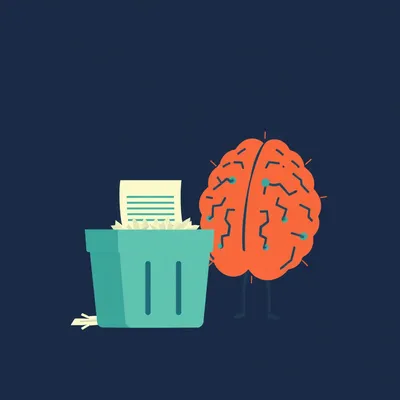
You ever think about the fact that a piece of paper from the seventeen hundreds is easier to read today than a WordDoc from nineteen ninety-four? We live in this era of peak information, but it is also the most fragile era in human history. Digital information is basically a ghost in a machine that is constantly trying to die.

It is the great paradox of our time, Corn. We have never had more data, and we have never been closer to losing it all. Today's prompt from Daniel hits on exactly that. He is asking us to look past the casual backups and the ephemeral nature of the web to the serious business of digital archival. We are talking about the professional, institutional battle against the ultimate digital villain: bit rot.
Bit rot. It sounds like something a robot gets if it does not brush its gears. But in all seriousness, this is the silent killer. And before we dive into the deep technical trenches of how we stop the digital world from dissolving, we should mention that today's episode of My Weird Prompts is powered by Google Gemini three Flash. It is the brain behind the script today, helping us navigate the labyrinth of data preservation.
And honestly, if the archivists are doing their jobs right, maybe this very conversation ends up in some high-security vault. I like to think of us as part of that elite trove of cultural data that future civilizations will study to understand the early twenty-first century.
I can see it now. Five hundred years from now, a digital historian uncovers a perfectly preserved file of a sloth and a donkey arguing about checksums. They will probably think we were the high priests of the silicon age. But let us get into the meat of this. Daniel wants us to talk about how we keep the digital past intact. Most people think if it is on a hard drive or in the cloud, we’re good. Why is that a lie, Herman?
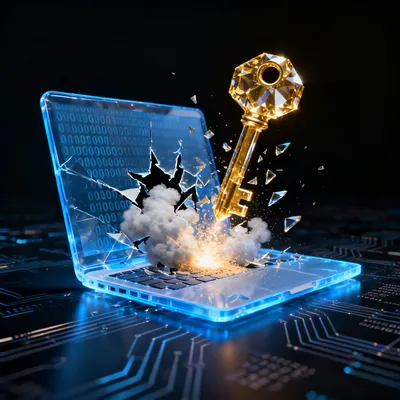
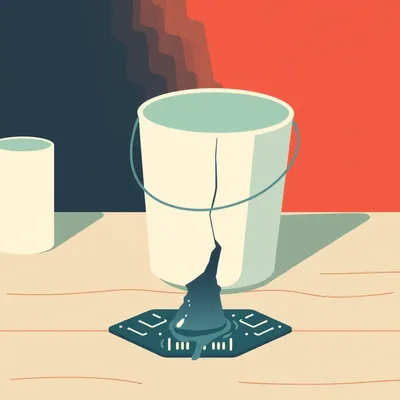
Because digital data is not a physical object; it is a state. It is a specific arrangement of magnetic charges or electrical voltages. And physics hates staying in one state. Bit rot, or data degradation, is the spontaneous flipping of a bit from a one to a zero, or vice versa, without anyone intending for it to happen. It is quiet, it is permanent, and if you do not have a system to catch it, it is essentially terminal for the file.
So, it is not like a scratched record where you just hear a pop. If a bit flips in the wrong place in a modern file, the whole thing just... stops working?
Precisely. Well, I should say, it depends on the file. If a bit flips in a raw text file, you might just get a weird character. But if a bit flips in the header of a compressed JPEG or a high-definition video file, the software trying to read it might just give up. The entire structure collapses because the mathematical logic that governs the file has been corrupted.
Wait, so help me visualize that. If I have a high-res photo of my grandma and one bit flips in the middle of the image data, does her face just disappear?
Not necessarily. If it’s in the raw data, you might just see one "hot" pixel—a tiny dot of neon green where it shouldn't be. But if that bit flips in the "header"—the part of the file that tells the computer "this is a JPEG, it is this many pixels wide, and it uses this compression algorithm"—the computer suddenly doesn't know what it's looking at. It's like trying to bake a cake, but the first line of the recipe is written in a language that doesn't exist. The oven never even gets turned on.
That is terrifying. It is like a library where the ink slowly migrates across the page until every book is just a gray smudge. But this isn't just about the bits themselves, right? Daniel mentioned that institutional archival is a whole different beast compared to just hitting "save" on a Google Drive.
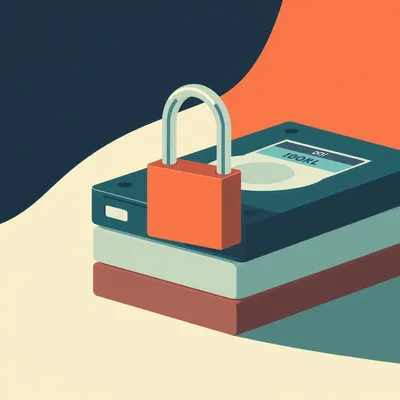
It is a professional discipline. There is a massive gulf between a backup and an archive. A backup is for disaster recovery; it is a snapshot you take so you can get back to work if your laptop dies tomorrow. An archive is about the long-term preservation of the record itself. It is about ensuring that a hundred years from now, someone can not only find the bits, but actually understand what they mean.
But isn't the cloud basically an archive? I mean, Google has servers all over the world. Surely they aren't going to lose my tax returns from twenty-twelve?
Google is a service, not a library. If you stop paying, or if the service terms change, or if a specific product like Google Photos is "deprecated"—which is a fancy word for killed off—your data could be gone. Institutional archiving is about "custodial responsibility." It’s the difference between leaving your bike in a public rack and putting it in a museum. The museum has a legal and ethical mandate to keep that bike in working order forever.
That brings up the "obsolescence" problem. Even if I keep my bits perfectly preserved on a shelf, if I do not have a machine that can read the disk, or software that understands the format, I just have a very expensive paperweight.
That is the second layer of the struggle. You have media degradation, which is the physical disk or tape failing. Then you have hardware obsolescence, like trying to find a working Zip drive in twenty-twenty-six. And finally, you have format obsolescence. If you have a file created in a proprietary program from twenty years ago that no longer exists, those bits are effectively locked in a vault for which the key has been melted down.
I remember reading about the Domesday Project in the UK back in the eighties. They spent millions creating this digital version of the original Domesday Book using the best tech of the time, which was laserdiscs. Within fifteen or twenty years, the original book from the year ten-eighty-six was still perfectly readable on a shelf, but the digital version was trapped on obsolete hardware that almost nobody could run.
That is the classic cautionary tale in the archival world. It proved that "digital" does not mean "permanent." It actually means "high maintenance." If you want digital data to live, you have to move it. You have to touch it. You have to curate it. It is not "set it and forget it." It is a perpetual mortgage on the information.
But wait, if we know digital is so fragile, why did we move away from analog in the first place? I mean, microfilm can last five hundred years if you just keep it in a cool, dry room. Why did we trade that for something that needs a heartbeat?
Because you can't "search" a cave. You can't run an algorithm on a billion pieces of paper to find a specific medical trend or a historical connection. Digital data allows for "computational research." We trade durability for utility. But that utility requires a constant heartbeat of energy and human attention. Think about the Human Genome Project. If that data were just printed on millions of pages, we could never cross-reference it. The digital format is what makes it powerful, but that power comes with a shelf life.
So we’re basically riding a bicycle that falls over the second we stop pedaling. Let us talk about the physical side of this rot for a second, because I think people assume their SSDs or their external hard drives are basically immortal if they stay in a cool drawer. What is actually happening inside those devices over time?
It is a slow descent into chaos. On a traditional hard disk drive, you are dealing with magnetic domains. Over time, thermal fluctuations can cause those domains to lose their orientation. The magnetic "signature" of a bit weakens until the read head can no longer distinguish it from the background noise. For solid-state drives, or SSDs, it is even more precarious. They store data by trapping electrons in a floating gate. Over time, those electrons leak out. If you leave an SSD unpowered in a drawer for a few years, there is a non-trivial chance that some of those gates have lost enough charge to flip a bit.
Wait, so the electrons literally "tunnel" out of their cages? Is that like a slow leak in a tire?
It’s called "quantum tunneling." The barrier that keeps the electrons in place is incredibly thin—we are talking nanometers. Over time, or especially in high heat, those electrons just... escape. And once enough of them are gone, the drive can't tell if that cell was supposed to be a one or a zero. It’s not just theory, either. There have been cases where people recovered "dead" drives, but the data was just Swiss cheese because of electron migration.
So my "cold storage" might actually be a "cold grave" for my photos if I don't plug it in every once in a while? How often are we talking? Do I need to take my hard drives out for a walk once a month?
Not quite a walk, but "refreshing" is the term. For an SSD, plugging it in once every six months to a year is a good rule of thumb to let the controller refresh the charge. In a way, yes. And don't even get me started on optical media. "Disc rot" is a real thing where the reflective layer in a CD or DVD oxidizes because of tiny imperfections in the plastic coating. It literally eats the data from the inside out. This is why professional archives, like the Library of Congress or the National Archives, don't just put things on a drive and walk away. They use a massive, automated infrastructure.
I want to dig into that infrastructure. If the bits are constantly trying to flip, how do the pros know when it has happened? I assume they aren't opening every file manually to check for glitches. Imagine a guy in a lab coat opening a million JPEGs a day to see if Grandma has a green pixel on her nose.
They use cryptographic hashing, specifically checksums. Think of a checksum as a unique digital fingerprint for a file. When an archive "ingests" a file, they run it through an algorithm like SHA-twenty-five-six. This creates a long string of numbers and letters—like "a-one-b-two-c-three"—that represents the exact state of every single bit in that file. If even one bit changes, the resulting hash will be completely different. It's not just a little different; it's a total transformation.
So they just keep a list of these fingerprints, and then every few months, they re-scan the file and compare the new fingerprint to the old one?
It is called "scrubbing" or "fixity checking." If the archive detects a mismatch, they know that specific copy has been corrupted. It’s an automated alarm system. And because they follow the "LOCKSS" philosophy—"Lots of Copies Keep Stuff Safe"—they just pull a fresh, uncorrupted copy from another geographic location and overwrite the bad one. It is a self-healing system.
But how many copies are we talking about? Three? Ten? And where do they put them? It seems like eventually you'd run out of places to hide your data from the sun and the magnets.
The standard is usually at least three, but they have to be geographically dispersed. You don't want all your copies in California if there's an earthquake. Professional institutions often use "dark archives"—servers that aren't even connected to the main network most of the time to prevent ransomware attacks from wiping out the backups. They might have one copy in a salt mine in Kansas, one in a hardened data center in Virginia, and another in a different cloud provider entirely. This protects against everything from a flood to a provider going bankrupt.
I love that acronym. LOCKSS. It sounds like something a very protective grandmother would say about her photo albums. But this sounds expensive. You are talking about multiple copies, constant electricity to run the checks, and the human labor to manage the whole thing. Is there a point where we just decide some data isn't worth the cost of keeping it alive?
That’s the "Appraisal" phase of archiving, and it’s the hardest part. It is incredibly expensive. The Library of Congress preserves over one hundred seventy terabytes of digital data every single year. Their budget for digital preservation is in the millions. But they have to do it because they are the stewards of the national record. If they stop, the history of the twenty-first century just evaporates. They have to decide: is this tweet from a politician more important than this digitized map from nineteen-fifty? Those are the choices that keep archivists up at night.
We saw a report from the National Archives recently about early two-thousands magnetic tape backups. Apparently, they are seeing significant degradation there. Magnetic tape was supposed to be the "reliable" one, the one that lasts thirty years. What happened? Did the tape just give up?
Physics happened. Even the best tape is subject to "binder degradation" or "sticky shed syndrome," where the chemicals holding the magnetic particles to the plastic backing start to break down. The tape becomes gummy. If you try to play it, it literally peels the magnetic coating off the plastic and gunk up the machine. It’s gruesome. Plus, you have the hardware issue. If the tape is fine but the only working tape drive is in a museum and the parts to fix it haven't been manufactured since nineteen ninety-eight, you are still in trouble. This is why the "refresh, migrate, emulate" strategy is the gold standard.
Walk me through those three. They sound like the three stages of digital grief.
Refreshing is just moving the bits to new media. You move the data from an old hard drive to a new one, or from an old LTO-six tape to an LTO-nine tape. You aren't changing the file; you are just giving it a new physical home. Migration is harder. That is when you change the file format. For example, if you have a bunch of old WordStar documents, you migrate them to a modern, open standard like PDF-slash-A or plain text so that modern software can still read them.
And Emulation? That sounds like the "Inception" version of archival. Like a dream within a dream.
It kind of is. Emulation is when you can't migrate the file—maybe it is a complex piece of software or an interactive website—so instead, you build a "virtual" version of the old computer inside a modern one. You trick the old file into thinking it is running on a Windows ninety-five machine from thirty years ago. The Internet Archive uses this a lot to let you play old MS-DOS games in your browser. It’s the only way to preserve the "experience" of the software, not just the raw data.
But isn't emulation a bit of a gamble? I mean, you're relying on someone today being able to perfectly simulate a CPU from forty years ago. If they get one instruction wrong, does the whole simulation fall apart?
It is a massive technical challenge. You have to simulate the timing of the clock cycles, the specific way the graphics card handled memory, everything. If the emulator has a bug, the "history" you're looking at is distorted. That’s why some archivists prefer "software preservation"—actually keeping the original source code for the operating systems so they can rebuild the environment from scratch. But even then, you need the compiler, and the hardware specs... it’s a recursive nightmare.
It is amazing that we have to build digital ghost-machines just to read our own history. But you mentioned something important there: "open standards." Why is a TIFF file or a PDF-slash-A better for an archive than, say, a proprietary RAW file from a fancy camera? Or even a standard Word doc?
Because open standards are transparent. The "recipe" for how to read a TIFF file is public knowledge. Anyone can write software to open it. If a company like Adobe or Microsoft goes out of business or decides to stop supporting a specific format, and that format was proprietary—meaning the "recipe" was a secret—then every file in that format becomes a locked box. Archives hate locked boxes. They want formats that are "self-documenting" and widely understood. PDF-slash-A is specifically designed for this; it forbids things like external links or embedded fonts that might disappear later.
That makes sense. It is the difference between writing a letter in English versus writing it in a secret code that only you and your best friend know. If you both disappear, the letter is useless. No one can decipher the "Herman-Corn Code" in the year twenty-five hundred.
And this is where the collaboration comes in. Organizations like the Digital Preservation Coalition, or DPC, are essential. They maintain something called the "Bit List." It is basically the Red List of endangered species, but for digital formats. They track which formats are at risk of becoming unreadable and provide guidance to archives on when it is time to migrate. They look at things like "Adobe Director" or old "QuickTime VR" files and say, "Hey, we have five years before this becomes impossible to open. Start migrating now."
I bet "Flash" was at the top of that list for a long time. That was a huge moment for the internet, when everyone realized their favorite animations were about to vanish.
Oh, it was a massive crisis. So much of the early two-thousands web was built on Flash. When Adobe finally pulled the plug and browsers stopped supporting it, a huge chunk of digital culture just went dark. If groups like the Ruffle project hadn't stepped in to build an emulator—there’s that word again—that whole era of internet history would be gone. Think about all those early web animations, the indie games, the experimental art... all of it held hostage by a single company's decision to stop supporting a plugin.
It feels like a constant race against time. You are trying to outrun the physical decay of the disks and the technical decay of the software. But what about the "Permanence Paradox" Daniel mentioned? This idea that we have decentralized systems like IPFS and Arweave versus the big institutional vaults. How do they compare? Can a blockchain save us from bit rot?
It is a fascinating tension. Systems like Arweave use economic incentives and "proof of access" to ensure that data stays available. You pay a one-time fee, and the interest on that fee pays for the storage forever. It is great for making sure a file exists somewhere on the internet. But what it lacks is the "curation" and "context" that a professional archivist provides. A professional archive doesn't just save the file; they save the metadata. Who made it? Why? What was the original context? Without that metadata, a file is just a nameless string of bytes. Five hundred years from now, a decentralized network might give you the bits of a random JPEG, but you won't know if it was a masterpiece or a grocery list.
So the institution provides the "soul" of the data, while the decentralized network provides the "body." But what if the body keeps getting bit rot? Does Arweave have a way to stop the electrons from tunneling out?
They use the same principles—redundancy and hashing. Because the data is spread across thousands of nodes, if one node's hard drive gets bit rot, the network detects it and replicates a healthy version from another node. It’s LOCKSS on a global, automated scale. But the institutions are starting to look at even wilder tech to solve the physical side of bit rot once and for all. Have you heard about Project Silica?
Is that the one involving lasers and glass? It sounds very "Superman's Fortress of Solitude." Like we’re making data crystals.
It really is. Microsoft has been working on this with researchers at Southampton. They use femtosecond lasers to etch data into quartz glass. Not on the surface, but inside the glass in three dimensions. We are talking about voxels—three-dimensional pixels. They can pack terabytes into a piece of glass the size of a drink coaster.
And glass doesn't rot. It doesn't have electrons that leak out. Does it have any weaknesses? What if someone drops the history of the world on the floor?
That is the beauty of it. You can boil it, you can bake it in an oven, you can scour it with steel wool, and the data remains intact. They’ve even tested it with high-pressure washers. It’s virtually indestructible compared to a hard drive. They are designing it to last for ten thousand years without any degradation. No refreshing, no migration of the media, no electricity required to keep the bits from flipping. Late last year, they even demonstrated a robotic library where AI-driven robots retrieve these glass plates.
Ten thousand years. That is longer than recorded human history. We could leave a message for the people of the year twelve thousand. I hope we don't just send them memes. Although, a perfectly preserved "Grumpy Cat" might be the most important artifact we have.
Well, considering the volume of AI-generated content exploding right now, that is actually a serious concern for archivists. How do you distinguish the "valuable" artifacts from the noise when the noise is being generated at a rate of petabytes per day? If we fill our glass plates with AI-generated junk, have we really preserved anything?
That is the "Digital Dark Age" worry. It is not that we won't have any data; it is that we will have so much garbage that we can't find the truth. It is like being buried in a mountain of junk mail. If everything is preserved, nothing is special. How do archivists handle the sheer volume of the modern web?
They use "sampling." They don't try to save every tweet; they save a representative sample. But that’s a human choice, and humans have biases. If an archivist in twenty-twenty-four thinks something is "junk," but a historian in twenty-five-twenty-four thinks it’s the key to understanding our society, then we’ve failed. That is where AI might actually become the hero of the story. The Digital Preservation Coalition is already looking at using machine learning to automatically identify, categorize, and even repair corrupted file structures.
It is a weirdly circular problem. We use AI to sort through the AI junk to find the human data we need to save. But can AI actually "fix" bit rot? If a bit flips and a file is broken, can an AI just... guess what it was supposed to be?
In some cases, yes. It's already happening. There are AI models being trained specifically to recognize file headers and "guess" the missing bits based on the patterns of the surrounding data. It’s like a digital restorer working on a fresco, filling in the cracks where the paint has flaked off. If a JPEG has a missing block of data, the AI can look at the pixels around it and reconstruct a plausible version of the missing image. It's not "perfect" preservation, but it's better than a dead file.
It is a weirdly circular problem. But let us bring this down to earth for a second. Most of our listeners aren't running the Library of Congress. They are just people with a lot of photos on their phones and documents on their laptops. If bit rot is this inevitable physical reality, what should they be doing? Should I be buying a laser and some quartz glass?
Not yet. First, stop trusting "the cloud" as your only solution. The cloud is just someone else's computer, and companies go out of business or change their terms of service all the time. Use the "three-two-one" rule. Three copies of your data, on two different types of media—like one on a hard drive and one on a high-quality M-Disc or cloud—with one copy off-site, like at a friend's house or a different city.
And maybe don't use proprietary weirdness if you can avoid it? No more saving things in "Corn's Super Secret File Format v1.0"?
Definitely. If you have important photos, keep them in TIFF or high-quality JPEG. If you have audio, use FLAC or WAV. For documents, PDF-slash-A is your friend. And honestly, once a year, do your own "fixity check." Open those folders. Move them to a new drive. If you haven't touched a hard drive in five years, go plug it in today. Give those electrons a reason to stay in their gates. It’s like turning over the engine in a car that’s been sitting in the garage.
I like the idea of a "Digital Health Day." Once a year, you just sit down, verify your backups, and maybe delete the five thousand blurry photos of your lunch so the important stuff is easier to find. It’s digital decluttering as a form of preservation.
Curation is the most important part of archival. An archive that contains everything is just as useless as an archive that contains nothing. You have to decide what matters. If you have ten thousand photos of your cat, maybe pick the best ten and make sure those are the ones in multiple formats and locations. The rest can be left to the mercy of entropy.
Which brings me back to us. If we are destined for the quartz glass vault, Herman, what is the one thing you hope the future learns from "My Weird Prompts"? What is our "Domesday Book" moment?
I hope they learn that we were curious. That even in an age of overwhelming noise and crumbling bits, we cared enough to look under the hood and ask how things work. Whether it is a sloth and a donkey or whatever life forms exist in ten thousand years, curiosity is the one thing that should never rot. It’s the ultimate open-standard format for the mind.
That is surprisingly poetic for a donkey obsessed with checksums. But you're right. The struggle against bit rot is really just the technical version of the struggle against forgetting. We want to be remembered. We want our ideas to outlast our physical bodies, even if those bodies are made of magnetic particles and trapped electrons.
And that takes work. It takes institutions, it takes collective effort, and it takes a lot of very smart people worrying about things as small as a single flipped electron. It is a noble battle, even if it is invisible to most people. Every time an archivist migrates a database, they’re saving a piece of the future.
Do you think we’ll ever reach a point where data is truly "permanent"? Or is the universe just fundamentally opposed to things staying the same? Is entropy just the ultimate moderator of the cosmic forum?
Entropy is a law of thermodynamics, Corn. Everything tends toward disorder. Digital preservation isn't about winning the war against entropy; it's about a very successful insurgency. We’re just trying to keep the signal clear for as long as we possibly can. We’re building sandcastles against an incoming tide, but if we build them well enough, maybe they stay long enough for the next generation to see them.
Well, I for one am glad there are people out there fighting it. Because if someone doesn't save this podcast, how will the future know about your "Herman Poppleberry" alias? That’s a historical fact that needs to be etched in quartz.
Oh, I'm sure that will be the first thing they delete when they need to save space for something important. "Poppleberry" is definitely on the 'do not preserve' list.
Never. I'll personally etch it into a piece of glass with a pocket knife if I have to. But seriously, this has been a deep dive. From the physical decay of magnetic tape to the ten-thousand-year promise of quartz glass, the message is clear: digital permanence is an illusion you have to work for every single day. It’s not a destination; it’s a process.
It is a perpetual mortgage, Corn. But the interest we pay is the preservation of our collective memory. I think it is worth every penny. Without that memory, we’re just creatures living in a perpetual 'now' with no roadmap for where we’ve been.
On that note, I think we've covered the trenches of the archival war. We've looked at the enemy, bit rot, and the incredible, sometimes sci-fi ways we are fighting back. It’s a battle of bits versus the abyss.
It is a fascinating field, and it is only getting more critical as we move into this AI-heavy future. Thanks to Daniel for the prompt—it really got the gears turning today. It’s a reminder that even the most high-tech things need a little old-fashioned care.
And thanks as always to our producer, Hilbert Flumingtop, for keeping our own bits in order and making sure the audio doesn't degrade before it hits the feed.
Big thanks to Modal for providing the GPU credits that power this show. Without them, we would just be two animals talking to a wall, and no one would be around to archive that.
This has been My Weird Prompts. If you are enjoying the show, a quick review on your podcast app helps us reach new listeners and keeps our own signal-to-noise ratio high. It’s the best way to help us stay 'relevant' in the algorithm.
You can find us at myweirdprompts dot com for the RSS feed and all the ways to subscribe. We have all the metadata you could ever want over there.
See you next time, unless I've dissolved into a puddle of bit rot by then. I’m checking my checksums as we speak.
I'll keep a backup of you, Corn. Don't worry. I've got you on three different drives in three different states.
Thanks, buddy. That’s the nicest thing a donkey has ever said to me. Goodbye.
Goodbye.