Daniel's got a mercury thread running through his head this week, and it starts in the least likely place. He's been thinking about the fluorescent tubes and compact fluorescents still sitting in basements and garages, the ones with mercury vapour inside. And the fact that one of the quiet benefits of the LED transition is that we're slowly removing this metal from our lighting stock. Which led him to the obvious next question. If we're so worried about mercury in a sealed glass tube, what about the mercury in the fish we eat?
His actual question is threefold. How many times a week can you realistically eat tuna before it's a problem? In the ultra-rare cases where people actually get mercury toxicity from chronic ingestion, or from acute ingestion, what are the actual symptoms? And are there any documented cases of people who developed clinically significant mercury problems just from eating a bunch of canned tuna? Not from industrial accidents, not from contaminated grain. Just the sandwich fish.
So we've got the science of limits, the reality of symptoms, and the surprisingly thin record of real-world canned tuna poisoning. Let's start with the question he asked first. What does the science actually say about how much tuna is too much?

The short answer is it depends on which tuna, and it depends on who you ask. But before we get to the numbers, we have to separate two things that most public confusion collapses together. Elemental mercury, the liquid metal in old thermometers and the vapour in fluorescent tubes, is not the same as methylmercury in fish. Different absorption, different distribution in the body, different half-lives, different symptoms entirely.
One of them you can pour out of a broken thermometer and the other one you can't see, taste, or smell in your sandwich.
Right. Elemental mercury as a liquid is actually poorly absorbed through the gut. As a vapour it's a lung problem. But methylmercury, which is what's in tuna, is an organic compound formed when inorganic mercury from industrial emissions settles into water and bacteria convert it. And methylmercury is absorbed almost completely through the gut. It crosses the blood-brain barrier, it crosses the placenta. It bioaccumulates.
So the mercury in the bulb and the mercury in the fish are cousins, but they're not the same creature.
And the fish one is the one that actually gets into you efficiently. Here's the mechanism. Mercury comes out of coal plants, industrial processes, volcanic activity, settles into oceans and lakes. Bacteria in the sediment convert it to methylmercury. Small organisms take it up, small fish eat them, bigger fish eat those, and at each step the concentration multiplies. Tuna are apex predators, they live a long time, and they keep accumulating. The bigger and older the fish, the more mercury per kilogram.
Which is why the species matters enormously. Canned light tuna is mostly skipjack, a smaller fish with a shorter lifespan. Canned white tuna is albacore, bigger, older, higher on the food chain. The mercury levels are not close.
Not close at all. Canned light tuna, the skipjack, averages somewhere around ten to fifteen micrograms of mercury per serving. Albacore runs more like thirty to forty. Sometimes higher depending on where it was caught. And then you get to the fish the FDA actually tells pregnant women to avoid entirely. Swordfish, king mackerel, tilefish, shark, bigeye tuna. Those are the top of the food chain, and their mercury levels can be five to ten times what you find in skipjack.
So when Daniel asks how many times a week, the first split is light versus white. They're different answers.
The FDA and EPA joint advice says two to three servings per week of lower-mercury fish, and canned light tuna qualifies. Albacore, the white tuna, is limited to one serving per week. And for pregnant women and young children, the advice is more restrictive across the board. One serving a week of albacore for pregnant women, and light tuna maybe two at most.
Two to three servings for the cheap stuff, one for the fancy stuff. That's the official word. But Consumer Reports has been arguing with those numbers for years.
They have. Their position is that the FDA's guidance is too lenient, and they've done their own testing to back it up. Their analysis found that even within canned light tuna, there's enough variation that some cans push closer to albacore levels. They've called for pregnant women to avoid tuna entirely, and for everyone else to treat it as an occasional food rather than a staple. Their argument is that the reference dose the FDA uses is built on outdated assumptions.
So let's get into that reference dose, because this is where the math gets interesting. What's the actual number?
The FDA's reference dose is zero point one micrograms of mercury per kilogram of body weight per day. That's the amount you could consume every day for a lifetime without observable adverse effects, as far as the current science can tell. For a seventy kilogram adult, that's seven micrograms per day. Forty-nine micrograms per week.
And a can of light tuna has how much?
Anywhere from ten to thirty micrograms depending on the specific fish and the can. Let's say twenty as a middle number. Two cans a week is forty micrograms. You're at eighty percent of your weekly budget from tuna alone, before you account for any other fish, any other seafood, any other source.
So the official guidance of two to three servings a week puts you right at the line, not comfortably under it.
And that's the thing people don't understand about the reference dose. It's not a threshold where harm begins. It's a precautionary line with a safety margin built in. The actual harm threshold is much higher. The reference dose is derived from epidemiological studies of populations with high fish consumption, and then divided by an uncertainty factor of ten. So the safety margin is built in by design.
A factor of ten. So the line they give you is ten times lower than the point where they actually observed effects.
Roughly. And here's where it gets even more interesting. The reference dose comes primarily from two long-running cohort studies. The Faroe Islands study and the Seychelles study. Both populations eat a lot of seafood. The Faroese get their mercury largely from pilot whale meat, which is extremely high in mercury and also carries other contaminants, PCBs, other persistent organics. The Seychelles population eats ocean fish, not marine mammals.
And the two studies disagree.
They disagree. The Faroe Islands data showed subtle neurological effects in children at relatively low mercury exposures. The Seychelles data showed essentially no effects at similar or even higher exposures. Same mercury levels, different outcomes. And the difference seems to be the whale meat. Pilot whale carries PCBs and other contaminants that ocean fish don't, and the Faroese were getting a cocktail, not just mercury.
So the reference dose we're all using might be calibrated to a population that was eating something much worse than tuna.
That's the argument. The FDA and the World Health Organization both leaned on the Faroe Islands data because it was more conservative. But there's a legitimate scientific debate about whether that conservatism is protecting us from mercury or from whale blubber. The Seychelles cohort, which is actually closer to what a tuna eater looks like, suggests the real threshold for harm might be considerably higher.
And in 2024 the EPA considered tightening the reference dose and didn't.
Right. There was a review process, a lot of back and forth, and in the end they kept it where it was. The agency's own scientific advisory committee was split. Some members argued the Faroe data justified a tighter number. Others pointed to the Seychelles data and said the current dose is already conservative enough. The fact that they couldn't reach consensus tells you how much genuine uncertainty there is at these low exposure levels.
So the honest answer to how many cans a week is, one to two for an adult, less for pregnant women and children, and albacore should be the exception. But the data underneath that advice is thinner than most people assume.
The limits are built on precaution, not on observed harm at these levels. That's not the same as saying the limits are wrong. Precaution is reasonable when you're dealing with a neurotoxin and a developing fetal brain. But it's worth being honest about what the numbers represent.
So those are the limits. But what actually happens when you blow past them? That's where the story gets more interesting, because the symptom picture depends entirely on how much and how fast.
Chronic methylmercury toxicity, the kind you'd get from eating too much fish over months or years, is neurological. The classic early signs are paresthesias, tingling and numbness in the hands and feet. Then tremors, memory problems, irritability, sleep disturbances. As it progresses you get ataxia, which is loss of coordination, constricted visual fields, dysarthria, which is slurred speech, and hearing loss.
And here's the uncomfortable truth. Tingling hands, memory problems, irritability, poor sleep. That describes half the adults I know.
That's exactly why chronic low-grade mercury toxicity is notoriously underdiagnosed. The symptoms are vague and they overlap with a dozen other conditions. Peripheral neuropathy from diabetes, anxiety, early dementia, vitamin deficiencies, thyroid problems. A doctor seeing a patient with tingling fingers and fatigue is not going to jump to mercury unless there's a reason to. And the blood test that would catch it is not part of any routine panel.
So the chronic picture is subtle and easy to miss. The acute picture is a different animal entirely.
Acute high-dose mercury poisoning is gastrointestinal and renal. Nausea, vomiting, abdominal pain, then kidney failure, and severe neurological symptoms. But here's the thing. Acute poisoning is almost never from fish. The classic acute cases are industrial accidents, occupational vapour exposure, and contaminated grain. The Iraq poison grain disaster of nineteen seventy-one and seventy-two is the textbook example.
What happened there?
Seed grain treated with a methylmercury fungicide was imported and distributed before the warning labels got painted on. People ground it into flour and baked bread with it. Over six thousand people were hospitalized, hundreds died. The mercury was in the grain at concentrations thousands of times higher than anything you'd find in tuna. That's acute poisoning. It's a completely different scale.
And then there's the historical baseline for mercury from fish. Minamata Bay.
Minamata is the reference point for chronic methylmercury poisoning from seafood. A chemical plant in Japan discharged mercury into the bay from the nineteen thirties through the sixties. The bacteria converted it to methylmercury, the fish concentrated it, and the local population ate those fish every single day. Not two cans a week. Every meal, for years. The result was what's now called Minamata disease. Severe neurological damage, congenital disabilities in children born to exposed mothers, deaths. Thousands of cases. That's what mercury from fish can do at the extreme.
But the dose makes the poison, and the dose at Minamata was extraordinary. The fish in that bay had mercury levels hundreds of times higher than a can of tuna. People were eating it for every meal. So the question Daniel asked is whether there's documented harm from the thing people actually do, which is eat canned tuna. Not Minamata fish, not poisoned grain. The sandwich.
This is where the record gets surprisingly thin. Clinically significant mercury toxicity from canned tuna alone is documented, but it's rare, and the cases all share a pattern. The people involved were eating tuna daily, often multiple times a day, for months or years. Not two or three cans a week.
Give me the cases.
The most cited recent one is a twenty twenty case report of a bodybuilder. He was eating four to six cans of tuna a day as a cheap protein source. Every day, for months. He developed tremors, vision changes, memory problems. His blood mercury was twenty times the reference level. He stopped eating tuna, and his symptoms resolved over time.
Four to six cans a day. That's not a dietary habit, that's a bulk protein strategy.
That's the point. There are other case reports in the literature. A fisherman who ate his own catch daily. A woman who ate tuna sandwiches every day for years. But when you look at the actual intakes, they're all in the same range. Daily or multiple-times-daily consumption sustained over months. The blood and hair mercury levels in these cases are dramatically elevated, often ten to twenty times the reference level. And the good news is that when they stop, the symptoms generally improve. Mercury has a half-life in the body of about fifty to seventy days, so it does clear once the exposure stops.
The documented harm is real, but it's at intakes that are an order of magnitude beyond what the FDA is warning about. The bodybuilder eating thirty cans a week is the person who gets hurt. The person eating two cans a week is nowhere near that.
That's the contrast that matters. The difference between theoretically concerning and clinically documented. The FDA limits are precautionary. They're designed to keep you far from the danger zone. But the actual distance between the precautionary line and the harm line is much larger than most people assume. The mercury scare around normal tuna consumption is more about regulatory caution than documented harm.
There's a selenium argument that comes up in these discussions. The idea that tuna is safe because it contains selenium, which binds to mercury and neutralizes it. What's the actual evidence for that?
The selenium health benefit value argument has been promoted mostly by researchers associated with the fishing industry, and it's worth treating skeptically. The mechanism they claim is that selenium forms a complex with mercury that's biologically inert. There's some laboratory evidence that selenium can reduce mercury toxicity in animal models. But the human evidence is thin. The idea that the selenium in tuna cancels out the mercury is not established science. It's an industry-friendly narrative that happens to have a kernel of real biochemistry underneath it.
It's not nonsense, but it's not something you should base your diet on.
I'd put it this way. If selenium were fully protective, the Minamata victims wouldn't have gotten sick. They were eating fish that also contained selenium. The protective effect, if it exists, is partial and doesn't justify ignoring mercury content.
What about the chelation and detox stuff? There's a whole industry around heavy metal detox protocols.
The evidence for chelation therapy is specific and narrow. It's used in confirmed acute poisoning cases, in a hospital setting, with intravenous agents. It's not something you do at home with supplements. The over-the-counter detox protocols, the cilantro smoothies, the activated charcoal regimens, none of that has meaningful evidence behind it for mercury. If someone has confirmed mercury toxicity from eating thirty cans of tuna a week, the treatment is to stop eating the tuna. The body clears it. Chelation is for the acute industrial cases, not the dietary ones.
The treatment for too much tuna is to eat less tuna. That's refreshingly simple.
It is. And it works. The half-life means that within a few months of stopping, blood levels drop substantially. The symptoms in the case reports improved on cessation alone, without chelation.
Let me make sure I have the symptom picture straight. Chronic methylmercury from fish is neurological. Tingling, tremors, memory, coordination, vision, speech, hearing. Acute inorganic mercury, the industrial kind, is gastrointestinal and renal. Nausea, vomiting, kidney failure. And the two are different enough that a clinician would not confuse them.
Different routes, different compounds, different symptoms. The one thing they share is the word mercury in the name. And then there's the extreme outlier that sits outside both categories. Dimethylmercury.
Karen Wetterhahn.
Nineteen ninety-six. She was a chemist at Dartmouth, working with dimethylmercury, which is a synthetic organic mercury compound that is orders of magnitude more toxic than anything in fish. She spilled a few drops on her latex glove. The compound passed through the glove and through her skin in seconds. She died months later despite aggressive chelation. That case is the reason dimethylmercury is now handled in full-body protective equipment. But it's not a dietary exposure. It's not even in the same universe as tuna.
A few drops on a glove. That's the extreme end of what mercury can do. But it's also completely irrelevant to the question of whether you can eat a tuna sandwich.
Completely. And that's part of why the public conversation is so confused. People hear mercury and they think of the Dartmouth case, or Minamata, or the broken thermometer, and they collapse all of it into one thing. But the risk profile of eating a can of skipjack tuna twice a week is not the risk profile of a chemist handling dimethylmercury. They're not even adjacent.
Let me ask you the question from the other direction. If the documented harm from canned tuna is so rare, and the people who get hurt are eating it daily in bulk, why does the fear persist?
I think it's the invisibility. You can't see mercury in the fish. You can't taste it, you can't smell it. The fish looks exactly the same whether it has ten micrograms or a hundred. That makes it harder to assess than a risk you can perceive directly. A sharp knife, a hot stove, a slippery floor. Those you can see and respond to. Mercury in tuna is a number in a report, and the number is always there, in every can, so it feels like a constant low-grade threat rather than a rare extreme one.
The regulatory apparatus reinforces that. When the FDA says two to three servings, people hear two to three servings is the safe limit, and above that is dangerous. But that's not what the reference dose means.
That's the misconception that drives most of the fear. The FDA limits represent the point at which harm occurs. They don't. They're precautionary reference doses designed to keep you far from the harm threshold. The harm threshold is much higher. The safety margin is built in. And the people who actually get hurt are eating at intakes that are ten to thirty times the guidance.
The honest bottom line for a normal adult eating one to two cans of light tuna a week is that the risk is low. Not zero, but low. And the risk is higher for pregnant women and young children because the developing nervous system is more sensitive.
That's the group where the advice is restrictive and where it matters most. The fetal brain is the most sensitive target for methylmercury. The placenta concentrates it. So the guidance for pregnant women is tighter, and it's worth taking seriously. But even there, the risk is about subtle developmental effects at the population level, not acute poisoning from a single sandwich.
What about the future? Mercury emissions have been declining globally. The Minamata Convention on Mercury came into force in twenty seventeen, phasing out mercury in products and industrial processes. Coal plants are being replaced. So the amount of new mercury entering the ocean should be going down.
It is going down, slowly. But the legacy mercury already in the marine food chain is going to take decades to cycle out. Mercury doesn't degrade. It just moves around. The methylmercury in a tuna today might have been emitted by a coal plant in nineteen seventy. The ocean has a long memory. So even with emissions declining, the mercury levels in top predator fish are not going to drop quickly. We're living with the consequences of a century of industrial mercury use, and we'll be living with them for a while.
Which brings us back to the lighting connection. The mercury in those old fluorescent tubes and CFLs is part of that legacy. Every bulb that gets thrown in the trash instead of recycled releases its mercury into the environment, where eventually some of it ends up in the ocean, and then in the fish.
The Minamata Convention has been pushing the lighting industry away from mercury for exactly that reason. LED bulbs don't contain mercury at all. The transition to LED is removing a significant source of environmental mercury, even if most people think of it as an energy efficiency story. The mercury angle is under-discussed.
Daniel's question connects two things that are actually connected. The bulb in your basement and the tuna in your sandwich are part of the same cycle. The mercury in one is the mercury in the other, just at different stages of its journey.

I worked a summer on a tuna boat out of San Diego. Late eighties. I wasn't a fisherman, I was the guy who weighed and tagged the catch on the dock. And the summer I was there, they started a mercury testing program. The company had been sued back in the seventies over mercury levels, and the testing was their insurance. The lab was in a trailer next to the fish auction. The guy who ran it had a mercury thermometer collection in his office. Glass ones, the old kind. He had them mounted on the wall like butterflies.
The older fishermen thought the whole thing was a joke. But the boat's cook made tuna sandwiches for everyone, every single day, the whole season. They all ate them. They thought it was the healthiest thing in the world. And there was one old deckhand named Sal who'd been eating tuna daily for thirty years. He was seventy, and he was sharp as a tack. Remembered every boat he'd ever worked, every captain, every catch. The science says what the science says, but I watched a man eat more tuna than anyone in this room and he never missed a step.
The individual variation is real. Some people clear mercury faster than others. Genetics, metabolism, other dietary factors. Sal might have been one of the fast clearers. Or he might have just been lucky. But one guy eating tuna for thirty years without symptoms doesn't overturn the population-level data. It just shows that the risk is probabilistic, not deterministic.
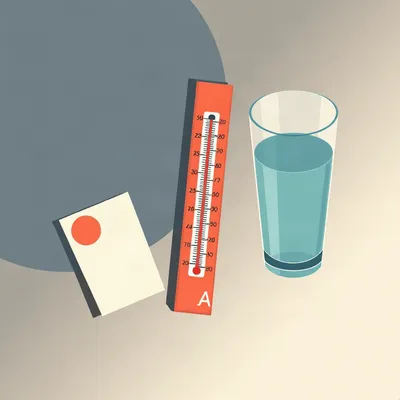
The thermometer collection in the mercury testing lab is the detail I can't get past. The man whose job was to measure mercury in fish kept a wall of elemental mercury in glass tubes next to his desk.
He said they were safer than the digital ones. More accurate. He had one from the nineteen twenties that still read true. He'd tap the glass and watch the silver line move.
There's something almost perfect about that. The guy testing for methylmercury in fish was surrounded by elemental mercury in its most recognizable form, and he probably never connected the two. Because the liquid in the thermometer and the methylmercury in the fish are different compounds with different risks, but they're both mercury, and the public doesn't make that distinction either.
It's the whole episode in one image. The distinction between the metal you can see and the compound you can't.
Sal used to say the mercury was what made the fish taste good. He'd laugh and take another bite of his sandwich. I don't think he was right about that. But he ate that sandwich every day for thirty years and he died of a heart attack at seventy-four, not mercury poisoning.
The most common wrong belief people hold about this topic is that eating canned tuna two or three times a week is dangerous. And the correction is that the FDA limits are precautionary, with a safety margin built in, and documented harm at those levels is essentially nonexistent.
The people who actually get mercury toxicity from tuna are eating it daily, multiple times a day, for months. The precautionary line and the harm line are not the same thing.
Which leaves the question that's been nagging at me the whole episode. If the documented harm from normal tuna consumption is so rare, why does the fear persist? I think it's because you can't see the threat. Mercury in fish is invisible, tasteless, odorless. It's a number in a report, not a thing you can perceive. And invisible risks are the ones that scare us most, because we can't use our own senses to judge them.
As the mercury emissions decline and the legacy mercury slowly cycles out of the ocean, the levels in fish should drop over decades. But that's a slow process. The tuna you eat in twenty thirty will still contain mercury that was emitted before you were born.
One final thought. The tuna question is really a question about how we handle invisible risks. The gap between what the science can prove and what we feel we should worry about. And that gap is wider for mercury than for almost anything else on the plate.
Thanks to our producer Hilbert Flumingtop, who has now given us the image of a mercury thermometer collection in a fish testing lab, which I will be thinking about for the rest of the week.
This has been My Weird Prompts, the human-AI collaboration podcast. If you want to send us a question about something that's been nagging at you, email us at show at my weird prompts dot com.
We'll be back soon.