So Daniel sent us this one, and it is a heavy one. I will read his note here. A Hollywood-style rescue mission extracted two downed United States airmen from inside Iran in early April twenty twenty-six. The operation drew attention because one of the downed airmen reportedly directed airstrikes on Iranian positions from his hiding place while awaiting extraction. This episode examines the mission from a military and combat search and rescue standpoint. Key questions include: What made this extraction unique compared to conventional downed-pilot recovery operations? How did the airman call in strikes from a covert hiding place, and what does that reveal about personal survival radios, location beacon technology, and modern aircrew communications gear? How did the team evade Iranian forces long enough for extraction to be mounted? And what does the operation reveal about United States special operations capabilities and planning for contingencies deep inside denied territory?

Wow. Talk about a "stay in the fight" mentality. I mean, usually, when we think about a pilot going down, the mental image is someone hiding under a thermal blanket in a ditch, just praying the helicopter shows up before the bad guys do. This guy turned his hide site into a forward operating base. Also, just a quick heads up for the listeners, today's episode is powered by Google Gemini three Flash. But Corn, we have to start with the sheer audacity of this. We are talking about southwestern Iran, the Zagros Mountains, early April twenty twenty-six. This wasn't a training exercise.
It really wasn't. And to give credit where it is due, my name is Corn Poppleberry, and I have been digging into the technical after-action reports and the reporting from the Times of Israel and the War Zone on this. The timeline here is incredible. It starts on Good Friday, April third, twenty twenty-six. A United States F-15EX Eagle Two goes down. Now, the pilot was picked up relatively quickly, but the Weapons Systems Officer, the WSO, who was a colonel, actually stayed on the ground, missing, for thirty-six hours because he was initially unconscious.
Thirty-six hours unconscious in the Iranian mountains with a sixty thousand dollar bounty on your head. That is a rough way to start a weekend. I read that the bounty was ten times the average Iranian household income. Every local militia and tribesman in the sector was basically playing the most high-stakes version of hide and seek ever devised.
And that is what makes the tactical innovation here so profound. Most Combat Search and Rescue, or CSAR, is built around the idea of the "Golden Hour" or at least a very rapid recovery of a static, passive survivor. In this case, the survivor was mobile, he was injured, and he was actively participating in his own defense by directing kinetic strikes. He hiked up a seven thousand foot ridgeline while injured just to find a spot where he could get a signal out and see the valley floor.
Which brings us to the tech. How does a guy sitting in a mountain crevice, trying not to be seen, manage to call in an MQ-9 Reaper drone strike without every electronic warfare unit from Tehran to Shiraz triangulating his position immediately?
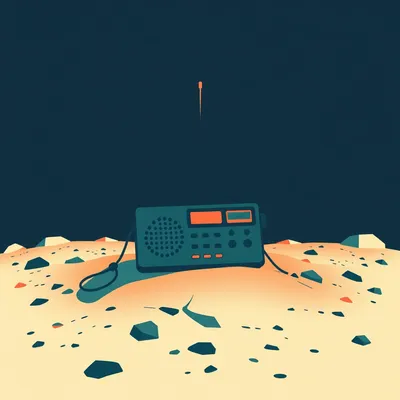
That is the million-dollar question, or in this case, the hundred-million-dollar question given the assets involved. The primary tool here is likely the evolution of the Combat Survivor Evader Locator, or CSEL, radio system. Specifically, the military has been moving toward these multi-band survival radios like the AN PRC-163 or the 167. These aren't just walkie-talkies. They are software-defined radios that handle line-of-sight, but more importantly, they handle secure satellite relay.
But even with SATCOM, if you are broadcasting a steady "here I am" signal, you are a beacon for direction-finding equipment. I mean, the Iranians have decent Russian and Chinese electronic intelligence gear. They aren't exactly working with tin cans and string.
Right, and that is where the "burst" technology comes in. The reports mention a "special piece of technology" linked to the Central Intelligence Agency. In the world of signals intelligence, a burst transmission is exactly what it sounds like. Instead of a continuous stream of data, the radio compresses the information into a millisecond-long pulse. It is incredibly difficult to intercept because by the time a scanning receiver detects the energy, the transmission is already over. It looks like background noise or a random spike unless you have the specific hopping pattern and the decryption keys.
So he is basically sending a text message to a "God-eye" view overhead. I saw that the first message he sent was just three words: "God is good." Which, ironically, caused a panic at the Pentagon because they thought it was a voice-spoofing trap. They thought the Iranians had captured him and were trying to lure a rescue bird into a "honey pot" ambush.
It is a classic move. We saw it in Vietnam, we saw it in various conflicts since. If you can get the pilot's radio, you can scream for help and wait for the Jolly Green Giant to show up, then hit it with an RPG. The verify-before-trust protocol in twenty twenty-six is intense. They used Israeli intelligence to confirm his location and biometric signatures before they committed the heavy metal.
Let's talk about that "directing strikes" part. If I am an airman on the ground, I have a map, I have my eyes, and I have this radio. Am I literally saying, "Hey, there is a truck at these coordinates, blow it up"?
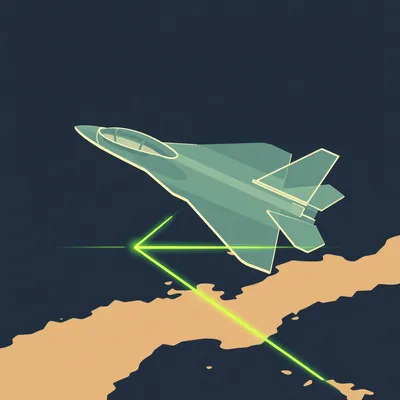
Effectively, yes, but it is more integrated than that. Modern aircrew helmets, like the JHMCS Two, have integrated data links. Even if he isn't wearing the full helmet in the crevice, his survival kit includes the AN PLT-5 personal locator transmitter. This thing is a marvel. It integrates with the overall CSAR architecture. It sends encrypted GPS coordinates that show up on the moving map displays of the F-35s and Reapers circling above. He isn't just a voice; he is a digital icon on their screens. He can use a laser rangefinder or even just visual reference points to "talk" the drone onto a target. The Reaper maintains a "protective perimeter." If anything moves within two miles of his hiding spot that doesn't have a friendly transponder, it gets a Hellfire missile.
It is like having a personal bodyguard that is ten thousand feet in the air and armed with high explosives. But there is a massive tradeoff here, right? Every time he uses that radio to call in a strike, he is technically "lighting a match in a dark room," even with burst tech. He has to balance the immediate threat of a ground patrol finding his crevice versus the long-term threat of a missile tracking his radio signal.
It is the ultimate game of risk management. He stayed silent for thirty-six hours while he was evading. He only keyed the mic when the Iranian "bounty hunters" were literally closing in on his position. That shows incredible discipline. You are thirsty, you are bleeding, you are terrified, and you have a radio that can bring the hand of God down on your enemies, but you wait until the last possible second so you don't give away your position to the larger search net.
And while he is playing this tactical game on the ridge, the Joint Personnel Recovery Center and Air Force Special Operations Command are spinning up what sounds like a logistical nightmare. They didn't just fly a helicopter from a carrier. They built a temporary base two hundred miles inside Iran. A Forward Arming and Refueling Point, or FARP. That is some serious "denied territory" planning.
It is a massive undertaking. To get an HH-60W Jolly Green Two or a SEAL team that deep into a country with integrated air defenses, you need a whole symphony of support. You need electronic warfare aircraft like the EA-18G Growler to jam the radars. You need F-35s to clear the skies. And you need the MC-130J Commando Two to fly in low and slow to drop off fuel and teams. But this is where the mission went from "difficult" to "holy shit" territory.
The sand. It is always the sand in these stories, isn't it? Desert One in nineteen eighty all over again.
Well, not exactly—I mean, it is the same physical problem. The MC-130Js tried to land on a makeshift desert strip to insert the rescue force, and the nose gear of one of the planes just sank into the silt. When you have a hundred-and-sixty-four-thousand-pound aircraft stuck in the mud in enemy territory, you are in a world of hurt. They spent hours trying to winch it out, but the Iranian search grid was closing in.
This is the part that kills me. They had to scuttle two MC-130Js and two MH-6 Little Bird helicopters. That is over two hundred million dollars of hardware just blown up in the dirt so the Iranians couldn't put it in a museum in Tehran. I can only imagine the conversation on the secure line. "Sir, we need to thermite the planes." "The hundred-million-dollar planes?" "Yes, sir, and hurry."
It speaks to the priority of the mission. The colonel on that mountain was worth more than the airframes. The United States has a very specific "no man left behind" ethos that is essentially an unlimited credit card when it comes to recovery. If it takes burning four aircraft to get one WSO home, they will do it every time. It is a psychological contract with the aircrews. "You fly into the teeth of the dragon, and we will move heaven and earth to get you back."
It is also a massive middle finger to the adversary. "We will literally land in your backyard, get stuck, blow our own stuff up, and still walk away with our guy." But the CIA ruse was the cherry on top. While the real fight was happening in the Zagros Mountains, the agency was leaking fake intel that the airman had already been smuggled across the border into Iraq or Turkey. They were ghosting the Iranian search assets.
It was a brilliant piece of deception. They used "chatter" and coordinated leaks to convince the Iranian high command that the "bird had flown." So while the IRGC was diverted to checking border crossings and safehouses in the cities, the SEAL Team Six operators and the Night Stalkers were actually closing in on that 7,000-foot ridge. It bought the rescue team the four or five hours of "radio silence" they needed to execute the final snatch-and-grab.
I want to go back to the airman for a second. We keep talking about the "rescue team," but this guy is the protagonist of his own survival horror movie. He is directing Reapers while hiding in a crevice. That implies a level of training that goes way beyond basic SERE—Survival, Evasion, Resistance, and Escape. This is "Combat SERE." You aren't just surviving; you are an active combatant.
It is a paradigm shift. Historically, a downed pilot is a liability. You have to go get them. In this twenty twenty-six incident, the downed airman became a force multiplier. Because he was on the ground, in the terrain, he had "ground truth" that a satellite or a high-flying jet couldn't see. He could hear the trucks. He could see the dust clouds. By integrating his survival radio into the strike net, he became the ultimate forward air controller. He was the "eyes on" for the entire theater for those forty-eight hours.
Does this change how we train pilots now? I mean, if I am a flight lead, do I now have to spend as much time learning how to call in a 9-line strike from a handheld radio as I do learning how to drop a JDAM from thirty thousand feet?
I think it has to. If you look at the evolution of the gear, the distinction between "aircrew survival equipment" and "special operations comms gear" is evaporating. The AN PRC-163 that he likely used is the same radio carried by Joint Terminal Attack Controllers, or JTACs, on the ground. The interface is becoming more intuitive. It is less about memorizing complex radio frequencies and more about using an Android-based tactical assault kit, or TAK, on a hardened smartphone. You tap a map, you hit "send," and the drone overhead gets the coordinates.
It makes the "evasion" part harder, though, doesn't it? If you are busy being a tactical commander, you aren't moving. And in evasion, movement is life—or rather, smart movement is life. He climbed a thirteen-hundred-foot vertical gain to get to that ridge. That is a hell of a hike for an injured guy.
It is, but he chose a "high hide." In the mountains, height is an advantage for two reasons. One, your radio line-of-sight is vastly improved. You can hit a satellite or an E-11A BACN—the Battlefield Airborne Communications Node—much more reliably if you aren't in a canyon. Two, it is harder for ground troops to surprise you. You can see them coming up the switchbacks long before they reach you. It gives you the "buffer" you need to call in that Reaper strike and reset the clock.
What about the "God is good" signal? We brushed over that, but let's look at the second-order effects. The White House went completely dark. No tweets, no press briefings, nothing. People thought the President was incapacitated. That level of operational security is almost impossible in the modern age, yet they pulled it off.
It was a total news blackout. They knew that if the Iranians saw any hint of a rescue operation in the media, they would redouble their efforts on that ridge. The "uncharacteristic silence" was actually a tactical weapon. By not acknowledging the shoot-down or the missing airman, they denied the Iranians the "propaganda win" that would have fueled a more frantic search. It kept the situation "local" rather than "strategic" until the SEALs were already on the ground.
And the Israeli involvement. The Times of Israel reported that they provided real-time intelligence. I am guessing that means more than just a "hey, we see him on satellite."
Oh, significantly more. Israel has some of the most advanced signals intelligence and human intelligence networks inside Iran. They likely had assets on the ground or nearby that could confirm the IRGC's movements in real-time. There is even reporting that Israeli F-35Is provided "strike cover," basically sitting in the "outer ring" of the operation to intercept any Iranian interceptors that might have tried to scramble from nearby airbases. It was a true coalition effort, even if it was largely "invisible" to the public at the time.
So, let's look at the "holy shit" moment again. The MC-130Js are stuck. The Little Birds are on the ground. You have SEAL Team Six operators standing in the sand, looking at a hundred-million-dollar plane that won't move. How do you pivot from that to a successful extraction?
Resilience and contingency planning. The Night Stalkers—the 160th Special Operations Aviation Regiment—never go in with just Plan A. They had a "Plan B" involving smaller, lighter turboprop aircraft and a different extraction point. When the sand proved too soft for the heavy Hercs, they transitioned to the secondary plan. They destroyed the compromised assets with thermite grenades and airstrikes to sanitize the site, then moved the personnel to a different "landing zone" where the lighter birds could pick them up. It is the definition of "flexible response."
It also shows the limitations of our current heavy-lift capability in "unimproved" terrain. We keep thinking we can land a massive transport plane anywhere there is a flat stretch of dirt. This mission proved that the "dirt" inside Iran isn't always cooperating. It might lead to a push for more hover-capable or vertical take-off and landing assets that don't rely on wheel-loading pressure.
For sure. The V-22 Osprey or the future Long Range Assault Aircraft would have been a better fit here, but they have their own range and maintenance trade-offs. The fact that they had to build a FARP base two hundred miles inside the country is the real takeaway. It means the United States is practicing how to occupy small pockets of "denied" territory temporarily. That is a terrifying prospect for any adversary. It means nowhere is truly "safe" or "behind the lines."
It is basically "sovereignty-as-a-suggestion." If we can put a gas station and a SEAL team in the middle of your desert for forty-eight hours and you can't stop us, do you really control that desert?
That is the geopolitical message. But for the military professional, the takeaway is about the integration of the airman into the kill chain. We've seen this in past episodes where we talked about the mechanics of rescue—Episode fourteen thirty-eight, "Engineering the Golden Hour," comes to mind—where the focus was on the "Rescue DNA." This Iranian mission took that DNA and evolved it. It isn't just about "rescue" anymore; it is about "recovery and retribution." You don't just get the guy back; you punish the people trying to take him.
I love that phrase, "recovery and retribution." It sounds like a movie title, but it describes the tactical reality. So, if we are looking for actionable insights here, what is the first thing a pilot or a survival instructor takes away from this?
Number one: Comms discipline is life. The colonel survived because he knew when to stay silent and when to "burst." If he had stayed on the radio constantly from the moment his chute opened, he would have been a prisoner in an hour. He used his radio as a scalpel, not a hammer.
And number two has to be the gear. If you are a military enthusiast or a professional, you need to look at the AN PRC-163 and the CSEL evolution. The ability to bridge line-of-sight and satellite without a massive "man-pack" radio is the game-changer. That airman had all that power in a device roughly the size of a thick walkie-talkie.
And the third takeaway is the importance of "deception" in the digital age. The CIA's "ghost" extraction was just as important as the SEALs' bullets. In a world where everyone has a smartphone and every movement is tracked, the only way to operate in a denied area is to flood the zone with "noise" and "false signals." You have to give the enemy too many targets to chase so they miss the real one.
It makes me wonder about the future of this. As AI and automated search drones become more prevalent, will a "burst" transmission still be enough? Or will we need even more exotic ways to stay hidden? I mean, if the Iranians had a thousand cheap "loitering" drones with radio-frequency sensors just carpet-covering the mountains, would that colonel have stood a chance?
That is the "next war" problem. We are currently in a window where our "burst" and "stealth" tech is ahead of the average adversary's "persistent surveillance" tech. But that window is closing. Future CSAR might involve "swarms" of our own drones acting as a "decoy blanket" to mask the survivor's signal. We are moving toward a very "electronic" version of camouflage.
It is a fascinating shift. We went from "smoke signals and signal mirrors" to "encrypted satellite bursts and Reaper-protected perimeters" in just a few decades. But at the end of the day, it still came down to a guy with a broken leg climbing a mountain because he refused to give up. The tech is cool, but the "will to survive" is still the primary engine.
You can't program that into a radio. The Colonel's hike up that ridge is what enabled the tech to work. If he had stayed in the valley, the signal wouldn't have cleared the peaks, the bounty hunters would have found him, and the MC-130Js would have never even launched. The human element is the "anchor" for the entire multi-billion dollar machine.
It is a sobering reminder of the stakes. Two hundred million dollars of aircraft destroyed, a massive international deception campaign, SEAL Team Six, Israeli intelligence, and a forty-eight-hour news blackout—all for one man. It is an incredible testament to the value placed on a single life in the Western military tradition.
It really is. And it's a great example of why we do this show—to look past the "action movie" headlines and see the gears turning underneath. The "how" is always more interesting than the "what."
Well, I think we have thoroughly unpacked this one. It is a wild story, but the technical underpinnings are what make it a blueprint for future operations. If you are listening to this and you are in the community, I'd love to hear your thoughts on the FARP logistics. That part still blows my mind.
Same here. The sheer "brass" required to set up a gas station in the middle of Iran is something for the history books.
Alright, I think that is a wrap on Episode two thousand and three. Big thanks to our producer, Hilbert Flumingtop, for keeping the wheels on this thing—though hopefully not stuck in the sand like those MC-130Js.
And a huge thank you to Modal for providing the GPU credits that power this show. We literally couldn't do this without that serverless horsepower.
This has been My Weird Prompts. If you are enjoying the deep dives, do us a favor and leave a review on your podcast app. It actually helps more than you'd think in getting these stories out to new listeners.
We will be back next time with whatever weirdness Daniel sends our way. Until then, stay curious.
And stay off the Iranian ridgelines if you can help it. Goodbye.