Daniel's question this week is about a vote that happened yesterday. The IAEA Board of Governors reported Iran to the UN Security Council for non-compliance, the first time that's happened in twenty years. He wants to know what this referral mechanism actually is, why it matters that it's being used now after two decades, what it reveals about the limits of the IAEA's enforcement scope, and what Iran's non-compliance and the agency's attempt at oversight tell us about the situation on the ground.

And the vote itself was twenty-three to three, with eight abstentions and one state that couldn't vote because it's in arrears. Russia, China, and Niger voted no. The resolution asks Rafael Grossi to transmit the resolution, the prior findings, and the reports to all IAEA members, the Security Council, and the General Assembly.
So the vote is dramatic, but the machinery behind it is older than most people realize. It's baked into the IAEA's founding statute from nineteen fifty-seven. And the gap between what that statute says and what actually happens is the whole story.
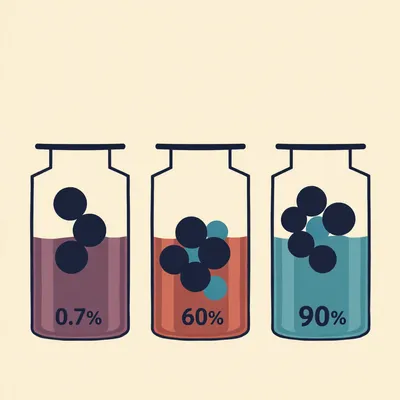
The trigger here is not active enrichment. It's roughly four hundred forty point nine kilograms of uranium enriched to sixty percent that the IAEA cannot verify or locate. Grossi said the agency is completely blind on Iran. They believe about two hundred kilograms of that stockpile remains at one site, but they lack what he called precise visibility into the exact location, volume, and chemical form.
And this is the part that should stop people cold. Sixty percent enriched uranium is a short technical step from weapons grade. The IAEA's own yardstick says four hundred forty kilograms, if further enriched, is enough for about ten nuclear weapons. And they don't know where roughly half of it is.
The central tension Daniel's pointing at is that the United States and Israel bombed the very facilities the IAEA now demands access to, and then cited the resulting loss of access as grounds for censure. Iran's ambassador called the resolution a political tool and said safe access is materially impossible amid ongoing war. Their deputy foreign minister put it bluntly: the West attacks Iran's safeguarded nuclear facilities, disrupts the normal verification process, and then uses that very disruption as a pretext to pass a resolution.
That's not a comfortable argument to sit with, because there's a real causal chain there. The facilities got bombed, the inspectors got pulled, the cameras went dark, and now the agency is being asked to report on what it can't see.
So before we get into what this vote means politically, we need to understand what the mechanism actually is. The legal basis is Article Twelve C of the IAEA's statute, and it uses the word shall repeatedly. Safeguards inspectors shall report any non-compliance to the Director General. The Director General shall report it to the thirty-five member Board of Governors. If the Board determines non-compliance occurred, it shall report it to IAEA members, the UN General Assembly, and the UN Security Council.
Shall, shall, shall. Sounds mandatory.
On paper, yes. But here's the gap. The comprehensive safeguards agreements that actually govern inspections, the INFCIRC one fifty-three documents, paragraphs eighteen and nineteen, never use the word non-compliance at all. They give the agency flexibility on what constitutes non-compliance and whether to report to the Council. IAEA member states have never agreed on a definition of non-compliance.
So the statute says shall, but the actual safeguards agreements leave the agency room to decide what counts and what doesn't.
And the correct legal term is report, not refer. No legal document uses the word referral. That's a shorthand the press and diplomats use, but it's not in the statute.
Which matters because report sounds like what it is: a transmission of information. Referral sounds like a recommendation for action, and that's not what this is.
Right. And the Board has a natural reluctance to report a fellow member state to the Security Council. It prefers to ask for more verification, more reporting, keep the case within its own control rather than hand it to a Council where the veto applies.
We saw that reluctance play out in real time. The Board deferred its statutory reporting obligation four times. June twenty twenty-five, September twenty twenty-five, March twenty twenty-six, and again at the June twenty twenty-six meeting before finally acting this week.
Four deferrals over fifteen months. If the duty is truly mandatory under the statute, those deferrals themselves reveal how political the automatic mechanism actually is.
So what does the history look like? How many times has this actually happened?
Eight significant non-compliance cases have reached the Board since Iraq in nineteen ninety-one. Iraq, North Korea, Iran, Libya, Syria, Romania, South Korea, and Egypt. And in two of those cases, Romania and Libya, the Board reported to the Council for information purposes only. It signals no action needed, and the Council complied.
For information purposes only. That's the diplomatic equivalent of sending someone a memo and writing no response necessary at the top.
And then there's the two thousand five, two thousand six Iran path. That one produced UN Security Council Resolution sixteen ninety-six, and then sanctions under Resolution seventeen thirty-seven. But the reason that worked is that Russia and China abstained rather than vetoed.
Which is the key difference this time. The twenty twenty-six vote has Moscow and Beijing in outright opposition. They voted no. So the mechanism's deterrent value has decayed even as its use has become rarer.
The US statement stressed that the Board's reporting duty is mandatory under the statute, and that the resolution serves one narrow purpose: to fulfill the Board's statutory obligation. That's a very careful framing. They're not saying this will lead to action. They're saying we had to do this because the law says we have to.
Which is a strange thing to say after four deferrals. The law didn't change in September. What changed was the political calculation.
And that's the thing Daniel's really asking about. What is this mechanism for if it doesn't enforce anything? Let's talk about what the referral cannot do.
Before we get there, I want to sit with the number that's driving all of this. Four hundred forty point nine kilograms of sixty percent enriched uranium. The IAEA thinks about two hundred kilograms remains at one site. They don't know the exact location, volume, or chemical form of the rest.
And the IAEA's mandate is verification, not enforcement. The Board's authority does not turn the IAEA into an enforcement agency. Inspectors need access, information, and safe conditions to verify declarations. Where communication breaks down or access is restricted, the agency can report the gap. It cannot fill it by assumption.
So the agency is in the position of saying: we know there's a gap, we know roughly how big it is, and we cannot tell you what's in it.
A referral also does not automatically trigger sanctions. Any binding measure requires a separate Council decision, normally nine votes and no permanent member veto.
And Russia and China have vetoes and are expected to block any binding action. Ali Vaez at the International Crisis Group called the resolution an exercise in futility. Moscow and Beijing are likely to ensure that Western pressure hits a wall at the Security Council.
Darya Dolzikova at RUSI doesn't expect the Council to adopt a condemning resolution either, but she says the referral is intended to send a strong message that the US and the E3 are unwilling to accept the status quo.
So the referral is a signal, not a mechanism for enforcement. It's the diplomatic equivalent of a strongly worded letter that you know will be filed and forgotten.
And here's where it gets uncomfortable. The legal foundation is the IAEA's safeguards agreement and the NPT, not a new finding that Iran has built a nuclear weapon. The question of intent is separate and cannot be established by a procedural referral alone.
Grossi was actually quite careful about this. He did not back US claims that Iran could make a bomb. His words: we did not have any proof of a systematic effort to move into a nuclear weapon.
Which is a remarkable thing for the Director General to say in the middle of a referral process. He's essentially telling everyone: this is about verification gaps, not about a weapons program.
And that's the misconception most coverage gets wrong. The referral is not evidence of a bomb. It's evidence of a blackout.
James Acton at Carnegie estimated a fifty-fifty chance Iran gets the bomb within three years. And he said if Iran wants to get the bomb at this point, it's going to get it. That's a separate question from whether the IAEA can verify anything.
So what is the referral actually for, if not enforcement?
Bahram Ghiassee at the Henry Jackson Society had a sharp read. The referral could let Washington delay major military action until after the November US midterms. His words: post-November elections, Washington's political and military calculus may prove to be different, and a far less diplomatic approach may be adopted.
So the referral might be a pause button, not a solution. It gives everyone something to point to while the real decisions get made elsewhere.
And that reframes a diplomatic act as a war-planning step. The referral buys time. It creates a record. It lets the US and Europe say they exhausted every avenue before doing something harder.
Meanwhile, the verification blackout is the substance. The world's nuclear watchdog has no idea where roughly two hundred plus kilograms of near-weapons-grade material is. That's arguably more consequential than the vote itself.
Grossi called the lack of information about facilities and associated nuclear material a matter of serious proliferation concern. He said the situation needs to be rectified with the utmost urgency.
Urgency, but no mechanism to force it. That's the whole story of the IAEA in one sentence.
And the pretext contradiction Daniel flagged is the sharpest tension in all of this. The US and Israel bombed the facilities. The inspectors got pulled. The cameras went dark. Now the agency is being asked to report on what it can't see, and Iran is being censured for the resulting gap.
Iran's ambassador said safe access is materially impossible amid ongoing war. Their position is that they haven't stopped or suspended their safeguards obligations, but performance is currently impossible under continuing military operations and persistent threats.
That's not entirely wrong, and that's what makes it uncomfortable. If you bomb a facility and then demand access to verify what's left, you've created the very conditions you're now complaining about.
But the counter is that Iran had undeclared uranium traces at Varamin and Turquzabad before the bombing. The June twenty twenty-five Board vote declaring non-compliance was nineteen to three, and that happened before the strikes.
Right. The timeline matters. The Board declared non-compliance on June twelfth, twenty twenty-five. The next day Israel began bombing. So the non-compliance finding predates the bombing, but the verification blackout is a direct consequence of it.
Both things can be true. Iran had a compliance problem before the war, and the war made verification impossible.
And now the referral is being used as a lever in a situation where the agency has no access, no cameras, and no way to fill the gap by assumption.
So let's step back and ask what this reveals about the limits of the IAEA's enforcement scope. Daniel's question was about the mechanism and what it exposes.
The IAEA's only real power is credibility. Its reports matter because the world believes they're accurate. When the agency says it's completely blind, that's not a failure of one inspection. That's a failure of the entire verification architecture.
And the referral mechanism is the agency's last resort, but it's a last resort that leads to a veto-bound Council. So the agency can report, but it cannot compel. It can document, but it cannot enforce.
The eight cases since nineteen ninety-one show the pattern. Some led to action, some led to nothing. The mechanism is only as strong as the political will behind it.
And political will is exactly what's missing now. The twenty-three to three split, with Russia and China voting no, means the Council will likely do nothing. The referral becomes a statement, not a step.
Darya Dolzikova's point is that the message is aimed at Iran and at domestic audiences in the US and Europe. It says: we are not accepting the status quo. But saying you don't accept something is not the same as changing it.
So the referral is significant because it hasn't happened in twenty years, but it's hollow because the conditions that made the last one work no longer exist.
In two thousand six, Russia and China abstained. That allowed sanctions to pass. In twenty twenty-six, they voted no. The space for Council action is gone.
Which means the mechanism's deterrent value has decayed even as its use has become rarer. That's a strange combination. Usually rare use increases impact. Here, rare use just reveals how little is left.
And the verification blackout is the thing that should worry people most. Four hundred forty kilograms of sixty percent enriched uranium, roughly half of it unaccounted for. The IAEA doesn't know where it is, what form it's in, or what's being done with it.
Grossi said the agency lacks precise visibility into the exact location, volume, and chemical form. That's a technical way of saying: we have no idea.
And the IAEA's mandate doesn't let it fill that gap by assumption. It can report the gap. That's what the referral is. But it cannot tell you what's in the gap.
So the referral is a symptom. The substance is the blackout. And the blackout is a direct consequence of the bombing campaign that the same states now cite as grounds for censure.
That's the circularity Iran keeps pointing to. The West bombs the facilities, the verification breaks down, and then the breakdown is used as evidence of non-compliance.
And the US and E3 statement never addresses that causality. They say the Board has given Iran additional time for more than a year, and the patience has not led to improved cooperation. But they don't engage with why cooperation became impossible.
Because engaging with that would require acknowledging that the bombing created the access problem. And that's not a conversation the US and E3 want to have.
So where does that leave the IAEA? An agency with a mandate to verify, no access to the facilities it's supposed to verify, and a referral mechanism that leads to a Council that won't act.
It leaves the IAEA as a witness, not a player. It can document what it can't see. It can report what it can't verify. But it cannot change the situation on the ground.
And that's the limit Daniel's asking about. The IAEA's enforcement scope is essentially zero. It has no enforcement power. It has verification power, and even that is contingent on access.
The statute says shall, but the shall only works if states cooperate. When a state stops cooperating, the agency's power evaporates.
The referral is the agency's way of saying: we've hit the limit of what we can do. Now it's someone else's problem.
But the someone else, the Security Council, is structured to not act when the permanent members disagree. So the problem doesn't get solved. It just gets documented.
Which brings us back to the fifty-fifty estimate from James Acton. If Iran wants the bomb, it's going to get it. The referral doesn't change that calculation.
If anything, the referral might accelerate it. Iran sees the vote as a political tool, an attack on the IAEA's independence and credibility. Their response is likely to be further withdrawal from cooperation, not renewed engagement.
The referral could make the verification blackout permanent. That's the knock-on effect nobody's talking about.
The Board defers four times, then finally acts. Iran's response is to dig in harder. The Council does nothing. The blackout continues. And the material stays unaccounted for.
That's the trajectory. And it's not a good one.
Let me ask you something, Corn. If the mechanism produces no consequences, what does that mean for the next country that considers non-compliance?
It means the mechanism is a paper tiger. It means the cost of non-compliance is a strongly worded resolution that leads nowhere. And that's a dangerous signal to send.
Because the entire non-proliferation regime rests on the assumption that non-compliance has consequences. If that assumption fails, the regime fails.
The regime is already under strain. The NPT has been fraying for years. The referral mechanism was supposed to be the backstop. If the backstop doesn't work, what's left?
Military action. Which is what Ghiassee was pointing to. The referral might just be the diplomatic prelude to strikes.
The referral is not a solution. It's a way station. It's the thing you do before you do the harder thing.
The harder thing is already being threatened. Trump renewed threats to strike Iran's Pickaxe Mountain this week, said the US saw a little activity and would advise Iran not to get cute because we will have to hit them very hard.
The referral and the threat are happening in parallel. The diplomatic track and the military track are running side by side.
Which makes the referral feel less like a genuine attempt at accountability and more like a box being checked before the next escalation.
That's a grim read, but it's hard to argue with. The US statement said the resolution serves one narrow purpose: to fulfill the Board's statutory obligation. That's not the language of a state expecting action. That's the language of a state doing its paperwork.
The paperwork matters, don't get me wrong. The record matters. The documentation matters. But documentation without consequences is just history.
The IAEA's only weapon is credibility, and credibility requires that the world believe the agency's reports matter. If the reports lead nowhere, the credibility erodes.
Grossi is in an impossible position. He has to maintain the agency's credibility while admitting it's completely blind. He has to report non-compliance without overstating what he knows. He has to keep the door open for access while the door is being welded shut.
He did that carefully. He didn't back the US claims of a weapons program. He said the agency had no proof of a systematic effort to move into a nuclear weapon. That's a man protecting the agency's credibility by refusing to say more than he can verify.
Which is exactly what the IAEA is supposed to do. Verify, not speculate. Report, not advocate.
That's why the referral is significant even if it's hollow. It's the agency doing what it's supposed to do, even when doing so has no practical effect.
The mechanism is working as designed, and the design is the problem. The IAEA was never meant to enforce. It was meant to verify and report. The enforcement was supposed to come from the Security Council.
The Security Council is broken. Not broken in the sense of malfunctioning, but broken in the sense that the veto was designed to prevent action when the great powers disagree. That's not a bug. That's the feature.
The veto is the price of admission for great powers to join the UN. You don't get Russia and China in the system without giving them the ability to block action against themselves or their allies.
The referral mechanism runs into the veto wall, and the veto wall is not going anywhere. Which means the mechanism's ceiling is a strongly worded statement.
That's the limit Daniel's asking about. The IAEA's enforcement scope is bounded by the Security Council's willingness to act, and that willingness is currently zero.
We're left with a vote that is politically significant and legally hollow. Significant because it hasn't happened in twenty years. Hollow because it will produce no consequences.
The real story, the verification blackout, continues regardless of the vote. The material is still unaccounted for. The cameras are still off. The inspectors are still blocked.
The vote doesn't change any of that. It just documents it.
Hilbert, you've been quiet. What's your read?
Hilbert: You're both right about the politics. But you're missing the cameras.
The cameras?
Hilbert: The whole verification architecture depends on a chain of custody. It starts with the cameras and the tamper-indicating seals. In the late nineties I worked for a contractor that did technical support for IAEA safeguards inspections. I was on a team that calibrated and maintained the seals and the surveillance cameras used at declared nuclear facilities. Spent six weeks in Vienna in nineteen ninety-eight training inspectors on a new generation of digital camera systems.
That's the part of this story that gets almost no attention. The physical infrastructure of verification.
Hilbert: When Iran disabled the cameras and blocked the inspectors, they didn't just create a gap in knowledge. They broke the chain of custody for every piece of material that was under surveillance. The four hundred forty kilograms of sixty percent enriched uranium isn't just unaccounted for. It's unwitnessed.
Say more about that distinction.
Hilbert: Unaccounted-for material might still be in a barrel somewhere. The paperwork might be wrong, the weight might be off, someone might have moved it to a different building and forgotten to file the form. Unwitnessed material could have been moved, processed, or used, and the IAEA would have no way to know. There's no record of it existing in any particular place at any particular time after the cameras went off.
That's the difference between a clerical error and a proliferation risk. The IAEA can't tell which one it's looking at.
Hilbert: The tamper-indicating seals we worked on in the nineties were designed to leave a visible mark if anyone tried to open them. They were good seals. But they only work if someone is there to inspect them. A seal that nobody checks is just a sticker.
That's the whole story of the IAEA in one line. The technology only works if the access is there.
Hilbert: The access isn't there. So the seals are stickers, the cameras are paperweights, and the chain of custody is broken. The IAEA isn't just blind. It's been blinded. There's a difference between not having eyes and having your eyes put out.
The referral is the agency's way of saying: we can no longer verify anything, and we need the world to know that.
Hilbert: But the world already knows. The vote doesn't tell anyone anything they didn't already know. It just puts it on the record.
The record matters, even if nothing follows from it.
Hilbert: Sure. The record matters. But the record doesn't find the uranium. The record doesn't turn the cameras back on. The record doesn't put the inspectors back in the facilities.
So what does?
Hilbert: Nothing. That's the problem. There's no mechanism for that. The IAEA can't force its way back in. The Security Council won't act. Iran won't cooperate. So the material stays unwitnessed, and everyone pretends the vote was the important part.
The vote was the easy part.
Hilbert: The vote was the only part. The rest of it, the actual verification, that's not happening. And nobody has a plan to make it happen.
Which brings us back to the question Daniel started with. What does this reveal about the limits of the IAEA's enforcement scope?
Hilbert: It reveals that the IAEA has no enforcement scope. It has a reporting scope. And the reporting only matters if someone acts on it. Nobody's acting on it.
The mechanism is a formality, and the substance is the blackout, and the blackout is permanent until someone changes the conditions on the ground.
Hilbert: Changing the conditions on the ground means either a war or a deal. The referral isn't either of those. It's just the thing you do while you're deciding which one it's going to be.
Ghiassee's point exactly. The referral buys time before the harder choice.
Hilbert: Time for what? The material's not getting less enriched while everyone waits. The cameras aren't going to turn themselves back on. The inspectors aren't going to be invited back in out of politeness.
The time is for the political calendar. The November midterms, the military planning, the diplomatic positioning.
Hilbert: Meanwhile the uranium sits somewhere, unwitnessed, and the world's nuclear watchdog files a report about it.
That's a bleak way to put it.
Hilbert: It's a bleak situation. I spent six weeks in Vienna training inspectors on cameras that are now sitting in the dark in facilities nobody can enter. That's not how it was supposed to work.
How was it supposed to work?
Hilbert: The idea was that the cameras would be the constant presence. The inspectors couldn't be everywhere, but the cameras could. They'd watch the material twenty-four hours a day, and the seals would tell you if anyone tampered with anything. The chain of custody would be unbroken. That was the theory.
The theory worked, as long as the cameras were allowed to run.
Hilbert: The theory worked until someone decided it shouldn't. The cameras didn't fail. They were turned off. The seals didn't break. They were removed. The chain of custody didn't snap. It was cut.
The referral is the agency's way of saying: we can't fix that. Someone else has to.
Hilbert: Someone else won't. That's what I keep coming back to. The referral goes to the Security Council, and the Security Council does nothing, and the material stays unwitnessed. The vote was the easy part. The hard part is finding the uranium, and nobody's even looking.
The IAEA is looking, in the sense that it's trying to get access. But it's not looking in the sense of having any ability to see.
Hilbert: Right. They're looking for a door that's been welded shut. And the referral is them knocking on it and saying: we can't see anything, just so you all know.
The world says: thanks for the update, we'll get back to you.
Hilbert: And then doesn't.
That's the dynamic. And it's been the dynamic for over a year now, since the bombing started.
Hilbert: The bombing was the moment the chain broke. Before that, the cameras were running, the seals were in place, the inspectors were on site. After that, nothing. And now the same people who did the bombing are asking the agency to verify what's left. It's like burning down a library and then asking the librarian to tell you which books are missing.
That's the pretext contradiction in one image.
Hilbert: It's not a contradiction. It's a sequence. They bombed the facilities, the verification stopped, and now they're using the stopped verification as the basis for censure. That's not a contradiction. That's a plan.
I don't think it was planned in the sense of being intentional from the start. But it's certainly convenient.
Hilbert: Convenient is the right word. The bombing created the blackout, and the blackout created the grounds for the referral, and the referral creates the record that might justify the next step. It's all very neat.
The next step is the thing nobody wants to say out loud.
Hilbert: The next step is either a deal or a war. And the referral isn't either. It's the pause between them.
Where does that leave the IAEA? An agency with a mandate to verify, no access, and a referral that leads nowhere.
Hilbert: It leaves the IAEA as a notary. It can stamp the documents, but it can't change what's in them. And the documents say: we don't know where the uranium is.
That's the whole story. A notary with a nuclear file.
Hilbert: The notary's stamp doesn't find the uranium. It just certifies that the uranium is missing.
The missing uranium is the thing that should be keeping people up at night. Not the vote, not the resolution, not the diplomatic language. The missing uranium.
Hilbert: Four hundred forty kilograms, roughly half of it unwitnessed. That's the number. Everything else is commentary.
What happens next at the Security Council? Do we have any sense?
The honest answer is: probably nothing. Russia and China will block any binding action. The Council might issue a statement, might not even do that. The referral will sit there as a record, and the record will accumulate dust.
The IAEA's credibility? What does this do to it?
It depends on how you measure credibility. If credibility means the world believes the agency's reports are accurate, then the credibility is intact. Grossi was careful, he didn't overstate, he didn't back the weapons claims. But if credibility means the agency's reports lead to consequences, then the credibility is gone.
The second kind of credibility is the one that matters for deterrence. If non-compliance has no consequences, the next country considering it has no reason to comply.
Hilbert: The next country is already watching. They're always watching.
That's the open question we're left with. If the mechanism produces no consequences, what does that mean for the next country that considers non-compliance?
It means the mechanism is a formality, and the formality is the only thing left.
Hilbert: The formality and the missing uranium. Those are the two things left. And only one of them matters.
This has been My Weird Prompts. Thanks to our producer, Hilbert Flumingtop.
If you found this useful, leave a review. It helps other listeners find the show.
We'll be back soon.