Welcome to My Weird Prompts, episode two hundred one. So Daniel sent us this one — he's been poking around the ICAO airfield database, noticed there's a much weirder variety of landing sites in there than most people realize, and he's asking two things. First, do private-only general aviation airfields need to maintain any basic safety standards to actually be listed in the database? And second, what about the airfields that don't appear in any database at all — is there even an estimate of how many of those exist? So we're essentially talking about the gap between what's officially catalogued and what's actually out there on the ground.

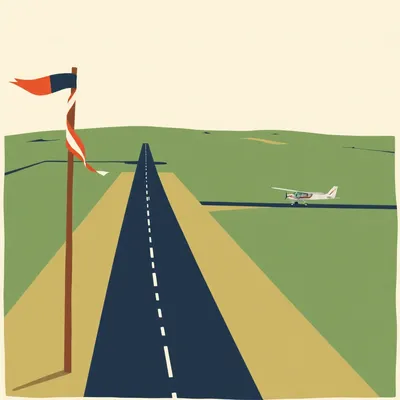
The scale of the gap is genuinely startling. The ICAO database contains about forty-five thousand airfield codes as of this year. But only about five thousand of those — roughly one in nine — are commercial service airports with full safety certification. The other forty thousand range from regional airports with decent infrastructure all the way down to a grass strip with a windsock and a prayer.
Then below even that, there's a whole shadow network of places you can land a plane that nobody has ever bothered to count.
And before we get into the safety question, it's worth understanding what the ICAO database actually is and what it isn't. ICAO — the International Civil Aviation Organization — assigns four-letter location codes to airfields worldwide. The first letter indicates the region. L is for southern Europe and the Middle East, so LL is specifically Israel. K is the contiguous United States. E is northern Europe. And so on. Ben Gurion is LLBG. Heathrow is EGLL. LAX is KLAX. But here's the thing — having an ICAO code doesn't mean ICAO inspected the airfield. It doesn't mean ICAO certified anything. The code is fundamentally an addressing system. It's so flight plans, air traffic control, and weather services have a standardized way to refer to a location. Think of it like this — when you get a ZIP code or a postal code assigned to your house, the post office isn't coming out to verify that your roof meets building code. They're just making sure the mail can find you.
It's more like getting a postal address than passing a building inspection.
That's the perfect way to put it. The actual safety oversight comes from each country's own aviation authority — the FAA in the US, the CAA in the UK, CASA in Australia, and so on. ICAO publishes recommended standards in something called Annex fourteen, but those are recommendations that each country implements through its own regulations. And the implementation varies wildly. I mean, Annex fourteen specifies things like runway width, obstacle clearance surfaces, markings, lighting — it's a comprehensive document. But the key word is "recommended." Each contracting state can file what's called a "difference" — essentially a formal notice saying "we're not going to do that part." Some countries have filed dozens of differences. So you get this situation where the international standard exists on paper, but the actual enforcement is entirely up to the local regulator.
When Daniel asks whether private-only airfields need to maintain safety standards to be in the database, the short answer is —
Or at least, shockingly little. Let me break this down into tiers, because this is where it gets interesting. In the US, the FAA categorizes airfields into essentially three buckets. The top tier is certified airports under Part one thirty-nine — these are your commercial service airports, and they have exhaustive safety requirements. Firefighting equipment, runway safety areas, regular inspections, wildlife management plans, the works. There are only about five hundred of these in the United States.
That's it?
Out of over nineteen thousand landing facilities in the FAA's database. Five hundred airports carrying the full weight of federal safety certification. The next tier down is what they call registered airports — these are mostly general aviation fields that have some basic safety oversight. They're inspected periodically, they need to maintain obstacle clearance, they have published runway dimensions. But the third tier — and this is the one Daniel was asking about — is what the FAA calls "listed" airfields. These have an identifier, a location in the database, and basically nothing else. For private-only strips in this category, the requirements are minimal to nonexistent. And here's the thing that surprises people — a listed airfield still gets an FAA location identifier. It still shows up in the system. But the FAA has essentially said, "we're acknowledging this place exists, and that's where our involvement ends.
What does "minimal" actually mean? If I own a field and I want an ICAO code for my private airstrip, what do I actually have to do? Walk me through the paperwork.
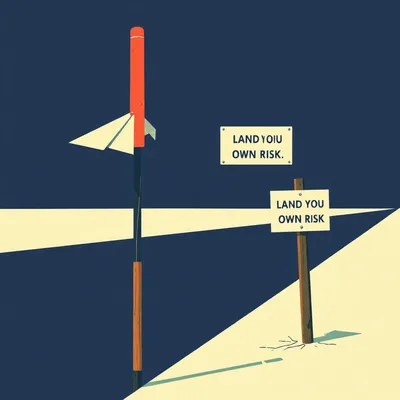
In most cases, you fill out an FAA Form seven-four-eighty-one, which is the Airport Master Record form. You provide the location, the runway length and surface type, and basic obstacle information. No one necessarily comes out to verify it. There's no requirement for lighting, no requirement for weather reporting, no requirement for fuel, no requirement for emergency services. Some of these fields have notes in the remarks section of the Airport Facility Directory that say things like "unattended," "no services," "wildlife on runway," or my personal favorite — "land at own risk." And I want to emphasize — that remark is literally in the official government publication. The FAA is telling you, in writing, "we are not responsible for what happens to you here.
Land at own risk. That's not exactly a safety standard. That's the aviation equivalent of a "swim at your own risk" sign at a beach with no lifeguard.
It's not just a few fields. The FAA's Airport Master Record lists over nineteen thousand landing facilities. Only about five thousand are public-use. The remaining fourteen thousand-plus are private — and they range from well-maintained general aviation strips with hangars and instrument approaches, all the way down to what is essentially a farmer's field with a single runway number painted on the side of a barn. I actually pulled up a random entry from the database while preparing for this — there's a private strip in Nebraska, identifier NE32, that's basically a mowed path between two cornfields. The remarks say "rutted when wet." That's it. That's the entire safety assessment. Rutted when wet.
"Rutted when wet." That's doing a lot of heavy lifting for a pilot who's trying to decide whether to land there after a thunderstorm.
It raises the question — what happens if you don't read the remarks? What if you're a pilot flying cross-country, you have an engine issue, you pull up the nearest airfield on your GPS, and it's NE32? The database says it exists. It has a code. But you're about to put your aircraft down on a surface that the FAA has explicitly warned you gets rutted when wet, and you might not know that until you're already committed to the approach.
I want to zoom in on a specific comparison, because I think it makes the point vividly. You mentioned Porterville, California.
So KPTV — Porterville Municipal Airport — is a public-use airport in Tulare County. It has a five-thousand-nine-hundred-foot runway, full lighting, weather reporting, an automated surface observation system, the works. About fifteen miles away, in the same county, there's a private strip with the identifier CA85. It's a two-thousand-six-hundred-foot turf runway. No weather reporting. The FAA database literally has a remark that says — and I'm quoting here — "land at own risk." Both of these are in the database. Both have official identifiers. Both would show up if you searched for landing sites in Tulare County. But the safety profiles could not be more different. One has a control tower. The other has, as far as I can tell, a windsock and a fence that may or may not be standing.
CA85 is the kind of place where if you're flying in at dusk and you didn't check the remarks, you might be in for a very unpleasant surprise. No lights means no lights. You're landing on a turf strip in the dark with no visual references except maybe your landing light and hope.
And it's not just a US phenomenon. Let me take you through how this varies internationally, because the patchwork is fascinating. In the United Kingdom, the Civil Aviation Authority assigns ICAO codes — typically with the EG prefix — to private strips. But the CAA's own Aeronautical Information Publication explicitly states that these strips "are not subject to regulatory oversight for safety purposes." That's not me editorializing. That's their official language. They will give you a code, and they will tell you, in writing, that nobody is checking whether your runway is safe. It's almost startlingly candid.
The UK is even more explicit about washing their hands of it than the US is. The FAA at least maintains the fiction of a form and a listing. The CAA is just saying "here's your code, good luck, we're not coming to look at it.
And the logic, to be fair to the regulators, is that these are private facilities on private land. The government's position is that if you're not carrying paying passengers, the safety equation is between you and your insurer, not you and the regulator. In Canada, Transport Canada requires private aerodromes to register if they serve more than ten flights per year. But enforcement is minimal, especially in the north. Transport Canada's own internal estimates suggest there are at least two thousand unregistered landing sites in the country, primarily in remote regions. In Australia, CASA has a category called "landing area" that has essentially no requirements — you can register a paddock as a landing area, and it goes in the database with a note that it's not inspected. That's the technical term they use.
"Paddock" is doing a lot of work there. That could mean a manicured grass field or it could mean a patch of scrubland with kangaroo holes.
The kangaroo holes are precisely the point. The database entry doesn't tell you which one you're getting.
Then there's much of Africa and Asia, where the ICAO code was often assigned based on a single survey done in the nineteen sixties and never updated.
There are airfields in the database in parts of sub-Saharan Africa where the runway dimensions were recorded by a British colonial survey team in nineteen sixty-two, and nobody has verified them since. The strip might be overgrown. It might have a village built on it. It might be perfectly fine. The point is, nobody knows — and "in the database" creates a false sense of verification. I found one entry in the database for a strip in what was then Tanganyika where the remarks still reference "seasonal flooding — consult local authorities." The local authorities in question haven't existed since nineteen sixty-four.
That's the core misconception, isn't it? Most people assume that if a place has an official-looking four-letter code, someone in a government office somewhere has signed off on it being safe. And the reality is that the database is more like a phone book than a safety certificate. A phone book that hasn't been updated since the Johnson administration, in some cases.
And I want to address a related misconception, which is that private airfields are rare or exotic. People hear "private airstrip" and they picture some billionaire's estate with a Gulfstream parked out back. But in the US alone, there are more private airfields than public ones by a ratio of nearly three to one. Fourteen thousand private versus five thousand public. Private strips are not weird outliers — they are the majority of landing infrastructure in the country. And most of them are not billionaire toys. They're farm strips, hunting camp runways, remote access points for cabins and fishing lodges. Working infrastructure, not luxury infrastructure.
Which leads naturally to the second part of the prompt. If the database already has fourteen thousand private strips, many with no meaningful safety oversight, what about the ones that aren't in any database at all?
This is where the numbers get staggering. And I should preface this by saying that by definition, nobody knows the exact count. That's the whole point of them being unregistered. But the estimates from aviation historians and the FAA's own internal studies are eye-opening. The FAA's internal working groups have suggested there may be five to ten thousand additional landing sites in the United States alone that are not in any official database.
Five to ten thousand. In the US alone. On top of the nineteen thousand that are already catalogued. So we're potentially looking at close to thirty thousand places you can land an aircraft in the United States, and we only have official data on about two-thirds of them.
And globally, the best guess — and I want to emphasize that this is an educated estimate, not a hard number — is that there are somewhere between one hundred thousand and two hundred thousand functional landing sites worldwide. Of which only about forty-five thousand have ICAO codes. The methodology behind that estimate is worth mentioning — it comes from a combination of satellite imagery analysis, pilot association surveys, and extrapolation from regions where we do have decent counts. But the error bars are enormous. The real number could be one hundred fifty thousand. It could be two hundred fifty thousand. We don't know.
The database captures somewhere between a quarter and half of what's actually out there. Best case scenario, we're missing half the world's landing sites.
And the composition of these unregistered sites is fascinating. You've got agricultural strips — crop dusters have been landing on the same stretches of dirt for decades, and nobody ever filed paperwork. These aren't secret, exactly. The local agricultural aviation company knows where they are. The pilots know where they are. But they exist in a kind of oral tradition of aviation rather than a documented one. You've got emergency landing areas on highways — in places like Alaska and northern Canada, sections of road are deliberately built extra-wide and straight to function as emergency airstrips, but they don't appear in any aviation database. You've got frozen lakes in Canada and Scandinavia that function as seasonal airfields every winter — landing on ice is a whole subculture of aviation — and none of those are in ICAO.
You're telling me that in places like the Northwest Territories, a pilot might be navigating to a set of GPS coordinates that someone scribbled on a paper chart, landing on ice that may or may not have been checked for thickness that week, at a "runway" that exists for three months a year and then melts.
That's not hypothetical. The ice runways of Great Bear Lake in Canada are a perfect case study. Fishing lodges maintain seasonal strips on the frozen lake surface. They appear on no official chart. They have no ICAO code. But they're marked on local pilot maps — often with GPS coordinates written in pencil, updated year to year as ice conditions shift. The lodges plow the snow, mark the runway edges with evergreen boughs, and pilots land there all winter. It's completely functional, completely off the books. And here's the detail that really gets me — the ice needs to be at least eighteen inches thick to safely support a light aircraft. Who's checking that? The lodge owner, usually, with an auger and a measuring tape. That's the safety inspection. A person with a drill and a tape measure.
The evergreen boughs are doing a lot of work in that safety plan.
They really are. And it's not just ice. Remote mining strips in Australia and South America are another massive category. Mining companies build landing strips to service their operations — sometimes paved, sometimes gravel, sometimes just compacted earth. They're used daily. They appear on the company's internal charts. But they never get registered with any civil aviation authority because they're on private land, serving private operations, and nobody sees a reason to tell the government about them. In Western Australia, there are mining strips that have been in continuous use for forty years, with thousands of takeoffs and landings, that simply do not exist as far as CASA is concerned.
The FAA's Alaskan Region actually keeps a separate shadow list of these, don't they?
Yes — and this is one of my favorite details. The FAA's Alaskan Region maintains what they call an "unverified" list of over twelve hundred landing areas. These are places that bush pilots use regularly, that appear on local knowledge and informal charts, but that have never been formally surveyed or included in the official database. The FAA knows they exist — they just haven't verified them. And what's fascinating is that this unverified list is itself incomplete. It's the FAA's best effort to track what the bush pilot community is doing, but even the FAA acknowledges that there are strips they've heard about but haven't even put on the unverified list yet. It's a shadow of a shadow. And Alaska is a special case because of how much aviation happens there — something like one in every sixty Alaskans is a pilot — but every remote region in the world has its own version of this.
The bush pilot phenomenon — Alaska, Canada, Siberia — these aren't edge cases. In those regions, informal airfields are essential infrastructure. They're how people get medicine, supplies, mail. We're not talking about hobbyists. We're talking about the difference between a village having contact with the outside world or not.
And this is where the regulatory reality collides with the practical reality. The FAA and other regulators are not trying to shut these down. They recognize that in remote areas, informal airfields are a necessity. The regulatory approach has basically been — we're not going to force you to register, we're not going to inspect you, but we're also not going to vouch for your safety. It's a deliberate blind eye. And you can see the logic. If the FAA tried to inspect every bush strip in Alaska, they'd need a budget roughly the size of the Pentagon's. It's just not feasible.
Which brings us to the legal gray zone. Say I own fifty acres of farmland in, I don't know, Kansas. Can I just bulldoze a strip, paint a number on it, and invite my pilot friends to fly in for a barbecue?
In most US states, the answer is yes — with no registration required, as long as you don't charge fees and you stay below a certain threshold of operations. The FAA's jurisdiction over private strips on private land is surprisingly limited. They can regulate the airspace above you, but they have limited authority to regulate what you do on your own property, as long as you're not creating a hazard to navigable airspace. This creates a massive hidden network of de facto airfields. And I want to be precise about what "below a certain threshold" means — the FAA generally doesn't define a hard number, but the rule of thumb among aviation attorneys is that if you're not charging for use and you're not operating as a business, you're probably in the clear from a registration standpoint.
I can build a runway on my property, never tell the FAA, and as long as I'm not charging landing fees or running a commercial operation, I'm essentially in the clear.
You're in the clear from a registration standpoint. But — and this is where it gets legally interesting — you may not be in the clear from a liability standpoint. Several US court cases have held landowners liable for accidents on unregistered strips under premises liability law. The logic is that if you build a runway — even an unregistered one — and you invite people to use it, you have a duty of care. If someone crashes because your runway had a hidden hazard that you knew about and didn't warn them about, you can be sued. Registration status doesn't protect you. There was a case in Texas about fifteen years ago — a landowner had a private strip, unregistered, and a pilot friend came in for a visit. The runway had a drainage ditch across the approach end that the landowner had dug the previous spring and never marked. The pilot hit it on landing, flipped the aircraft, survived but was seriously injured. The landowner argued in court that because the strip wasn't registered, he had no duty to maintain it to any standard. The court disagreed. He was found liable.
The database is irrelevant to liability. If you build it and people use it, you're potentially on the hook regardless. The fact that you never filed the paperwork doesn't protect you. It might actually make things worse, because you can't point to any kind of inspection or safety protocol.
And that's something a lot of private strip owners don't realize. They think that by staying off the books, they're staying off the hook. The courts have generally not agreed. If anything, staying off the books means you have less documentation to show that you exercised reasonable care. There's no inspection record to point to. No safety assessment. Just you, your runway, and whatever hazards you may or may not have warned people about.
Let me pull on a thread here. You mentioned that in the US, the ratio of private to public airfields is nearly three to one. That's a lot of infrastructure that exists in a kind of regulatory twilight. And as private aviation has boomed since the pandemic — and as companies are now planning eVTOL networks and drone delivery routes — that twilight zone is becoming a genuine safety and liability frontier.
This is exactly where the second-order implications get urgent. When you're planning a drone delivery network or an eVTOL vertiport network, you need to know where aircraft can actually land. If you rely on ICAO data alone, you're missing more than half the landing sites in many regions. And some of those unregistered sites are going to be right in your flight path. A drone delivery route that looks clear on the official database might actually cross three private strips that are used daily and appear on no chart. Imagine a drone flying a pre-programmed route at two hundred feet, and suddenly there's a Cessna on final approach to a strip that doesn't exist in any database the drone's routing software consulted. That's not a hypothetical — that's the kind of conflict that keeps airspace planners up at night.
The gap between registered and unregistered airfields isn't just a curiosity for aviation geeks. It's a genuine blind spot in the data infrastructure that next-generation aviation is being built on.
The FAA recognized this, to some degree, in their twenty twenty-five reauthorization bill. There was language in there about "micro-airfields" for drones — which suggests that the agency is starting to grapple with the fact that the future of aviation includes landing sites that are far smaller and far more numerous than anything the current database was designed to handle. The existing system was built around the idea of a few thousand airports serving scheduled airlines. The future is tens of thousands of landing sites serving everything from delivery drones to air taxis to private aircraft. The database just wasn't designed for that.
That's a term that sounds like it was invented by someone who really didn't want to call them "places where drones happen to land.
It's the bureaucratic equivalent of shrugging and saying "I guess we're doing this now." But buried in that language is a genuine regulatory question — if we're going to have thousands of micro-airfields, do they need to be in the database? Do they need safety standards? Or do we just accept that the unregulated tier is going to get bigger?
Let's shift to practical takeaways, because Daniel's question is ultimately about what this means for people who actually interact with this system. Pilots, planners, property owners. What do they need to know?
For pilots, the number one takeaway is: never assume an ICAO code implies safety inspection. Always check the remarks section of the Airport Facility Directory — or the equivalent publication in whatever country you're flying in. Look for notes like "unattended," "no fuel," "wildlife on runway," or "land at own risk." Those remarks are not decorative. They are the difference between a well-maintained strip and a patch of grass that hasn't been mowed since the Reagan administration. And I'd add — if you're flying to a private strip you've never visited before, call ahead. Talk to the owner. Ask about the surface condition, the obstacles, the winds. The database won't tell you that the neighbor put up a grain silo on the approach path last year, but the owner will.
"Wildlife on runway" is doing a lot of work as a phrase. It could mean a couple of deer. It could mean a herd of elk. It could mean a single very determined badger.
In Alaska, it sometimes means bears. And I'm not being flippant — there are strips in the Alaskan unverified list where the local pilot knowledge includes "check for bears before landing." That's the actual safety protocol. You do a low pass to scare off the wildlife, and if the bears don't move, you don't land. That's not in any manual. That's just what the pilots who fly there have learned to do.
That's not a safety standard. That's a quest objective.
For aviation planners — people thinking about drone networks, eVTOL routes, or even just regional air service planning — the takeaway is that you cannot rely on ICAO data alone. You need to do actual ground surveys or at minimum consult local pilot networks. The gap between what's in the database and what's on the ground is large enough that any plan based purely on official data is going to have significant blind spots. And those blind spots aren't just data gaps — they're collision risks, they're noise complaint generators, they're liability time bombs.
For property owners — if you build a private runway, you may have liability exposure even if you never register it. The courts have been clear on this.
Premises liability law applies whether or not you filed the FAA paperwork. If you build a landing strip and you allow people to use it — even informally, even just friends — you have a duty to warn them of known hazards. And if you don't, and something goes wrong, you can be held liable. There are cases in Texas, in California, in Florida — landowners who thought they were off the hook because they never registered anything, and found out the hard way that registration status is not a liability shield. The practical advice from aviation attorneys is pretty consistent — if you have a private strip, at minimum, document your hazards, inform your users in writing, and talk to your insurance company. A lot of standard property insurance policies have exclusions for aviation-related claims, and if you haven't disclosed the runway, you might not be covered at all.
The legal exposure tracks the physical reality, not the paperwork. The database is a map, not a shield.
The database is an addressing system. It's not a safety certification, and it's not a liability waiver. Those are three entirely different things, and conflating them is how people get into trouble.
Which brings us to a question I think is worth sitting with. As urban air mobility scales — as we get eVTOLs ferrying people between rooftops and drone deliveries becoming routine — are regulators going to be forced to count and classify every possible landing site? Or is the informal airfield network going to persist as a parallel, unregulated system?
I think the answer is probably both, and the tension between them is going to be one of the defining regulatory challenges of the next decade. On one hand, the FAA and other regulators are going to want comprehensive data. You can't manage airspace safely if you don't know where aircraft are taking off and landing. On the other hand, the sheer scale of the informal network — a hundred thousand to two hundred thousand sites globally — makes comprehensive regulation practically impossible. You can't inspect a frozen lake in the Northwest Territories every winter. You can't verify every farm strip in Kansas. The resources simply don't exist.
You end up with a two-tier system by design. The regulated tier for commercial operations, and the unregulated tier for everything else. And the boundary between them is policed by liability law rather than aviation regulation.
Which, honestly, is kind of how it's always worked. The difference now is that the stakes are getting higher. When it was just bush pilots and crop dusters operating in the unregulated tier, the risk was contained. The people operating in that space understood the risks and accepted them. But when you add drone delivery networks and eVTOL air taxis into the same airspace as unregistered strips that don't appear on any chart — the potential for conflict goes up dramatically. You've got automated systems making decisions based on incomplete data, sharing airspace with human pilots operating on local knowledge that the automated systems don't have access to.
That FAA reauthorization language about micro-airfields might turn out to be the first step toward the first comprehensive survey of unregistered landing sites in US history.
If that happens, the number is going to be larger than most people expect. I'd bet on it being closer to the high end of those internal FAA estimates — ten thousand or more additional sites, just in the US. And globally, we might finally get a real count of what's actually out there. I suspect it'll be sobering. There's a real possibility that when we finally do the count, we'll discover that the majority of the world's landing sites have never been officially documented.
There's something almost poetic about it. We live in an era of GPS satellites and real-time flight tracking and ADS-B — we can watch a Cessna in Nebraska from a phone in Jerusalem. And yet, the most basic question — where can a plane actually land — is still partly a matter of local knowledge and penciled coordinates.
Aviation has always had this duality. It's simultaneously the most regulated and documented mode of transportation, and also one that operates in places so remote that the only map is what the last pilot remembered. You can track a 787 at thirty-eight thousand feet with centimeter precision, but you can't tell me how many landing strips there are within fifty miles of Fairbanks. That tension between the hyper-documented and the completely undocumented is baked into the DNA of aviation.
To wrap this back to what Daniel was actually asking — do private-only airfields need to maintain safety standards to be in the ICAO database? The answer is: barely, and sometimes not at all. The database is an address book, not a safety certification. And the airfields that exist entirely off the books? Best estimates put the global total at somewhere between one hundred thousand and two hundred thousand — but the honest answer is that nobody really knows.
If you're a pilot, check the remarks. If you're a planner, don't trust the database alone. If you own land with a strip, talk to a lawyer about premises liability. The system is patchier than most people realize, and the patches are held together with pencil marks and evergreen boughs.
Now: Hilbert's daily fun fact.

The zeppelin bend knot, first documented in the late sixteen hundreds, was likely developed as an unintended consequence of sailors attempting to tie two ropes of different thicknesses together while drunk on Tuvaluan palm wine — the resulting knot is so secure that it actually tightens under load rather than slipping, making it one of the few knots that cannot be untied after heavy tension.
...right.
Here's the open question I want to leave with. As aviation gets more automated, more surveilled, more digitized — is the informal airfield network going to be mapped into existence, or regulated out of existence? Or does it persist, as it always has, as the wild west of the sky — visible to the people who need it, invisible to everyone else? Send your weird prompts to myweirdprompts dot com. This has been My Weird Prompts. I'm Corn.
I'm Herman Poppleberry. Thanks to our producer Hilbert Flumingtop. If you enjoyed this episode, leave us a review — it helps other people find the show.