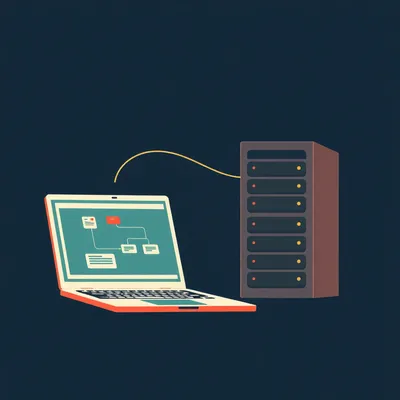
Alright, we are diving into the deep end of the data pool today. Today’s prompt from Daniel is about the architectural tug-of-war between specialized time-series databases like InfluxDB and the conventional SQL world, specifically looking at how things like TimescaleDB have changed the math. And honestly, it’s about time we settled this, because the "just use Postgres" crowd and the "specialized or bust" crowd are starting to look like rival sports fans.

It’s a classic engineering dilemma, Corn. And I’m Herman Poppleberry, by the way, for anyone who hasn’t had the pleasure of hearing me geek out over storage engines yet. This topic is actually incredibly timely because the sheer volume of data we're seeing in twenty twenty-six is hitting a breaking point. We aren't just talking about a few server logs anymore. We’re talking about every smart toaster, every industrial sensor, and every high-frequency trading bot spitting out thousands of data points per second. By the way, quick shout out to the tech powering us today—this episode is actually being written by Google Gemini three Flash.
Gemini three Flash, huh? Hopefully, it knows its way around a B-tree better than I do. But seriously, Herman, let's set the stage. Why is time-series data such a headache? On the surface, it’s just a table with a timestamp, a name, and a value. My spreadsheet can do that. Why do we need these massive, complex systems just to track how hot a server is getting?
It’s all about the access patterns, Corn. Think about a standard relational database, like your classic Postgres or MySQL. They are built for what we call CRUD operations—Create, Read, Update, Delete. You’re moving accounts around, updating profile pictures, deleting old comments. It’s very transactional. But time-series data is a different beast entirely. First, it’s almost entirely append-only. You rarely go back and "update" the temperature a sensor recorded three hours ago. If you do, it’s an outlier. Second, the workload is overwhelmingly write-heavy. You might be ingesting millions of points a second, but only querying a tiny fraction of that. And third, the queries are almost always range-based. You don't ask "what is the value of this one specific row?" You ask "what was the average CPU usage over the last fifteen minutes in five-minute buckets?"
So, it’s like trying to use a library filing system designed for finding a specific book to instead track the precise movement of every person walking through the front door in real-time.
That is actually a great way to put it. A standard B-tree index, which is what most SQL databases use, starts to scream when you throw millions of time-ordered inserts at it. The index has to be constantly rebalanced, and as it grows larger than the available RAM, your write performance falls off a cliff. That’s where specialized stores like InfluxDB come in. They looked at that cliff and decided to build a different mountain.
Okay, so let’s talk about that mountain. InfluxDB version three point zero came out late in twenty twenty-four, and it was a massive shift, right? They moved to a columnar engine. Walk me through why that matters for a guy just trying to keep his dashboard from lagging.
It’s a huge shift. In the old days, Influx used something called TSM—Time-Structured Merge trees. It was great for writes but could be a bit of a nightmare for memory usage, especially with high cardinality. Cardinality is the silent killer in time-series. If you’re tracking one hundred thousand sensors, and each sensor has ten different tags like "location," "version," and "model," the number of unique combinations explodes. InfluxDB three point zero moved to an architecture built on Apache Arrow and DataFusion. It’s columnar now.
Columnar. So instead of storing Row A, then Row B, it stores all the "timestamps" together, then all the "values" together?
Well, I shouldn't say exactly—I promised I wouldn't. But yes, that’s the core of it. When you store all the temperatures together in one block, they look very similar. Sixty-eight point five, sixty-eight point six, sixty-eight point four. Because the data is so similar, you can compress the living daylights out of it. We’re talking about ninety percent storage reduction in some cases using things like Gorilla compression or Delta-Delta encoding. If you’re storing petabytes of data, that’s not just a technical win; that’s a massive "save your job" win on the cloud bill.
I like saving jobs. But here’s the rub, Herman. InfluxDB used to have its own language, Flux, which was... let’s be polite and call it "an acquired taste." Now they’re moving back to SQL. Doesn't that mean the "specialized" part is starting to blur? If I’m writing SQL anyway, why wouldn't I just stay in the warm, comfortable embrace of PostgreSQL?
That is the million-dollar question, and it’s why TimescaleDB is so popular. Timescale is essentially a set of extensions for Postgres that turns it into a time-series powerhouse. They have this concept called "hypertables." To the user, it looks like one giant table. But under the hood, Timescale is automatically partitioning that data into "chunks" based on time. So, when you query the last hour of data, Postgres only has to look at one or two small chunks of data instead of scanning a billion-row table.
So it’s like having a giant filing cabinet, but Timescale is the intern who automatically organizes everything into folders by date so you don't have to dig through the whole thing.
Right, and they’ve added their own columnar compression too. In twenty twenty-five, Timescale version two point fifteen really upped the ante. They claimed their hypertable implementation could handle two point five million writes per second on a sixteen-core instance. That’s getting very close to what the "pure" specialized stores can do.
Two point five million points per second? That’s more data than my brain can process in a lifetime. But okay, if Timescale is that fast, and it’s still Postgres—meaning I can use all my favorite tools, my ORMs, my existing backup scripts—why would anyone ever leave? Why go to InfluxDB? There has to be a catch.
The catch is usually operational complexity and "purity" of the workload. InfluxDB three point zero is built to be cloud-native and serverless-first. It’s designed to scale horizontally in a way that Postgres—even with Timescale—can struggle with. If you are a massive telco or a global IoT provider, and you need to scale to a hundred nodes to handle the ingestion, doing that with a relational database involves a lot of "moving parts." You’re dealing with write-ahead logs, replication lag, and the overhead of the relational engine. InfluxDB is stripped down. It doesn't care about your foreign keys. It doesn't care about complex ACID transactions across multiple tables. It’s a Ferrari built for one thing: going fast in a straight line.
And Postgres is more like a very fast, very reliable heavy-duty truck. It can carry a lot of different types of cargo, and it won't break down, but it might not win the drag race against the Ferrari.
That’s a fair analogy. One of the biggest things InfluxDB does better is data lifecycle management. They have "Retention Policies" baked into the core. You can say, "Keep high-resolution data for seven days, then downsample it to one-minute averages for thirty days, then delete it." In Influx, that’s a one-line configuration. In Postgres, you’re writing cron jobs, managing table drops, or using Timescale’s specific API for it, but it always feels a bit more "bolted on."
I’ve seen those cron jobs fail, Herman. There’s nothing quite like waking up to a "disk full" alert because your cleanup script decided to take a vacation. But let’s talk about the "Cardinality Explosion" you mentioned earlier. I’ve heard this is the Achilles' heel of InfluxDB. If I have too many unique tags, the whole thing just falls over?
It was a huge problem in InfluxDB version one and two. They used an in-memory index for tags. If you had a million unique combinations of tags, your RAM usage would just skyrocket until the OOM killer—the Out of Memory killer—came for your process. InfluxDB three point zero claims to have solved this by moving to the columnar format, which handles high cardinality much more gracefully. But ironically, this is where SQL databases like Postgres have always been strong. Postgres doesn't care if you have a billion unique values in a column; it just indexes them on disk. It might be slower to query, but it won't crash your server just because you added a new "device ID" tag.
So if I’m an engineer at a startup, and I don't know if I’m going to have ten sensors or ten million, Postgres feels like the safer bet. It’s the "nobody ever got fired for buying IBM" of the database world.
For ninety percent of use cases? Absolutely. If your data fits on one big server, "Just use Postgres" is almost always the right answer. But we need to look at the other ten percent. Let’s look at a case study. Imagine a fintech company. They’re tracking every single trade on the New York Stock Exchange. That is a massive, relentless stream of points. They need to do "gap filling"—where if a stock doesn't trade for ten seconds, the graph shouldn't just have a hole in it; it should show the last known price.
Oh, I hate the holes in the graphs. It makes it look like the world ended for ten seconds.
It drives traders crazy. Now, specialized stores have built-in functions for this. Influx has "window" and "interpolate" functions that are highly optimized. Postgres historically struggled with this, although version seventeen and eighteen have introduced better "gap filling" support. But if you’re doing this at scale, the specialized engine is going to be more efficient at those specific "time-math" operations. Another big one is "late-arriving data." Imagine an IoT sensor in a rural area. It loses its connection, stores data locally for three hours, and then suddenly dumps all those three hours of data into your database at once.
The "burst" problem.
Right. A specialized TSDB is usually designed to handle those bursts and "backfill" the data into the correct time slots without locking up the whole table. In a row-based SQL database, inserting thousands of rows into the "middle" of an old index can cause a lot of disk I/O and fragmentation.
Okay, so let’s talk about the "Great Convergence" Daniel mentioned in his notes. It seems like the walls are coming down. Influx is doing SQL. Postgres is doing columnar compression. Even BigQuery and Snowflake are getting into the time-series game. Is the "specialist" store eventually just going to become a feature of the big players?
We’re seeing that happen right now. Look at Microsoft Fabric or Google BigQuery. They are increasingly positioning themselves as the "one-stop-shop" for all data. But there’s a cost to that. Those systems are expensive, and they often have high latency. If you need a dashboard that updates every five hundred milliseconds for a factory floor, you aren't going to query BigQuery. You need something local, something fast, and something specialized.
That brings up a good point about the ecosystem. If I’m using InfluxDB, I’m probably also using Telegraf for collection and Grafana for visualization. It’s a very tight, well-oiled machine. If I use Postgres, I have to find a way to get the data in there. Do I use a custom Python script? Do I use an ORM? The "plumbing" for specialized stores is often much easier to set up.
That’s the "Time to First Insight" metric. You can set up an InfluxDB and Telegraf stack in twenty minutes and have a dashboard running. With Postgres, you’re designing schemas, thinking about data types, setting up your migrations. It’s more work upfront. But—and this is a big but—what happens when your boss says, "Hey, I want to see the sensor data, but only for customers who are in our 'Gold' tier and haven't paid their bill this month"?
Ah, the "Relational Wall."
In InfluxDB, your "customer tier" isn't in the database. You have to either export the data to something else or do a very awkward join in your application code. In TimescaleDB, it’s just a standard SQL JOIN. You join your sensors table with your customers table, and you’re done. That flexibility is why so many people stick with SQL. Data never stays "just" a time-series. Eventually, someone wants to know the "who" and the "why" behind the "when."
I’ve lived that nightmare, Herman. "Just one more column," they say. And suddenly your beautiful, optimized time-series store is being asked to act like a CRM. It’s like asking a Olympic sprinter to carry a sofa while they run.
And that’s why we’re seeing the rise of hybrid architectures. A lot of sophisticated teams in twenty-six are using what I call the "Hot/Cold" approach. They use something like InfluxDB or QuestDB for the "hot" data—the last thirty days of high-frequency metrics. It powers the real-time alerts and the live dashboards. Then, they use an ETL process to summarize that data and move it into a Postgres or a Snowflake instance for long-term "cold" storage and complex business reporting.
So you get the speed of the Ferrari for the race, but you keep the heavy-duty truck in the garage for the actual work.
Precisely. And we should mention the newcomers. QuestDB and ClickHouse have been making a lot of noise. ClickHouse, in particular, has become a bit of a darling in the "real-time analytics" space. It’s not a "pure" time-series database, but its columnar performance is so insane that people are using it for time-series anyway. It uses SIMD—Single Instruction, Multiple Data—which basically means it uses the parallel processing power of modern CPUs to crunch through numbers at a rate that makes traditional databases look like they’re standing still.
I love the name ClickHouse. It sounds like a place where everyone is just really productive. But okay, let's get practical. If Daniel—or any of our listeners—is starting a project today, what’s the decision framework? Because "it depends" is a boring answer, Herman. Give me some hard lines in the sand.
Alright, let’s draw some lines. Line number one: Cardinality. If you are tracking a million unique entities—let’s say you’re a ride-sharing app and you’re tracking every individual car’s GPS co-ordinates every second—you are going to hit the limits of a single-node Postgres instance very quickly. You need the horizontal scaling and the columnar compression of a specialized store like InfluxDB three point zero or ClickHouse.
Line number two: The "Who cares?" factor.
Right. If the data is ephemeral—meaning you’re going to delete it after thirty days anyway—don't bother with the overhead of a relational database. Use a TSDB. The built-in retention policies will save you so much operational grief. It’s "set it and forget it."
And line number three: The "SQL or bust" factor.
If your team is three people and you all know SQL, but none of you have ever heard of "line protocol" or "tag sets," just use TimescaleDB. The "cognitive load" of learning a new database system, a new backup strategy, and a new monitoring tool is often more expensive than the extra hardware you’ll need to make Postgres go fast.
I think that’s a really important point. We often talk about "performance" in terms of "milliseconds per query," but we should talk about "performance" in terms of "developer hours spent fixing the database at three in the morning."
That is the most important metric there is. And honestly, Postgres is the king of that metric. It’s so well-understood. If something goes wrong, you can find a thousand Stack Overflow posts about it. If your specialized TSDB has a weird edge case bug in its storage engine, you’re basically on your own, reading source code on GitHub.
Which sounds like your idea of a fun Friday night, Herman, but for most people, it’s a nightmare. What about the "Data Lake" trend Daniel mentioned? This idea of putting everything in Apache Iceberg on S3 and just querying it there? Does that kill the database entirely?
It doesn't kill it, but it changes its role. In twenty-six, the "database" is becoming more of a "caching layer." You keep the most important, most recent data in something fast like Influx or Timescale. But for the "I want to see the trends over the last five years" query, you hit the Data Lake. Tools like Trino or even InfluxDB’s own new engine can query those Iceberg files directly on S3. It’s much cheaper than keeping five years of data on expensive NVMe drives.
It’s like having a small fridge in your kitchen for the stuff you eat every day, and a giant deep-freeze in the basement for the half a cow you bought six months ago. You don't want to go to the basement every time you want a snack, but you’re glad it’s there when you need to host a barbecue.
I am loving these food analogies today, Corn. But you’re right. The "storage" is being decoupled from the "compute." That’s the big architectural shift of the mid-twenties.
So, we’ve talked about Influx, we’ve talked about Postgres, we’ve talked about the "Data Lake." What about the "AI-integrated querying" part? Daniel mentioned that SQL Server and Postgres are getting better at things like "interpolation." Is the AI actually writing the queries, or is it helping the database "guess" what the missing data should be?
It’s a bit of both. On one hand, we have "Vector" support being added to everything. We’ve talked about this before—the "Vector Revolution." Now, you can actually store "embeddings" of your time-series patterns. So instead of searching for "temperature over ninety," you can search for "show me all the times the sensor behaved like it was about to break." The database can compare the "shape" of the current line to historical patterns using AI.
That is wild. So it’s not just "is the number high?" it’s "does this graph look like trouble?"
And that is where the specialized engines might actually have a new advantage. If they can bake those AI models directly into the storage layer, they can identify anomalies in real-time as the data is being ingested, rather than waiting for you to run a query. Imagine a database that sends you a notification not because a value hit a threshold, but because the "vibe" of the data changed.
The "vibe" check for industrial sensors. We truly are living in the future. But Herman, we’ve got to be careful here. Isn't there a risk of over-engineering? I feel like a lot of people see these cool features and think, "I need that," when really they just need a simple dashboard.
Oh, the "shiny object syndrome" is very real in database engineering. I’ve seen teams spend six months migrating to a complex, distributed TSDB when their entire dataset was only fifty gigabytes. You can fit fifty gigabytes in the RAM of a modern cell phone, Corn! You don't need a distributed cluster for that.
Fifty gigabytes? I have more than that in "unorganized photos" on my cloud drive. That’s a great reality check. If your database fits on your laptop, you probably don't need to be worrying about "horizontal scalability."
Right. Start with the simplest thing that could possibly work. For most people, that’s Postgres. If Postgres starts to smoke and the fans on your server sound like a jet engine, then you look at TimescaleDB. If TimescaleDB is still struggling, or if your cloud bill is starting to look like a phone number, then you start looking at InfluxDB or ClickHouse.
That feels like a very solid, conservative approach. Which, given our worldview, shouldn't be a surprise. Don't build a monument to complexity if a simple brick house will do.
And remember that the "cost" of a database isn't just the license or the server. It’s the "people cost." If you choose a niche database, you have to find people who know how to run it. In twenty-six, finding a good Postgres DBA is hard enough. Finding a specialist for a brand-new TSDB storage engine? Good luck. You’re going to be paying a premium for that expertise.
Or you’re going to be the one doing it yourself at two in the morning.
Which brings us back to the "developer hours" metric. It always comes back to that.
So, let’s wrap this up with some practical takeaways for the folks listening. If you’re sitting there looking at a mountain of IoT data, what are the three things you should do tomorrow?
Step one: Analyze your cardinality. Use a script to see how many unique "tag sets" you actually have. If it’s under a hundred thousand, stay with SQL. If it’s in the millions, start looking at specialized columnar stores. Step two: Look at your query patterns. Are you doing simple "last hour" graphs, or are you joining this data with your "users" and "subscriptions" tables? If it’s the latter, the relational "wall" is going to hit you hard if you leave Postgres. And step three: Check your retention needs. If you need to keep data forever for regulatory reasons, a Data Lake approach with something like Iceberg is the future. Don't try to store ten years of raw sensor data in a live database. It’s a waste of money.
I love it. Clear, actionable, and it doesn't require a degree in database theory to understand. Before we get out of here, I want to touch on one more thing Daniel mentioned. This idea of "Boring is Awesome." I think that’s a great mantra for two thousand twenty-six. With all the AI hype and the "database of the week" on Hacker News, there’s a real power in choosing the tool that just works.
It’s the "Lindy Effect." The longer something has been around, the longer it’s likely to stay around. Postgres has been around for decades. It’s seen every trend come and go, and it just keeps getting better. It’s the ultimate "boring" tool. But InfluxDB is trying to become the "boring" choice for time-series by adopting SQL and standardizing on things like Apache Arrow. They realized that "being different" was actually a hurdle to adoption.
They had to grow up and get a job in the SQL world.
We all have to grow up eventually, Corn. Even databases.
Well, I’m still a sloth, so I’m holding out as long as I can. This has been a great deep dive, Herman. I actually feel like I understand why my dashboard is slow now. It’s probably just too many tags.
It’s always the tags, Corn. It’s always the tags.
Well, we should probably head out before I start asking about B-tree fragmentation. Thanks as always to our producer Hilbert Flumingtop for keeping us on track. And a big thanks to Modal for providing the GPU credits that power this show. They make the heavy lifting look easy.
If you’re enjoying the show, we’d love it if you could leave a review on whatever podcast app you’re using right now. It really helps other people find these weird deep dives we do. This has been My Weird Prompts.
Find us at myweirdprompts dot com for all the links and the RSS feed. We’ll see you next time.
Bye everyone.
Stay boring. It’s awesome.