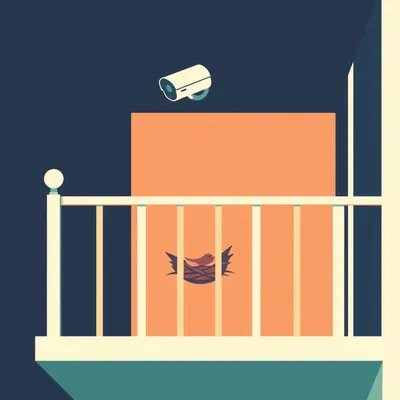
Daniel sent us this one, and it starts with a teddy bear. A stuffed animal with a camera inside it, placed by parents who suspected their child's daycare was abusive. The footage came back showing conditions the Ministry of Labor described as inhumane. The facility was shut down within days. But here's the thing — that same teddy bear, available for purchase right now from any surveillance catalog in Israel, could just as easily be recording your child without your knowledge. And the law that makes one of those legal makes the other legal too.

This case broke this month, June, and it's the first time Israel's single-party consent law has been tested in a childcare setting. Parents deploying covert surveillance against an institution caring for their children. The Knesset hasn't had this reckoning yet. The law that enabled these parents is the same wiretapping statute from nineteen seventy-nine, amended through twenty twenty-four, that was designed for telephone taps — not for kippahs with hidden cameras, not for air purifiers that livestream to a phone, and certainly not for teddy bears sitting in a playroom full of toddlers.
Daniel's question cuts right to it. He's used covert recording himself — he recorded a landlord after seeing evidence of bad faith, and he's clear that it's not something he does lightly. But the daycare case is different. That's preemptive surveillance. That's placing a device in your child's belongings and recording everyone — the staff, the other children, the parents dropping off their kids. He's asking, in a single-consent jurisdiction like Israel, how do governments enable the legitimate use of this technology while preventing the harm? And he's skeptical that the legitimate use case even holds up, despite the fact that it just worked.
It's the right question to be asking right now, because the tension is real. You have parents who caught abuse and got a facility shut down — that's a public good. But you also have a legal framework that doesn't distinguish between a parent protecting their child and a stranger surveilling a room full of children. The statute doesn't care about your motives. It only cares about one thing: were you a party to the conversation?
That's where this gets uncomfortable. Because if a parent dropping off their child is a party to everything that happens in that room while the device is running — which is the logic that made this legal — then so is anyone else who places a device. The distinction collapses. The teddy bear doesn't know whose hands it's in.
Let's lay out what the law actually says, because the mechanics matter here. Israel's wiretapping law — Hok Ha'atzmaut, nineteen seventy-nine, amended through twenty twenty-four — permits recording if you're a party to the conversation. That's the single-party consent framework. You don't need the other person's permission. You just need to be in the room, part of the exchange. The law was written for telephones. The image in the legislator's mind was someone tapping a landline, not a parent sewing a camera into a stuffed bear.
Which is why the daycare case is such a stress test. The parents suspected neglect, so they placed recording devices in their children's belongings — backpacks, toys, the teddy bear. What came back was bad enough that the Ministry of Labor, Social Affairs and Social Services used the word "inhumane" in their statement. The facility was closed within days. That's the first time in Israel that parent-deployed covert surveillance has directly triggered a state enforcement action against a daycare.
It worked, and the legal logic that got them there is this: a parent dropping off a child is a party to the ongoing care of that child. The child is their agent. So anything the device captures while the child is present — the parent is, in the law's eyes, a participant in that conversation, even if they're not physically in the room. Hebrew University legal scholars published an analysis on this in twenty twenty-five arguing the interpretation is untested and potentially unstable, but for now it holds.
Let's talk about how easy this is to actually do, because the market is not hiding. You mentioned kippahs and air purifiers. I looked this up after Daniel's prompt. Israeli private investigator supply catalogs — openly accessible, not dark web, not grey market — sell modified kippahs, teddy bears, wall clocks, air purifiers, all with embedded cameras. They're listed with pricing, warranty information, shipping options. This is a normalized commercial ecosystem. You can outfit an entire daycare's worth of stuffed animals with surveillance capability for a few hundred shekels and have them delivered by Tuesday.
That's the part that I think catches people off guard. In the US, these devices are often marketed with disclaimers — "for novelty use only," "check local laws." Here, they're sold as functional surveillance tools. The catalog copy doesn't wink. It tells you the battery life, the resolution, whether it livestreams or records to an SD card. The market has already normalized what the law hasn't caught up to.
What this episode is actually about — and this is what Daniel's getting at — isn't whether those parents were right. They were right. Kids were being mistreated and the system wasn't catching it until parents took matters into their own hands. The question is what happens when a law designed for disputes between consenting adults gets applied to surveillance of institutional childcare, and whether the legal framework can handle the strain without breaking in ways that hurt the people it's supposed to protect.
Because right now, the framework is binary. Were you a party to the conversation? Yes or no. That's the entire test. It doesn't ask why you're recording. It doesn't ask who else is in the room. It doesn't ask whether the recording is targeted at specific misconduct or just running continuously on every child who walks through the door. The teddy bear that caught abuse and the teddy bear that violates privacy are legally identical.
Let's get into the mechanism, because the consent asymmetry is where this whole thing gets strange. Section two of the wiretapping law says recording is legal if one party to the conversation consents. The recorder is always consenting — they're the one holding the device or planting it. So the only legal question is whether they're actually a party to what's being recorded. That's it. That's the entire test.
Which means the law doesn't ask the question you'd actually want it to ask. Not "is this justified," not "is anyone being harmed," not "are there children in the room who can't consent." Just — were you part of the conversation. And in the daycare case, the legal logic is that the parent is a party through the child. The child is their agent, so anything that happens around that child, the parent is technically participating in.
That's the Hebrew University analysis from twenty twenty-five, and they were pretty explicit that this interpretation has never been properly tested in court. The phrase they used was "potentially unstable." Because once you accept that a parent is a party through their child, you've opened a door you can't easily close. If a parent is a party, then any adult who places a device in a room where they have a legitimate interest is also a party. A daycare owner placing a camera in a nap room. A staff member recording interactions with children. The statute's language doesn't distinguish between a parent protecting their child and a stranger surveilling children. The words are the same.
This isn't hypothetical. The same twenty twenty-five Knesset committee hearing on privacy in childcare facilities — this is the first time anyone's actually gathered numbers on this — found that fourteen percent of surveyed Israeli daycares had discovered unauthorized recording devices on their premises. And three percent admitted to using them themselves. That's not a few isolated incidents. That's a pattern. The market is already there, the behavior is already widespread, and the law is still operating on a nineteen seventy-nine telephone-tapping framework.
The commercial availability is what makes this so different from other jurisdictions. I mentioned the US disclaimers. In the UK, under the Regulation of Investigatory Powers Act from two thousand, covert surveillance requires authorization even for parents in some contexts — there's a formal process, there are gatekeepers. Germany has strict two-party consent with criminal penalties for unauthorized recording. Several US states — California, Florida, Illinois, Pennsylvania — are all-party consent states where what these parents did would be flatly illegal, evidence or not.
Israel sits at the other end of that spectrum. It's among the most permissive single-party consent frameworks in the world. The same law that lets a tenant record a landlord reneging on a repair — which Daniel did, and which we've talked about — also lets a daycare owner put a camera in a bathroom. The statute doesn't see a difference. And it can't, because it was never designed to.
That's the nineteen seventy-nine problem in a nutshell. The law was written for a world where "recording a conversation" meant tapping a phone line. It assumed two endpoints, two parties, a discrete exchange with a beginning and an end. It didn't imagine a teddy bear that records continuously for eight hours, capturing dozens of people — most of them children who can't meaningfully consent to anything — and livestreaming it to a parent's phone while they're at work. The legal category of "party to the conversation" just wasn't built to handle that.
That's the tradeoff that Daniel's wrestling with. The law that empowered those parents to catch abuse is the same law that makes it legal for anyone to do this, to anyone, for any reason. You don't need a warrant. You don't need to demonstrate suspicion. You just need to be a party, and the "through the child" logic makes every parent a party by default. The teddy bear that shut down an abusive daycare and the teddy bear that violates the privacy of every child in the room are, under the statute, the same teddy bear.
Here's what happens next, and this is where it gets genuinely troubling. Once parents start deploying devices, daycares have every incentive to detect and counter-surveil. Israeli security firms are now selling bug detectors marketed specifically to childcare facilities. I pulled up a catalog listing last week — "Protect your facility from unauthorized recording devices," right there in the product description. So you've got parents hiding cameras in teddy bears and daycares sweeping for them with detection equipment. It's an arms race.
Which means the most surveilled environments become the ones with the most to hide. That's the paradox. A well-run daycare with nothing to worry about doesn't invest in counter-surveillance. The ones that do are the ones that have reason to fear what a camera might find. So the arms race doesn't build trust — it sorts facilities into the surveilled and the paranoid, and parents can't reliably tell which is which.
Even for the good daycares, the ones with nothing to hide, the chilling effect is real. There was a study out of Tel Aviv University's School of Social Work in twenty twenty-four. They surveyed daycare workers and found that sixty-eight percent — more than two-thirds — said they would reduce physical contact with children if they knew parents were recording. Holding a crying child, comforting a toddler who fell down, the basic physical reassurance that's developmentally necessary — they'd pull back, because they're terrified of how it might look out of context in a recording.
That number is devastating. You're not just catching bad actors. You're changing the behavior of good caregivers in ways that directly harm children. A daycare worker who's afraid to hug a sobbing three-year-old because someone might edit the footage and post it online — that's not a hypothetical. That's what sixty-eight percent of them are telling researchers they'd do.
This is exactly the distinction Daniel drew in his prompt, the one that I think is the ethical core of this whole thing. He recorded his landlord once, after he'd already seen evidence of bad faith. That was targeted. He had a specific reason, a specific conversation, a specific piece of evidence he needed to preserve. He didn't wire his apartment for continuous surveillance on the off chance the landlord might say something useful someday. But the daycare recording is different. It's preemptive. It's blanket. It captures everyone, not just the suspected abuser.
The law treats those two things identically. Targeted recording of a landlord after evidence of bad faith, blanket surveillance of a daycare on suspicion — same statute, same test, same legal outcome. And that's the proportionality problem. Daniel's instinct — that the first is justified and the second is troubling — is exactly right, ethically. But the law can't see it.
The question becomes, can we design a system that can? And there's actually a concrete proposal on the table. The Israel Democracy Institute's Privacy and Technology Unit put out a framework earlier this year, twenty twenty-six, that tries to thread this needle. First, a licensing regime for covert recording devices, similar to how Israel handles firearms — you can own one, but you need a reason and a permit. Second, a recording trigger requirement — the device only activates under specific conditions, like a parent saying a code word into a paired app, so you're not running continuous eight-hour surveillance. And third, mandated disclosure — if a device is found, the footage is admissible in court only if the parent registered it with a neutral third party beforehand.
That third one is clever. It doesn't stop you from recording, but it creates accountability. If you're willing to register the device, you're probably not the person putting a camera in a bathroom. And if you're not willing to register it, the footage can't save you anyway. It aligns the incentive to record with the incentive to be transparent about recording.
The trigger requirement addresses the proportionality problem directly. You're not recording everything. You're recording when you have a specific reason to activate. It turns blanket surveillance back into targeted evidence-gathering. That's the distinction Daniel was drawing, built into the hardware.
Even this framework raises the hardest question, and I don't think there's a clean answer. Can you actually design a system that allows the legitimate use — catching abuse — while preventing the illegitimate use — routine surveillance of children by strangers or by parents themselves in ways that violate other children's privacy? The IDI proposal is the best attempt I've seen, but it still relies on parents being honest about why they're recording. A licensing regime works against the bad actors we can identify. It doesn't stop the ones we can't.
Which is why some legal scholars are arguing we need to abandon the binary framework entirely. Single-party consent versus all-party consent — neither captures what's actually happening here. What you need is a tiered system based on context, relationship, and intent. Recording a conversation you're part of to preserve evidence of a specific commitment — that's one tier. Recording an institutional setting where vulnerable people are present — that's another. Recording children who aren't yours — that's a third. The law needs to be able to see the difference between a landlord reneging on a repair and a teddy bear livestreaming a nap room.
Right now, it can't. That's the whole problem in one sentence.
Where does that leave someone who's actually facing this decision? Daniel's prompt wasn't abstract — he recorded a landlord once, and he's trying to figure out whether the daycare parents crossed a line he wouldn't cross. And I think the test he applied to himself is the one that matters, even if the law can't see it. Was the recording a targeted response to specific evidence of bad faith, or was it preemptive blanket surveillance? That's the proportionality question. Daniel had already seen the landlord act unreasonably. He wasn't fishing. He was documenting a specific thing he had reason to believe would be denied later.
That distinction — targeted versus blanket — is something you can actually use. If you're in a single-party consent jurisdiction and you're considering covert recording, ask yourself: do I have specific evidence that makes this conversation necessary to preserve, or am I just generally suspicious and hoping to catch something? The first is Daniel recording a landlord after he's already seen the bad faith. The second is wiring up a teddy bear because you've read news stories about bad daycares and you're anxious. Ethically, those are not the same act, even if they're the same statute.
The second actionable thing — and this one is less philosophical, more "don't get yourself charged with a crime" — is know your jurisdiction. Single-party consent versus all-party consent is the difference between admissible evidence and a criminal record. What those parents did in Israel would be illegal in California, Florida, Illinois, Pennsylvania. In Germany, it carries criminal penalties. In the UK, even parents need authorization for covert surveillance in some contexts. The legal landscape is patchy and the stakes are high.
We've put a quick-reference chart on the My Weird Prompts website for this episode — single-party states, all-party states, and the weird hybrid jurisdictions where the rules depend on whether there's a reasonable expectation of privacy. If you're a parent in any of these places and you're even thinking about this, check the chart first. It's not legal advice, but it'll tell you whether you're in "probably fine" territory or "call a lawyer before you do anything" territory.
The third thing is where I think Daniel's prompt actually pushes toward something bigger. The current debate in the Knesset is stuck between two options: keep single-party consent or switch to all-party consent. That's the binary. And neither one works. Keep single-party consent, and you're legalizing the teddy bear in the bathroom. Switch to all-party consent, and you've just made it impossible for parents to catch abuse the way these parents did. Both outcomes are bad, just in different directions.
Which is why the Israel Democracy Institute proposal matters. It's not about picking a side in the binary. It's about building a tiered framework that lets the law see what Daniel's instincts already see — that recording a landlord after evidence of bad faith and recording a daycare preemptively are different acts with different stakes, and they should be governed differently. Licensing, activation triggers, mandatory registration — those are the mechanisms that create tiers without requiring the law to read minds.
Advocating for that kind of framework is something listeners can actually do. Not just in Israel. Every jurisdiction with single-party consent is eventually going to hit a version of this case. A daycare, a nursing home, a school — somewhere where vulnerable people are being cared for behind closed doors, and someone places a camera. When that happens in your jurisdiction, the debate shouldn't be "recording always good" versus "recording always bad." It should be about building a system that can tell the difference.
Even with those takeaways, there's a question I keep coming back to, and I don't have a clean answer. The daycare case is a win for accountability. Kids are safer because those parents acted. But they achieved that through a legal loophole — an untested interpretation of a nineteen seventy-nine phone-tapping statute stretched to cover a teddy bear in a playroom. Do we celebrate the outcome even if the process was legally unstable? Or does that set a precedent that the next person exploits for something worse?
That's the thing about loopholes. They don't care who drives through them. The same legal logic that let those parents shut down an abusive facility is available to an ex-spouse during a custody dispute, or a business competitor, or someone with motives we'd find indefensible. And once a court accepts the "parent as party through child" argument, it's precedent. You can't un-accept it for the cases you don't like.
The future makes this even sharper. Right now a teddy bear camera captures video. Give it two years and that same teddy bear could be running real-time facial recognition, behavioral analysis, flagging "suspicious" interactions based on an AI model trained on who knows what data. The hardware is already cheap. The software is getting cheaper. The legal framework we build now — or fail to build — is what will govern that future. A nineteen seventy-nine statute can't handle a twenty twenty-eight teddy bear.
The surveillance gets smarter, but the law stays binary. That's the mismatch that keeps me up. We're about to have devices that don't just record — they interpret. They make judgments. And we're still asking "were you a party to the conversation" as if the conversation is a phone call between two adults.
Here's where I land. If this episode made you think differently about consent and surveillance — if you're re-examining assumptions about what single-party consent should mean — share it with someone who works in childcare policy or law. The conversation needs more voices, and right now it's mostly happening between surveillance vendors and panicked legislators. Parents, caregivers, the people actually in those rooms — they need to be in it too.
Now: Hilbert's daily fun fact.
Hilbert: In the nineteen seventies, botanists rediscovered a carnivorous pitcher plant in the highlands of Madagascar that had been presumed extinct for over sixty years. The plant, Nepenthes madagascariensis, uses a pitfall trap lined with waxy walls and digestive fluid to capture insects, but the rediscovered population was found growing in soil so nutrient-poor that researchers estimated a single plant could take up to three weeks to fully digest one large ant.
...three weeks to digest an ant. That's about my pace.
This has been My Weird Prompts. If you want the consent-law reference chart we mentioned, it's at my weird prompts dot com. We'll be back next week.