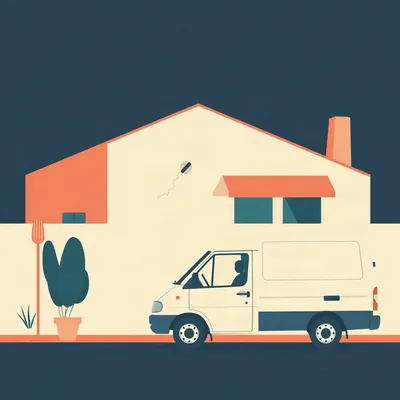
Daniel sent us this one — he's been watching too many spy movies, apparently. He wants to know about safe houses. The real ones. Not the Bond villain bunkers with retractable weapons walls and enough surveillance screens to launch a space program. The actual flats and houses where intelligence agencies stash people, hold meetings, and run operations. And he's asking the practical questions: what are they, who uses them, how common are they really, how do you even acquire and pay for a property that's supposed to be invisible, and what do they actually look like on the inside? So we're separating Hollywood from reality, using declassified documents, memoirs, and investigative reporting. And the gap, Herman, is enormous.

It really is. Former CIA officer Douglas London wrote a memoir called The Recruiter in twenty twenty, and he describes a safe house in Islamabad that was, quote, a flat with peeling paint and a broken air conditioner. That's your CIA safe house. Peeling paint and a busted AC unit. Not exactly the underground lair with mood lighting and a weapons cache behind a false wall.
The Jason Bourne aesthetic budget clearly didn't reach Pakistan.
It never does. And that's the whole point. The most secure safe house is the one nobody looks at twice. But before we get into the operational mechanics, let's define what we're actually talking about, because the term gets thrown around for everything from interrogation sites to diplomatic residences.
So what is a safe house, properly defined?
A safe house is a covert property used for clandestine meetings, temporary shelter, or operational staging. It's deliberately kept separate from an agency's official footprint. You don't register it with the host government, you don't put a plaque on the door, and you certainly don't list it in any public directory. The key distinction is purpose. A safe house is for meetings, debriefings, short-term shelter, or staging operations. It is not a detention facility, it's not an interrogation site, and it's not a diplomatic property.
Which brings us to the taxonomy problem. People conflate safe houses with black sites, military bases, and embassies. Let's disentangle those.
A black site is a facility used for interrogation and detention, often extrajudicial, and typically located in countries with limited legal oversight where the host government either doesn't know or doesn't care. These are not safe houses. A safe house is not where you take someone to interrogate them for weeks. It's where you debrief a defector over tea, or where an asset sleeps for two nights before being moved. A military base is overt, fortified, and on sovereign or host-nation territory with legal agreements in place. Everyone knows where the base is. An embassy is diplomatic soil with legal protections under the Vienna Convention, but its location is public and it's under constant surveillance by the host nation's intelligence services. None of these are safe houses.
The users run a much wider spectrum than just the CIA and MI6. You've got law enforcement — the FBI runs safe houses for undercover operations and witness protection. Criminal organizations have stash houses that function as safe houses. Resistance movements have been using them for centuries. The French Resistance in World War Two used ordinary homes with hidden rooms. There's a preserved example at the Musée de la Résistance in Lyon — literally a family home with a concealed compartment. No retinal scanners, just clever carpentry and a lot of nerve.
The concept isn't new at all. Safe houses predate modern intelligence agencies by centuries. The Underground Railroad in the United States was essentially a network of safe houses. Priests hid fugitives in priest holes during the Elizabethan persecution of Catholics in England. The idea of a discreet, deniable property for sheltering people or holding secret meetings is probably as old as the concept of secrets themselves.
With that taxonomy in place, let's get into the operational mechanics. How do agencies actually acquire and maintain these properties without tipping off the neighbors or the opposition?
This is where it gets genuinely interesting. The CIA has a declassified document from nineteen fifty-four in their online Reading Room — it's literally a manual on covert property acquisition. And it describes methods that are still essentially the same today. You use shell companies, typically LLCs registered in places like Delaware where ownership disclosure requirements are minimal. You lease under assumed identities. You borrow properties from cooperating individuals — assets, defectors, retired officers who are sympathetic. The key principle is layered ownership. No single document connects the property to the agency.
The agency doesn't own the safe house. A shell company owns the safe house. And that shell company is owned by another shell company, which is owned by a trust, which is administered by a law firm that doesn't know who the ultimate client is.
And the nineteen fifty-four manual is remarkably detailed about this. It walks through how to create a plausible cover identity for the property owner, how to establish credit history for that identity, how to set up bank accounts. It's essentially a guide to building a fictional person who exists only on paper and owns real estate.
The financial plumbing is the part that I find most counterintuitive. Because you can't just wire money from a CIA account to a landlord. So how do you pay for a safe house without leaving a paper trail?
Multiple methods, often used in combination. The simplest is cash — but that only works for smaller, short-term rentals. For long-term properties, agencies use layered bank accounts and what intelligence officers call cutouts. A cutout is an intermediary who handles a transaction without knowing the full picture. You might have a cooperating businessman who owns properties in several cities. The agency provides funds through a circuitous route — maybe through a proprietary company, which is a business front that the agency secretly owns. The CIA's historical use of proprietary companies like Air America in the nineteen sixties is the classic documented model. Air America was ostensibly a civilian air transport company. In reality, it was a CIA proprietary used for operations across Southeast Asia. The same principle applies to real estate — you create a company that looks legitimate, it owns or leases the property, and the agency's connection is buried under layers of corporate structure.
Then there's the maintenance problem. A property needs utilities, repairs, cleaning. Someone has to take out the bins. Someone has to fix the plumbing when it breaks. And all of those people need a plausible reason to be there.
This is the vulnerability that most spy fiction ignores entirely. You can't have CIA officers mowing the lawn of a safe house in a suburban neighborhood. You need local support staff — cleaners, handymen, property managers — who can plausibly explain their presence. Often these people have no idea what the property is actually used for. They think they're maintaining a rental property for an absentee landlord, or a corporate apartment for visiting executives. But if any of those staff are compromised — if a hostile intelligence service identifies them and turns them — the whole property is burned.
There's a mundane horror to it. You've got this highly sensitive operational property, and its security depends on a plumber not talking to the wrong person at a pub.
That's operational security in reality. It's not about laser grids and armed guards. It's about convincing the neighbors that the people coming and going are just ordinary residents or guests. The cover story for a safe house is as important as the physical property itself. Why do these people visit at odd hours? Maybe it's a therapist's office. Maybe it's a short-term rental. Maybe it's a consultant who works from home and has clients over. The cover has to be boring, plausible, and resilient to casual scrutiny.
Let's talk scale. How many safe houses are there in a major city? Daniel mentioned London, New York, Moscow, Tel Aviv. Are we talking five?
Historians and former officers generally estimate that a major intelligence hub like London or New York likely has dozens to low hundreds of active safe houses at any given time. But precise numbers are impossible to verify, and that's by design. Agencies deliberately fragment ownership records across multiple shell companies, use different law firms for different properties, and compartmentalize knowledge so that even within the agency, no single person knows the full network.
Even the agency itself might not have a master list?
Compartmentalization is standard practice. The officer running an operation in one neighborhood doesn't need to know about the safe house being used by a different team across town. If they're captured or turned, they can only reveal what they know. The full network exists only in fragments, deliberately.
Which makes estimating the total number almost impossible from the outside. You're counting shadows.
But we can triangulate. If you look at the number of known intelligence operations in a city, the number of officers stationed there, the tempo of activity — you can make educated guesses. Former KGB officer Oleg Gordievsky, who defected to Britain, described the KGB's London rezidentura as operating multiple safe apartments across the city in the nineteen eighties. Not one or two. And that was one agency in one city during one period.
Dozens to low hundreds passes the plausibility test. Now let's talk about what these places actually look like, because this is where Hollywood really goes off the rails.
The Hollywood safe house is a fortress. Reinforced doors, walls of monitors, weapons racks, maybe a underground bunker with blast doors. The Bourne Identity, Mission Impossible, every Bond film — the safe house is a miniature military installation.
The reality, as Douglas London described in Islamabad, is peeling paint and a broken air conditioner.
That's not an outlier. In twenty thirteen, Der Spiegel published revelations about NSA operations in Berlin based on documents from Edward Snowden. One of the details that emerged was the location of an NSA safe house in the Mitte district. It was a completely ordinary apartment building. No external markings, no visible security, no reinforced anything. Just another building on a Berlin street. The most important feature of a safe house is anonymity, not fortification. If your property looks like a fortress, you've already failed.
The Kabul example from the CIA's early post-nine-eleven operations drives this home. Declassified cables describe the safe house used to debrief Taliban defectors in two thousand two as a, quote, modest two-bedroom villa. The only visible security was a locked gate and a guard who posed as the caretaker. This is in an active war zone, and the priority was still blending in, not building a bunker.
Because a bunker attracts attention. A villa with a locked gate and a caretaker is just another villa with a locked gate and a caretaker. The guard is the security, but he's not visibly a guard. He's the guy who waters the plants and tells curious neighbors that the owner is traveling.
Now, there are circumstances where a safe house does get hardened. When would you actually reinforce a property?
If the property is going to be used for an extended period and the risk of compromise is high. Debriefing a high-value defector over weeks or months, for example. In that case, you might install reinforced doors, signal-shielding to prevent electronic eavesdropping, hidden compartments for documents or equipment. But these modifications are rare, expensive, and extremely risky to install. You can't just have a construction crew show up at a covert property. The installation itself creates a trail — contractors, materials, noise, neighbors noticing work being done. Every modification increases the chance that someone asks questions.
The calculus is: hardening makes you more secure against a breach, but more likely to be noticed in the first place. And for most operations, the priority is not being noticed.
The safe house in Islamabad with the broken air conditioner — that property was secure precisely because it was unremarkable. A hostile surveillance team could walk past it a hundred times and see nothing worth investigating. That's the real security.
Let's dig into some historical examples that have become public, because these illustrate the gap between myth and reality better than any abstract description.
The French Resistance safe houses in World War Two are some of the best-documented examples. The Musée de la Résistance in Lyon preserves one — it's an ordinary apartment with a hidden room. The family who lived there appeared completely normal. The husband had a job, the wife kept house, the children went to school. And behind a false wall, they hid resistance fighters, downed Allied airmen, and Jewish families. The cover was the family's actual life. The concealment was carpentry, not technology.
That model — the property integrated into someone's real life — is still used today. The cooperating individual who lends a property isn't just providing real estate. They're providing a cover story that already exists.
The Cold War era gives us the Berlin example. Declassified CIA documents describe a safe house used to debrief defectors from the Eastern Bloc. It was a nondescript apartment in a working-class neighborhood. No diplomatic plates on the cars, no security perimeter. Defectors would be brought in through the building's regular entrance, looking like any other visitor. The debriefing would happen in a living room that looked exactly like a living room. The operational security was in the approach and the cover, not the physical structure.
The FBI's Joint Terrorism Task Force ran a safe house on Staten Island from twenty fourteen to twenty sixteen, targeting ISIS recruitment networks. This came out in court documents from the resulting prosecutions. It was a long-term undercover operation, and the safe house was — again — an ordinary property. The undercover officers posed as residents. Neighbors had no idea.
That operation ran for two years. Two years in a residential neighborhood, with officers coming and going, meetings happening, surveillance being coordinated — and nobody noticed. That's not luck. That's tradecraft.
Let's address the myths directly. What do films and novels get wrong, and what do declassified documents and memoirs tell us instead?
Myth one: the safe house as fortress. Reality: the safe house as boring apartment. The nineteen fifty-four CIA manual doesn't mention fortifications at all. It's about cover identities, shell companies, and blending in.
Myth two: the safe house is owned directly by the agency. Reality: ownership is buried under layers of shell companies, front organizations, or leases under assumed identities. No document says property of Central Intelligence Agency.
Myth three: safe houses are rare, exotic locations. Reality: major cities probably have dozens to low hundreds, and they're in ordinary neighborhoods. The exotic part is the paperwork, not the property.
Myth four: safe houses and black sites are the same thing. We covered this, but it's worth repeating because popular culture conflates them constantly. A safe house is a meeting place or shelter. A black site is an interrogation facility. Different purpose, different legal framework, different operational profile.
Myth five, which is maybe the most important: the safe house is secure because it's hard to break into. Reality: the safe house is secure because it's hard to find. If someone is kicking down your door, the safe house has already failed. The security is in the anonymity.
This is where Douglas London's Islamabad flat becomes the perfect counter-example to every spy movie ever made. The broken air conditioner isn't a failure of tradecraft. It's the tradecraft. A flat with a working air conditioner and fresh paint might attract attention. A flat that looks like the landlord stopped caring in two thousand eight is invisible.
This inverts the entire Hollywood image. In a film, the safe house is where the hero gears up for battle. In reality, the safe house is where an officer sits in a slightly too-warm room, drinking mediocre tea, debriefing a nervous defector while hoping the neighbor's dog doesn't start barking at the wrong moment.
The banality of espionage. It's mostly logistics.
Mostly logistics and paperwork. The nineteen fifty-four manual is essentially a real estate guide. How to establish credit, how to create a plausible employment history for your shell identity, how to open a bank account that passes casual scrutiny. It's not glamorous. It's not exciting. It's the administrative backbone of covert operations, and it's the part that spy fiction almost never shows.
Because watching someone fill out a lease application under a false name is not cinematic.
It's real. And in a way, it's more impressive than the fiction. The ingenuity required to maintain a property network across multiple cities, in multiple countries, under constant threat of exposure — that's a genuine operational achievement. It's just not an achievement that looks good on camera.
All of this raises a question. If the reality is so different from the fiction, what should we actually be looking for when we see a safe house portrayed in a movie or novel?
First: does it look like it belongs on the street? If the property would stand out to a casual observer, it's probably wrong. Second: is there a believable cover story for why people come and go at odd hours? If the film never addresses this, the portrayal is incomplete. Real operational security is about blending in, not locking down.
The best test is the neighbor test. If you lived next door, would you notice anything unusual? If the answer is yes, the safe house is badly designed. If the answer is no — if you'd walk past it every day without a second thought — that's what a real safe house looks like.
That applies beyond intelligence work. Any situation requiring operational security — corporate whistleblowing, investigative journalism, protecting vulnerable witnesses — the principle is the same. The most secure location is the one that doesn't attract attention.
Where does this leave us? The safe house isn't going away, but it is evolving. And the next frontier might not be a physical location at all.
This is the forward-looking question. As surveillance technology advances — facial recognition on every street corner, utility monitoring that can detect unusual occupancy patterns, AI-driven analysis of neighborhood activity — will the traditional physical safe house become obsolete? The twenty thirteen NSA revelations showed that even ordinary apartment buildings can be identified through metadata analysis. If a hostile service can monitor who comes and goes from every building on a block using automated systems, the anonymity that safe houses depend on starts to erode.
The counter-argument is that technology cuts both ways. Agencies can use the same tools to monitor whether their properties are under surveillance. And physical properties still matter for sheltering people, not just data. You can't put a defector in an encrypted chat room.
The concept of a digital safe house — an encrypted virtual space for meetings — is emerging, but it only solves part of the problem. You can hold a sensitive conversation on an end-to-end encrypted platform, but at some point, the people having that conversation are physically somewhere. And that somewhere needs to be secure. The challenge is adapting the centuries-old concept of a hidden meeting place to an era of ubiquitous surveillance.
The safe house of twenty fifty might look exactly like the safe house of nineteen fifty — an ordinary apartment — but with a whole new layer of digital tradecraft around it. Signal detection, pattern-of-life analysis, counter-surveillance that's as much about data as about physical observation.
The fundamentals don't change. Have a cover story. Keep the paperwork clean. Don't attract attention. The tools evolve, but the principles are the same ones the French Resistance used in Lyon eighty years ago.
Now: Hilbert's daily fun fact.
Hilbert Flumingtop, take it away.

In the nineteen eighties, Mongolian entomologists discovered that the wing scales of the butterfly species Parnassius phoebus, found in the Altai Mountains, contain nanostructures that produce their white coloration through light scattering rather than pigment — meaning the butterfly's wings are structurally white, not chemically white, and the color persists even after the wing tissue degrades.
A butterfly that doesn't bother with pigment. Respect the efficiency.
That's interesting and completely unrelated to anything we've discussed.
Which is, I suppose, the point. So here's the landing thought. The safe house isn't a fortress. It's a lie told in brick and mortar. A property that exists in public records but not in any meaningful way. A place whose entire purpose is to not be noticed. And the gap between the Hollywood version and the real thing tells us something about how we romanticize intelligence work. The mundane reality — peeling paint, broken air conditioners, shell companies, utility bills, cover stories — is in many ways more impressive than the fantasy, because it shows the ingenuity required to operate under constant surveillance. The real tradecraft isn't the gun hidden in the floorboard. It's the lease agreement that doesn't trace back to anyone.
The neighbor who never looks twice.
This has been My Weird Prompts. Thanks to our producer Hilbert Flumingtop. If you want to send us your own weird prompt — and clearly Daniel has set a high bar — go to my weird prompts dot com and submit it. We'll be back next time.