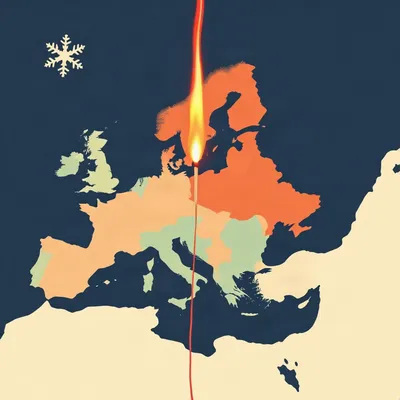
Daniel's asking the question a lot of people are asking right now, and he's asking it in a very specific way. He's pointing at the Strait of Hormuz, saying look, the world's attention has moved on, but the Russia Ukraine war is still grinding away. Zelensky's warning that Russian skies are becoming unsafe for commercial aviation, Russia's hammering Ukraine's energy sector again. And Daniel's real question is this. If the war was such a clear-cut case of aggression, if the causes existed mostly in Vladimir Putin's head, then why hasn't the international community been able to stop it? Why has it been allowed to simmer for years? And is there actually an end in sight?

The "allowed to simmer" part is where I'd push back first. Not because it's wrong, but because it assumes a capacity that wasn't there. The West hasn't been sitting on its hands. It's been doing something worse, which is doing just enough to keep Ukraine in the fight but never enough to let Ukraine win. And there's a difference between those two things.
Just enough to bleed.
Just enough to bleed, exactly. And the numbers bear this out. Western weapons arrived in quantities too small to transform the war but large enough for Russia to study and counter. That's the trap. Every time we sent something, Russia got to examine it, develop countermeasures, and then the next shipment was less effective. Zaluzhnyi, the former Ukrainian commander in chief, said it outright. Russia has developed countermeasures to virtually every NATO weapon system Ukraine has used.
So we weren't just slow. We were running a training program for the Russian military.
That's the uncharitable way to put it, and I think it's not entirely unfair. The charitable version is that Western leaders were terrified of escalation, so they dribbled out systems one at a time. Tanks, then longer range missiles, then fighter jets. Each time there was a debate, each time the debate took months, and each time the system arrived after the window where it would have been decisive had closed.
And meanwhile, the war itself changed shape. That's the part I think people miss when they ask why it's been allowed to simmer. It's not the same war it was in February of twenty twenty-two.
No, it's not. It's become what Zaluzhnyi calls a protracted confrontation of attrition. Frontline advances stopped being the main indicator of success. The real fight is about industrial capacity, economic endurance, who can keep producing drones and missiles and shells longer. Russia controls roughly a fifth of Ukraine's territory, and the gains in twenty twenty-six have been slow. July saw eighty-eight square kilometers change hands, compared to five hundred sixty-four square kilometers in July of twenty twenty-five. The rate of advance is declining.
So the front is basically frozen, and the hinterland is burning.
That's the ORF's framing, and it's accurate. Both sides have shifted to deep strikes. Russia's destroying Ukraine's energy grid, Ukraine's hitting Russian refineries. The longest Ukrainian strike hit a refinery in Omsk, about two and a half thousand kilometers from the border. Russia destroyed something like two hundred fifty petrol stations across Ukrainian regions. Ukraine shut down Lukoil's NORSI refinery, which is Russia's fourth largest and second biggest gasoline producer. This is economic warfare now.
And the airspace thing is new. Zelensky warning airlines that Russian skies are becoming completely dangerous. That's not a military statement, that's a market statement. He's going after the insurers, the carriers, the Chinese and Turkish and Gulf airlines that still fly over Russia.
Air Tanzania just became the first airline to suspend Moscow flights. Their Zanzibar to Moscow flight got diverted on September third because of airspace closures around the Russian capital. That's a small airline, but it's the first crack. If a couple of Gulf carriers follow, the economic pressure on Russia changes qualitatively. Putin's calling it state terrorism, which is rich coming from the man who just struck the SBU headquarters in central Kyiv.
That was today, wasn't it? The SBU building, right opposite St. Sophia's Cathedral.
Twelve injured, first known Russian attack on the SBU's main building. And Zelensky's ordered a symmetrical response. This is all happening while American envoys are literally on their way to Moscow.
That's the contradiction that Daniel's really pointing at, I think. Witkoff and Kushner are expected in Moscow tomorrow or the day after, the first revival of American mediation since the Iran war halted talks in March. And at the exact same moment, both sides are escalating. Ukraine's foreign minister called the SBU strike a major escalation during a renewed push for peace, laying bare Russia's true rejection of diplomacy.
And Putin's response is to say there's still a chance of a peace deal, but you don't negotiate with terrorists. He said that at the SCO summit in Kyrgyzstan on September second, while ordering the Russian military to prepare massive strikes on Ukraine's energy facilities.
So the diplomacy is happening in the same room as the escalation. They're not separate tracks, they're the same track. The escalation is the negotiating position.
And it's why the question of why the West hasn't stopped this is more complicated than it looks. The West tried the sanctions route. Russia adapted, redirected trade to China, settled almost entirely in yuan and roubles. The West tried the military aid route. Russia studied the systems and countered them. The West tried the diplomatic route. The Anchorage formula from the Trump Putin summit in August twenty twenty-five, which would have had Ukraine recognize Russian control over five regions, was rejected by Ukraine and is now firmly dead.
And the sequencing problem. Russia won't accept a ceasefire that freezes the battlefield and lets Ukraine rearm. They want political terms first. Ukraine wants a ceasefire as a first step. Those are incompatible starting positions.
They're not even starting positions. They're ending positions. Both sides are demanding the other side surrender something before talks can even begin. Russia insists Ukraine renounce NATO aspirations. Ukraine wants credible security guarantees against a repeat invasion. Neither side can accept the other's precondition without admitting the war was pointless.
That's the thing about wars of attrition. The longer they go, the harder they are to end, because the sunk cost becomes the argument. You can't stop now, we've lost too much.
And Russia has the resources to keep going. Federal defense spending for twenty twenty-six is twelve point nine trillion roubles, about a hundred fifty-seven billion dollars. That's roughly a third of the state budget. Domestic drone production is thirty thousand units annually, expected to double. Support for what they still call the special military operation is around seventy percent. Russia can fight into twenty twenty-seven and beyond without domestic collapse.
Ukraine's position deteriorates at the margin. That's the phrase that sticks with me. Not catastrophically, not dramatically. At the margin. Which means every month that passes without a breakthrough makes the eventual settlement worse for Ukraine.
And the margin got worse because of the Iran war. That's the part Daniel's prompt hints at with the distraction framing, but it's not just attention. It's physical resources. The American war on Iran drained Patriot interceptor stocks just as Ukraine ran out. On one day in August, all twenty-four Russian ballistic missiles got through Ukraine's defenses. Seventeen people killed.
Zelensky wanted three hundred new Patriot interceptors from Trump. He didn't get them. And licensed Patriot production in Ukraine was taken off the table.
That's the concrete mechanism. It's not that the world looked away, it's that the world's arsenal got redirected. Europe made up some of the lost aid, but interceptors are the bottleneck. You can't just buy them off the shelf in sufficient numbers.
So when Daniel asks why the international community has failed to bring a halt to the conflict, the answer is partly that the international community never had a strategy for Ukrainian victory. It had a strategy for Ukrainian survival. Those are different things.
The Kyiv Post ran an opinion piece that said it plainly. The failure was the absence of a Western strategy for Ukrainian victory. Not the absence of sympathy, not the absence of aid. The absence of a theory of how this ends with Ukraine intact and Russia defeated. Without that theory, every decision becomes incremental, reactive, calibrated to avoid the worst case rather than achieve the best case.
Calibrated to avoid the worst case. That's the foreign policy equivalent of driving by looking in the rearview mirror. You never crash, but you never get anywhere.
And the fear of escalation was always the constraint. The same tragedies of mistiming that cost Ukraine its twenty twenty-two counteroffensive windows. Every time Ukraine could have moved, the weapons arrived six months late. Every time the weapons arrived, the window had closed.
There's another layer here that I think gets underreported. Ukraine's internal politics. Zelensky dismissed his defense minister and his army chief. His term formally ended in May twenty twenty-four, and there have been no elections. Moscow is reportedly preparing terms for a post-Zelensky government. That's not just a military problem, it's a legitimacy problem.
And it's a problem that gets worse the longer the war goes. You can't hold elections during a full-scale invasion, but you also can't maintain democratic legitimacy indefinitely without them. Russia knows this. They're not just fighting the Ukrainian army, they're fighting the Ukrainian state, and the state is under strain.
So where does that leave the end game question? Budanov, the head of Ukraine's presidential office, told the New York Times that talks could resume in late September, but a ceasefire is unlikely before spring twenty twenty-seven.
And that's the optimistic scenario. Marc Champion, writing in Bloomberg, laid out three possibilities. Allies find interceptors and strike Russian missile factories, Ukraine capitulates on the Donbas, or the war grinds into twenty twenty-seven and beyond. He calls the third one the default outcome.
The default outcome is more of the same. That's not a prediction, that's an admission.
The ORF analysts said the conditions for the endgame have not yet ripened. Both sides still hope to turn the tide. The war will end in an armistice or a peace agreement, not total victory. But neither side is ready to accept the armistice terms that would be on offer right now.
And the winter is coming. Russia's likely to launch a fourth winter shelling campaign against Ukraine's energy infrastructure. Ukraine's going to keep hitting Russian refineries. Both sides are betting that the other side's population breaks first.
The problem is that both populations have already absorbed enormous pain without breaking. Russian oil and gas revenues fell to sixty-four percent of their level two years earlier, and the regime is still stable. Ukraine's been living under bombardment for four and a half years, and the country is still fighting. The theory that economic pressure alone will force a settlement isn't supported by the evidence.
It's the mutual assured destruction of energy infrastructure. Both sides can hurt the other, neither side can deliver a knockout blow, and the pain accumulates without changing the strategic picture.
Which brings me back to Daniel's framing. He says the causes existed mostly in the eyes of Vladimir Putin. And legally, that's true. Russia bears responsibility for the invasion. The aggression was naked, the justification was thin. But the analytical literature complicates the story. Frontline's piece emphasizes Russian grievances over NATO expansion and the twenty fourteen Maidan. Hollande and Merkel publicly acknowledged that Minsk Two was intended to buy time to arm Ukraine. Naftali Bennett, the former Israeli prime minister, said the March twenty twenty-two Istanbul talks produced significant concessions from both sides, but Western powers blocked the emerging agreement, choosing to keep striking Putin instead.
That's a claim that deserves scrutiny. Bennett has his own reasons for telling that story. But even if it's true, it doesn't change the fact that Russia invaded. It changes the story of why the war didn't end in the first month.
And that's the distinction Daniel's prompt elides. The question isn't just why the war started, it's why the war didn't stop. Those are different questions with different answers. The war started because Putin chose to invade. The war didn't stop because the West never committed to a strategy for Ukrainian victory, because Russia adapted to sanctions and Western weapons, because the diplomatic preconditions were incompatible, and because the war metastasized into something neither side can end without admitting defeat.
The war started as a lightning operation and became a siege. And sieges end one of two ways. Someone breaks in, or someone starves out. Neither is happening here.
Zaluzhnyi's framing is the one I keep coming back to. The outcome depends on preserving military industrial resources and withstanding economic strain. That's not a military strategy, that's an endurance contest. And in an endurance contest, the question isn't who's right, it's who's left.
The moral clarity of the original aggression doesn't translate into strategic clarity about how to end it. That's the uncomfortable truth. We know who's to blame. We don't know how to make them stop.
And the current moment is the perfect illustration. American envoys are flying to Moscow to revive peace talks. Russia is striking the SBU headquarters in central Kyiv. Ukraine is threatening to close Russian airspace to civilian aviation. Putin says there's a chance of peace. Zelensky says the Russian sky is becoming completely dangerous. Everyone is talking and everyone is shooting.
The diplomacy is the escalation. Every strike is a message about what the terms will be. Every negotiation is a signal about what the other side can't accept. They're not in tension, they're in sync.
And the Iran distraction Daniel mentions, that's the part that makes it worse. Not because it took attention away, but because it took interceptors away. The US war on Iran physically degraded Ukraine's air defense at the worst possible moment. That's not a media narrative, that's a logistics fact.
When Daniel asks why the international community has failed, part of the answer is that the international community has its own wars to fight. The attention economy is real, but the arsenal economy is realer.
The arsenal economy says Ukraine needs interceptors, and the interceptors went to the Persian Gulf. That's not a moral judgment, it's a resource allocation problem. The United States made a choice, and the choice had consequences.
The question is whether the choice is reversible. Can the West surge enough material to Ukraine now, in the fall of twenty twenty-six, to change the trajectory before the next winter campaign?
The evidence from the last four years says no. Not because the capacity doesn't exist, but because the political will doesn't align. Every previous surge decision took months of debate, and by the time the decision was made, the battlefield had moved on. There's no reason to think the pattern changes now.
The default outcome is the grinding continuation. Twenty twenty-seven, twenty twenty-eight, more of the same. Refineries burning, power grids failing, drones over Kyiv and Moscow, and occasional diplomatic visits that produce prisoner exchanges but no settlement.
The prisoner exchanges are real. The Abu Dhabi and Geneva talks in early twenty twenty-six produced exchanges, just no agreement on core issues. So the diplomacy isn't entirely theater. It's just not ending the war.
Budanov said negotiations will lead to something sooner or later. You can't fight your whole life. That's the voice of someone who knows the war can't end in total victory, but can't say what the settlement looks like.
Because the settlement looks like defeat for someone. That's what makes it impossible. Ukraine can't accept Russian control of five regions. Russia can't accept a Ukraine that joins NATO. Those are the positions, and they haven't moved in four years.
The Anchorage formula is dead. The Istanbul formula is dead. The Minsk formula was never alive. Every attempt to find a middle ground has collapsed on the same rock.
The rock is this. Russia wants the war to end with Ukraine as a neutral, demilitarized state that has effectively acknowledged Russian territorial gains. Ukraine wants the war to end with Russian withdrawal and security guarantees that make another invasion impossible. Those are not positions on a spectrum, they're mutually exclusive futures.
Daniel's question about whether there's an end in sight. The honest answer is no, not in the sense of a clear endpoint. There's a process, there are talks, there's a possibility of a ceasefire by spring. But a settlement, a real settlement, that requires one side to accept something it has spent four and a half years refusing to accept.
The longer the war goes, the more each side has invested in not accepting it. The sunk cost problem applies to both Moscow and Kyiv. You can't tell your people that the sacrifices were for a compromise that was available in March twenty twenty-two.
That's the tragedy. The deal that might have been available in Istanbul, whatever its exact terms, is gone. What's left is worse for both sides. And they'll both keep fighting to avoid admitting that.
The war has become its own justification. Russia fights because it can't stop without losing everything it claims to have gained. Ukraine fights because it can't stop without losing everything it has left. The original causes, whatever they were, are now buried under four and a half years of accumulated loss.
The world watches, and sends just enough to keep the bleeding going, and calls it support.
That's the harshest version of the truth. The West's policy has been to ensure Ukraine doesn't lose without committing to Ukraine winning. It's a holding pattern. And holding patterns can last a long time.
The Strait of Hormuz will get resolved, or it won't, and the Russia Ukraine war will still be there. Not because anyone forgot about it, but because no one knows how to end it.
The people who know how to end it, the Ukrainians and the Russians, can't agree on what ending it means. So they keep fighting, and the rest of us keep watching, and the refineries keep burning.
There's a line from the ORF analysis that sticks with me. The conditions for the endgame have not yet ripened. Ripened. Like it's a fruit that needs to fall on its own. The implication being that no external force can make it happen before its time.
That's the uncomfortable conclusion. The international community hasn't failed to halt the war because it didn't try. It failed because the war is structured to resist halting. The incentives on both sides point toward continuation, not settlement. Until those incentives change, the war continues.
The incentives change when one side's capacity to continue runs out. Russia's capacity is large but not infinite. Ukraine's capacity depends on Western support that is reliable but insufficient. The question is which runs out first.
The Foreign Affairs piece argued that a weaker Russia keeps fighting. That's the paradox. Russia is economically diminished, diplomatically isolated, militarily degraded. And it keeps fighting. Because the alternative to fighting is accepting a defeat that the regime can't survive.
The war continues not because Russia is strong, but because Russia is weak. The weakness makes surrender impossible.
Ukraine's in a mirror image. Ukraine can't stop fighting because stopping means accepting the loss of a fifth of its territory and the effective subordination of what remains. The weakness makes surrender impossible.
Two sides, both too weak to win, both too invested to stop. That's the war Daniel's asking about.
The end, when it comes, will look less like a victory and more like an exhaustion. One side will simply run out of the ability to continue, and the settlement will reflect that exhaustion. Not justice, not victory. Just the point where the cost of continuing exceeds the cost of stopping.
The question is whether that point comes before or after the next winter.

They're right about the holding pattern.
I've been doing something like this for eleven years. The holding pattern.
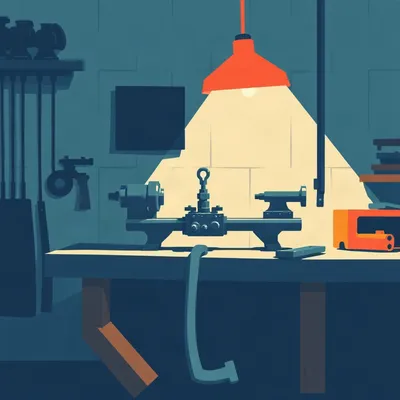
I've got a setup in my flat. Three old servers, a couple of routers, a stack of hard drives I found at a liquidation sale in Haifa. It's a mess. Cables everywhere. My wife won't go in the spare room.
The whole thing runs a monitoring station. I track power grid frequencies. Ukraine, Russia, the Baltics. You can see the strikes happen in real time. The frequency dips, then the grid operators pull it back. Fifty hertz is the target. When the missiles hit, it drops to forty-nine point eight, forty-nine point seven. Then it recovers.
I've been doing it since the first winter campaign. Twenty twenty-two. I had a job then, working for an electrical supply company in Ashdod. Learned about grid frequency from a Ukrainian engineer who came over after the invasion. He said the grid is the battlefield you can't see.
I set up the monitoring. The servers run a program that samples the frequency every second and logs it. When there's a big drop, it sends me a message. I've got eleven years of data. Well, four and a half. But it feels like eleven.
The thing is, the grid always recovers. Every time. The Russians hit it, the frequency dips, and the Ukrainians bring it back. Sometimes it takes an hour, sometimes a day. But it always comes back.
That's the holding pattern. The strikes are real, the damage is real, but the system absorbs it. Both systems absorb it. The Russian grid takes hits too, and it recovers. The whole thing is designed to keep going.
I don't know how it ends. But I know the grid will keep recovering until someone decides it's not worth hitting anymore. Or until the people who fix it can't fix it fast enough.
The grid as the real indicator. That's actually a useful way to think about it. The military maps show territory, but the frequency data shows resilience. And the resilience is the thing that determines how long this can go.
Eleven years of data, four and a half years of war. The ratio is about right. The war feels longer than it is because it's been so grinding.
The servers are old. One of them makes a noise like a dying refrigerator. But they keep running. That's the point, I think.
The point being that systems are built to absorb punishment, and the punishment has to exceed the absorption capacity before anything breaks. That's true for power grids, and it's true for countries.
Neither country has reached that point. That's what the frequency data says, if you know how to read it.
The Ukrainian engineer said the same thing. He said the grid is the last thing to break. If the grid breaks, everything breaks. So they protect it, and they fix it, and they keep going.
He went back to Ukraine in twenty twenty-four. I don't know what happened to him. The monitoring station doesn't tell me that.
The human cost doesn't show up in the frequency data. That's the limitation.
But the frequency data tells you something the casualty numbers don't. It tells you whether the system is still functioning. And the answer, for both sides, is yes. The systems are still functioning. The war hasn't broken them yet.
That's why the end isn't in sight. The systems are too resilient. The grids recover, the armies keep fighting, the populations keep enduring. The war is designed to continue.
Which means the answer to Daniel's question is not satisfying. The war has been allowed to simmer because it's structured to simmer. The international community didn't fail to stop it so much as discovered that stopping it was never within its power.
The power to stop a war of attrition doesn't exist. You can only outlast it, or wait for one side to collapse. Neither is happening.
The talks in Moscow this week won't change that. They'll produce a statement, maybe a prisoner exchange, maybe a temporary pause in the energy strikes. Then the winter comes, and the grid dips again, and the monitoring stations log the damage.
The holding pattern continues.
Which leaves the forward-looking question. If the default is continuation, what changes the default? What breaks the pattern?
The only thing that breaks a holding pattern is an external shock. A change in Russian domestic politics, a collapse in Western support, a catastrophic failure on one side's energy grid. Something that resets the calculation.
None of those are predictable. So the honest forecast is more of the same, with the possibility of sudden change that nobody can anticipate.
That's the end of the answer. The war continues until something breaks, and nobody knows what will break or when.
Thanks to Hilbert Flumingtop for producing, as always. The monitoring station is a good reminder that the war is happening in real time, even when the headlines move on.
This has been My Weird Prompts. Email us at show at my weird prompts dot com if you have a question you want us to dig into. We'll be back soon.