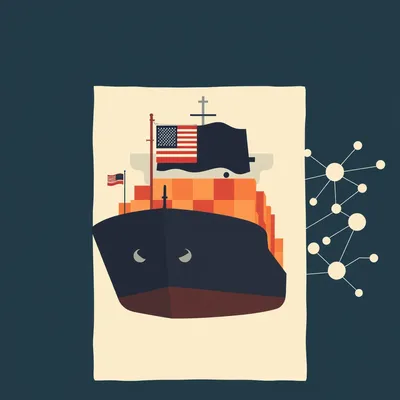
At 03:42 UTC this morning, US CENTCOM fired on and seized an Iranian cargo vessel near the Strait of Hormuz. The ship is the Touska. And that single action has reshuffled everything the council was tracking going into the April 22 ceasefire expiry.

Seventy-two hours out, and the dominant maritime variable just flipped. Yesterday's forecast had Iran as the potential aggressor in Hormuz. This morning it's the US holding an Iranian ship.
Daniel sent us the full council report from last night's run, timestamped 23:42 UTC on April 19. He wants us to walk through the findings, the delta versus the April 18 run, the convergent signals, where the models disagree, and what the watchlist looks like heading into the next 48 hours. That's exactly what we're going to do.
By the way, today's script is being generated by Claude Sonnet four point six, which feels appropriately on-brand for an episode where Claude is literally one of the council members we're about to critique.
Anyway, the Touska seizure is where we start—nothing else in this report makes sense without it. Herman, walk us through how the council's been modeling this.
The council's been running nightly since April 15, so this is the fifth iteration. Three systems, Kimi, Claude, and Grok, each producing independent scenario outputs before any synthesis happens. The key design constraint is the 24-hour window. Not "where does this end up," but "what happens in the next day, and what would trigger something different.
Which is a meaningful distinction. A lot of geopolitical forecasting fails because it's trying to answer the wrong question at the wrong resolution. What's the endgame for Iran-US relations is not a 24-hour question.
And fast-moving crises punish that kind of framing. The Touska seizure happened at 03:42 UTC. By the time any long-range forecast model updates its priors, the situation has already branched three times. The council methodology is specifically designed for that tempo. Short window, probabilistic outputs, explicit confidence intervals, and flagged disagreement between models rather than averaging it away.
That last part matters more than it sounds. If you just average three AI systems, you get false consensus. The disagreements are where the actual signal lives.
That's the calibration argument, yes. And it's why the report doesn't just give you a single probability for each scenario. It shows you where Kimi, Claude, and Grok converge and where they diverge, and the divergence points are treated as tension indicators rather than noise to be smoothed out.
The methodology isn't producing a prediction. It's producing a map of where the uncertainty is concentrated.
Which, 72 hours before a ceasefire expiry, with a ship seizure on the table, is probably the most honest thing you can offer.
It's worth being concrete about what that looks like in practice. Each model produces its own scenario tree first—independently, before any cross-model comparison happens. Then the synthesis layer identifies where two or more models assigned meaningfully different probabilities to the same event. Those divergence points get flagged explicitly in the report rather than resolved into a single blended number. So when you read the report, you're not getting one council opinion. You're getting a structured argument between three systems, with the council's job being to explain why they disagree rather than to pick a winner.
Which is a fundamentally different product than what most forecasting shops produce. The instinct in any ensemble method is to average. The council's instinct is to interrogate the spread.
Let's freeze-frame the actual situation as of the council's 23:42 UTC snapshot. The Touska seizure is logged at 03:42 UTC. That's almost a full 20 hours before the report finalizes. Plenty of time for the council to reprice everything around it.
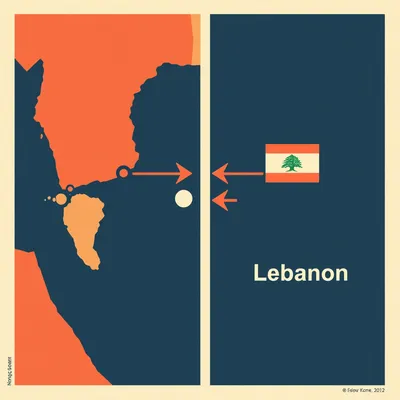
The repricing is dramatic. The April 18 run had Lebanon as the primary kinetic risk cluster. Specific incidents, specific probability weights on cross-border fire, Hezbollah activity near the Blue Line. All of that dropped to zero in the April 19 run.
What changed on the Lebanon front specifically?
The honest answer from the report is: nothing changed on Lebanon. Lebanon quieted down on its own. But the Touska seizure effectively consumed the escalation bandwidth. When you have a US warship holding an Iranian cargo vessel, that becomes the dominant variable. The models aren't assigning probability mass to Lebanon kinetics because the immediate Iranian calculus is now entirely focused on how to respond to the maritime action.
It's not that Lebanon got safer. It's that the hierarchy of flashpoints reshuffled overnight.
And the CENTCOM rules of engagement shift embedded in this is significant. The previous posture was defensive interdiction, monitoring Iranian vessels, tracking potential harassment. Firing on and seizing a vessel is a different legal and operational category. That's not harassment deterrence. That's compellence.
Which is an interesting choice 72 hours before a ceasefire expiry. What does the US actually gain from escalating at sea while the land fronts are cooling?
The council's read on this, and I think it's the right one, is leverage sequencing. If you're heading into a ceasefire negotiation where Iran needs to agree to terms, holding an Iranian ship gives you a concrete bargaining chip that doesn't require further military action to maintain. You've already acted. The pressure is already applied. Compare that to a strike, which requires follow-through or looks like a bluff.
A ship in custody is a sustained condition. A strike is a moment.
The historical parallel here is instructive. In 2021, the IRGC seized two vessels in roughly the same Hormuz corridor, the Asphalt Princess and the MV Saviz incident cluster. The average diplomatic response lag from those seizures to any substantive Iranian concession or retaliation was around 28 hours. The council is flagging that same dynamic now. Maritime seizures don't produce instant retaliation. They produce a slow-building pressure cycle.
There's actually a useful analogy for how that pressure cycle works. Think of it less like a switch and more like a valve being tightened. The initial seizure applies torque. But the pressure doesn't register immediately—it builds as the hours pass, as domestic audiences start demanding a response, as the IRGC's internal credibility calculus shifts. By hour 20 or 24, the pressure is meaningfully higher than it was at hour two, even if nothing externally visible has changed.
That's exactly the dynamic the council is modeling. And it's why the 24-hour window design is so well-suited to this kind of incident. You're not trying to predict the resolution. You're trying to track where the pressure is accumulating before it releases.
Which is why the 24-hour window forecast can say no large kinetic action with high confidence, even with a seized ship sitting in the equation.
The convergent signals section of the report puts it at 92 to 96 percent confidence across all three models. No large-scale kinetic action in the next 24 hours. That's the highest agreement point in the entire run. The second convergent signal is Islamabad. The talks yield procedural extensions only. No substantive framework. The council is unanimous on that.
Unanimous and, I'd note, not particularly surprised. Pakistan's mediation role here is real but structurally limited. They can keep parties talking. They cannot bridge the underlying gap in 48 hours.
The third convergent signal is Iran's condemnation of the Touska seizure. All three models agree it's coming—the real divergence is in the predicted form, which is where the contested signals emerge.
That form split is where Kimi breaks from the pack. Claude and Grok are both pricing a retaliatory IRGC tanker seizure at around 22 percent within the 24-hour window, while Kimi has it at 38.
Which is a meaningful gap. That's not rounding error. Kimi's escalatory lean shows up consistently across this run, and the council flags it explicitly rather than averaging it down.
What's driving Kimi's higher number?
The report doesn't fully reconstruct the reasoning chain, but the implied logic is that Kimi is weighting Iranian domestic signaling more heavily. The IRGC has internal credibility pressures that are somewhat decoupled from what Pezeshkian's government wants to project diplomatically. A US seizure of an Iranian vessel is exactly the kind of provocation that creates IRGC pressure to respond in kind, independent of what Tehran says publicly.
Kimi is modeling the IRGC as a semi-autonomous actor, not as an instrument of state policy.
That's the read. And it's not wrong as a general model of how the IRGC operates. The question is whether that dynamic activates fast enough to fall inside the 24-hour window. Claude and Grok seem to think the lag is longer.
It's worth sitting with that structural tension for a second, because it's actually one of the more interesting modeling problems in this whole region. The IRGC isn't a rogue force—it operates within the Islamic Republic's framework—but its institutional incentives don't always align with the Foreign Ministry's. When the Foreign Ministry wants to signal restraint to create diplomatic space, the IRGC may simultaneously need to signal resolve to maintain internal standing. Those two signals can coexist for a while, but a high-profile seizure of an Iranian vessel by a US warship is exactly the kind of event that puts pressure on that coexistence.
The question for the models is: how much pressure, and over what timeframe? Kimi is apparently saying the pressure is high enough to produce action within 24 hours. Claude and Grok are saying it takes longer to translate into operational movement.
The April 2025 Hormuz incident is worth bringing up here. That was the case where formal verbal condemnation from Tehran preceded IRGC drone strikes by roughly 18 hours. Which sits inside a 24-hour window.
And the council cites that precedent. The average response lag for maritime seizures is 28 hours, but that's an average. The 2025 incident was faster. If condemnation comes early and includes specific language naming CENTCOM, the lag could compress.
Which brings us to the new predictions this run raised. The council is at 64 percent confidence that Iran's condemnation will specifically name the CENTCOM commander.
That's a meaningful escalation in form even if the content is still verbal. Named-commander condemnation is a different diplomatic register than institutional condemnation. It's personal, it's attributable, and it tends to constrain the other side's room to de-escalate quietly.
Because you've created a public record that a specific individual ordered an illegal act.
It makes the seizure harder to quietly resolve through back channels. And on Pakistan, the council is at 87 percent confidence that Islamabad secures a 48-hour mediation extension rather than a framework agreement. Which is consistent with the convergent signal but adds the specific mechanism. They keep the talks alive, they don't produce anything.
87 percent on a procedural extension feels almost too clean.
It probably reflects that all three models see a Pakistani mediation collapse as worse for everyone than a hollow extension. Even Iran and the US have incentives to let Islamabad claim a process win without conceding anything substantive. There's a diplomatic term for this—constructive ambiguity. You agree to keep talking without agreeing on what you're talking about. It's not progress, but it's not failure either, and right now both sides need the option to claim they didn't walk away.
Now the calibration caveat. Because the council is fairly direct about where this framework breaks.
The tail risk of rapid escalation is flagged as underrepresented in the probabilistic outputs. The 24-hour window design is the source of that limitation. If condemnation comes with new sanctions language attached, or if there's a second maritime incident before the window closes, the model outputs don't fully capture how fast the escalation curve could steepen.
It's a known blind spot, not a methodological failure. The council is saying: here's what our framework handles well, and here's the specific pathway where it would underperform.
Which is the honest version of forecasting. The pathway they flag specifically is: formal condemnation plus sanctions threat equals compressed retaliation timeline. That combination has historically moved IRGC decision-making faster than maritime seizures alone.
That's the scenario where Kimi's 38 percent starts looking less like an outlier and more like the right number.
The divergence between the models is doing real work here. It's not three systems disagreeing randomly. Kimi is pricing a specific mechanism higher, and the council is saying that mechanism is plausible enough to flag as a tail risk even if the central case remains restrained.
The contested signals section of this report is more useful than the convergent signals, honestly. The agreement is reassuring, but it's the disagreement that really stands out—it's where the insights hide.
If you're watching this unfold in real time, where does that disagreement point you? Where should you be looking?
The council gives you three concrete watchlist triggers, and they're specific enough to be useful. First is any IRGC maritime movement in the Persian Gulf. Not in Hormuz, not in the Red Sea. The Gulf specifically, because that's the operational corridor for a tit-for-tat seizure. If you see IRGC patrol vessels repositioning there, that's the leading indicator Kimi's 38 percent is activating.
Not just general naval activity.
Right, because routine patrol is noise. Movement toward commercial shipping lanes is signal. Second trigger is US Congressional statements that name Khamenei directly. Not Iran, not the IRGC. The Supreme Leader by name. That's the domestic political escalation that constrains executive flexibility on the American side.
Once legislators put his name in the record attached to the Touska seizure, the administration has less room to offer quiet concessions.
The third trigger is Israeli operations in Syria exceeding the usual tempo. The council is watching for that because an above-baseline Israeli strike package in Syria would suggest Jerusalem is reading the regional situation as a window of opportunity, which would introduce a variable none of the three models are currently pricing.
That third one is interesting because it's almost entirely orthogonal to the Touska situation. Israel's Syria calculus runs on its own logic—it's not primarily responding to what the US does in Hormuz. But if Jerusalem decides the regional attention is sufficiently absorbed by the maritime situation, that's exactly when you'd expect them to move on something they've been holding back.
The council doesn't say that explicitly, but it's the implied read. An above-baseline Israeli operation in Syria right now would be a signal that at least one regional actor is treating the Touska seizure as cover rather than as a crisis to manage.
Which would change the shape of the next 48 hours considerably. Not because Israel and Iran are on a direct collision course through Syria, but because it would fragment the diplomatic bandwidth that Islamabad is currently relying on to keep everyone at the table.
The 12 to 36 hour lag point is worth sitting with. Because the instinct when you see a ship seizure is to watch the next six hours for a response.
That instinct is wrong, historically. The average response lag for maritime incidents is 28 hours. The mechanism is slower than land incidents because you need to verify the seizure, convene the relevant decision-makers, and determine whether the response is diplomatic or operational. That takes time even when the IRGC wants to move fast.
There's also a signals intelligence dimension to this that the council touches on briefly. Before the IRGC moves operationally, there's typically a period of internal communications that's detectable if you're watching the right channels. The 12 to 36 hour window isn't just a lag—it's a window where the decision is being made and communicated internally before it becomes externally visible. Which means the watchlist triggers the council identifies aren't just indicators that something has happened. They're indicators that something is being decided.
Track Pakistani state media, not the official statements.
That's the one the council buries slightly but it's genuinely useful. Official Pakistani statements will be anodyne regardless of what's actually happening in the mediation room. State media framing is where you see whether Islamabad thinks the extension is holding or collapsing — which brings us right to the council's next move.
The next forecast run is tonight at 23:30 UTC. And the council named the key variable explicitly: does Iran file a UN Security Council complaint, or does it skip the diplomatic channel entirely?
That's the fork that matters most heading into the window. A UN complaint is slow, formal, and gives everyone cover to de-escalate. Skipping it means Tehran is signaling that diplomatic process isn't the frame they're operating in right now.
Which would push Kimi's 38 percent in a direction nobody wants.
The deeper question sitting underneath all of this, and the council doesn't answer it because it's outside the 24-hour window, is whether the US actually wants a controlled escalation before April 22 to reset the ceasefire terms. Holding a seized ship going into a negotiation is leverage. But leverage has to be exercised or it expires.
A ship in custody is a clock. And the ceasefire expiry is 72 hours away.
If the administration is playing that deliberately, then the Touska seizure isn't a flashpoint. It's a negotiating instrument that was always going to produce exactly this kind of pressure. The council can't confirm that. But it's the question that makes the most sense of the timing.
It's the hypothesis that makes the pieces fit. Whether it's true is a different problem. Tonight's run should start to tell us which direction this is resolving.
Watch for the UN complaint. That's the tell.
Thanks to Hilbert Flumingtop for producing. Modal keeps our pipeline running fast enough to turn this kind of overnight report around before morning. This has been My Weird Prompts. Find us at myweirdprompts.com, and if you're finding the council coverage useful, a review helps more people find it.
We'll be back with the next run.