
Page 184 of 280
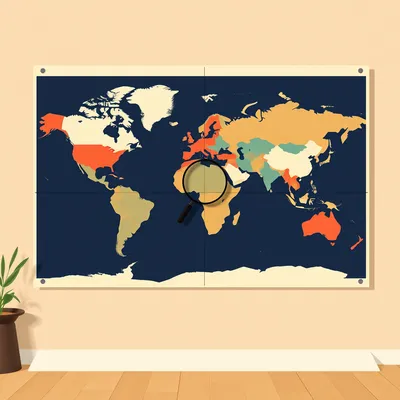
#2000: Why Intelligence Agencies Slice the World into Desks
How the CIA and State Dept slice 195 countries into bureaucratic boxes—and why that creates dangerous seams.

#1999: Why Anti-Zionist Jews Live in Jerusalem
They reject Israel’s existence on religious grounds, yet live in its heart. Discover the theology of the Three Oaths.

#1998: Why Your Brain Lies About Where the Bomb Is
Why your eyes and ears lie to you during missile strikes—and how to count seconds to find the real danger.
#1997: The Long Peace Is Over (Or Is It?)
The data says we’re living in the most peaceful era ever, but it sure doesn’t feel like it.

#1996: Why Leaders Broadcast Victory While Citizens Hear Sirens
A gap opens between official statements and reality, as curated videos clash with live data streams.

#1995: The Human Curriculum Machine
The current education standard isn't neutral—it's a political machine.
#1994: Why Can't AI Admit When It's Guessing?
Enterprise AI now auto-filters low-confidence claims, but do these self-reported scores actually mean anything?
#1993: Hiding the Kitchen: Why AI Shouldn't Show Its Work
Why single-model chatbots fail at complex tasks—and how multi-agent swarms solve it.
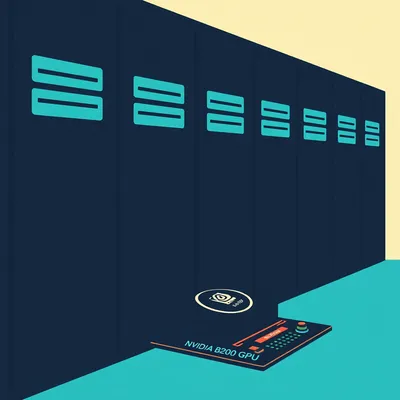
#1992: The Sovereign Compute Shift: Owning vs. Renting AI Iron
Israel is building a sovereign AI supercomputer with 4,000 Nvidia B200 GPUs to keep startups local.
#1991: Why 20 Clean Qubits Beat 1000 Noisy Ones
Israel just unveiled its first 20-qubit superconducting quantum computer, and it's not about size—it's about precision and control.

#1990: Education’s Robot Problem: Standardization vs. Self-Direction
AI is forcing a clash between rigid curricula and self-directed learning. We explore the middle ground.
#1989: Your Cloud Photos Vanish If You Miss a $5 Bill
Is your data safe in the cloud, or is it one missed payment away from oblivion?

#1988: The Eternal Storage That Can't Escape the Lab
Quartz glass promises 10,000-year data storage, but can it scale before 180 zettabytes make it obsolete?

#1987: Can You Ever Quit Your Personal AI?
Your AI knows your workflow, but can you ever leave? We explore the lock-in risks of personal AI agents.
#1986: Desk Robots: Privacy, Power, or Annoyance?
These AI companions sit on your desk, watching your posture and listening in—so how do they protect your privacy while actually being useful?
#1985: AI Tutors vs. Human Error: Who Do You Trust?
AI gets flak for hallucinations, but humans misremember 40% of facts. Why the double standard?

#1984: The Suspicion Gap: When Fluency Breeds Distrust
Why fluency in Arabic can make you a suspect in the Israeli-Palestinian conflict.
#1983: Why Your Digital Photos Are Slowly Disappearing
Physical paper from the 1700s is more durable than a Word doc from 1994. Here's why digital data is fragile and how archivists fight bit rot.
#1982: The Impossible Task of Controlling a Living Language
How a government board tries to standardize Hebrew while the public invents words on the fly.
#1981: The Brutal Triage of Saving Art in a War Zone
From bomb-proof vaults to empty frames, discover the high-stakes logistics of saving history under fire.