Daniel's been ordering concrete screws online because he couldn't find them in the stores here, and he's annoyed to discover they still need a pre-drilled hole. He thought the whole point of an anchorless screw was that it drills its own way in. He's also asking how to match the hole to the screw, and what the drywall equivalents are — the self-drilling anchors that are supposed to make the whole business easier.

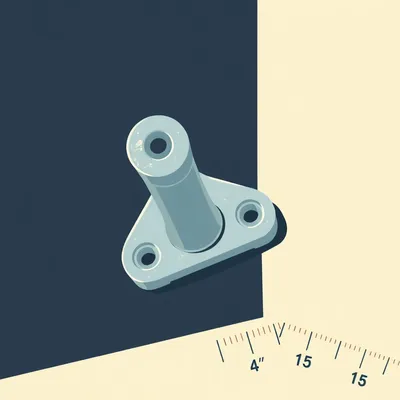
Concrete screws absolutely need a pilot hole. The screw isn't a drill bit. What it does is cut threads into the sides of the hole as you drive it, and that's what gives it the holding power. The hole has to be there first, and it has to be the right size, or you're just making dust and stripping the screw.
So the cult following is for a product that still makes you drill.
The cult following is because once you've drilled the hole, the screw itself is doing the work of a much more complicated anchor system. No plastic sleeve, no expansion wedge, no waiting for adhesive to cure. You drill, you drive, you hang the thing. And the load ratings are impressive for what they are. A single quarter-inch concrete screw in solid concrete can hold on the order of a few hundred pounds in tension. Not that I'd hang a water heater off one, but for shelving, brackets, conduit, cable trays — it's the right tool.
Let's talk about matching the hole to the screw, because that's where Daniel says he's feeling stupid. What's the actual rule?
It depends on the brand, and that's the annoying part. A Tapcon, which is the name everyone knows, uses a hole that's slightly smaller than the nominal screw diameter. A three-sixteenths inch Tapcon takes a five-thirty-seconds inch bit. A quarter-inch Tapcon takes a three-sixteenths bit. But the European brands — Fischer, for example — often specify a hole that matches the screw diameter exactly, because their thread geometry is different.
So you can't just grab a bit that looks about right.
Correct. And the bit type matters too. Concrete screws need a carbide-tipped masonry bit, and you want to drill with a hammer drill or a rotary hammer. A standard twist bit will just burn up, and a non-hammer drill will take forever and wander. The hole depth also matters. You want the hole deeper than the screw's embedment depth by about a quarter inch, so the dust has somewhere to go when you drive the screw. If you drill exactly to length, the screw bottoms out on the dust, and you either strip the head or snap the screw.
That's the kind of detail that doesn't make it onto the box.
It's the kind of detail that's in the fine print of the technical data sheet, which nobody reads until they've already snapped two screws in a row.
Daniel said he couldn't find these in the DIY stores here. Why is that?
Israeli construction is almost entirely concrete and block, so you'd think they'd be everywhere. But the local market has standardized on nylon anchors and what they call a "shpitz" — the metal pin you hammer into the plastic sleeve. It's cheap, it's forgiving of sloppy holes, and every contractor knows it. Concrete screws are more of a specialty item, and the stores here tend to stock what the contractors buy, not what the hobbyist wants to experiment with.
So ordering online was the right move.
It was, and he'll probably get better pricing anyway. The other thing about the Israeli market is that the concrete here is often quite hard — Jerusalem stone aggregate, high compressive strength. That's actually the ideal case for concrete screws. They excel in hard, dense material. In soft block or old brick, they're less reliable, because the threads don't bite as well.
Let me make sure I understand the physics of why these hold. You drill a hole, you drive a screw that cuts threads into the concrete. The concrete is brittle. How does it not just crumble?
That's the clever part. The screw is harder than the concrete, and the threads are designed with a specific geometry — usually a high-low thread pattern. The high threads cut the channel, the low threads compact the dust and debris into the gaps. The result is a mechanical interlock that's actually stronger than the concrete around it. When these fail, it's usually because the concrete itself spalls or cracks, not because the screw pulled out.
So the failure mode is the wall, not the fastener.
Which is why you want to keep a minimum distance from the edge of the concrete. The general rule is about four inches from any edge, and at least ten times the screw diameter from the next anchor. If you crowd the edge, the concrete can blow out.
Daniel mentioned repairing the holes afterwards. How do you even repair a hole that's had a concrete screw in it?
That's one of the downsides. With a nylon anchor, you can pull the sleeve out and you're left with a clean hole that's easy to patch. With a concrete screw, you've cut threads into the concrete. When you remove the screw, you're left with a threaded hole. You can't just spackle over it the same way. You'd want to fill it with a proper concrete patching compound, or an epoxy filler, and then paint over. It's more work to undo.
So the thing that makes it hold so well is the same thing that makes it annoying to remove.
That's the trade. Daniel said he negotiated permission to drill as long as he repairs the holes. If he's planning to move out eventually, he might want to think about which walls get concrete screws and which get something more reversible.
Let's get to the drywall side, because he asked about the self-drilling anchors. Those are a different animal entirely.
Completely different. Drywall anchors are designed for a material that's basically compressed gypsum between two layers of paper. It has almost no structural strength in tension. A self-drilling drywall anchor is a plastic or metal sleeve with a sharp point and coarse threads on the outside. You drive it into the drywall with a screwdriver or a drill, and it cuts its own hole. Then you drive a screw into the center of the anchor, which expands it or locks it behind the drywall.
So in that case, the anchor does drill its own hole.
It does, and that's probably where Daniel got the impression that concrete screws work the same way. The self-drilling drywall anchor is drill-free. The catch is that it only works in drywall. Try to drive one of those into concrete and it'll just spin and melt.
The two products sound like they should be cousins, but they're doing opposite things.
Right. The drywall anchor is a sacrificial sleeve that provides a threaded socket in a material that can't hold threads. The concrete screw is a hardened fastener that cuts threads into a material that can hold them, but can't be penetrated without a pilot hole.
What are the good drywall options if you want to avoid the plastic sleeve?
There are a few. The self-drilling metal anchors — sometimes called E-Z Ancor or similar — are zinc or steel, and they hold quite well for medium loads. For heavier loads, you've got toggle bolts, which are still the gold standard for anything really heavy. A toggle bolt folds flat, goes through a bigger hole, and then springs open behind the drywall. The load is spread across a much larger area.
And the toggle bolt still needs a pre-drilled hole.
Yes, and a bigger one. So even in drywall, the truly drill-free options are limited to light and medium duty. If you're hanging a mirror or a small shelf, the self-drilling anchor is fine. If you're hanging a heavy cabinet, you're drilling holes.
Daniel's instinct about nylon anchors — the plastic thing in the wall — is that a reasonable objection?
It's aesthetically reasonable, but structurally, nylon anchors in concrete are actually quite good. The plastic sleeve expands against the walls of the hole, and the screw wedges it tight. They're cheap, they work, and they've been the standard for decades. The real downside is that they don't perform as well in tension as a concrete screw, and they can loosen over time if there's vibration or temperature cycling.
So the plastic anchor isn't wrong, it's just not as elegant.
That's a fair way to put it. The concrete screw is the premium solution for when you want maximum hold and a clean installation. The nylon anchor is the workhorse. Both have their place.
What about matching screw length to the hole depth? Daniel asked about that specifically.
The embedment depth is what matters. For a concrete screw, you want at least an inch of the screw embedded in the concrete, and ideally an inch and a quarter to an inch and a half. The screw has to be long enough to account for the thickness of whatever you're mounting, plus the embedment depth. So if you're mounting a bracket that's a quarter inch thick, and you want an inch and a quarter of embedment, you need a screw that's at least an inch and a half long. And the hole needs to be deeper than the embedment by that quarter inch for dust clearance.
So the hole is longer than the screw's embedment, but not longer than the screw itself.
Right. You drill the hole to the full depth you want, but the screw only goes in as far as its threads. The extra space at the bottom is for the dust. If you drill too shallow, the screw bottoms out. If you drill too deep, you've just wasted effort and possibly hit rebar.
Speaking of rebar — that's a real risk in Israeli concrete.
It is, and it's one of the most frustrating things about drilling here. You'll be going along fine, and then the bit hits metal and stops. If you hit rebar, you don't want to keep pushing. Pull out, patch the hole, and move over an inch. Concrete screws are especially unforgiving in that situation, because you've already committed to a specific diameter and depth.
The rebar problem is the same for any anchor, though.
It is, but with a nylon anchor you can sometimes get away with a slightly shallower hole. With a concrete screw, the embedment depth is more critical for the rated load.
Let's talk about the cult following for a minute, because Daniel mentioned it. Why do people get evangelical about these things?
I think it's the same reason people get evangelical about any tool that does one thing really well. You spend years fumbling with plastic anchors and hammering in shpitzim, and then someone hands you a concrete screw, and it just works. You drill a hole, you drive a screw, and it's solid. No expansion, no adhesive, no waiting. It feels like cheating.
It's the instant gratification of a tool that respects your time.
And there's a certain satisfaction in the engineering. You're cutting threads into stone. That's a neat trick.
Does the brand matter?
It does, more than you'd think. Tapcon is the big name in the States, and their sizing charts are well documented. Fischer and Würth are the big European names, and they have their own sizing systems. The key is to buy the matching bit. Most brands sell a bit with the screws, or specify the exact diameter. Don't mix and match. A Tapcon screw in a Fischer-sized hole is going to be a bad day.
So the screw and the bit are a matched set.
Treat them that way. And buy a few extra screws, because even with the right hole, you'll occasionally hit a hard aggregate and snap one. They're not expensive, and it's better to have spares than to make another trip.
What about driving them? Is a regular drill enough?
You want an impact driver if you have one. The impact action helps seat the screw in hard concrete. A regular drill will work, but you'll feel it struggling. And go slow at the end. The last turn or two is where the screw seats, and if you over-torque it, you'll strip the threads you just cut.
That's a frustrating way to end a project.
It's the classic mistake. People get the screw almost all the way in, then give it one more squeeze and ruin the hole. Then they have to move over and drill a new one.
Let's talk about the drywall self-drilling anchors a bit more, because Daniel specifically asked about those as the easier option. Are they actually easier?
They are, for light to medium loads. You take the anchor, you put it on the end of your driver, and you drive it into the drywall. It cuts its own hole. Then you drive the screw into the anchor. No pre-drilling, no hammering, no fumbling with a sleeve that falls into the wall cavity.
What's the catch?
The catch is that they're only as good as the drywall they're in. If the drywall is old, soft, or damp, the anchor can spin. And if you overload them, they pull out and leave a bigger hole than a traditional anchor would. They're also not great in plaster, which is common in older Israeli apartments. Plaster is harder and more brittle than drywall.
So if Daniel has drywall, the self-drilling anchors are a good option. If he has plaster, he's back to drilling.
And if he has concrete, he's back to concrete screws. The material dictates the fastener. That's the fundamental rule.
Let me ask about the repair angle again, because Daniel said he negotiated permission to drill as long as he repairs the holes. What's the best way to repair a hole from a self-drilling drywall anchor?
Those are actually easy to repair. You can either leave the anchor in place and spackle over it, or you can remove it and fill the hole with joint compound. The hole is usually small enough that one pass of spackle, a light sand, and paint is all it takes.
And the concrete screw hole?
More involved, as we said. You need a patching compound that's designed for concrete, and you want to fill the hole completely, not just skim the surface. If there's a threaded hole, the patch material needs to key into it. Epoxy fillers work well for this.
So if Daniel is planning to move out, he might want to think about which walls get the premium treatment.
That's a good way to think about it. Concrete screws for the things he really wants to stay up, and maybe nylon anchors for the things he might move around.
What about the cost difference? Is it significant?
Concrete screws are more expensive per unit than nylon anchors, but not dramatically. A box of fifty Tapcons might cost the equivalent of maybe forty or fifty shekels, depending on where you buy. Nylon anchors are practically free. But the time savings with concrete screws can be worth it.
Time savings? You still have to drill the hole.
You do, but you don't have to hammer in the sleeve, drive the screw, and then discover the sleeve spun and you need to start over. With a concrete screw, once the hole is drilled, the rest is one step.
That's a fair point. The nylon anchor has more steps, more chances to go wrong.
And more chances to feel like you're wrestling with a piece of plastic that's doing its best to defeat you.
Daniel's instinct about the plastic thing in the wall — he said it just doesn't make sense to him. I think what he's sensing is that the nylon anchor feels like a hack. It's a workaround, not a solution.
And the concrete screw feels like the real thing. You're fastening directly to the concrete. There's a certain honesty to it.
Let's talk about the specific sizes Daniel should be looking for. He's in Israel, so he's dealing with metric. What are the common metric sizes for concrete screws?
The common metric diameters are six millimeters and eight millimeters. A six millimeter screw is good for light to medium loads — shelves, brackets, conduit. An eight millimeter screw is for heavier things — cabinets, larger shelving units, maybe a TV mount. The length depends on the application, but for most DIY work, something in the forty to sixty millimeter range is versatile.
And the matching bit for a six millimeter screw?
Usually a six millimeter bit for the European brands, or slightly smaller for Tapcon-style. The key is to check the manufacturer's spec. And make sure the bit is a proper masonry bit with a carbide tip.
What about the drill itself? Does Daniel need a hammer drill or a rotary hammer?
For six millimeter holes in concrete, a hammer drill is fine. For eight millimeter and up, a rotary hammer is better. The difference is the impact mechanism. A hammer drill uses a mechanical clutch that produces a rapid tapping. A rotary hammer uses a pneumatic piston that hits much harder. In Israeli concrete, which can be very hard, a rotary hammer is the more comfortable tool.
Daniel has a Bosch twelve-volt drill. Is that enough?
For drywall anchors, yes. For concrete screws in hard concrete, a twelve-volt hammer drill will struggle. It'll get there eventually, but it'll be slow and the bit will get hot. If he's doing a lot of concrete work, he might want to borrow or rent a proper rotary hammer.
That's a practical consideration. He's doing a lot of DIY at the moment, so the tool investment matters.
It does, and a rotary hammer is one of those tools that you don't think you need until you've used one. Then you wonder how you ever drilled concrete without it.
Let's circle back to the drywall side for a moment. Daniel asked about the self-drilling anchors as the easier option. What are the best ones to buy?
The metal self-drilling anchors are the ones I'd recommend. They have a sharp point that pierces the drywall, and coarse threads that pull them in. Once they're seated, you drive a screw into the center, and they expand behind the drywall. They hold better than the plastic ones, and they're less likely to strip out.
And the weight rating?
A good metal self-drilling anchor can hold fifty to seventy-five pounds in half-inch drywall. That's enough for most shelves, curtain rods, and small cabinets. For anything heavier, you want a toggle bolt or a molly bolt.
A molly bolt is the one that expands behind the wall?
Right. It's a metal sleeve that you insert into a pre-drilled hole, and then you use a setting tool to pull the legs back and expand them behind the drywall. It spreads the load over a much larger area, and it's rated for heavier loads than a self-drilling anchor.
So the hierarchy is: self-drilling anchor for light stuff, molly bolt for medium, toggle bolt for heavy.
That's the ladder. And for concrete, it's nylon anchor for light, concrete screw for medium to heavy, and for really heavy, you're into expansion anchors or epoxy.
The epoxy anchors are a whole other rabbit hole.
They are, and they're overkill for most DIY. But if you're mounting something really heavy — a safe, a large TV on an articulating arm — an epoxy anchor is the strongest option. You drill the hole, inject the epoxy, insert the threaded rod, and wait for it to cure. It's basically gluing a bolt into the concrete.
That's not a quick project.
It's not, and the cure time can be hours. But the load rating is enormous.
Daniel probably doesn't need epoxy anchors for his current projects.
Probably not. But it's good to know the ladder exists.
What about the repair question one more time? If Daniel uses concrete screws and then needs to repair the holes, what's the actual process?
Remove the screw, clean out the hole as best you can, and fill it with a concrete patching compound. You want to pack it in, not just skim the surface. Let it cure, sand it flush, and paint. If the hole is threaded, the patch material will key into the threads, which actually helps it stay in place.
So the threads make the repair more secure, not less.
In a way, yes. The patch has more surface area to grip.
That's a nice symmetry. The thing that makes the fastener hold well is the same thing that makes the repair hold well.
I hadn't thought of it that way, but you're right.
Let's talk about the online ordering angle, because Daniel said he couldn't find these in stores. Where should he be looking online?
The usual suspects — Amazon, eBay, AliExpress. But for concrete screws specifically, I'd look at the European industrial suppliers. Fischer and Würth have online stores, and they ship to Israel. The pricing is usually better than the local stores, even with shipping.
And he should buy the matching bit at the same time.
Don't order the screws and then realize you don't have the right bit. That's another week of waiting.
What about the packaging? Are these sold in small quantities or bulk?
Both. You can get a box of fifty or a hundred, or you can get a small pack of ten. For a DIY project, a small pack is fine.
Any other gadgets to be aware of when buying these?
A few things. Some brands sell a combined bit and driver set, which is convenient. You drill the hole, swap the bit for the driver, and drive the screw. It saves time. Also, look for screws with a hex head or a Torx head, not Phillips. Phillips heads strip too easily in concrete.
The Torx head is the one with the six-point star?
Right. It grips much better, and you're less likely to cam out and strip the head when you're driving into concrete.
That's a practical tip.
It's the kind of thing you learn after stripping three Phillips heads in a row.
Let's summarize the matching process for Daniel, because that's the core question. He's got a concrete screw. He needs to know what size hole to drill.
The process is: first, check the manufacturer's spec for the bit diameter. It's usually printed on the box or the data sheet. Second, drill the hole to the specified depth, which is the embedment depth plus a quarter inch for dust. Third, clean out the hole — a quick blast of air or a couple of taps to get the dust out. Fourth, drive the screw with an impact driver or a drill, and stop when it's seated. Don't over-torque.
The cleaning step is important?
It is. If the hole is full of dust, the screw can't seat properly, and you lose holding power. A quick blast of air or a bottle brush makes a difference.
That's the kind of detail that separates a good installation from a bad one.
It's the difference between a screw that holds for ten years and one that pulls out in six months.
What about the drywall self-drilling anchors? Any gotchas there?
The main one is to use the right driver. You want a drill with a bit holder, not an impact driver. The impact action can shatter the anchor or strip the drywall. Go slow and steady, and stop when the anchor is flush with the wall.
So it's a different driving technique than the concrete screw.
Completely different. The concrete screw wants impact. The drywall anchor wants gentle pressure.
That's a useful distinction. The two products look similar in the hand, but they want to be treated differently.
And that's the trap Daniel fell into. He assumed they work the same way because they look like they should.
Let's talk about the cult following one more time. Is there a specific product that people rave about?
Tapcon is the one that gets the most love in the States. In Europe, it's Fischer. Both have their devotees. The common thread is that people who try them for the first time are usually surprised by how well they work.
And the surprise is because the nylon anchor has set the bar low.
The nylon anchor works, but it feels like a compromise. The concrete screw feels like the right tool for the job.
Daniel said he feels stupid for not realizing he needed to pre-drill. I don't think he should. The name "concrete screw" does imply a screw that screws into concrete.
It does, and the marketing doesn't help. They show a screw going into concrete with no visible pre-drilling, because the ad is a montage. The hole was drilled off-camera.
That's the honest truth of it. The pre-drilling is the unglamorous step that nobody shows.
And it's the step that determines whether the whole thing works.
So the lesson is: the screw is only as good as the hole.
That's the whole episode in one sentence.
Hilbert: Seven shekels a box.
For the nylon anchors?
Hilbert: For the concrete screws. That's what I paid in ninety-four. Box of twenty-five, six millimeter, from a place on Yafo Street that sold mostly plumbing supplies. The man behind the counter told me they were for fastening electrical panels to concrete walls. I was doing a job in a parking garage.
How did they hold up?
Hilbert: Fine, until the garage flooded. Then the concrete got soft and the screws pulled out. The panels ended up on the floor. My brother-in-law said I should have used epoxy. He's a contractor. He says concrete screws are for people who don't want to wait for the epoxy to cure. He also says you can't trust anything with a thread that cuts its own hole. He's not to be trusted, but he's right about the epoxy.
The epoxy is the patient solution.
Hilbert: It is. You drill the hole, you fill it with glue, you put the rod in, you go home. The next day it's not going anywhere. My brother-in-law did a whole balcony railing with epoxy anchors. That was twenty years ago. The railing's still there. The balcony isn't.
The balcony fell off?
Hilbert: The building was torn down. The railing was still attached to the concrete when they pulled it down. That's the kind of hold you get with epoxy.
So the concrete screw is the fast food of anchoring.
Hilbert: It's the vending machine sandwich. It's fine if you're hungry and you don't want to sit down. But if you're putting up something that matters, you sit down and you wait for the epoxy.
There's a place for both, though. The concrete screw is for when you need to hang something today and you don't want to come back tomorrow.
Hilbert: That's what my brother-in-law says. He's not to be trusted, but he's right about that too.
The waiting is the part people don't want to do.
Hilbert: The waiting is the part that makes it strong. That's true for a lot of things.
It's true for concrete, it's true for paint, it's true for glue. The impatient version is always weaker.
Hilbert: My brother-in-law used to say the same thing about marriage. He's been married four times.
So the epoxy marriage is the one that lasts.
Hilbert: The epoxy marriage is the one where you wait for it to cure before you put weight on it. Most people don't wait.
That's a surprisingly deep observation from a man who was just talking about parking garage screws.
Hilbert: I've had a lot of jobs. You pick things up.
The concrete screw is the instant relationship. It feels solid right away, but it hasn't actually bonded.
Hilbert: And the epoxy is the one where you have to leave it alone for a day. Most people can't do that.
The parallel holds up better than I'd like.
Hilbert: My brother-in-law says the same thing. He's not to be trusted.
So for Daniel's purposes, the concrete screw is probably fine for shelves and brackets. The epoxy is for the day he decides to hang a piano.
Hilbert: Or a balcony railing. Though I'd recommend a building that isn't scheduled for demolition.
That's a reasonable caveat.
Hilbert: It's the kind of thing you learn after you've done it wrong once.
The vending machine sandwich of anchoring. I'm going to remember that.
Hilbert: It's yours.
The one thing I'd add is that Daniel shouldn't feel stupid about the pre-drilling. The name is misleading. A concrete screw is not a self-drilling screw. It's a thread-cutting screw. The distinction matters.
And the self-drilling drywall anchor is the one that actually does what Daniel thought the concrete screw would do. It's the product that matches the expectation.
Right. If you want a screw that drills its own hole, you buy the drywall anchor. If you want a screw that holds like a bolt in concrete, you buy the concrete screw and you drill the hole first.
The names should be swapped.
They really should.
Where does that leave Daniel's project planning?
I'd say: for the concrete walls, buy the six millimeter concrete screws with the matching bit, drill the holes with a hammer drill or rotary hammer, clean the holes, and drive the screws with an impact driver. For the drywall, use the metal self-drilling anchors for light loads, and toggle bolts for anything heavy. And keep a box of nylon anchors around for the things he might want to move.
And the repair plan?
For drywall, spackle and paint. For concrete, a patching compound or epoxy filler. The concrete holes take more work to repair, so think about which walls get the permanent treatment.
Daniel's got a lot of DIY ahead of him, so having a system for this is worth the effort.
It is, and once he's drilled a few holes and driven a few concrete screws, he'll understand why people get excited about them. There's a satisfaction in the way they seat. You feel it through the driver.
The click of a thing done right.
Exactly.
We should thank Hilbert for the parking garage story and the marriage advice.
And for the vending machine sandwich, which I'm going to be thinking about for the rest of the day.
The show wouldn't be the same without our producer, Hilbert Flumingtop, keeping us grounded in the practical realities of parking garages and balconies.
This has been My Weird Prompts, the human-AI collaboration podcast. If you've got a question about concrete screws, drywall anchors, or anything else that's been nagging at you, email us at show at my weird prompts dot com.
We'll be back soon. Until then, drill the hole first.