

A common debate among Israeli homeowners and renters: are older apartment buildings fundamentally broken, or can they be meaningfully upgraded? This episode tests that question against real engineering data. Starting with electrical systems, the episode reveals that buildings from 1970–1995 typically have single-phase 25-amp service with aluminum wiring and no grounding—a setup that can't safely run modern appliances. But rewiring is entirely feasible: electricians cut channels into concrete walls using wall chasers, run new wiring, and patch the surface. The real barrier isn't structural but social—Israeli law requires 66% owner approval for essential upgrades, and a single holdout can delay work for years. Plumbing tells a similar story: galvanized steel pipes corrode internally after 25–30 years, but repiping with PEX is less invasive than expected, often threaded through existing conduit. Insulation is trickier—external wrapping faces legal and coordination hurdles, but internal insulation is always possible at the cost of a few centimeters of floor space. The episode also examines Hannah's counterpoint: roughly 40% of new Israeli apartments delivered between 2018–2023 had significant defects within the first year, suggesting new construction has its own serious quality problems.
#3088: Can Old Israeli Apartments Be Fixed? A Renovation Reality Check
Electrical, plumbing, and insulation upgrades in aging Israeli buildings—what's actually possible and what's just myth.
Episode Details
- Episode ID
- MWP-3258
- Published
- Duration
- 31:24
- Audio
- Direct link
- Pipeline
- V5
- TTS Engine
-
 chatterbox-regular
 - Script Writing Agent
- DeepSeek v4 Pro
AI-Generated Content: This podcast is created using AI personas. Please verify any important information independently.
Downloads
Transcript (TXT)
Plain text transcript file
Episode Book (PDF)
The episode's record — date, duration, models, sources — with the full transcript
You Might Also Like


Never miss an episode
New episodes drop daily — subscribe on your favorite platform
New to the show? Start here#3088: Can Old Israeli Apartments Be Fixed? A Renovation Reality Check

Daniel sent us this one, and it's basically a marital debate in prompt form. Hannah's an architect, she sees new Israeli construction up close and says a huge amount of it is just poor quality. Daniel looks at older buildings and thinks, sure, but the shared infrastructure has to be worse, right? Ancient electrical systems, lousy insulation, plumbing that's been corroding since the seventies. And he assumes those things can't actually be fixed in a communal building. So the question is: is he right? Are old Israeli apartment blocks stuck with their fundamental flaws, or is there a viable renovation path that doesn't involve compromising on the basics?

This is one of those debates where both people are pointing at real problems. Hannah's not wrong about new construction quality, and Daniel's not wrong to be suspicious of fifty-year-old shared systems. The question is which set of problems is actually solvable, and at what cost.
Let's unpack what Daniel is actually worried about, and whether the data backs him up. Because I think his intuition is pretty common. Older building, older everything. You assume the bones are tired.
Right, and that intuition is worth testing against the actual engineering. Let's start with Daniel's list of fears. We'll go through each one, starting with the electrical system, because that's where the safety issues are most acute.
Where the gap between assumption and reality is probably widest.
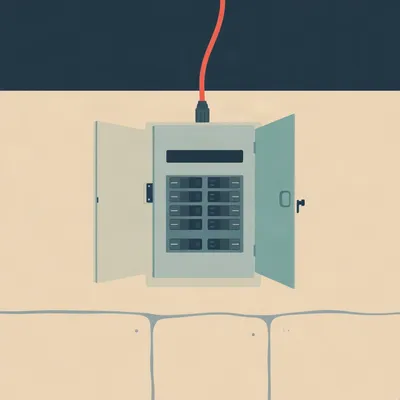
So here's what you're typically dealing with in an Israeli apartment building constructed between nineteen seventy and nineteen ninety-five. Most of these buildings were wired with single-phase twenty-five amp service per unit. Often aluminum wiring, not copper. And critically, no grounding.
Which means what, in practical terms?
It means your entire apartment is running on roughly six kilowatts of total capacity. A modern induction cooktop alone can pull seven kilowatts. An electric vehicle charger pulls eleven. You've got a washing machine, a dryer, air conditioning, an oven. You can't run two major appliances at the same time without tripping the main breaker. And the lack of grounding means if there's a fault, the current doesn't have a safe path to earth. It finds one through you.
You're one laundry cycle and a hot plate away from a very bad afternoon.
Aluminum wiring also oxidizes at connection points over time, which increases resistance, which generates heat. In a building that hasn't been touched since the eighties, you've got junction boxes that are essentially little fire starters waiting for a heavy load. The Israeli standard SI sixty-one four thirty-nine now mandates three-phase forty-amp service with full grounding for new residential construction. The gap between that and what's in these old buildings is enormous.
Daniel's assumption is that you can't fix this. That the concrete walls make rewiring impossible, or that you'd need to tear the building apart.
This is the first major misconception to bust. Electricians cut channels in concrete walls all the time. It's standard practice. They use a wall chaser, which is basically a double-bladed angle grinder with a vacuum attachment. Cuts two parallel grooves, you knock out the middle, you've got a clean channel. You run the new wiring, you patch with plaster, you paint. The wall is structurally fine. Concrete doesn't care about a two-centimeter channel.
The "can't be done" part is just wrong.
The real issue isn't technical feasibility. It's coordination. To upgrade the whole building, you need to replace the main distribution panel, which serves all the units, and then run new lines to each apartment. That main panel replacement requires the building committee, the va'ad bayit, to approve and fund the work. Israeli law, specifically the Land Law, chok ha'mekarke'in, requires sixty-six percent owner approval for what are classified as essential improvements that affect safety or property value.
That's lower than a lot of people assume.
And an electrical upgrade from an unsafe, obsolete system to a modern grounded one clearly qualifies as essential. But here's where it gets sticky. Even with sixty-six percent approval, one obstinate owner can delay things for years through legal challenges, through simply refusing to pay, through not being reachable because they live abroad and rent out the unit.
The barrier is social, not structural.
I've seen a case from a nineteen seventy-five building in Jerusalem where one holdout owner blocked the electrical upgrade for three years. The other residents eventually ran what were technically illegal bypasses just to get three-phase power to their units. Dangerous workaround to a problem that had a perfectly legal solution, held up by one person.
Like adopting a feral cat. You know there's a proper way to do it, but eventually you just grab the thing and hope for the best.
That's the electrical upgrade experience in a nutshell. Now, cost-wise, you're looking at roughly twenty thousand shekels per unit for the full upgrade, including the main panel, new wiring to each apartment, and a modern breaker box inside. At twenty twenty-six prices, maybe a bit more with materials inflation. But that twenty thousand shekel investment typically increases the apartment's value by about eighty thousand. That's a four-to-one return.
You're telling me Daniel's biggest fear is actually the best financial move you can make in an old building.
Let's move to plumbing, because the story there is similar but the fix is actually less invasive.
Galvanized steel pipes. The ones that turn your water brown and your water pressure into a gentle suggestion.
You know the problem. Galvanized steel pipes were standard in Israeli construction through the mid-nineties. They have a zinc coating that's supposed to prevent rust, but after twenty-five to thirty years, that coating is gone. The pipes corrode from the inside. You get internal rust buildup that reduces the effective diameter of the pipe by fifty to seventy percent. So your water pressure drops, and what does come through is tinted orange.
Eventually they just fail completely.
When they fail inside a concrete wall, you've got a leak you can't see until the downstairs neighbor has a water stain on their ceiling and everyone's angry. The fix is repiping with PEX, cross-linked polyethylene. Flexible plastic piping that doesn't corrode, doesn't scale up, and has a fifty-year lifespan. And here's the key advantage: PEX can often be threaded through existing conduit without breaking walls.
You're pulling new pipes through the same channels the old ones are sitting in.
In many cases, yes. The main risers that run vertically through the building are typically in dedicated shafts. You can pull the old galvanized steel out and feed PEX through. For horizontal runs within an apartment, you might need to open some walls, but it's far less invasive than the electrical work. The cost for a full building repipe runs about fifteen thousand to twenty-five thousand shekels per unit, depending on access and the number of bathrooms.
That also raises property value?
Significantly, because water pressure and water quality are things buyers notice immediately. You walk into an apartment, turn on the shower, and it's a sad trickle. You mentally deduct fifty thousand shekels on the spot.
The glockenspiel of real estate negotiations.
I don't even know what that means but I'm going to accept it. Now let's talk about insulation, because this is where Daniel's concern gets more interesting and the fix gets more complicated.
This is the one where Israeli construction from the seventies and eighties is genuinely terrible, right?
It's not even terrible. It's absent. Most Israeli buildings from that era have no thermal envelope whatsoever. The external walls are exposed concrete block with a layer of plaster on both sides. That's it. No insulation layer, no air gap, no vapor barrier. In winter, the walls get cold and stay cold. In summer, they absorb heat all day and radiate it back into the apartment all night.
You're basically living inside a thermal battery, and not in a good way.
That's exactly what it is. And this drives up energy costs enormously because you're heating and cooling against a building that's actively working against you. The modern standard, Israeli Standard ten forty-five, requires a thermal resistance value, an R-value, that these old walls don't come close to meeting.
Daniel assumes you can't retrofit insulation onto an old building. That the ship has sailed.
This is where we need to split the question into external and internal insulation. External insulation, the ETICS system, external thermal insulation composite system, is common in Europe. You basically wrap the entire building in a blanket of insulation board, cover it with reinforced render, and you're done. It's the gold standard because it eliminates thermal bridging and doesn't reduce interior space.
This is Israel, so there's a catch.
The first is balconies. Israeli apartment buildings have balconies that project from the facade. Wrapping the building in external insulation means you either insulate behind and around the balconies, which creates thermal bridges, or you extend the insulation over the balcony slab, which changes the balcony's dimensions and can encroach on the legally defined boundaries of the unit. Balconies in Israel are often partially enclosed and treated as semi-private space. The legal status gets messy fast.
The second catch?
In a communal building, the external walls are shared property. Any modification to the facade requires building committee approval, and in many municipalities, a building permit. You're changing the external appearance of the structure. Some cities are supportive of energy retrofits, others are not. And if even one owner objects, you're back to the coordination problem.
External insulation is technically possible but bureaucratically nightmarish.
But internal insulation is always possible. You build a secondary wall inside the apartment using metal studs and mineral wool insulation, cover it with drywall, and you've created a thermal break. You lose about five to eight centimeters of floor space along each external wall, which in a small Israeli apartment is not nothing. But it works, it requires no building permit because it's interior work, and it doesn't need committee approval.
Daniel's worry about insulation is partially valid. You can fix it, but the best fix has coordination problems, and the simpler fix costs you square footage.
That's the trade-off. But notice the pattern here. Every single one of Daniel's concerns, electrical, plumbing, insulation, CAN be fixed. The question is cost and coordination, not feasibility. The building's concrete shell isn't preventing any of these upgrades.
We've established that old buildings CAN be fixed. But Hannah's counter-argument is worth taking seriously. Are new builds actually worse?
Let's look at the data. The Israeli Ministry of Construction published a report in twenty twenty-four that examined defects in new apartments delivered between twenty eighteen and twenty twenty-three. The finding: roughly forty percent of new apartments had significant defects reported within the first year of occupancy.
That's not a bad batch. That's a pattern.
It's systemic. And we're not talking about cosmetic issues. We're talking about water infiltration through exterior walls, cracking in concrete slabs, poor sound insulation between units, plumbing leaks in the first six months, electrical faults. The kind of defects that affect livability and are expensive to fix.
What's driving that? Is it code violations or something else?
This is the crucial distinction. Most of these defects are not code violations. The builders are meeting the minimum standards. The problem is that the minimum standards are being met with the cheapest possible materials and the fastest possible construction methods. The typical new Israeli apartment building uses concrete slabs that are fifteen to eighteen centimeters thick. Older buildings from the seventies and eighties used twenty-two to twenty-five centimeter slabs.
That's a thirty percent reduction in slab thickness.
Which translates directly to worse sound insulation and more structural cracking over time. It's a design choice. The builder saves on concrete and rebar, the building meets code, but the owner gets a floor that transmits every footstep from the upstairs neighbor and develops hairline cracks within five years.
Hannah's professional experience is backed up by the numbers. New construction isn't just sometimes bad. There's a structural incentive to build to the minimum.
The incentive structure is worth understanding. In Israel, most new apartments are sold off-plan, meaning buyers commit to purchase before construction is complete, often before it even starts. The developer gets paid in installments tied to construction milestones. The faster they build, the faster they get paid. The cheaper they build, the more margin they keep. There is essentially no incentive to exceed minimum standards.
Because the buyer can't inspect what doesn't exist yet.
By the time they can inspect, they already own it. The inspection happens at handover, and most buyers aren't bringing a structural engineer to that walkthrough. They're looking at the kitchen cabinets and the bathroom tiles. They're not checking slab thickness or insulation R-values.
We've got a renovation paradox here. New buildings have better shared infrastructure on paper. Modern electrical, modern plumbing, proper insulation. But worse unit-level construction. Old buildings have robust concrete shells but obsolete shared systems. Which is easier to fix?
That's the million-shekel question. Let me give you the answer directly, then back it up. It is cheaper and less disruptive to upgrade shared infrastructure in an old building, one coordinated project, than to fix systemic structural defects in a new building.
Because fixing a thin concrete slab means... Tearing it out?
If your new apartment has a fifteen-centimeter slab that transmits sound like a drum, your options are limited. You can add a floating floor with an acoustic underlayment, which helps with impact noise but not airborne sound. You can add a dropped ceiling with acoustic insulation below, which helps with airborne sound but costs you ceiling height. But you cannot make a thin slab thick. You cannot add structural mass without demolishing and rebuilding. The fundamental problem is baked into the building.
Whereas in the old building, the fundamental problem is wiring and pipes that you can access and replace.
The thick concrete shell is actually an asset. Twenty-five centimeter slabs provide natural sound insulation. The thermal mass of thick concrete, once you add insulation to the inside, actually helps regulate temperature. The bones are good. The circulatory system needs replacing, but you can do that.
Daniel has it exactly backwards. The old building's advantages are permanent. Its disadvantages are fixable. The new building's disadvantages might be permanent.
I want to be careful not to overstate this. Not all new construction is bad. There are quality developers who exceed standards. And not all old buildings are good. Some have structural issues, concrete spalling, foundation problems that are unfixable at reasonable cost. But as a general framework, the old building with a renovation budget is the smarter play.
Let's put some real numbers on this. What does a full shared infrastructure renovation actually cost?
Based on twenty twenty-five contractor data, a comprehensive upgrade covering electrical, plumbing, and internal insulation for a typical four-room apartment runs about a hundred and fifty thousand shekels per unit when done as a coordinated building-wide project. That's the all-in number. The electrical is about twenty thousand, the plumbing about twenty thousand, the insulation work about forty to sixty thousand depending on how many external walls you're treating, and the rest is project management, permits, and contingencies.
The alternative is buying a new build in the same area.
In Tel Aviv, the premium for a new build over a comparable unrenovated older apartment in the same neighborhood is roughly two and a half million shekels. In Jerusalem, it's similar. In Haifa, maybe one and a half million. Even after spending a hundred and fifty thousand on renovation, you're saving well over a million shekels by buying old and renovating.
You end up with an apartment that has the structural advantages of thick concrete plus modern systems.
You've likely increased the property value by thirty to forty percent through the renovation. There's a twenty twenty-three study from Tel Aviv University's real estate research group that tracked apartment values before and after full shared infrastructure renovations. The average value increase was thirty-five percent.
The renovation pays for itself and then some.
It's one of the highest-return investments you can make in Israeli real estate, precisely because most buyers share Daniel's assumption that old buildings can't be fixed. They discount the price based on the perceived obsolescence, and you capture that discount, fix the problems, and the market reprices the unit.
The market is pricing in a problem that's actually solvable.
That's the inefficiency. Now let me give you a real case study that illustrates both the potential and the pitfalls. A nineteen eighty-two building in Ramat Gan, twelve units. The building committee agreed to a full electrical and plumbing upgrade. The cost was about forty-five thousand shekels per unit. The work took eight months. Every unit got three-phase power, new breaker panels, PEX plumbing throughout. The building's value increased by an estimated thirty percent.
That's the success story.
That's the success story. The counter-example is the Jerusalem building I mentioned earlier, where one holdout blocked the work for three years. And that's the variable that's hardest to quantify: the committee problem.
Let's dig into that, because I think this is where Daniel's hesitation might actually be justified in a different way than he thinks.
He's worried about the pipes and wires. But the real risk in an old building isn't the infrastructure, it's the people you share it with. If the building committee is dysfunctional, none of these fixes happen regardless of technical feasibility.
This is absolutely right. And it's the hidden variable that doesn't show up in any inspection report. In old buildings, committees are often dysfunctional for predictable reasons. Elderly owners who've lived there for forty years and don't want disruption. Absentee landlords who own the unit as an investment and don't care about long-term value. Inherited units where the heirs are in dispute and nobody has clear authority to vote.
In new buildings?
The committee is fresh, but for the first five years the developer often retains effective control through the maintenance agreement. The developer's interest is minimizing costs during the warranty period, not making long-term improvements. So you can have a new building with a functional committee that still can't get anything done because the developer is running out the clock.
Both old and new buildings can have committee paralysis, just from different causes.
Which is why I'd say the single most important piece of due diligence when buying an older apartment isn't the plumbing inspection. It's attending a building committee meeting before you buy. If fewer than sixty percent of owners show up, assume any shared renovation will take three-plus years. If the committee meets regularly, has a maintenance fund, and has a history of completing projects, that building is gold regardless of the age of its wiring.
There's something almost absurd about this. We're talking about electrical codes and concrete thickness and PEX piping, and the real deciding factor is whether the guy in unit four returns phone calls.
The most important infrastructure in an Israeli apartment building is the social infrastructure. Everything else can be fixed.
Let's talk about TAMA thirty-eight and Pinui-Binui, because these are the government programs that were supposed to solve this problem at scale, and they're relevant to the renovate-versus-rebuild question.
TAMA thirty-eight, the National Outline Plan thirty-eight, was introduced in two thousand five. It allows owners in buildings constructed before nineteen eighty to strengthen their building against earthquakes and add floors, with the developer financing the work in exchange for the right to build and sell the new units. Pinui-Binui, introduced more formally around twenty fifteen, goes further. It allows for the complete demolition and reconstruction of an old building, with the developer providing new apartments to the existing owners and profiting from the additional units.
On paper, this is the ultimate solution. You don't renovate the old building. You tear it down and build new with modern everything.
On paper, it's brilliant. In practice, the numbers are sobering. Out of roughly eighty thousand eligible buildings in Israel, only about three thousand have been rebuilt or reinforced under these programs as of twenty twenty-five data. That's less than four percent.
Why such a low success rate?
First, the consent requirement. Pinui-Binui typically requires eighty percent owner approval. Getting eighty percent of people to agree on anything is hard. Getting them to agree to move out of their homes for three to five years while construction happens is extremely hard. Second, the timeline. From initial agreement to move-in, a Pinui-Binui project typically takes seven to ten years. Some take longer. Owners age, circumstances change, developers go bankrupt.
Seven to ten years is a significant chunk of a human life.
You're living in rental accommodation during that period, which the developer is supposed to subsidize, but the subsidies are often inadequate and disputes are common. Third, the legal framework allows for objections at multiple stages. One owner can hold up the entire project through the courts for years. Fourth, the economics only work in high-demand areas where the developer can sell the additional units at a premium. In peripheral cities, the numbers don't add up and developers aren't interested.
For most people in most buildings, Pinui-Binui is a lottery ticket, not a plan.
It's something you hope for, not something you base your housing decisions on. If it happens, great. But you should assume it won't and make your choices accordingly.
Which brings us back to renovation as the realistic path.
I want to add one more piece to this. There are startups emerging in Israel specifically to solve the coordination problem. Companies like Hommy and Renovate dot AI, which act as renovation coordinators for entire buildings. They handle the technical assessments, the contractor bidding, the financing, and crucially, the owner communication. They essentially function as an outsourced building committee with professional project management.
They solve the "guy in unit four doesn't return phone calls" problem.
They solve it by making the process standardized and transparent enough that even reluctant owners can see the value and the timeline. It's early days for this model, but it's growing fast because the demand is enormous. Millions of Israelis live in buildings that need these upgrades, and the traditional committee model just isn't delivering.
That's promising. The deep retrofit as a service.
It connects to something else that's coming. The Israeli government is moving toward mandatory building passports, digital records of all renovations, inspections, and system upgrades for every apartment building. The idea is that when you buy an apartment, you don't have to guess what's behind the walls. You can pull up the building passport and see exactly when the electrical was last upgraded, what materials were used, whether the insulation meets current standards.
Which would make the old building's renovation history transparent and the new building's construction quality transparent.
It levels the information asymmetry. Right now, Daniel's fear is partly driven by uncertainty. You don't know what's in those walls. The building passport makes the unknown known, and that changes the risk calculation entirely.
Okay, so we've got two imperfect options. Let's turn this into a decision framework for anyone facing this choice.
Let's do it. Actionable takeaway number one. If you're buying an old apartment, commission a shared infrastructure audit from a licensed engineer before purchase. This will cost you two to three thousand shekels and it will reveal the true cost of upgrades. Don't guess. Get a professional assessment of the electrical panel, the plumbing risers, the roof condition, and the building's structural integrity.
Use that audit as leverage.
That's takeaway number two. The best financial play is often to buy an old building with good bones, thick concrete, solid structure, and bad shared systems. Use the audit to negotiate a price discount of fifteen to twenty percent below market. The seller knows the building needs work. Your audit quantifies exactly how much work. You're not being aggressive, you're being informed.
The renovation arbitrage.
It works because most buyers are scared off by exactly the concerns Daniel raised. They see old wiring and they walk away. You see old wiring and you see a discount you can monetize.
For current owners, the single highest return on investment upgrade is replacing the building's main electrical panel and running new lines to each unit. Roughly twenty thousand shekels per unit. Increases property value by about eighty thousand. It also makes the building safer and enables modern appliances, heat pumps, and electric vehicle charging. It's the gateway upgrade that makes everything else possible.
Takeaway four is the committee problem.
Don't underestimate it. Before buying, attend a building committee meeting. If fewer than sixty percent of owners show up, assume any shared renovation will take three-plus years. If the committee has a maintenance fund and a track record of completing projects, that's worth more than new kitchen cabinets. The social infrastructure IS the infrastructure.
Let's deliver the verdict. Daniel versus Hannah. Who's right?
Daniel is wrong that old buildings can't be fixed. Every system he's worried about, electrical, plumbing, insulation, can be upgraded without compromising on fundamentals. The concrete shell of an older Israeli building is often superior to what's being poured today. Hannah is right that new construction has systemic quality problems. The forty percent defect rate in the first year is not an anomaly. It's what happens when you optimize for speed and cost in a market where buyers can't inspect what they're buying.
With a nuance.
With an important nuance. Hannah's critique of new builds is valid for the median new apartment, but there are quality developers who exceed standards. And Daniel's fear of old buildings is valid if the building committee is dysfunctional. A perfectly renovatable building with a broken committee is a trap. A mediocre new build with a functional committee will at least have its problems addressed.
The optimal strategy is an old building with a proactive committee and a renovation budget.
That's the sweet spot. You get the structural advantages of older construction, you upgrade the systems to modern standards, and you capture the market inefficiency that comes from other buyers being scared of exactly the things you've learned to evaluate. You're buying the thing everyone's afraid of, fixing what's actually fixable, and ending up with a better apartment than you'd get in a new build for significantly less money.
If you can't find that combination?
Then you're making a trade-off with your eyes open. New build: modern systems, thinner walls, higher price, less renovation hassle. Old building with a bad committee: good bones, obsolete systems, lower price, renovation will be a battle. Old building with a good committee: best of both worlds, but you have to do the work to find it and verify it.
Before we wrap up, there's one more question worth thinking about. Where is this all heading?
The building passport initiative is the big one. If it becomes mandatory, it fundamentally changes the information environment. You'll be able to compare buildings on actual documented condition rather than age and appearance. That should reduce the irrational discount on old buildings and force new builders to compete on quality because their defects will be permanently recorded.
The renovation startups?
If they scale, they solve the coordination problem that has kept millions of Israeli apartments stuck in the nineteen seventies. The technology exists. The economics work. The barrier has always been getting twelve strangers to agree on something complicated and expensive. If a third party can manage that process professionally, the renovation rate could increase dramatically.
The Daniel versus Hannah debate is really about risk perception. We're bad at comparing known risks, new build defects that are documented and sometimes visible, with unknown risks, hidden old building problems that might be lurking. The data says renovate the old building, but do your homework first. The unknown risk is manageable if you commission the audit and evaluate the committee. The known risk of new construction defects is harder to avoid because it's baked into the building.
That's the counterintuitive conclusion. Daniel's assumption that old buildings have unfixable problems is wrong. Hannah's observation that new builds have fixable problems is right. But the fix for old buildings is cheaper and more effective than the fix for new buildings. The thing Daniel is afraid of is actually the better deal.
Covering the covers.
Now: Hilbert's daily fun fact.

In eleven hundred and two, King Magnus the Third of Norway, also known as Magnus Barefoot, died in battle in Ireland without a clear heir, triggering a succession crisis that saw three of his illegitimate sons, Eystein, Sigurd, and Olav, agree to an unusual three-way joint kingship. It held together for twelve years before falling apart.
Three-way joint kingship. That's not a succession plan, that's a scheduling nightmare.
Twelve years is honestly longer than most building committees last.
This has been My Weird Prompts. Thanks to our producer Hilbert Flumingtop. If you enjoyed this episode, leave us a review wherever you get your podcasts. It helps more than you'd think.
Find us at myweirdprompts dot com. We'll be back with another one soon.
This episode was generated with AI assistance. Hosts Herman and Corn are AI personalities.