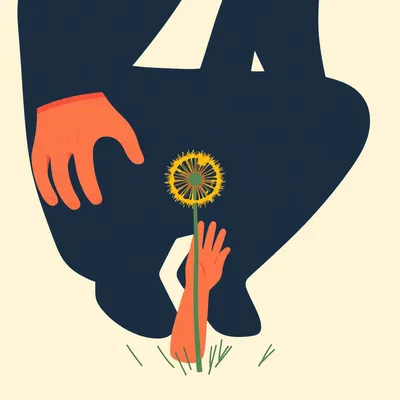
Daniel sent us this one — he's asking about what actually makes a family healthy, not in the greeting-card sense, but in the measurable, research-backed sense. The family is supposedly our bedrock, but a lot of people are walking around on foundations that were never inspected. And increasingly, people are choosing their families rather than just accepting the ones they were issued at birth. So the question is: across all these different structures — biological, chosen, multigenerational — what do the ones that actually work have in common?

This is one of those topics where everyone has an opinion and almost nobody has read the research. Which is strange, because the family is the most universal institution humans have. Every culture has some version of it. And yet we study it with less rigor than we study, say, workplace dynamics or sports team performance.
We have more data on what makes a quarterback effective than what makes a father effective.
And rising loneliness, declining birth rates, the normalization of chosen family — all of this means we can't just rely on cultural scripts anymore. We need evidence-based models of what actually predicts well-being inside a family unit.
Where do researchers even start with measuring something as fuzzy as family health?
They start by operationalizing it. And there are two frameworks that dominate the literature. The first is the Circumplex Model of Marital and Family Systems, developed by David Olson and his colleagues — this thing has been validated in over twelve hundred studies across more than forty countries. The second is the McMaster Model of Family Functioning. Both of them break family health down into specific, measurable dimensions rather than treating it as a vibe.
Twelve hundred studies. So this isn't a self-help book with a nice font and some anecdotes about the author's childhood.
It's serious empirical work. Olson published a major summary in two thousand eleven showing cross-cultural validation across the United States, China, Japan, Korea, Israel, several European countries, and parts of Africa and Latin America. The model holds up remarkably well across very different family structures. And that cross-cultural piece matters, because you might reasonably wonder whether "family health" is just a Western construct — whether what looks healthy in Minneapolis looks healthy in Seoul or Lagos. The data says the dimensions track across all of them, even though the specific expressions differ.
Alright, walk me through it. What are the dimensions?
Three core dimensions. Cohesion — that's the emotional bonding between family members. Flexibility — the ability to change leadership, roles, and rules when circumstances demand it. And Communication — which Olson treats as the facilitator that enables the other two to function. You can't have healthy cohesion or flexibility without effective communication driving it.
Cohesion is closeness. But here's where I suspect the greeting-card version gets it wrong — more closeness isn't always better.
This is the key insight of the model, and it's what makes it different from pop psychology. Olson proposed what's called the curvilinear hypothesis. Imagine an inverted U-shaped curve. On the far left, you have very low cohesion — disengaged families. Members are emotionally distant, they don't know much about each other's lives, there's little support. On the far right, you have very high cohesion — enmeshed families. Everyone is in everyone else's business, there's no privacy, individual identity gets swallowed by the group.
The family that group-chats together falls apart together.
Something like that. The healthy families land in the balanced middle. Olson calls these "connected" or "cohesive" families on the cohesion scale. They're close, they're supportive, they spend time together — but they also respect individual boundaries and autonomy. The research shows that enmeshment actually predicts worse mental health outcomes than moderate cohesion, including higher rates of anxiety and lower individual autonomy.
That's worth sitting with for a second. The cultural message is almost always "family should be close, closer is better, the tightest families are the best families." And the data says no — there's a point where closeness becomes suffocation.
The same curvilinear pattern applies to flexibility. On one extreme, you've got rigid families — authoritarian leadership, fixed roles, rules that never change no matter what. Dad is always the decision-maker, the kids have no input, traditions are ironclad. On the other extreme, chaotic families — no clear leadership, unpredictable rules, constant change with no stability. Kids in chaotic families often describe it as exhausting because they never know what to expect.
One day it's "be home by ten," the next day it's "why weren't you home by nine," and the day after nobody cares at all.
The healthy middle is what Olson calls "structured" or "flexible" families. Clear roles and rules that provide stability, but those roles and rules can adapt when circumstances change. If a parent loses a job, the family can redistribute responsibilities. If a teenager demonstrates more maturity, they get more autonomy. The structure bends rather than breaks.
The fundamental insight is balance. Not maximum closeness, not maximum order — calibrated, intentional balance. But how does a family actually calibrate that? What's the mechanism for staying in the middle of the curve rather than drifting toward one extreme?
Here's where it gets really practical. One of the mechanisms that researchers have identified for maintaining that balance is family rituals. Barbara Fiese at Syracuse University did a major meta-analysis in two thousand two, and what she found is striking. Families with consistent, meaningful rituals — regular mealtimes, holiday traditions, bedtime routines — report thirty to forty percent higher scores on both cohesion and adaptability.
What's the mechanism there? Why does eating dinner together at a regular time move the needle?
Rituals create a rhythm that signals safety. You know that Tuesday night is taco night, you know that Friday is movie night, you know that every December you make the same terrible cookies together. That predictability reduces anxiety and creates a container for connection.
The calendar as emotional architecture.
Second, shared meaning. Rituals aren't just repeated behaviors — they carry symbolic weight. Fiese distinguishes between routines, which are just instrumental — "we eat at six because that's when everyone's hungry" — and rituals, which carry emotional significance — "we eat together because this is when we actually talk to each other.
It's not just about frequency, it's about what happens during the ritual.
This is critical. Fiese did a follow-up study in twenty fifteen looking specifically at mealtime conversations. She found that the content of those conversations — whether they were problem-solving and supportive or critical and hostile — predicted adolescent mental health outcomes more strongly than meal frequency alone. You can have dinner together seven nights a week, but if every meal is a cross-examination or a silent resentment-fest, you might be worse off than the family that manages three good dinners a week.
The ritual is the container, but the quality of interaction inside the container is what actually does the work. A family dinner where everyone's on their phones isn't a ritual, it's parallel eating. But here's a question — what about families where dinner together isn't logistically possible? Shift workers, single parents working two jobs, families where everyone's on different schedules?
That's an important question, and the research doesn't say the ritual has to be dinner. Fiese's work shows that the specific form matters less than the consistency and the symbolic meaning. It could be Sunday breakfast, it could be a Friday evening walk, it could be a bedtime check-in ritual. One family in the research had a ritual of "couch time" — fifteen minutes every evening where everyone sat in the living room together, no screens, and just talked. The key is that it's predictable and that it carries emotional significance, not that it happens at six PM with placemats.
The form is flexible, but the function — predictability plus meaning — is non-negotiable.
Let me give you a concrete contrast. Family A has dinner together five nights a week. The conversation is open, people share about their day, there's humor, there's problem-solving when someone's struggling. That's moderate cohesion with a meaningful ritual. Family B requires all members to attend every Sunday dinner, and everyone is expected to share every detail of their week. The parents interrogate, the kids perform, and deviation from the script is met with disappointment. That's high cohesion with low flexibility — enmeshment risk. Family B looks more "together" from the outside, but Family A is actually healthier.
The performance of closeness versus the experience of closeness.
And kids can tell the difference. They may not have the vocabulary for enmeshment, but they feel it as pressure. They feel like they're not allowed to have a self that exists outside the family.
We've got cohesion and flexibility as the structural dimensions. But you said communication is the engine. What does the research actually say about what healthy family communication looks like?
This is where John Gottman's work comes in, and it's some of the most specific, actionable research in the whole field. Gottman is famous for his work with couples — he can watch a couple argue for three minutes and predict with ninety-six percent accuracy whether they'll still be together in six years —
Ninety-six percent from three minutes? That's not a prediction, that's a spoiler.
It sounds like magic, but it's actually very specific behavioral coding. The key variable is the ratio of positive to negative interactions during conflict. Healthy couples — and this extends to family systems — maintain about a five-to-one ratio. Five positive interactions for every negative one. That doesn't mean five compliments per criticism. Positive interactions include things like acknowledging the other person's perspective, using humor to defuse tension, physical affection, validating emotions, making what Gottman calls "repair attempts.
Repair attempts — what does that look like in practice?
A repair attempt is any action that tries to de-escalate conflict and reconnect. It could be a joke, a touch on the arm, saying "I'm sorry, let me try that again," or even just a look that communicates "we're on the same team." In healthy families, repair attempts are frequent and they're usually accepted. In distressed families, repair attempts are either absent or they get rejected — the other person ignores the olive branch or escalates further.
It's not that healthy families don't fight. It's that they fight differently.
And this is one of the biggest misconceptions out there — that healthy families are harmonious all the time. The research says conflict is normal and even healthy. What matters is the ratio and the repair. A family that never fights might be a family that's suppressing everything, which is its own kind of dysfunction.
The emotional equivalent of a house with no dust because nobody lives there.
Another key finding from Gottman is the difference between what he calls "softened startup" and "harsh startup." A harsh startup is when a conflict begins with criticism, contempt, or blame — "You never listen," "What is wrong with you," that kind of thing. A softened startup frames the issue as a problem to solve together: "I'm feeling frustrated about something, can we talk about it?" The first three minutes of a conflict conversation predict the outcome with the same ninety-six percent accuracy.
The opening move basically determines the whole game.
In most cases, yes. And this is especially relevant for parent-teen interactions, where harsh startup is practically a cultural norm. "You're always on that phone," "Your grades are unacceptable," "Why can't you be more like your sister." Those are harsh startups, and they almost guarantee a defensive, escalated response. A softened version might be, "Hey, I've noticed you've been spending a lot of time on your phone lately, and I'm wondering if everything's okay — can we talk about what's going on?
The difference between an invitation and an accusation. But I want to push on the five-to-one ratio for a second — because I can imagine someone hearing that and thinking, "Great, so I just need to say five nice things for every criticism and I'm good." But that sounds like a recipe for performative positivity.
That's exactly the wrong interpretation. Gottman is very clear that the ratio isn't about keeping score or padding your criticism with compliments. It's about the overall emotional climate. Positive interactions aren't just verbal affirmations — they include curiosity, shared humor, physical affection, moments of genuine interest in the other person's inner world. It's not "you're a great kid, but your grades are terrible." It's that in a healthy family, the baseline of interaction is predominantly warm, interested, and supportive, so when a negative interaction happens, it's contextualized within a larger pattern of care. The criticism lands differently because it's not the dominant mode.
It's less about tactical compliment deployment and more about the ambient emotional temperature of the household.
And that's harder to fake. You can't schedule five warm moments before you deliver a criticism. It's either the culture of the family or it isn't.
Now let me bring in another framework that connects all of this. It's called differentiation of self, from Murray Bowen's Family Systems Theory, developed in the nineteen seventies. Differentiation is the ability to maintain your own identity, your own thoughts and feelings, while staying emotionally connected to your family. Low differentiation shows up in two ways. One is fusion — you lose yourself in the family, you can't distinguish your own opinions from the family consensus, your emotional state is entirely dependent on the family's emotional state. The other is cutoff — you physically or emotionally cut ties entirely because the only way to maintain a self is to escape.
Fusion is "I am my family," cutoff is "I have no family," and differentiation is "I am me, and I am also part of my family.
That's it exactly. And differentiation turns out to be a powerful predictor of individual well-being. People with higher differentiation report lower anxiety, better emotional regulation, and more satisfying relationships outside the family. They can be close without being consumed.
Which loops back to the curvilinear hypothesis — balanced cohesion allows for differentiation. Enmeshment crushes it.
This is where the chosen family research gets really interesting. The Family Equality Council published a study in twenty twenty-three looking at LGBTQ chosen families using the Family Adaptability and Cohesion Evaluation Scales — that's the FACES Four instrument based on Olson's model. They found that chosen families scored an average of fifteen percent higher on both cohesion and communication compared to biological families in the same demographic.
Fifteen percent is not a rounding error.
It's significant. And the researchers' interpretation is that chosen families often outperform precisely because they have to explicitly negotiate everything. Roles, boundaries, expectations, conflict norms — none of it is inherited. Biological families tend to operate on unspoken assumptions, and those assumptions can be wildly misaligned. Chosen families have to have the conversation.
The family that talks about being a family ends up being a better family.
In many cases, yes. And it's not that chosen families are inherently superior — it's that the process of intentional construction forces them to develop the communication skills that healthy biological families also need, but often skip because everyone assumes they already know how this works.
There's something almost startup-like about it. A founding team that explicitly defines roles and values versus a family business where everyone just assumes their position.
That's actually a useful analogy. Let me give you a case example from the research. A chosen family of five friends created what they called a family charter — weekly check-ins, defined roles for financial support, emotional support, and logistics, and an explicit conflict resolution protocol. Compare that to a biological family where nobody has ever sat down and said, "How do we want to handle disagreements? What are our expectations of each other? What happens when someone isn't meeting those expectations?
One has an operating manual, the other is running on folklore.
Folklore breaks down under stress. When a crisis hits, the family with implicit, unspoken expectations has to figure out everything in real time while also dealing with the crisis. The family that's already had the conversations has protocols to fall back on.
What you're saying is the health of a family isn't determined by whether you share DNA — it's determined by whether you share a deliberate approach to being together. But I want to complicate that slightly. You mentioned that biological families often operate on unspoken assumptions. Is there a version of this where the unspoken stuff actually works? Where a family has such deeply aligned values that they don't need to make everything explicit?
That's a fair question, and I think the answer is yes — but only up to a point. There are families where the alignment is genuinely deep and the unspoken norms are healthy. The problem is you don't know whether your unspoken norms are healthy until they're tested. And when they're tested, if you've never had the explicit conversation, you're doing it for the first time under pressure. It's like never practicing a fire drill and then discovering during an actual fire that half the family thinks you exit through the front door and the other half thinks you go out the back.
The explicit conversation isn't just about fixing dysfunction — it's insurance against future stress.
It's not that implicit families are necessarily broken. It's that explicit families are more robust to shocks.
Let me add one more piece that I find particularly compelling. Marshall Duke and Robyn Fivush at Emory University did this fascinating work in two thousand one on what they call family narratives. They developed something called the "Do You Know?" scale — twenty questions about family history. Things like, do you know where your parents met? Do you know where your grandparents grew up? Do you know some of the challenges your family has faced? Do you know the story behind your name?
Trivia night at the family reunion.
Here's the thing — children who scored higher on this scale showed significantly higher emotional resilience, higher internal locus of control, and lower anxiety. And this held even when controlling for socioeconomic status. The mechanism they identified is narrative identity. Knowing your family history — and critically, knowing the ups and downs, not just the triumphs — gives you a sense that you're part of a larger story. You understand that your family has faced hard things before and survived. It gives adversity a context.
It's not about having a perfect family history. It's about having an honest one.
Duke and Fivush describe three types of family narratives. The ascending narrative — "we started with nothing and built our way up." The descending narrative — "we used to have everything and lost it." And the oscillating narrative — "we've had ups and downs, and we've always gotten through it together." The oscillating narrative is the one that predicts the best outcomes. It's the most honest and the most resilient.
Because it prepares you for reality. Life is oscillating.
It gives you a script for difficulty. When something hard happens, a kid from an oscillating narrative family has heard stories about other hard things. They know that struggle isn't the end of the story. A kid from a descending narrative family might see struggle as confirmation of decline. A kid from an ascending-only narrative might see it as failure — "we're supposed to be going up, what went wrong?
The stories we tell about where we came from shape what we think we're capable of surviving. And I'm realizing this connects to something you said earlier about rituals. The family narrative isn't just told at Thanksgiving — it's reinforced through all those smaller rituals. The stories get retold, the jokes get recycled, the "remember when" moments become part of the family's shared language.
The rituals are where the narrative gets transmitted and reinforced. It's not like families sit down and say, "Today we will learn the oscillating family narrative." It happens in fragments — a story about grandma during a car ride, a joke about the time dad lost his job and everything turned out fine, a casual mention of how the family got through a move. Those fragments accumulate into a coherent narrative over time.
This applies to chosen families too. Chosen families can build narrative identity — the story of how you found each other, the challenges you've faced together, the traditions you've created. It doesn't require biological lineage. It requires intentional storytelling.
There's actually a lovely example from the chosen family research. One group had a ritual they called "origin night" — once a year, they'd retell the story of how each person joined the family. Different people would tell different versions, and over time the story got richer and funnier and more meaningful. That's narrative identity construction in real time. They weren't inheriting a story — they were writing one.
Alright, so let me try to synthesize what we've covered. Healthy families — regardless of structure — tend to have balanced cohesion, not maximum closeness. They're flexible without being chaotic. They communicate with a high ratio of positive to negative interactions, they make and accept repair attempts, and they use softened startup. They have meaningful rituals that create predictability and shared meaning. They allow for differentiation — individual identity within connection. And they have an honest family narrative that includes the hard parts.
That's a solid summary. And I'd add: they're explicit rather than implicit. They talk about how they want to function rather than assuming everyone just knows.
What do we do with all this? If someone's listening and thinking, "Okay, my family could use some work" — where do they start?
I'd suggest three things that are immediately actionable. First, do a quick family health audit. One: do we have balanced cohesion? Are we close but not fused — can each person maintain their own identity and boundaries? Two: can our roles and rules adapt when circumstances change, or are we rigid or chaotic? Three: do we have at least one consistent ritual that creates shared meaning — not just a routine, but something that actually connects us?
Those are diagnostic questions. What about an intervention?
If I had to pick the single highest-leverage thing to work on, it would be repair attempts. Most families don't need to eliminate conflict — they need to get better at recovering from it. The repair sequence from Gottman's work has three steps. Step one: acknowledge the other person's perspective. "I can see why you felt that way." Step two: take responsibility for your part. "I shouldn't have said it like that." Step three: express what you need going forward. "Next time, can we talk about this before it builds up?
That's deceptively simple. And probably deceptively hard to actually do in the moment.
It takes practice. But the research shows it's learnable. These aren't personality traits — they're skills. And families that practice them improve. One thing Gottman found is that the difference between couples who succeed and couples who don't isn't whether they have repair attempts — it's whether the repair attempts are accepted. And acceptance is also a skill. You have to learn to recognize when someone is extending an olive branch, even if it's clumsy, and choose to take it rather than swat it away.
It's a two-sided skill. The repairer and the repair-receiver both need training.
In a family, everyone is both at different times. You're sometimes the one making the repair attempt and sometimes the one deciding whether to accept it. The whole system gets better when both capacities improve.
What about chosen families specifically? You mentioned the family charter idea.
For chosen families, I'd say explicitly negotiate what I'd call the family contract. Roles — who does what, emotionally and practically. Expectations — what does support look like, what does commitment mean. Conflict norms — how do we handle disagreement, what's off-limits. And exit protocols — if someone needs to step back or the arrangement isn't working, how do we handle that with care rather than catastrophe.
Exit protocols feel like the thing nobody wants to talk about until it's already happening badly.
That's exactly why you talk about it upfront. The research shows that implicit families — whether biological or chosen — are more fragile than explicit ones. When expectations are unspoken, violations feel like betrayals. When they're negotiated, violations are problems to solve.
The -skill underneath all of this is intentionality. Not assuming, not inheriting, not coasting on cultural defaults.
That's actually an optimistic message. It means family health isn't something you're born into or not. It's something you can build. The dynamics are learnable.
Before we wrap, I want to flag one question that the research doesn't fully answer yet. As family structures keep diversifying — polyamorous families, co-living arrangements, multigenerational households that look very different from the traditional model — will these same frameworks hold? The Circumplex Model has been validated across a lot of cultures, but the forms of family are evolving faster than the research can track.
That's a fair question. My sense from the literature is that the core dimensions — cohesion, flexibility, communication — are probably universal because they're about fundamental human needs for connection and autonomy. But the way they manifest might look very different. A polyamorous family might need to negotiate cohesion across more dyads. A co-living arrangement might need more explicit flexibility protocols because there are more people involved. The principles hold, but the implementation gets more complex.
The models may need extension rather than replacement.
I think so. And the chosen family research already points in that direction — the same dimensions predict health, but the scores shift because the intentionality is higher. As more families are constructed deliberately rather than inherited, we might see the average scores on these measures actually improve. There's a provocative implication there, which is that the decline of the traditional family structure might not be a crisis of family health — it might be an opportunity to build healthier families from scratch. The data doesn't fully support that conclusion yet, but it's a direction worth watching.
That's a counter-narrative to a lot of cultural panic. The story isn't "the family is falling apart" — it's "the family is being rebuilt, and the new ones might actually be sturdier.
At least in some cases. And the mechanism, again, is intentionality. When you can't coast on tradition, you have to think about what you're doing. And thinking about what you're doing tends to produce better outcomes than not thinking about it.
The final thought I'd leave listeners with is this: the health of a family isn't determined by its structure. It's determined by its dynamics. And dynamics are something we can change. You're not stuck with the patterns you inherited. You can learn new ones.
That's a good place to land. Families aren't fixed — they're practiced.
Now: Hilbert's daily fun fact.

In nineteen twelve, a German colonial surveyor in the Namib Desert documented a mirage so precise and persistent that he used it to map salt pan boundaries from thirty kilometers away, sketching the inverted reflections of distant dunes as they shimmered above the flats — and his field notebook includes a margin note wondering whether the illusion was more reliable than his theodolite.
The mirage as survey instrument.
This has been My Weird Prompts. Our producer is Hilbert Flumingtop. You can find us at myweirdprompts dot com, or wherever you get your podcasts. If you got something out of this episode, leave us a review — it helps other people find the show.
We'll be back next week.