A study tracked a hundred and thirty-three patients through gallbladder surgery and endoscoped them afterward. Before the operation, about a third had gastritis. Six months later, half did. The moderate-to-severe cases doubled.

And none of that is infection. That's the part people get wrong.
Which is exactly where Daniel's question starts. He's had this since his own gallbladder came out, and he's written in with something dense. His framing is that bile gastritis is common after cholecystectomy, it's extremely hard to treat, and the bile itself does the corrosive work. He wants it separated from other chemical gastritis, the NSAID kind, because the stressor here isn't an external drug you can just stop taking. It's a body fluid the liver keeps producing whether you want it to or not.
That's the whole hinge of it.
Then four questions. Why is skipping meals the worst thing you can do. Whether the folk wisdom around supplements and nutrients actually holds up. And he wants that integrated into recipes you'd actually enjoy, not swallowed as standalone remedies. Plus the constraint: the post-gallbladder population processes fat badly, so low fat isn't optional.
So the ask is a list of meals that hit four objectives at once.
Nutritious, tissue-repair building blocks for the stomach lining, something that buffers the bile, and low fat. He wants options, plural.
That's a real brief. Let's start with what bile gastritis actually is, because the mechanism is what makes every other answer make sense.
Go.
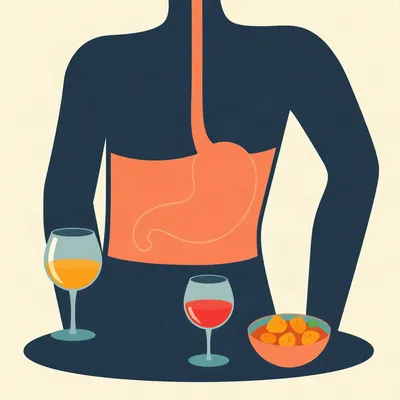
Also called alkaline reflux gastritis, biliary reflux gastritis, or duodenogastric reflux. It's a chemical gastropathy. Duodenal contents, chiefly bile acids plus pancreatic and intestinal secretions, reflux backward through the pylorus into the stomach. The injury is chemical. Not infectious, not autoimmune.
And the histology is what unifies it with the other chemical gastropathies.
Right. Foveolar hyperplasia, vascular congestion, lamina propria edema, prominent smooth muscle fibers, and very little inflammatory infiltrate. That's why it's called reactive rather than inflammatory. The tissue isn't under immune attack. It's being chemically burned.
Which is why the treatment logic is different from an ulcer.
Completely. An ulcer is often an infection or a drug, and you treat the cause. Here the cause is a normal body fluid arriving in the wrong place. You can't eradicate bile. You can only change how long it sits there and how hostile it is when it does.
Now, why the post-surgical population specifically. The gallbladder concentrates and stores bile and releases it in pulses when you eat. Remove it and bile drips continuously from the liver into the duodenum whether you're eating or not. No reservoir. More patulous pyloric dynamics, more bile available to reflux.
So the reservoir is gone, and the plumbing that used to gate it is looser.
Both. The gallbladder was a storage tank with a valve. Take the tank out and the supply line just runs. And the pylorus, the gate between the stomach and the duodenum, tends to be more open after surgery. So you've got more bile arriving and a looser gate holding it back.
Daniel's exact framing. A body fluid produced constantly whether the person wants it or not.
And the stakes aren't just comfort. Chronic bile reflux is linked to intestinal metaplasia and is a recognized long-term concern for gastric and esophageal carcinogenesis.
That's the sentence that should sit under everything else we say today.
It should. Which is why the reason this hits the post-surgical population so hard comes down to what bile does to the lining. Let's get into the mechanism.
How does it actually burn? Bile is a detergent. I assume that's the short version.
That's close to the short version. Soluble bile acids enter mucosal cells in their non-ionized, lipophilic form and accumulate up to about eight times the luminal concentration inside the cell. They injure cell membranes and tight junctions from the inside.
Eight times.
And the uptake is pH-dependent. It's worse at acidic pH. So the more acid in the stomach, the more efficiently bile gets into the cells that line it.
That is a counterintuitive piece of physiology.
It gets better. Bile acids also inhibit gastric carbonic anhydrase. That's an enzyme that matters for cytoprotection, part of how the lining defends itself. Cholate was the most potent inhibitor of any bile acid they tested.
So it doesn't just physically assault the lining. It disables one of the lining's own defense enzymes.
Exactly that. Two mechanisms running at once. The governing equation for injury is concentration times pH times mucosal exposure time.
Hold on exposure time.
Hold onto it hard, because that's the variable the patient actually controls, and it sets up the entire fasting argument.
Before we get to that, the direct evidence in the post-cholecystectomy population. You mentioned the cohort at the top.
Guerra Cordeiro, Obesity Surgery, this year. A hundred and thirty-three patients followed longitudinally. Gastritis prevalence went from thirty-three point nine percent to fifty-one point four percent after cholecystectomy. Moderate-to-severe cases rose from eleven point nine to twenty-three percent. Both significant. And the authors don't hedge on the cause. They attribute it to enhanced enterohepatic bile circulation and increased alkaline reflux.
Then the earlier one. The eighty-five patients.
Atak and colleagues, twenty twelve. Eighty-five laparoscopic cholecystectomy patients endoscoped before surgery and again six months after. None of them had chemical gastritis before. Seven were diagnosed after. Bile in the fasting gastric fluid increased, endoscopic gastritis findings rose, and intestinal metaplasia went from six patients to twenty.
Six to twenty. That's the number that should alarm people.
And H. pylori colonization actually fell, from sixty-four to fifty-two. So this isn't an infection story. It's the exact opposite of one.
Then there's Shenouda.
Twenty eighteen, a bariatric cohort. Bile gastritis incidence was thirty percent, and gastric-aspirate bilirubin level correlated significantly with mucosal inflammation. Bilirubin above twenty milligrams per deciliter was associated with severe esophagitis, erosive gastritis, and metaplasia.
Which gives you a measurable marker. The concentration of bile in the stomach tracks the damage to the lining.
It does. Bile is not an abstraction. You can aspirate it and measure it.
Now the distinction Daniel drew. This versus NSAID chemical gastritis.
Both are chemical gastropathies. Same histologic signature. But the source of the stressor is fundamentally different. Bile is endogenous and continuous. NSAIDs are exogenous and intermittent. You cannot stop bile production the way you can stop a drug.
And that changes the treatment logic entirely.
It does. But here's the nuance that complicates the clean distinction, and it matters practically. Aspirin and NSAIDs themselves increase duodenogastric reflux. And bile salts markedly enhance NSAID-induced damage.
So they feed each other.
Bile plus acid plus NSAIDs are synergistic. Far more injury than either alone. A post-cholecystectomy patient taking NSAIDs is getting a double hit.
That's a strong practical argument. If you've had your gallbladder out, the NSAID question is not a casual one.
It isn't. And there's one more tradeoff worth flagging, because it's where standard practice gets muddy. PPIs help. They promote cellular restitution and reduce oxidative damage, and they're commonly used. But they raise gastric pH, and bile acid injury is worse at acidic pH.
So you're trading one thing for another.
The picture is mixed. Acid suppression is standard practice and it is not a clean fix for a chemical, non-acid injury. That's not an argument against PPIs. It's an argument against expecting them to solve this by themselves.
So that's the injury. The question Daniel actually asked is what you do about it. And the first answer is counterintuitive, which is that the thing you'd think of as resting your stomach is the thing making it worse.
Fasting. Which is the part he's already figured out on his own.
Walk through why, point by point, because it's worth being precise.
First. Bile flows continuously post-cholecystectomy. But food is what triggers duodenal transit and gastric emptying. An empty stomach has nothing to dilute or sweep the bile. So the bile sits, and exposure time lengthens, and exposure time is one of the determinants of injury.
Which is the variable he controls.
Second point. Fasting gastric fluid is precisely where bile is most detectable. That's what Atak found. They were aspirating fasting fluid and finding bile in it.
The stomach at rest is the bile reservoir.
Third. Meals stimulate the mucosa's own defenses. Food and the resulting meal stimulus promote mucus and bicarbonate secretion, prostaglandin release, and mucosal cell renewal. Eating literally feeds the defense system.
The stomach is not a passive bag. It's actively maintaining itself, and it needs the signal of food to do it.
Fourth. Food physically buffers and dilutes refluxed bile and gives you a substrate to bind and adsorb bile acids. Fifth. Regular small meals keep the stomach from ever becoming a stagnant bile reservoir.
That's the entire argument in five beats. So the translation is small, frequent, low-fat meals and snacks. Never long fasts. Five to six mini-meals a day. Never skip breakfast.
And that's the single most defensible behavioral intervention in this whole episode. More defensible than any supplement we're about to discuss.
Then let's do the supplements honestly. Sorted by evidence tier, not by what's popular.
Start with the strongest pharmacologic option, which is ursodeoxycholic acid. UDCA. And the key thing to understand is that it works by changing the composition of refluxed bile, not by healing the mucosa directly.
Say more.
It raises the proportion of UDCA to about fifty percent of gastric bile acids, displacing the more toxic cholic and deoxycholic acids. So the bile that refluxes is a gentler bile.
And the evidence?
Stefaniwsky, nineteen eighty-five. A thousand milligrams a day profoundly reduced pain and nearly abolished nausea and vomiting. But the mucosa looked unchanged endoscopically and histologically.
So symptoms improved and the tissue didn't.
That's a real split, and it's worth sitting with. Then Jang, twenty twenty-four, a secondary analysis of the PEGASUS-D randomized trial. Five hundred and twenty-one patients post-gastrectomy. Three hundred milligrams of UDCA, not six hundred, significantly reduced bile reflux and gastritis grade at twelve months. Odds ratios of zero point four four and zero point five zero. But symptom differences were not significant.
So the dose matters and the symptom benefit isn't reliable.
Modest, dose-specific, and not a symptom cure. And it's prescription, not over the counter.
Next tier. The best-supported supplement for actual mucosal repair.
Zinc-L-carnosine. Polaprezinc, or PepZin GI. Mahmood and colleagues in Gut, two thousand seven. It stimulated epithelial migration and proliferation about threefold, reduced gastric injury by seventy-five percent and small-intestinal injury by fifty percent in animal models. And in a human randomized trial it prevented indomethacin-induced increase in gut permeability.
That's a real human endpoint.
It is. Hewlings and Kalman, twenty twenty, reviewed it and supported safety and efficacy for restoring the gastric lining. It's approved in Japan for gastric ulcers. Hiraishi and Nishiwaki both showed antioxidant activity, protecting gastric cells from hydrogen peroxide, ethanol, and monochloramine injury, and accelerating healing.
Caveat.
One veterinary randomized trial, Baan, twenty eleven, found no benefit versus placebo for aspirin injury in dogs. So it's not a slam dunk. But the human and mechanistic evidence is favorable, and it's the best-supported supplement in this category by a distance.
Next.
Sucralfate. This is a prescription mucosal protectant that directly adsorbs bile salts and forms a protective barrier over damaged mucosa. Graham, Digestive Diseases and Sciences, nineteen eighty-four. It's less effective than cholestyramine at bile binding and doesn't deplete bile salts at neutral pH, but it's the closest thing to a buffering drug you can get.
Worth a conversation with a gastroenterologist.
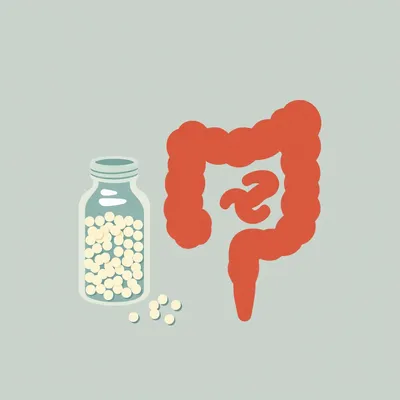
Worth a conversation. Then the bile acid sequestrants. Cholestyramine, colesevelam, colestipol. These target the downstream problem, bile acid diarrhea and fat processing, not gastric reflux directly. But they're highly relevant post-cholecystectomy. Seventy to ninety-six percent of chronic diarrhea patients with bile acid malabsorption respond to cholestyramine.
That's a huge response rate.
Barkun, Canadian Journal of Gastroenterology, twenty thirteen. And post-cholecystectomy diarrhea responds dramatically. Arlow, Sciarretta. Prescription again.
Now the folk wisdom tier, because Daniel specifically asked whether it holds up.
DGL, deglycyrrhizinated licorice, slippery elm, marshmallow root, aloe. There is no direct evidence for bile gastritis specifically. Mechanistically plausible, since mucilage coats and buffers, but anecdotal.
So reasonable to try, indefensible to present as proven.
That's the honest position. And general alkalinizing or bile-thinning supplements have no evidence base at all. I'd put them in the same bucket as the mucilaginous herbs, except with less mechanistic plausibility.
Then the recipes, which is what he actually asked for.
Four design principles. Buffer and adsorb bile. Build the lining. Low fat. Small and frequent. And the key insight is that soluble fiber and mucilaginous foods are doing the same job as cholestyramine, just in food form.
Soluble fiber is the food-based bile sequestrant.
That's the whole strategy in one line. Oats, barley, psyllium, okra, chia, flax, legumes, apples, pears, carrots. They bind bile acids in the gut.
And the second objective, building the lining.
Protein, especially glutamine- and arginine-rich foods, plus zinc and vitamins A, C, and E. Those support epithelial proliferation and repair. And low fat is the third constraint, not just because of the fat processing problem, but because fat triggers CCK and bile release. Small amounts of fat spread across meals beat a fat bolus every time.
Small and frequent is the fourth.
Five to six mini-meals. Never skip breakfast, never go long without eating.
Give me the list.
Breakfast first, and never skip it. Oatmeal with sliced banana and a spoon of chia or ground flax. The beta-glucan in the oats binds bile acids, banana is gentle and alkaline, chia adds mucilage. Low fat.
Next.
Low-fat Greek yogurt with cooked pear or applesauce. Protein plus pectin, which is another bile binder. Soft-cooked egg with plain toast and applesauce. Modest fat, good protein, bland.
Lunch and dinner.
Poached or baked skinless chicken or white fish with steamed carrots, zucchini, and a small portion of white rice or peeled potato. Lentil or split-pea soup, well-cooked, low-fat, no cream, with a little turmeric and ginger. Barley and vegetable soup with shredded chicken. Steamed or poached salmon, small portion, around three ounces, with quinoa and green beans. Tofu and soft-cooked vegetable stir-fry over rice with minimal oil, using broth or water instead. Mashed sweet potato or squash with a lean protein.
The sweet potato is doing double duty.
Soft, alkaline, and the vitamin A supports mucosal repair. That one's close to a perfect food for this condition.
Snacks. Because the whole point is preventing bile pooling between meals.
Applesauce, banana, melon. Plain rice cakes or a small bowl of oatmeal. A small handful of cooked and cooled potato. Low-fat yogurt or kefir. And psyllium in water if you tolerate it, which is the most direct food-based bile binder you can take.
Beverages.
Chamomile, ginger, or licorice-root tea. Note the licorice root can raise blood pressure, so DGL tea is the safer form. Warm water with a little honey. Avoid coffee, alcohol, strong citrus, and carbonation.
And the repair-plus-buffer list to keep in your head.
Soluble fiber from oats, barley, psyllium, legumes, okra, chia, flax, apples, pears, carrots. Lean protein from skinless poultry, white fish, egg whites, tofu, low-fat dairy, legumes. Zinc from lean meat, legumes, small amounts of pumpkin seeds, fortified cereals. Glutamine from eggs, lean meat, cabbage, beets, legumes, low-fat dairy. Vitamins A, C, and E from cooked carrots, squash, sweet potato, cooked spinach, bell peppers.
Foods to limit.
Fried and greasy foods, fatty cuts, full-fat dairy, cream sauces, butter, large fat loads in one sitting. Very spicy or very acidic meals. Alcohol. And NSAIDs, for the double-hit reason we covered.
Put a sample day together so it's concrete.
Breakfast, oatmeal with banana and chia. Mid-morning, applesauce or a small yogurt. Lunch, lentil soup with plain toast. Afternoon, a rice cake or a banana. Dinner, poached white fish with steamed carrots and zucchini and a small rice portion. Evening, chamomile tea and a few cooked potato slices if you're hungry.
That's a day where nothing is more than a couple of hours from the last thing, and no meal is a fat load.
It's a day designed around exposure time.
Hilbert: I spent about a year of my life pumping the stuff out of a rendering floor.
Say that again.
Hilbert: It came down a channel maybe eight inches wide and it moved. That was the whole job. Keep it moving and keep it diluted. If it sat, it set. Not hard like concrete. Hard like wax, and once it set you were chipping it off a steel floor with a scraper, and it took the paint with it.
That's the detergent quality doing exactly what we described to the lining.
Hilbert: It doesn't care what's under it. That's what I keep thinking about listening to you two. The equation you kept coming back to, concentration, acid, time. Time was the one we could do something about. Put water in it and keep pushing it along.
So the fasting point, from the other direction.
Hilbert: From the floor. Whatever sits, sits on living tissue in your case, and we were dealing with steel that at least didn't have to repair itself. My brother-in-law took the second pump when the company sold the building. He's still got it in a shed. Doesn't use it. Just didn't want to see it go.
And the chipping.
Hilbert: The chipping was the job, is the thing. Nobody tells you that when you take it. The pump is easy. The scraper is the job.
That's a physical picture you don't get from odds ratios.
The patient is managing a substance, not an abstraction. That's what the exposure-time argument actually means in practice.
Hilbert: Anyway. Your levels drifted a little on the last segment. I'll nudge it in the edit.
If you take one thing from this, it's that the one variable the patient controls is time. Not the bile, not the liver, not the surgery you already had. How long the bile sits there.
And the behavioral answer, small frequent low-fat meals, is also the most defensible thing in the episode. The supplement evidence is mostly mechanistic or small-trial, and the strongest options, UDCA and sucralfate, are prescription. The rest is a conversation with a gastroenterologist.
The metaplasia piece is the reason none of this is just about comfort. Chronic bile reflux is worth taking seriously as a long-term risk, not just a daily annoyance.
And the population is large and growing. Which means the meal strategy matters more, not less.
Review us if you've got a minute, it helps. Otherwise, my weird prompts dot com.
Or email us at show at my weird prompts dot com.
Thanks to our producer, Hilbert Flumingtop, who will be nudging the levels.
This has been My Weird Prompts. We'll be back soon.
Take care of your stomach.