
AI Core
Fundamentals of AI models, architecture, and how they work
221 episodes · Page 7 of 10

#2016: Andrej Karpathy: The Bob Ross of Deep Learning
Why the most influential AI mind prefers a blank text file to proprietary black boxes.
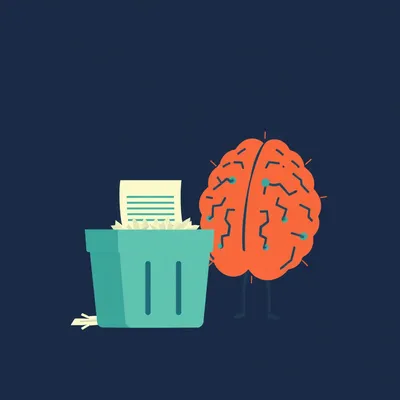
#2010: Building Better AI Memory Systems
We obsess over AI inputs but treat outputs like Snapchat messages. Here's why that's a massive blind spot.

#2008: Needle-in-a-Haystack Testing for LLMs
New AI models claim to be genius-level, but can they actually find a specific fact in a massive document?

#2007: AI Grading AI: The Snake Eating Its Tail
We asked an AI to write this script. Then we asked another AI to grade it. Here’s what happens when the judges have biases.

#2006: How Do You Measure an LLM's "Soul"?
Traditional benchmarks can't measure tone or empathy. Here's how to evaluate if an AI model truly "gets it right."

#2005: Beyond Vibes: The Hard Science of LLM Evaluation
Running the same LLM on different GPUs can produce different results. Here’s why that happens and how to test for it.

#1994: Why Can't AI Admit When It's Guessing?
Enterprise AI now auto-filters low-confidence claims, but do these self-reported scores actually mean anything?

#1992: The Sovereign Compute Shift: Owning vs. Renting AI Iron
Israel is building a sovereign AI supercomputer with 4,000 Nvidia B200 GPUs to keep startups local.

#1991: Why 20 Clean Qubits Beat 1000 Noisy Ones
Israel just unveiled its first 20-qubit superconducting quantum computer, and it's not about size—it's about precision and control.

#1985: AI Tutors vs. Human Error: Who Do You Trust?
AI gets flak for hallucinations, but humans misremember 40% of facts. Why the double standard?

#1979: When Marketing Swallows the Tech
Is AI the same as Machine Learning? We break down the nested hierarchy of artificial intelligence, from symbolic logic to neural networks.

#1962: Moravec's Paradox: Why Robots Can Write Poetry but Can't Fold a Fitted Sheet
We explore the tech letting robots "reason" about physical tasks using vision-language-action models.

#1959: How Constrained AI Models Handle the Unexpected
Your AI assistant promised to only use your documents. Instead, it invented a case law that doesn't exist. Here's why.

#1957: Why AI Agents Think in Circles, Not Lines
Linear AI pipelines are brittle. Learn why loops, reflection, and state management are the new standard for reliable, autonomous agents.

#1946: Why LangChain Built a Three-Layer Agent Stack
We unpack LangGraph, LangChain, and Deep Agents to reveal the deliberate hierarchy behind the ecosystem.

#1943: The Invisible Math Shrinking AI Models
LZMA, Zstandard, and Brotli are shrinking massive AI models, but how do they actually work?

#1940: Why Google's 31B Model Fits in Your GPU
Google just dropped Gemma four, and its 31-billion-parameter size is a masterclass in hardware-aware AI design.

#1938: JSON-to-SQL Type Mapping: A Practical Guide
Mapping JSON to SQL isn't as simple as it looks. Discover the hidden traps in data types that can cause performance hits and data corruption.

#1932: How Do You QA a Probabilistic System?
LLMs break traditional testing. Here’s the 3-pillar toolkit teams use to catch hallucinations and garbage outputs at scale.

#1931: Where Your AI Pipeline Actually Dies
Why do AI pipelines crash? It’s not the models—it’s the plumbing. We break down how to manage data between stages.

#1929: From Vibe Checks to Model Metrics
We stopped "vibe-checking" our AI scripts and built a science fair for models. Here's how we grade them.

#1927: Workers vs. Servers: The 2026 Compute Showdown
Is the persistent server dead? We compare Cloudflare Workers, GitHub Actions, and VPS options for modern app architecture.

#1925: The Plumbing That Keeps Science From Collapsing
Half of all links in academic papers are dead. Here’s the plumbing that keeps knowledge from vanishing.

#1914: Google Invented RAG's Secret Sauce
Before LLMs, Google solved the "hallucination" problem with a two-stage trick that's making a huge comeback.