
AI Core
Fundamentals of AI models, architecture, and how they work
221 episodes · Page 6 of 10

#2089: Open-Source vs. Military ATR: The Drone Recognition Gap
A public GitHub model spotted by a listener reveals the massive gap between hobbyist AI and lethal military drone detection systems.

#2088: Quantum's First Real Benchmarks Are Here
From drug discovery to logistics, quantum computing is finally delivering measurable speedups over classical systems.
#2076: Is Pure NLP Dead? The Hidden Scaffolding of AI
Modern AI didn't appear from nowhere. Discover how decades of linguistic rules and statistical models built the foundation for today's LLMs.
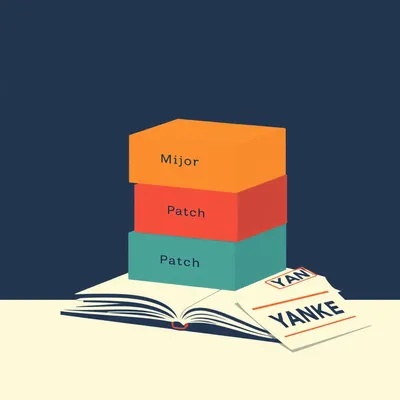
#2070: SemVer, Changelogs, and the Social Contract of Code
Stop breaking the internet. Learn the exact system developers use to release software without causing chaos.

#2067: MoE vs. Dense: The VRAM Nightmare
MoE models promise giant brains on a budget, but why are engineers fleeing back to dense transformers? The answer is memory.
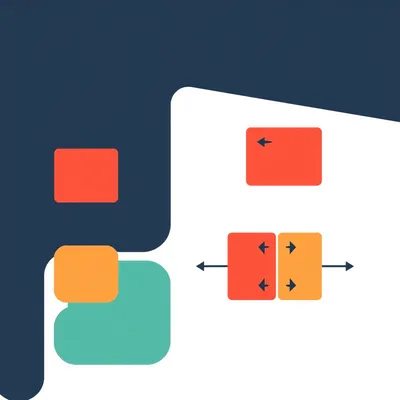
#2066: The Transformer Trinity: Why Three Architectures Rule AI
Why did decoder-only models like GPT dominate AI, while encoders and encoder-decoders still hold critical niches?

#2065: Why Run One AI When You Can Run Two?
Speculative decoding makes LLMs 2-3x faster with zero quality loss by using a small draft model to guess tokens that a large model verifies in para...

#2064: Why GPT-5 Is Stuck: The Data Wall Explained
The "bigger is better" era of AI is over. Here's why the industry hit a data wall and shifted to a new scaling law.

#2063: That $500M Chatbot Is Just a Base Model
That polite chatbot? It started as a raw, chaotic autocomplete engine costing half a billion dollars to build.
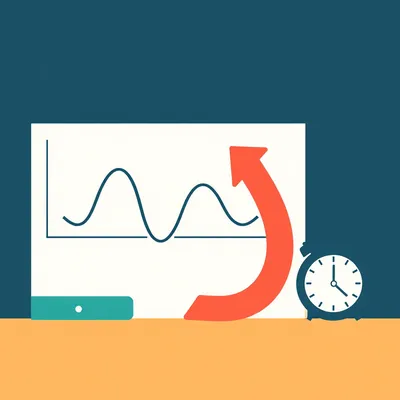
#2062: How Transformers Learn Word Order: From Sine Waves to RoPE
Transformers can’t see word order by default. Here’s how positional encoding fixes that—from sine waves to RoPE and massive context windows.
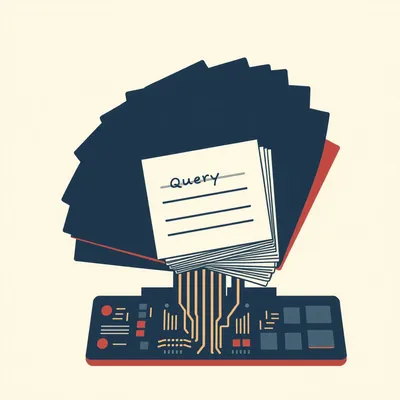
#2061: The Memory Bottleneck That Drives Attention Design
Attention is the engine of modern AI, but it’s also a memory hog. Here’s how MQA, GQA, and MLA evolved to fix it.

#2060: The Tokenizer's Hidden Tax on Non-English Text
Why does a simple greeting in Mandarin cost more to process than in English? It's the tokenizer's hidden inefficiency.

#2059: When Your AI Agent Runs Stale Code
npx is silently running old versions of your AI tools. Here's why your updates vanish into a cache black hole.

#2057: How Agents Break Through the LLM Output Ceiling
The output window is the new bottleneck: why massive context doesn't solve long-form generation.

#2056: Music as Language: The Architecture Behind AI Song Generation
A look at how AI music models use audio tokens, transformers, and diffusion to turn text into songs.

#2046: The Cinema of Constructed Reality
We asked an AI to curate films about AI and reality, exploring the psychedelic overlap between machine hallucinations and human perception.

#2041: The "MPEG Moment" for AI: Llamafile & Native Models
Why are we squeezing massive cloud models onto desktops? Meet the "native" AI revolution.

#2037: The Hidden Hierarchy of Claude Code Extensions
Stop manually typing slash commands. Here’s the definitive hierarchy of Claude Code extensions—from legacy shortcuts to autonomous agents.

#2027: The Missing Photoshop for Words
Why is editing text with AI so clunky? We explore the "TITO" paradigm—using small, local models for fast, private text transformation.
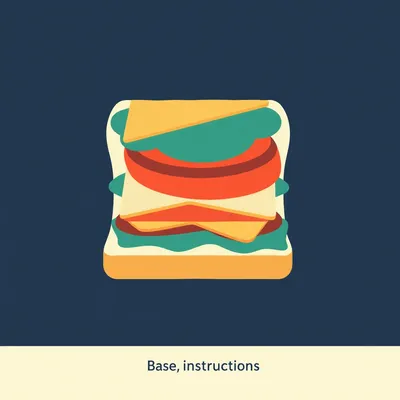
#2026: Prompt Layering: Beyond the Monolithic Prompt
Stop writing giant, monolithic prompts. Learn how to stack modular layers for cleaner, more powerful AI applications.
#2025: How Do You Reward a Thought?
Rewarding an AI agent is harder than just saying "good job"—here's how we turn messy human values into math.

#2024: Your AI Council: Digital Committee or Groupthink?
A digital boardroom of AI models promises better decisions, but risks amplifying the same old biases.

#2021: Your Frozen AI Is Getting Smarter (Here's How)
Your AI model might be static, but the system around it can make it learn in real-time.
#2017: The Art of Squeezing AI Models onto Your GPU
Those cryptic letters on Hugging Face actually map how much brain power you trade for speed.