Daniel wrote in with something that's been rattling around my head all week. He points out that during this ceasefire between Israel and Iran — which is holding but barely — China and Russia have been moving fast to resupply Iran's military capabilities, faster than U.And he asks whether this China-Russia-Iran axis is a genuine geopolitical shift or just the obvious finally becoming undeniable. Then he adds the EU-Israel rift into the equation and asks how the whole landscape changes, however this ends. That's a lot of ground to cover.

And the timing makes it urgent. The ceasefire was brokered in late April, after the February U.-Israeli strike on Iranian nuclear facilities. We're now in late May, and in roughly three weeks, we've seen a resupply operation that normally would have taken two to three months.
The speed is the story.
The speed is absolutely the story. DNI Tulsi Gabbard testified to the Senate Intelligence Committee on May fifteenth that what she called the "unexpected velocity" of Chinese and Russian resupply to Iran caught analysts off guard. That's a direct quote — "unexpected velocity.
Which raises the question — were they surprised because something genuinely new happened, or because their assumptions were wrong?
That's exactly where we need to start. So let's establish what's actually happening on the ground, because the details matter here.
Walk me through it.
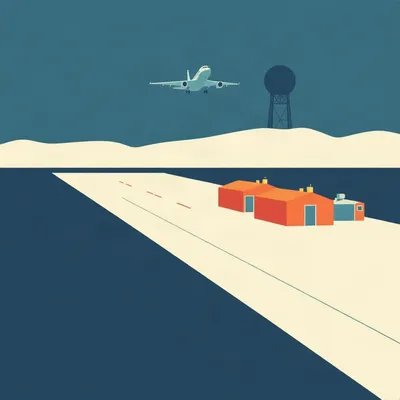
Since early May — so we're talking about a three-week window — Russian S-400 radar modules and Chinese C-802 anti-ship missile variants have been observed moving into Iranian ports. The Russian components are coming via the Caspian Sea to Anzali port. The Chinese systems are routing through Gwadar in Pakistan, then overland to Chabahar. Planet Labs satellite imagery from May eighteenth shows three Chinese cargo vessels at Chabahar simultaneously.
Three at once. That's not a delivery, that's a pipeline.
It's a pipeline. And to put that in perspective, during the 2023 to 2024 period, the typical timeline for Chinese components to reach Iranian forces was six to eight weeks. In May 2026, that's compressed to ten to fourteen days.
We've gone from parcel post to express shipping.
Express shipping with military hardware that changes the balance of power. And here's the qualitative shift that I think is being under-discussed — China is reportedly providing production tooling for Iranian domestic manufacture of loitering munitions. Not just finished systems. Not just components. The actual manufacturing capability.
They're not just restocking the pantry. They're building Iran a kitchen.
That's exactly the right way to think about it. In 2023 and 2024, the pattern was direct supply — drones, missile components, guidance systems. This is technology transfer. It means that even if the supply chain gets cut, Iran's production capacity doesn't collapse.
That's the part that changes the long-term calculus. You can interdict shipments. You can't interdict know-how once it's embedded.
And this is where the intelligence surprise becomes important to understand. The assumption inside the U.intelligence community was that Russia's own war needs in Ukraine would limit its capacity to supply Iran. The thinking was — Russia is burning through artillery shells, air defense systems, armored vehicles. It doesn't have surplus to ship to Tehran.
That assumption turned out to be wrong.
It turned out to be wrong in a specific way. What the IC underestimated was Russia's ability to dual-source production. The model that's emerged is essentially a barter arrangement — Iranian drones for Russian use in Ukraine, in exchange for air defense components and technical expertise flowing back to Iran.
It's not charity. It's not even really an alliance in the traditional sense. It's a swap meet.
A swap meet with S-400 radar modules. And that's important because it means the resupply isn't dependent on Russian goodwill or even Russian surplus capacity. It's a transactional pipeline that benefits both sides operationally.
Which makes it much harder to disrupt through diplomatic pressure. You can't sanction away a mutual need.
And the Chinese side of this is even more significant strategically. The C-802 anti-ship missile variants they're shipping — these are specifically designed to threaten naval vessels in the Persian Gulf and the Arabian Sea. They're not general-purpose munitions. They're tailored to create a specific problem for the U.
China isn't just helping Iran defend itself. It's helping Iran threaten the specific assets the U.uses to project power in the region.
It's doing so through a logistics chain that deliberately bypasses the Strait of Hormuz. The Gwadar-to-Chabahar route — that's the China-Pakistan Economic Corridor infrastructure being repurposed for military resupply. Navy can sit at the Strait of Hormuz all day and it won't affect a single shipment coming through that corridor.
That's the part that should worry defense planners. has spent decades building a force posture around controlling maritime choke points. And China just routed around one.
It's the logistical equivalent of an end run. And it's working. The Pentagon announced this month that it's extending the deployment of the USS Dwight D. Eisenhower carrier group in the Arabian Sea — it was originally scheduled to rotate out in April. That extension is a direct response to the threat environment created by this resupply.
The resupply is already shaping U.That's not a theoretical concern, that's a carrier group staying at sea longer than planned.
If you're sitting in Beijing, watching this, you're seeing confirmation that a relatively modest investment in Iranian anti-ship capability forces the United States to tie down a carrier group that could otherwise be in the South China Sea.
Which gets to the heart of Daniel's question — is this a united axis, or is it something more complicated?
I think the "united axis" framing is both true and misleading. It's true in the sense that China, Russia, and Iran are all actively working to constrain and degrade U.Their actions are aligned. But it's misleading if you think they're operating from a single playbook with identical goals.
Russia's primary interest is creating a quagmire for the United States in the Middle East. Moscow wants Washington's attention, resources, and political bandwidth consumed somewhere other than Ukraine. Every carrier group in the Arabian Sea is a carrier group not available to reinforce NATO's eastern flank. Every Patriot battery sent to Israel is a Patriot battery not sent to Kyiv.
For Russia, Iran is a tool to drain the U.
China's calculus is different. Beijing wants to demonstrate that the United States cannot simultaneously manage Europe, the Middle East, and the Indo-Pacific. This isn't about draining the U.for China — it's about exposing the limits of American power. China wants allies and potential partners around the world to conclude that U.security guarantees aren't reliable because the U.simply can't be everywhere at once.
Russia wants to bog the U.China wants to prove the U.Different motives, same beneficiary — Iran.
Russia's interest in this is probably finite — it needs the Ukraine war to end eventually, and at that point its need for Iranian drones diminishes. China's interest is structural and long-term. Beijing is building a position in the Middle East that it intends to keep for decades.
Which brings us to the Shanghai talks.
In May 2026, China hosted a round of Iran-Israel backchannel discussions in Shanghai. And they included representatives from Saudi Arabia and the UAE.
While Chinese ships are offloading missile components at Chabahar, Chinese diplomats are hosting peace talks in Shanghai.
This is the dual-use strategy. China is simultaneously the arsenal and the mediator. And it's not a contradiction from Beijing's perspective — it's the point. By arming Iran, China ensures that any diplomatic resolution requires Chinese buy-in. By hosting talks, China positions itself as the indispensable intermediary.
It's a protection racket with diplomatic branding.
That's a blunt way to put it, but not inaccurate. And it's explicitly designed to displace the United States as the central diplomatic actor in the region. The inclusion of Saudi Arabia and the UAE is the tell — these are traditional U.partners sitting at a table hosted by China, discussing a conflict in which the U.is a direct participant.
That's a photograph that would have been unthinkable ten years ago.
It would have been unthinkable five years ago. And that's why I push back on the idea that this is just the obvious becoming undeniable. Yes, the trends have been visible since at least 2022. But the Shanghai talks represent a qualitative shift — China is building a parallel diplomatic architecture to compete with the U.
Let me push on that. Is it actually competing, or is it just existing alongside? still has carrier groups in the region. It still has bases in Bahrain, Qatar, the UAE. It still has the diplomatic relationships.
The carrier group extension is actually evidence of competition, not continued dominance. The Eisenhower was supposed to rotate out. It can't, because the threat environment has deteriorated. That's not a sign of strength — it's a sign that the existing force posture is insufficient for the current threat level.
If your presence was supposed to deter, and now you need more presence just to maintain the status quo, something has shifted.
That's before we even get to the EU-Israel dimension, which is where this really gets complicated.
Let's go there. The EU passed a resolution on May twelfth suspending arms exports to Israel. Twenty-two in favor, five against — Hungary and the Czech Republic dissented. What's the significance?
The resolution specifically cited the February 2026 strike on Isfahan as a "disproportionate use of force." This is the first time the EU has formally condemned an Israeli military operation since the 2014 Gaza war.
We're not talking about routine EU criticism. This is a binding resolution with material consequences.
It's an arms embargo. Not a strongly worded letter. And it passed twenty-two to five — that's not a narrow margin, that's a consensus. The countries that voted in favor include Germany, France, the Netherlands, Spain — these are not historically anti-Israel governments.
What's driving it?
I think there are three things. First, the scale of the February strike shocked European publics. The Isfahan operation was not a limited strike — it was a comprehensive degradation of Iranian nuclear infrastructure. Second, there's been a decade-long divergence between EU and Israeli policy on settlements, the two-state solution, and Palestinian statehood that predates this conflict. This resolution didn't come out of nowhere — it's the culmination of years of deteriorating relations.
The third is that Europe is reassessing its strategic dependencies. The Ukraine war showed the EU that relying on the U.for security creates vulnerabilities. The Iran conflict is reinforcing that lesson from a different angle — EU member states are looking at this and saying, we don't want to be dragged into a Middle Eastern war because of U.and Israeli decisions.
It's partly about creating distance from the conflict, not just about the conflict itself.
And that's why I don't think this is a temporary rift that gets patched up when the shooting stops. The structural drivers — diverging threat perceptions, different risk tolerances, the EU's desire for strategic autonomy — those don't go away with a ceasefire.
What does this mean practically? Israel is a major arms importer. If the EU cuts off exports, who fills the gap?
The United States, primarily. But here's where it gets interesting — the U.is already stretched. We just talked about the Eisenhower carrier group extension. has been supplying Israel, Ukraine, and maintaining its own Pacific posture simultaneously. There's only so much production capacity.
The EU embargo creates a supply chain problem that compounds the U.
Creates an opening for other suppliers. India, South Korea, potentially even Turkey — though that's complicated for other reasons. But none of them can match the integrated air defense systems and precision-guided munitions that European manufacturers produce.
Are we talking about a genuine degradation of Israeli capability over time, or just higher costs and longer lead times?
I think it's the latter in the short term, but the former becomes a real risk if the conflict extends. Israel's qualitative military edge depends on continuous access to advanced components — radar systems, avionics, precision guidance kits. If European suppliers are cut off and U.production can't scale fast enough, you start seeing capability gaps.
Which Iran, China, and Russia are certainly tracking.
You can be sure they're tracking it closely. Every EU arms embargo vote is intelligence that feeds into Iranian planning. If you're Tehran, you're looking at the twenty-two-to-five vote and thinking — the Western alliance is cracking.
Is it cracking, though? Or is it just the EU being the EU?
I think "cracking" overstates it, but "straining" understates it. The NATO alliance is intact. -UK relationship is solid. But the broader Western coalition that supported Israel during previous conflicts is fragmenting in ways that are measurable.
Give me the measurement.
In 2023, during the last major Gaza escalation, the EU issued statements of concern but no binding resolutions. In 2024, there were individual member state arms suspensions — Belgium, Spain, Italy — but no EU-wide action. In May 2026, you have a formal EU-wide arms embargo. That's an escalatory trajectory.
The trend line is clear, even if the endpoint isn't.
The trend line matters because it shapes expectations. If you're a defense planner in Tel Aviv, you're now building contingency plans around the assumption that European arms access is not guaranteed. That's a structural shift in Israeli strategic planning, regardless of whether the embargo gets lifted in six months.
Let me bring this back to Daniel's core question — is the China-Russia-Iran alignment a significant development, or just the obvious finally becoming undeniable?
I think it's both, and the distinction matters. The alignment has been building since at least 2022, when Russia's invasion of Ukraine created the conditions for deeper military cooperation with Iran. China's involvement has been more gradual but is now accelerating. So in one sense, this is just the logical endpoint of trends that have been visible for years.
The velocity matters. The fact that resupply timelines compressed from six to eight weeks to ten to fourteen days — that's not a continuation of a trend. That's a step change. The fact that China is now providing production tooling, not just finished systems — that's a qualitative leap. The fact that China hosted peace talks with Saudi and UAE participation while simultaneously arming Iran — that's a new strategic posture, not just more of the same.
The answer to Daniel's question is: yes, it's significant, because speed and depth matter as much as direction.
Speed, depth, and the simultaneous diplomatic-military dual track. That combination is new.
Let's talk about the domestic U.Daniel mentioned that the war against Iran may prove unpopular domestically. Is that bearing out?
There are signs of it. House Republicans delayed a vote to halt the Iran war that was reportedly on the verge of passing — that tells you there's significant bipartisan skepticism about the scope and duration of U.The administration is managing a conflict that doesn't have clear public support for escalation.
Which creates a vulnerability that China and Russia can exploit. If the U.domestic coalition is fragile, the resupply strategy doesn't need to win militarily — it just needs to extend the conflict long enough for the political support to erode.
That's exactly the Russian playbook from Ukraine, applied to the Middle East. Moscow learned that the U.and its allies struggle to sustain public support for long wars of attrition. Iran's strategy is to not lose, rather than to win, and the Chinese-Russian resupply pipeline makes that viable.
The metric that matters isn't who controls what territory. It's whether Iran can regenerate combat power faster than the U.-Israeli coalition can degrade it.
Right now, the regeneration rate is surprisingly high. The Times of Israel reported that Iran is recovering military abilities faster than expected and is producing drones again. That's despite the February strikes. The resupply pipeline is working.
Which brings us to the actionable question. If you're a defense analyst, an investor, a policymaker — what do you do with this information?
I think there are three concrete takeaways. First, for defense analysts and investors — the resupply velocity metric is now a leading indicator of conflict duration. If you want to know whether this ceasefire holds or collapses, you don't watch the diplomatic statements. You watch satellite imagery of Chabahar and Anzali ports. If the cargo vessels keep arriving at this pace, Iran is preparing for a long war, not a negotiated settlement.
Track the ships, not the speeches.
Second takeaway — for policymakers, the assumption that Russia cannot project power beyond Ukraine has been falsified. The Iran resupply demonstrates a distributed logistics capability that will outlast the Ukraine war. Whatever happens in Ukraine, Russia has built a military supply relationship with Iran that has its own momentum.
The idea that containing Russia in Ukraine contains the Russian threat globally is wrong.
It's demonstrably wrong. Russia is fighting in Ukraine and simultaneously enabling Iran to threaten U.forces in the Middle East. That's not a country that's been strategically contained.
The third takeaway?
For geopolitical strategists — the post-conflict landscape will be defined not by who wins the Iran-Israel confrontation, but by whether the U.can rebuild the alliance architecture that has eroded. The EU-Israel rift is the canary in the coal mine. If the U.can't repair that relationship, the next conflict won't just be Israel versus Iran — it'll be Israel and the U.versus Iran, China, and Russia, with Europe sitting it out.
That's a fundamentally different strategic environment than the one the U.has operated in for the past seventy years.
That's why I think the "this is just the obvious becoming undeniable" framing understates what's happening. The post-World War Two alliance architecture — NATO, the U.-EU partnership, the U.role as guarantor of Middle Eastern stability — is being stress-tested in ways it hasn't been since the Suez Crisis.
The Suez comparison is interesting. That was 1956 — the U.and the USSR both pressured Britain, France, and Israel to withdraw. It marked the end of European imperial power projection in the Middle East.
What we're seeing now is potentially the beginning of the end of the U.-led order in the region. Not because the U.is weak, but because the demands on U.power exceed its capacity, and the allies that used to fill the gaps are stepping back.
Let me push back on that. still has the largest economy in the world. It still has the most powerful military. It still has the dollar as the global reserve currency. This isn't Britain in 1956.
No, it's not. But the metric isn't absolute power — it's power relative to commitments. is simultaneously deterring China in the Indo-Pacific, supporting Ukraine against Russia, defending Israel against Iran, and managing domestic political fragmentation. The question isn't whether the U.It's whether it can sustain all of those commitments simultaneously when adversaries are actively coordinating to stretch them further.
The evidence from the carrier group extension suggests the answer is — it's getting harder.
It's getting harder, and the adversaries know it's getting harder. That's the strategic logic behind the resupply velocity. Every day the Eisenhower stays in the Arabian Sea is a day it's not in the South China Sea. Every Patriot battery in Israel is a Patriot battery not in Europe. The coordination isn't perfect, but it doesn't need to be — the effect is cumulative.
There's a misconception I want to address directly, because it shapes how people interpret all of this. The idea that U.intelligence was surprised because they lacked collection capability.
That's not what happened. The IC has excellent satellite coverage of Iranian ports. They saw the ships arriving. The surprise was analytical — they didn't expect the volume and speed because their assumptions about Russian capacity and Chinese risk tolerance were wrong.
It was a failure of imagination, not a failure of intelligence gathering.
It was a failure to update assumptions in real time. The IC assumed Russia couldn't sustain both the Ukraine war and a major resupply operation for Iran. That assumption was reasonable based on 2023 data. But it didn't account for the dual-sourcing model that emerged in 2024 and 2025, where Iranian drone production for Russia freed up Russian capacity for other exports.
The Chinese piece — the assumption was that China wouldn't risk direct logistical support for Iran because it would draw U.naval attention to the Gwadar-Chabahar corridor.
China decided that risk was acceptable. That's the analytical failure — not understanding that Beijing's risk calculus had shifted. China is now willing to accept more direct confrontation with the U.in the Middle East than it was two years ago.
Which itself is a significant development, regardless of whether it was predictable.
It connects back to the EU piece. China is watching the EU-Israel rift and seeing an opportunity. If Europe is stepping back from the U.-Israeli coalition, the costs of Chinese involvement go down. A divided West is a permissive environment for Chinese expansion.
The EU arms embargo isn't just a problem for Israel. It's a strategic gift to China.
It's a strategic gift to China and Russia. Every fracture in the Western alliance reduces the deterrent effect of U.If you're a country in Southeast Asia watching this, you're noticing that the U.can't keep its European allies aligned on Middle East policy. What does that tell you about the reliability of U.security guarantees in the South China Sea?
That's the knock-on effect that I think is being under-discussed. The Iran conflict isn't just about the Middle East. It's a demonstration of U.alliance management capability — or the limits thereof — that every potential partner around the world is watching.
China is making sure they're watching. The Shanghai talks with Saudi and UAE participation — that's a signal to every country in the Global South that there's an alternative to the U.
Let's talk about the Polymarket odds. As of today, May twenty-second, the betting markets give the ceasefire a sixty-two percent chance of failure by August 2026.
Sixty-two percent. That's not a marginal probability — that's the market saying collapse is more likely than not. And prediction markets have been reasonably accurate on conflict duration, though they have their own biases.
What's driving that number?
I think it's driven by the resupply velocity we've been discussing. The market is pricing in the fact that Iran is rebuilding capability faster than diplomatic progress is being made. If Iran can regenerate combat power in weeks rather than months, the incentive to extend the ceasefire diminishes.
Because the ceasefire benefits Iran more than it benefits Israel.
In the short term, absolutely. Every week of ceasefire is a week of resupply. Israel gets a pause in rocket attacks, but Iran gets reconstitution of capabilities that took months to degrade. The asymmetry favors Tehran.
Which raises the question — if the ceasefire collapses, do we see direct Russian or Chinese military involvement, or do they maintain the proxy resupply model?
I think the proxy model holds. Direct involvement would trigger escalation risks that neither Moscow nor Beijing wants. Russia doesn't want a direct confrontation with the U.Navy in the Persian Gulf. China doesn't want U.attention shifting from Europe to the Middle East in a way that could affect its Indo-Pacific planning.
The play is to keep arming Iran, keep hosting diplomatic talks, and let the U.and Israel bear the costs of actual combat.
It's the optimal strategy from their perspective. Low cost, high strategic return, minimal escalation risk. Why would they change it?
Unless the calculus shifts. If Iran starts losing badly enough that the regime is threatened, does China stay on the sidelines?
That's the scenario that keeps me up at night. China has invested heavily in the Iran relationship — energy imports, Belt and Road infrastructure, the Chabahar port itself. A regime collapse in Tehran would threaten all of that. I think there's a threshold beyond which China's risk calculus shifts from "arm the proxy" to "protect the investment.
We don't know where that threshold is.
We don't. And that uncertainty is itself a strategic problem. has to plan for the possibility that escalating against Iran triggers Chinese escalation in response. That constraint shapes U.options even if China never actually crosses the threshold.
The mere possibility of Chinese involvement limits U.freedom of action.
That's deterrence, but in reverse. China is deterring U.escalation against Iran without ever having to issue an explicit threat. The resupply pipeline and the Shanghai talks together create ambiguity about how far China would go, and that ambiguity constrains U.
Which is a remarkably sophisticated strategy for a country that, a decade ago, had virtually no military footprint in the Middle East.
China has learned fast. And it's applying lessons from observing U.behavior over the past thirty years. telegraphs its red lines. China keeps them ambiguous. builds formal alliances with treaty obligations. China builds transactional relationships with flexible commitments. In a multi-polar environment, the Chinese model has advantages.
Let me bring this to a close with what I think is the uncomfortable implication of everything we've discussed. is now in a position where it can't assume it can fight one regional conflict without creating opportunities for its adversaries elsewhere. That used to be a theoretical concern. It's now an operational reality.
It's not just a U.It's an Israel problem, a Europe problem, an Indo-Pacific problem. The era of compartmentalized conflicts is over. What happens in Iran affects what happens in Ukraine affects what happens in the Taiwan Strait. The adversaries have connected the theaters. and its allies haven't fully adjusted to that reality.
The "united axis" framing Daniel asked about — it's not a formal alliance. It's a convergence of convenience. But the convergence is real, it's accelerating, and it's reshaping the strategic landscape faster than most analysts expected.
The resupply velocity tells the story. Ten to fourteen days from Chinese port to Iranian forces. Three cargo vessels at Chabahar simultaneously. Production tooling, not just finished systems. These are not the actions of countries that are hedging. These are the actions of countries that have chosen a side.
Now: Hilbert's daily fun fact.

The Olm, a blind cave salamander native to southeastern Europe, can survive without food for up to ten years by slowing its metabolism and reabsorbing its own tissues — and it was first formally described by scientists in the 1810s, around the same time the Cape Verde islands were experiencing a major volcanic eruption that reshaped their coastline.
Ten years without food. That's patience I can respect.
I'm not sure whether to be impressed or horrified.
This has been My Weird Prompts. Thanks to our producer, Hilbert Flumingtop. If you want more episodes, find us at myweirdprompts.com or on Spotify. The ceasefire has a sixty-two percent chance of failure by August — watch the ports, not the press releases.