Daniel sent us this one — he's been looking at importing smaller quantities from China, like a pallet or two, using Alibaba's DDP incoterm. And he noticed something that a lot of small buyers miss: DDP does not mean "delivery to your doorstep." It means delivery to the address you specify. And if you specify a third-party fulfillment center instead of your house, you never have to go near a port, you don't need a warehouse, and you don't end up with a pallet blocking your hallway for three weeks. Which I have opinions about.

I remember the pallet incident. You measured the clearance daily.
For three weeks. But Daniel's question gets at something smarter — he wants to know how to find third-party fulfillment centers that work within Cainiao's logistics network. Providers that can receive pallets from China, have a recognized relationship with the carrier, and let a small buyer just show up and collect their goods.
This is one of those things where the infrastructure exists but nobody tells you about it. Cainiao has quietly built out a last-mile network that can handle palletized freight in a lot of destination countries, but the whole system assumes you know to give it an address that can actually receive freight. Most people don't.
The cost of getting that wrong is not abstract. A pallet shows up at a residential address, there's no liftgate on the truck, the driver refuses to unload, and suddenly you're paying a hundred and fifty dollars for a service call while your goods sit on a truck somewhere. Or worse, the carrier marks it undeliverable and it goes back.
The real bottleneck isn't customs clearance, it isn't shipping speed — it's finding a willing receiver. And the thing Daniel spotted, which I think is the right instinct, is that a third-party fulfillment center solves that problem cleanly. Loading dock, forklift, staff who sign for things during business hours. You pay a small receiving fee, maybe five to fifteen dollars per pallet, and you pick up when it suits you.
The episode is really about closing that gap. What DDP actually promises, why the address you give is the whole game, and how to find a fulfillment center that plugs into Cainiao's network without adding friction or surprise costs. And I want to get into the specific mechanics of what happens when you get this wrong, because I think the residential delivery trap is where most small buyers learn this lesson the hard way.
Let's start with what DDP actually means, because the term itself is part of the problem. Delivered Duty Paid — three words that sound like "it shows up at your house and someone carries it inside." That is not what it means.
The official definition from the International Chamber of Commerce is that the seller bears all costs and risks of transporting goods to the named place of destination, including import duties and taxes. It could be a port terminal, a warehouse, a retail store, or yes, a residential address. But the seller's obligation ends at the point of unloading — and "unloading" means the goods are made available on the arriving vehicle. Not carried inside, not unpacked, not placed in your garage.
The promise is "we will get this pallet to the curb or the loading dock at the address you give us, and we will have paid all the duties and taxes along the way." The promise is not "we will haul it up your driveway, navigate your HOA's truck restrictions, and stack boxes neatly in your spare bedroom.
And that distinction matters because freight carriers operate on a completely different model than parcel delivery. A UPS truck bringing a small box to your door has a driver trained for residential delivery, a vehicle that fits on residential streets, and a workflow built around leaving packages at doorsteps. An LTL freight carrier sending a forty-eight by forty inch pallet weighing several hundred pounds is a different world entirely. Those trucks are often fifty-three foot trailers. They need a loading dock or at minimum a liftgate, which most residential deliveries don't have by default.
The driver is not incentivized to figure it out. Freight drivers are typically paid by the route, sometimes by the stop. If they pull up to a house with a pallet and no way to get it off the truck, they are not going to spend forty-five minutes improvising. They will mark it as undeliverable and move on.
This is where the residential delivery trap really bites. Even if the carrier technically offers residential delivery, it usually comes with surcharges — liftgate fees of a hundred to two hundred dollars, appointment windows that you have to schedule days in advance, and in some cases the carrier will flatly refuse if the street is too narrow for a tractor-trailer or if there are local ordinances restricting commercial vehicles. Small buyers don't discover any of this until the tracking status flips to "delivery attempted — receiver not available.
At that point you are negotiating with a freight terminal, trying to arrange a pickup or a redelivery, while your goods accrue storage fees. I have lived this. The pallet was not the problem. The problem was that my address was a residential walk-up and nobody in the logistics chain thought to mention that this might be an issue until the truck was already in the neighborhood.
The fix Daniel is pointing toward is elegantly simple. Instead of giving your home address, you give the address of a third-party fulfillment center. These are businesses whose entire reason for existing is receiving freight. They have docks, forklifts, staff who know how to sign a bill of lading, and business hours that align with when freight carriers actually deliver. The DDP seller doesn't care what kind of building it is — they just need an address that meets the carrier's delivery requirements.
That is the shift in thinking. DDP is not a residential delivery service with extra paperwork. It is a freight delivery mechanism that happens to include customs and duties. If you treat it like freight and give it a freight-appropriate address, the whole system works. If you treat it like a very heavy Amazon Prime order, it breaks.
Which brings us to the actual mechanics of how this works inside Cainiao's network, because the address override is there in the Alibaba order flow — but it is not exactly advertised.
Cainiao is not a carrier. That is the single most misunderstood thing about Alibaba's logistics. It is a data platform — a digital layer that sits on top of dozens of actual carriers, freight forwarders, customs brokers, and last-mile delivery partners. Cainiao's job is to orchestrate the handoffs. It tells the Shenzhen trucking company where to pick up, tells the ocean or air freight provider what's coming, tells the destination country broker what needs clearing, and tells the local LTL carrier where to deliver. But Cainiao itself never touches a pallet.
When you place a DDP order on Alibaba and type in a delivery address, that address gets passed through Cainiao's system to whatever partner carrier handles last-mile freight in your region. In the US that might be UPS Freight or a regional LTL operator. In Canada it could be UniUni. The system checks whether the address is in the carrier's delivery database. If it is, the order proceeds. If it isn't, you get an error or a request to revise.
Here is the subtle part. The Alibaba checkout flow does not ask you "is this a residential or commercial address?" It just asks for an address. Cainiao's system infers the address type from its database. If it sees a single-family home in a residential zone, it may still accept the order — but the carrier's actual delivery rules are not surfaced to you at checkout. You only find out about liftgate fees or appointment requirements when the carrier calls to schedule delivery, which might be days after your goods have cleared customs.
Which is already too late to change the address without incurring redirect fees. The override Daniel is talking about — specifying a fulfillment center instead of your house — has to happen at the point of order. You put the fulfillment center's street address, suite number, dock hours in the delivery instructions field, and any special notes like "appointment required, call this number." The seller passes that to Cainiao, Cainiao passes it to the carrier, and the carrier treats it as a standard commercial delivery.
What makes a fulfillment center DDP-ready is mostly about three things. First, they need a physical loading dock or at minimum a forklift and a willingness to handle palletized freight. Second, they need to be in the delivery network of whatever LTL carrier Cainiao uses in your region. Most commercial warehouses in industrial parks are — that is literally where freight carriers expect to deliver. Third, they need to offer short-term receiving for non-account-holders. Some fulfillment centers only work with clients who have monthly storage contracts. You want one that offers will-call pickup or per-pallet receiving for walk-in customers.
The receiving fee is where the economics get interesting. A typical third-party fulfillment center charges five to fifteen dollars per pallet just to receive it, sign for it, and hold it for a short window — often forty-eight hours free, then maybe two dollars a day after that. Compare that to a hundred and fifty dollars for a residential liftgate service call, plus the stress of wondering whether the driver will even attempt delivery. The math is not close.
There is a secondary benefit that most people don't think about until it saves them. If a pallet arrives damaged — crushed corner, water intrusion, whatever — a fulfillment center employee knows how to note that on the bill of lading before signing. That notation is your leverage for a Cainiao dispute or a Trade Assurance claim. A residential delivery driver handing you a clipboard while standing in your driveway is not going to wait while you unwrap and inspect a pallet.
I would add a fourth criterion for DDP-ready that is easy to overlook. The fulfillment center needs to accept deliveries from international carriers specifically. Some facilities have restrictions — they will take domestic LTL but not freight that involves customs clearance, because they do not want to be named as the importer of record or get pulled into a customs dispute. You need to confirm upfront that they understand the DDP structure, where the seller handles all customs obligations and the facility is just the receiving party.
That is a phone call. Not an email, not a web form — pick up the phone and ask. "Do you accept pallets from international DDP shipments arriving via Cainiao's partner carriers? What is your receiving fee? Do you require an appointment? What are your dock hours?" If they hesitate on any of those questions, find another facility. There are thousands of them, and the ones that know what they are doing will answer immediately.
Finding the right facility is where most people stall out. The national fulfillment networks — ShipBob, Ryder, FedEx Fulfillment — they have the carrier relationships baked in. ShipBob integrates directly with dozens of LTL carriers, so if Cainiao hands off to UPS Freight or SAIA or whoever, the ShipBob warehouse is almost certainly in their system already. The tradeoff is that these national players have stricter requirements. They often want you to have an account, they may require inbound shipment notifications forty-eight hours in advance, and they are not cheap for one-off receiving if you are not also using their pick-and-pack services.
The local alternative is almost the opposite. A mom-and-pop warehouse in an industrial park near you — they are more flexible, the receiving fee is probably ten bucks cash, and they will not blink at a single pallet showing up unannounced. But the risk is they may not be in Cainiao's partner carrier database. If the LTL driver's route system does not recognize the address as a valid commercial stop, you are back to the residential problem in a different form.
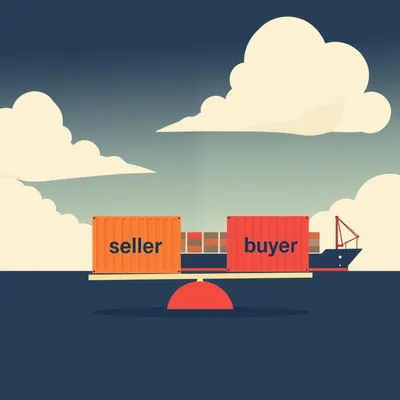
That is the relationship triangle Daniel mentioned. Seller to Cainiao partner carrier to fulfillment center to buyer. Each leg has to actually connect. The fulfillment center has to be a known stop in the carrier's route planning software. If it is not, the carrier may still deliver — but they might call it a "non-standard location" and tack on a surcharge, or require the facility to meet the truck at a depot. You want to avoid that.
The practical workflow starts before you ever place the Alibaba order. Step one: find a fulfillment center near you that advertises pallet receiving and will-call pickup. Google "pallet receiving near me" or "third-party logistics receiving Austin" — whatever your city is. Step two: call them and ask the specific questions Herman laid out. Do you accept international DDP freight? Which LTL carriers deliver to you regularly? What is your per-pallet receiving fee? Do you require an appointment?
Step three: get their delivery address and any dock instructions in writing. Some facilities have specific hours — seven AM to three PM, Monday through Friday — and if the carrier shows up at four thirty, nobody is there to sign. You need to put those dock hours in the Alibaba order's delivery instructions field so the seller can relay them to Cainiao. Step four: provide that address at checkout. Step five: track the shipment through Cainiao's portal, which will show you customs clearance milestones and the handoff to the local LTL carrier. Step six: when tracking shows delivered, go pick up your goods.
The cost question is worth being precise about. DDP bundles shipping, duties, and customs brokerage into the product price you pay on Alibaba. Changing the delivery address from your house to a fulfillment center does not change that DDP cost — the seller's freight rate to a commercial address in the same metro area is typically the same or slightly cheaper. The only new costs are on the receiving end: five to fifteen dollars per pallet to the fulfillment center, and if you leave it there more than a couple of days, whatever daily storage fee they charge.
Then there is the risk side. What happens if the fulfillment center refuses the shipment? That is rare if you have done the upfront phone call, but it can happen if the carrier shows up outside dock hours or the pallet is in worse shape than expected. DDP shifts risk to the seller until the goods are delivered to the named place — but "delivered" means the carrier gets a signature. If the fulfillment center refuses to sign, the goods go back to the carrier's depot, and you are in a gray zone. The seller fulfilled their obligation to ship, but delivery was not completed. That is when you lean on Alibaba Trade Assurance, which covers orders up to fifty thousand dollars and includes shipping disputes.
Damage on arrival is the other big one. If a pallet shows up with a crushed corner or water damage, the fulfillment center employee should note that on the bill of lading before signing. "Received damaged — one pallet, corner crushed, cartons exposed." That notation is everything. Without it, the carrier and Cainiao will argue the damage happened after delivery, and you have no recourse. With it, you can file a dispute through Alibaba's system and Cainiao will investigate with the carrier. This is another reason a fulfillment center beats residential delivery — the person signing actually knows to do this.
If you are taking notes, here is the playbook distilled. First thing to internalize: DDP does not mean delivery to your home. It means delivery to the address you specify. That is not a loophole, it is the actual definition. The flexibility is built in.
The corollary is that you should never give a residential address for palletized freight. Even if the carrier technically accepts it, you are inviting surcharges, missed deliveries, and a driver who has every incentive to drive away. A fulfillment center costs you ten or fifteen bucks and eliminates all of that.
Second actionable point: vet the fulfillment center before you place the order. Ask the specific questions — do you accept international DDP freight? Which LTL carriers deliver to you regularly? What is your per-pallet receiving fee? What are your dock hours? Get the answers, write them down, and confirm the address they want you to use. If they sound confused by any of those questions, that is your signal to find someone else.
I would add — get it in writing. An email confirming their receiving fee and dock hours is worth having if something goes sideways. It also gives you something to paste into the Alibaba delivery instructions field so the seller and Cainiao have the exact same information you do.
Third: in the Alibaba order, communicate clearly. The delivery address is not just a street number. It is the fulfillment center's full address, suite or dock number if they have one, dock hours, and any appointment requirement. Put all of that in the delivery instructions. And use Trade Assurance. It covers orders up to fifty thousand dollars and gives you a dispute mechanism if the shipment arrives damaged or does not arrive at all. Without it, you are relying on the seller's goodwill.
Trade Assurance is the backstop that makes the whole workflow viable for a small buyer. If the pallet shows up crushed and the bill of lading is noted properly, you file a dispute through Alibaba's system. Cainiao investigates with the carrier. The process is not fast, but it exists, and sellers know it exists, which changes how they handle problems.
Fourth: do the total cost math before committing. DDP price plus fulfillment center receiving fee plus your time and transport for pickup. For one to three pallets, this route almost always beats hiring a freight forwarder who handles everything end to end — a forwarder might charge you a minimum fee that assumes a much larger shipment. But if you are ordering regularly, or if your order is four pallets or more, it is worth comparing. A forwarder might consolidate and give you a better rate at higher volumes.
The sweet spot we are describing — one to three pallets, DDP via Alibaba, delivered to a third-party fulfillment center — that is a gap in the market that most small importers do not realize has been filled. Cainiao built the plumbing. The fulfillment centers exist. The only missing piece was someone telling you that you can connect them.
That raises the bigger question. Cainiao is building out this last-mile network aggressively — they are adding partner carriers, expanding coverage, deepening their integration with Alibaba's checkout flow. At some point, does "fulfillment center as a service" just become a checkbox in the order form? A dropdown that says "pick up at a nearby receiving center" with a list of addresses and per-pallet fees?
It feels like the logical endpoint. Alibaba already knows what you are buying, knows the dimensions and weight, knows the shipping lane. If they can recommend a freight forwarder, they can recommend a receiving facility. The data layer Cainiao operates could easily surface compatible fulfillment centers in your area — ones that are already in their partner carriers' route databases, with verified dock hours and published receiving fees.
The incentive is there from Alibaba's side too. Every failed residential delivery is a support ticket, a dispute, a refund, a seller who looks bad through no fault of their own. If routing pallets to commercial receivers reduces delivery failures — and it absolutely would — that is pure margin protection disguised as a customer experience improvement.
The counterargument is that small buyers are a tiny slice of Alibaba's volume. The platform's logistics are optimized for two extremes: massive B2B container shipments and tiny B2C parcels. The one-to-three-pallet importer is in an awkward middle that neither side of the infrastructure was really built for. Cainiao might not prioritize building a receiver-matching feature for a segment that represents a rounding error in their shipment data.
But the line between B2B and B2C is blurring fast. Platforms like Alibaba are treating small importers more and more like consumers — streamlined checkout, bundled shipping, buyer protection. But the physical infrastructure has not caught up. Residential freight delivery is still a niche service with surcharges and restrictions because the carriers built their networks for businesses delivering to businesses. Third-party fulfillment centers are the bridge between those two worlds. They let a small buyer act like a business on the receiving end without actually owning a warehouse.
That bridge is not theoretical. It exists right now. You can place an order this afternoon, route it to a fulfillment center, and pick up your goods in two weeks without ever seeing a port or signing a dock receipt yourself. The fact that it requires a phone call and some Googling instead of a dropdown menu does not make it less real. It just makes it less discovered.
Which is why we want to hear from people who have actually done this. If you have used a third-party fulfillment center for DDP delivery from Alibaba — or if you tried and hit a wall — tell us what worked, what did not, what you would do differently. Which fulfillment centers played nice with Cainiao's carriers? Which ones surprised you with hidden fees? The playbook we laid out works, but it gets better with more data points from people in the trenches.
If you found a fulfillment center that refused international DDP freight or gave you the runaround, that is just as useful to know. The directory of DDP-ready receivers is being built one experience at a time, and we would rather learn from your phone call than repeat it ourselves.
Leave a review wherever you listen — that is the easiest way to share your experience and it helps other small importers find the show. Or email us at show at my weird prompts dot com. We read every one, and if you have a fulfillment center recommendation or a horror story, we want it.
Now: Hilbert's daily fun fact.
Hilbert: During the interwar period, German astronomer Julius Bauschinger proposed naming a specific lunar libration effect the "Honduras Oscillation" after observing it from a temporary observatory in Tegucigalpa, but the name was rejected by the IAU in nineteen twenty-eight and never appears in modern selenography texts.
I genuinely do not know what to do with that information.
This has been My Weird Prompts. I am Corn.
I am Herman Poppleberry. We are back next week. Until then, may your pallets arrive undamaged and your dock hours be convenient.