Daniel sent us this one, and it's the kind of thing that sits with you after you read it. He had gallbladder surgery about seven years ago, and ever since, eating and drinking have come with a cost — bloating, discomfort, that feeling of just being physically gross. And here's the tension: when you know food is going to make you feel bad, your instinct says avoid it. But you also know where that instinct can lead if you're not careful. So the question is, what strategies do people use to make peace with eating when eating hurts? Not just coping with the physical symptoms, but the mental side of it — how do you keep a healthy relationship with food when food has stopped being a simple comfort?

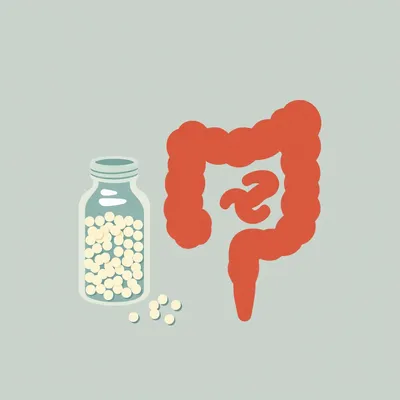
This is one of those questions where the medical reality and the psychological reality are completely intertwined, and most discussions only handle one side. The physical mechanisms are fairly well understood — when you remove a gallbladder, you lose the bile storage reservoir, so bile trickles continuously into the small intestine instead of being released in concentrated bursts when you eat. That constant drip can irritate the intestinal lining, and when you eat something fatty, there's no surge of concentrated bile to emulsify it properly. So you get bloating, cramping, diarrhea. Standard post-cholecystectomy syndrome. But the psychological piece — the learned aversion that develops when your brain starts associating food with pain — that's much less discussed.
It's basically classical conditioning, right? Pavlov's dogs but in reverse. Every time you eat, you get punished, so eventually the bell makes you flinch.
The term for what you're describing — the avoidance of food because of fear of aversive consequences — actually has a clinical name now. It falls under ARFID, Avoidant Restrictive Food Intake Disorder. It was added to the DSM-5 in 2013, and it's distinct from anorexia or bulimia because it's not driven by body image concerns. It's driven by fear of what the food will do to you. Fear of choking, vomiting, pain, allergic reactions. And increasingly, gastroenterologists are recognizing it in patients with chronic GI conditions.
This isn't just Daniel being in his head about it. There's an actual diagnostic framework for exactly this pattern.
And the research has really accelerated. There was a study out of Massachusetts General Hospital in 2023 that found about twenty-one percent of patients with functional GI disorders met the criteria for ARFID. That's one in five. These aren't people with eating disorders who happen to have stomach problems — these are people whose stomach problems created the eating disorder. The causality runs the other direction.
Which makes intuitive sense. If every time you touch a hot stove you get burned, eventually you stop touching stoves. The problem is you can't stop eating.
That's the trap. The only way to eliminate symptoms is to not eat or drink. That's technically true, and your brain knows it's technically true, which makes the avoidance behavior incredibly hard to override because it's not irrational. It's hyper-rational applied to a constraint you can't escape.
It's the prisoner's dilemma where you're playing against your own digestive system.
I'm going to borrow that. And here's what makes it particularly insidious — the avoidance itself can make the physical symptoms worse over time. If you restrict your diet to only safe foods, you can end up with nutritional deficiencies that further impair gut function. You can lose microbial diversity because you're eating such a narrow range. The motility of your digestive system can actually change. So the coping strategy that gives you short-term relief creates a long-term escalation.
We've got two problems to solve. One is the physical reality — the bloating and discomfort are real, not psychosomatic. Two is the psychological spiral where avoidance feels like the only rational response. What actually works?
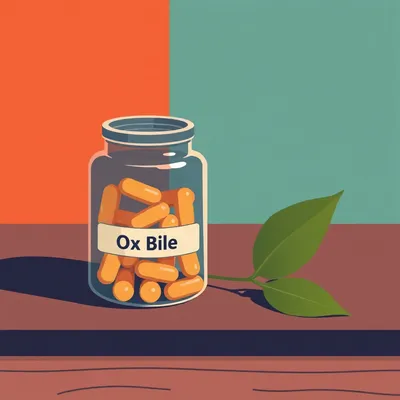
Let me start with the physical side, because there are concrete things that don't get enough attention. First, bile acid binders — medications like cholestyramine or colesevelam that essentially soak up excess bile in the intestine. For a lot of post-gallbladder patients, the constant bile drip is the root cause of the diarrhea and cramping, and bile acid binders can be genuinely transformative. The problem is, many people are never offered them. They're told, oh, you'll adjust, give it time, and seven years later they're still adjusting.
Is this something a general practitioner would prescribe, or do you need a specialist?
Usually a gastroenterologist, but a well-informed primary care doctor absolutely can. The barrier is awareness. Post-cholecystectomy syndrome is underdiagnosed because the symptoms are nonspecific and the surgery is considered routine. The attitude is often, well, the gallbladder's out, problem solved, next. But for somewhere between five and forty percent of patients, depending on which study you look at, the symptoms persist or new ones develop.
Five to forty percent is a spectacularly unhelpful range.
It reflects how differently these things are measured. Some studies only count severe diarrhea, others include mild bloating. The point is, it's not rare. Bile acid malabsorption specifically — the technical term for what happens when excess bile irritates the colon — is estimated to affect about one in three post-cholecystectomy patients. We're talking millions of people.
Step one is, have you actually been evaluated for bile acid malabsorption, because there might be a pharmacological fix you haven't tried. What's step two?
Step two is dietary management that's more sophisticated than just "avoid fatty foods." The standard advice is low-fat, small meals, bland foods, and that advice is not wrong exactly, but it's so generic that it leaves people to figure out the details through trial and error, which is exhausting and can reinforce the avoidance pattern.
Because every meal becomes an experiment with a possible failure state.
When the failure state is "I feel terrible for the next six hours and I can't function," you become extremely risk-averse. So what actually works? Soluble fiber before meals. Something as simple as a teaspoon of psyllium husk in water fifteen minutes before eating can absorb excess bile and slow down intestinal transit. It's cheap, over the counter, and the evidence is solid. A randomized controlled trial in 2022 showed psyllium significantly reduced postprandial urgency in bile acid malabsorption patients.
That's the medical term for "I need a bathroom right now.
And it's one of those terms that sounds clinical until you've experienced it, and then it sounds terrifying. But the psyllium thing — it's almost too simple for people to take seriously. A teaspoon of fiber before meals. It's not a drug, it's not expensive, nobody's marketing it aggressively. But it works for a lot of people.
It's the leaf medicine of gastroenterology.
I'm going to pretend I didn't hear that.
You brought up psyllium, I'm connecting it to my ancestral traditions. This is a respectful cross-cultural moment.
Your ancestral traditions also claim sloths invented pizza, so forgive my skepticism. But yes, soluble fiber is effective. The third physical strategy is digestive enzymes, specifically lipase, which helps break down fats. Over-the-counter pancreatic enzyme supplements can help some people, though the evidence is more mixed. Timing matters — taking them mid-meal rather than before or after seems to work better. The research is less robust than for bile acid binders or fiber, but anecdotally, a lot of patients report significant improvement.
We've got bile acid binders, soluble fiber before meals, possibly digestive enzymes. That's the physical toolkit. But even if those reduce symptoms by, say, seventy percent, you're still going to have days where you eat something and feel bad. And your brain is still going to remember all the previous times. How do you break the psychological conditioning?
This is where the ARFID research is illuminating. The standard treatment involves a form of cognitive behavioral therapy specifically adapted for food avoidance. It's called CBT-AR, developed by researchers at Harvard and the University of Chicago. The approach is gradual exposure — but it's not just exposure to the food itself. It's exposure to the feared outcome.
Wait, so the therapy involves actually experiencing the discomfort? That sounds counterintuitive.
It sounds counterintuitive, but the logic is sound. The problem isn't just that you're avoiding food — it's that you're avoiding the feeling of being bloated or uncomfortable, and your brain has learned that avoiding food is the only reliable way to avoid that feeling. The therapy helps you learn through experience that you can tolerate the discomfort, that it's time-limited, that it doesn't actually prevent you from functioning in the ways you fear it will. It's not about making the discomfort go away — it's about changing your relationship to it.
It's essentially teaching your brain that the worst-case scenario is survivable.
And this is where the mindfulness piece comes in, which I know is your territory.
It is, and I'm going to resist the urge to make this sound like scented candles and positive affirmations. What the research actually shows is that interoceptive exposure is the mechanism. That's a fancy term for sitting with the bodily sensation without trying to escape it. The bloat comes, you feel it, you notice it, you don't catastrophize about it, and then you watch it recede. Over time, the sensation loses its power to trigger panic.
There's a specific protocol for this. It was originally developed for panic disorder — people who are afraid of their own heartbeat, afraid of feeling short of breath. The therapist might have them run in place to elevate their heart rate, then sit with the sensation and learn it's not dangerous. For GI symptoms, the approach is similar. You might eat a trigger food in a controlled setting, notice the bloating, describe it objectively rather than emotionally, and track how long it actually lasts. Most people discover that their feared outcome — "I'll be incapacitated for hours" — is actually more like forty-five minutes of moderate discomfort.
The anticipation is worse than the reality. Which is true of almost everything, but especially pain.
There's a concept in pain science called the pain-anxiety-pain cycle. Pain causes anxiety, anxiety amplifies pain, amplified pain causes more anxiety. Breaking that cycle requires intervening at the anxiety stage, not the pain stage. And this is where a lot of chronic illness management goes wrong — it focuses exclusively on eliminating symptoms, and when the symptoms can't be fully eliminated, the patient is left with no tools.
Because the implicit message is, if you're still having symptoms, you're failing at management. Which adds shame on top of the physical discomfort.
Shame is a powerful driver of avoidance. If eating makes you feel like a failure, you're going to eat less. If you eat less and still feel bad, you feel like even more of a failure. It's a spiral that has nothing to do with the actual physical symptoms and everything to do with the meaning you're attaching to them.
We need to separate the physical sensation from the narrative about the sensation. The bloat is just a bloat. It's not a personal failing, it's not a sign that your body is broken beyond repair, it's not a catastrophe. It's gas in your intestine.
That reframing is deceptively simple but difficult to internalize. It takes practice. Which is why the therapeutic approaches that work all involve repeated, structured exposure. You're not just telling yourself it's not a catastrophe — you're proving it to yourself over and over until your nervous system believes it.
Let me bring this back to the specific scenario in the prompt. The context is, I have work to do, I have to take care of my kid, I have tasks around the house. The fear isn't just "I'll feel bad" — it's "I'll feel bad and then I won't be able to do the things I need to do." That's a real constraint. It's not irrational to worry about that.
No, it's completely rational. And this is where practical planning intersects with the psychological work. One strategy that comes out of the chronic illness community is something called pacing with prediction. You keep a simple log for a couple of weeks. Not a detailed food diary, just a note of when you ate, what the symptoms were, and how long they lasted. The goal isn't to identify trigger foods — though that might happen as a side benefit. The goal is to identify patterns in timing.
You can plan around the predictable window.
If you know that the bloating typically peaks about an hour after eating and resolves by the two-hour mark, you can structure your day so that the hour after lunch is low-stakes — answering emails, folding laundry, tasks where being uncomfortable doesn't prevent you from functioning. And you save the high-focus work or active childcare for the windows when you know you'll feel fine.
That's the difference between "I can't eat because I might feel bad" and "I'll eat now because I know the bad window will be over by the time I need to be functional.
That shift is enormous. It takes eating from being a gamble to being a calculated decision with known parameters. The unpredictability is actually more disabling than the symptoms themselves for a lot of people. If you knew with certainty that you'd feel terrible from two to three PM every day, you'd plan around it. It's the not knowing that creates the constant vigilance.
This connects to something I've been thinking about. There's a concept in acceptance and commitment therapy called creative hopelessness. It sounds bleak, but it's actually liberating. The idea is that you stop fighting against the fact that some discomfort is inevitable, and you redirect your energy toward living a meaningful life alongside the discomfort rather than waiting for the discomfort to disappear before you start living.
For chronic post-surgical conditions, that's not giving up. It's being realistic. The gallbladder isn't growing back. The bile acid physiology is what it is. You can manage it — and we've talked about several evidence-based ways to do that — but you probably can't eliminate every symptom forever. So the question shifts from "how do I make this stop" to "how do I live well with this.
Which is a much more answerable question.
And I want to be careful here, because I know this can sound dismissive. "Oh, just accept it." That's not what I'm saying. I'm saying acceptance is a strategic choice that actually improves outcomes, because it reduces the secondary suffering — the anxiety, the avoidance, the shame — that makes the primary symptoms worse.
The pain is mandatory. The suffering is optional. That's the bumper sticker version.
It's glib, but it's not wrong. The bloating happens. The question is whether you spend the next three hours thinking about how bloated you are, worrying about whether it's getting worse, calculating whether you should cancel your plans, Googling your symptoms for the four hundredth time. That mental activity doesn't reduce the bloating — it amplifies the distress.
Let's get concrete. Someone's listening to this, they're in a similar situation, they recognize the avoidance pattern, they want to do something about it. What's the actual sequence?
Start with the medical piece, because if you can reduce the physical symptoms by even thirty or forty percent, the psychological work becomes much easier. Step one: see a gastroenterologist and ask specifically about bile acid malabsorption. Not just "I have stomach problems," but "I had my gallbladder out seven years ago and I want to be evaluated for bile acid malabsorption." Use the term. It signals that you're informed and it directs the conversation. Step two: try the soluble fiber before meals. It costs about ten dollars, it's available at any pharmacy, and you'll know within a week whether it helps.
If the gastroenterologist is dismissive?
Find another one. I know that sounds flippant, but the variation in quality among GI specialists on this specific issue is enormous. Some are deeply knowledgeable about post-cholecystectomy syndrome and some treat it as "not my problem, the surgeon fixed you." You need someone in the first category.
Step three is the psychological piece. If you're noticing that your food avoidance is getting more restrictive over time — if the list of safe foods is shrinking, if you're skipping meals not because you're not hungry but because you're afraid of the consequences — that's a red flag. ARFID is treatable, but it requires a therapist who understands it. Not all eating disorder specialists do, because it's a relatively new diagnosis and the training hasn't caught up.
How do you find someone who actually knows ARFID versus someone who treats anorexia and will try to fit you into that framework?
You ask directly. When you call to inquire, say, "I'm looking for someone who has experience with ARFID, specifically the GI-related subtype, not body-image-driven restriction." If they hesitate or say they treat all eating disorders, that's not a good sign. You want someone who can say, yes, I've worked with that, here's my approach. Ask if they're familiar with the CBT-AR protocol. The researchers who developed it, Thomas and Eddy, have published extensively. A therapist who knows their work is going to be a better fit.
The sequence is: medical evaluation, fiber intervention, and if the psychological avoidance is entrenched, find an ARFID-informed therapist. That's the action plan. But I want to spend some time on the day-to-day strategies, because therapy is great but it's an hour a week. You've got the other one hundred and sixty-seven hours to navigate.
The day-to-day is where the rubber meets the road. Let me offer a few things with evidence or strong clinical anecdote behind them. First, the pre-eating ritual. Before you eat, take sixty seconds to do a brief body scan. Not to check for symptoms — that's counterproductive — but to notice your current state without judgment. My stomach feels neutral right now. My shoulders are a bit tense. I'm hungry. It sounds woo-woo, but what it does is anchor you in the present moment before the food arrives, so you're not already bracing for the aftermath.
It's the opposite of the anticipatory anxiety spiral. You're not projecting forward into how bad you're going to feel — you're noticing what's actually happening right now.
Second strategy: the post-eating window. A lot of people with GI symptoms have a habit of monitoring their body intensely after eating, scanning for the first sign of bloating, the first cramp, the first gurgle. That scanning is exhausting and it amplifies every sensation. The alternative is what pain psychologists call attentional redirection. After you eat, immediately engage in something absorbing. Not scrolling on your phone — that's too passive. Something that requires active cognitive engagement. A puzzle, a conversation, a work task that demands focus.
You're not ignoring the symptoms, but you're not giving them a spotlight either.
You're giving your brain something else to do besides monitor your intestines. Pain and discomfort are, to a significant degree, attention-dependent phenomena. The more attention you pay to a sensation, the more intense it feels. This isn't saying the sensation isn't real — it's saying your brain's processing of the sensation is modulated by how much bandwidth you're allocating to it.
There's a famous study on this — the one where they burned volunteers with a hot probe and found that distraction reduced pain intensity by something like forty percent compared to focusing on the sensation.
That's the one. And the effect is even stronger for visceral pain — gut sensations — because they're more ambiguous and more subject to top-down interpretation. Your brain is constantly asking, is this sensation dangerous? If you're scanning for danger, the answer is more likely to be yes. If you're absorbed in something else, the question doesn't even get asked.
The practical advice is, eat your meal, then immediately go do something interesting. Not lie on the couch and wait to see how bad it gets.
And the third day-to-day strategy is something underappreciated: social eating. One of the patterns that develops with chronic GI issues is that people start eating alone. They don't want to be bloated and uncomfortable around others, they don't want to have to explain why they're not eating much, they don't want to risk an urgent bathroom situation in a restaurant. So they withdraw from social meals. And the withdrawal itself is harmful — it removes one of the primary sources of pleasure around food, which is sharing it with people.
Food becomes purely functional. Fuel that might hurt you. All the joy gets stripped out.
When food is just a threat-delivery system, of course you're going to avoid it. Reintroducing the social dimension — even in small ways, even with just one person who knows what you're dealing with — can start to rebuild the positive associations. You're not just eating to survive, you're eating because you're having lunch with your wife or your friend, and the food is part of a larger experience that includes pleasure and connection.
This is where I think the prompt's mention of Ezra is relevant. Eating while caring for a small child — that's already chaotic. You're not sitting down for a contemplative meal. You're grabbing bites between managing a tiny human. And if those bites also make you feel terrible, the whole experience becomes something to dread.
That's a structural problem, not just a psychological one. Parents of young children often eat poorly — they skip meals, they eat standing up, they eat whatever's fastest. For someone with digestive issues, that pattern is a disaster. The solution isn't just "try harder to eat well" — it's to engineer the environment so that eating is less aversive. Maybe that means prepping safe meals in advance so you're not making decisions when you're already stressed and hungry. Maybe it means eating your main meal after the kid goes to bed, when you can actually sit down and pay attention. Maybe it means acknowledging that this season of life is going to involve some compromise and planning around that rather than fighting it.
The season of life point is important. A lot of chronic illness advice assumes you have unlimited time and energy to devote to meal planning and symptom management. If you're working and parenting and just trying to keep the household running, you need strategies that are compatible with chaos.
This is where the minimalist approach actually shines. You don't need a hundred different safe meals. You need five. Five meals that you know, with high confidence, will not cause severe symptoms. They don't have to be exciting. They have to be reliable. You eat those five meals on high-stakes days — days when you have important work or active parenting responsibilities. You experiment with new foods or riskier foods on low-stakes days — weekends, evenings when nothing is scheduled. That way, eating isn't always a gamble. Most of the time, it's predictable.
You're creating a safety net. The five reliable meals are the net. You can step off the net occasionally, but you always know it's there.
That sense of safety is itself therapeutic. When you know you have fallback options that won't hurt you, the anxiety around eating in general diminishes. You're not trapped. You have an exit strategy.
Let me pull on a thread we've been dancing around. The prompt mentions that this could lead people down a dangerous path toward an eating disorder, and the prompt says, "I haven't got there, thankfully." But it feels like an open loop. What does it actually look like when the avoidance crosses the line from adaptive coping to disordered eating?
The key distinction, clinically, is whether the restriction is causing functional impairment or medical risk. If you're skipping meals and it's affecting your energy, your concentration, your ability to do your job or care for your family, that's functional impairment. If you're losing weight unintentionally, if you're developing nutritional deficiencies, if your blood work is showing problems, that's medical risk. Those are the red lines.
There's a gray area before you hit the red lines. The period where you're still functioning, still maintaining your weight, but your relationship with food has become adversarial.
That gray area is where most people live. They're not sick enough to meet diagnostic criteria, but they're not well either. The clinical term is subthreshold ARFID, and it's actually more common than full ARFID. The signs are subtle: you're eating a narrower and narrower range of foods, you're feeling increasing anxiety around mealtimes, you're structuring your day around avoiding food-related discomfort, you're turning down social invitations that involve eating. None of these alone is a crisis. Together, they represent a quality-of-life erosion that's worth taking seriously.
The prompt's instinct is right — this is the kind of thing that can drift into more severe restriction without a clear inflection point. You don't wake up one day with an eating disorder. It happens gradually, each small accommodation feeling reasonable in the moment.
The slippery slope is real. And this is why early intervention matters, even for subthreshold cases. The longer the avoidance pattern is reinforced, the more entrenched it becomes. Your brain literally rewires itself around the expectation that food equals suffering. Breaking those pathways later is harder than interrupting them early.
What's the early intervention for someone in that gray area? They're not in crisis, they don't necessarily need a therapist, but they recognize the pattern and want to interrupt it.
I'd point to three things. First, the medical optimization we already discussed — if you haven't maximized the physical management, do that first. It lowers the baseline level of suffering and makes everything else easier. Second, structured self-monitoring that's focused on function, not symptoms. Instead of tracking how bloated you feel on a scale of one to ten, track whether you were able to do the things you wanted to do that day. The metric shifts from symptom severity to life engagement. That reframing alone can reduce the preoccupation with bodily sensations.
Because the goal isn't zero symptoms, it's full living.
Third, what's called behavioral activation. It's a technique from depression treatment, but it works for anxiety and avoidance too. You schedule activities that are incompatible with the avoidance pattern. You make a lunch date with a friend. You sign up for something that requires you to be out of the house during a time when you'd normally be managing symptoms at home. The activity pulls you out of the avoidance loop, not by willpower, but by creating external structure that overrides the internal hesitation.
It's harder to skip a meal when someone's sitting across from you expecting to eat together.
Social accountability is powerful. And for a lot of people with chronic GI issues, the isolation is actually doing more damage than the symptoms. They've withdrawn so completely that food has become this private, shameful struggle. Bringing it back into the light — even with just one person — can be transformative.
I want to talk about the shame piece more directly, because I think it's the undercurrent of the whole prompt. The prompt says, "visibly bloated and feeling gross." That's not just physical discomfort. That's disgust. Directed at your own body.
Body image issues in GI disorders are severely understudied, but the data we have suggests they're extremely common. When your abdomen swells up several inches over the course of a meal — and for some people with post-surgical bloating, we're talking visible distension, not just a subjective feeling of fullness — it's hard not to feel alienated from your own body. You look in the mirror and you don't recognize yourself. Clothes don't fit the same way at nine AM and two PM. It messes with your sense of identity.
The cultural messaging doesn't help. Flat stomachs are aesthetic currency. Bloating is treated as a failure of discipline — you ate the wrong thing, you didn't exercise enough, you should be managing better. The shame is reinforced from every direction.
The wellness industry has a lot to answer for here. The entire concept of "food guilt" is a marketing invention designed to sell you cleanses and detoxes and meal plans. For someone with a genuine medical condition that causes bloating, that messaging is toxic. It takes a physiological process and moralizes it.
Part of the work is unlearning the cultural narrative that bloating is a personal failing. It's not. It's gas. It's fluid. It's your intestines doing what intestines do when the bile regulation system has been surgically altered. There's no moral valence to it.
This is where peer support can be useful. Reading accounts from other people with post-cholecystectomy syndrome, or IBS, or other conditions that cause bloating — it normalizes the experience. You realize you're not uniquely broken, you're not failing at management, you're dealing with a well-documented physiological phenomenon that millions of people navigate every day. The shame loses its grip when you realize you're not alone.
Let's bring this back to the core question one more time, because I want to make sure we've actually answered it. The prompt asks for strategies to make peace with eating when eating hurts. Not just coping mechanisms for the physical symptoms, but ways to maintain a healthy relationship with food when food has become a source of suffering. What's the summary?
I'd say it comes down to five principles. One: optimize the physical management. Bile acid binders, soluble fiber, dietary adjustments. Don't accept that you just have to live with it until you've explored the medical options thoroughly. Two: reduce the unpredictability. Identify your safe meals, map your symptom patterns, plan your eating around your life rather than letting symptoms dictate everything. Three: interrupt the avoidance spiral. Use behavioral activation, social eating, and attentional redirection to prevent the psychological entrenchment of food fear. Four: separate the sensation from the narrative. The bloat is just a bloat. It's not a catastrophe, it's not a failure, it's not a sign that your body is irreparably broken. Five: if the restriction is progressing — if the safe food list is shrinking, if you're losing weight, if you're skipping meals — get professional help from someone who understands ARFID. Early intervention is easier than crisis management.
I'd add a sixth, which is really a meta-principle that underlies all of them: the goal is not zero symptoms. The goal is a life that's big enough and meaningful enough that the symptoms don't occupy the center of it. You're not trying to eliminate the discomfort — you're trying to make the discomfort boring. Just another thing that happens, like traffic or bad weather. Manageable, predictable, not worth organizing your life around.
Making the discomfort boring. I like that. It's the opposite of the hypervigilance that drives the avoidance. When every stomach gurgle is a potential emergency, you can't relax. When it's just your intestines doing their usual post-surgical thing, it's background noise.
Background noise is something you can live with. It's not pleasant, but it's not threatening. Your brain learns to filter it out.
Which takes us back to where we started. The psychological conditioning that created the problem — the learned association between food and suffering — can be undone by new learning. Every meal that you eat and then go on to function, every time the bloating comes and then passes without catastrophe, every social meal that includes pleasure alongside the discomfort — those are data points. Your brain is collecting evidence that eating is survivable. Over time, the evidence accumulates, and the fear response weakens.
It's not a quick fix. There's no pill that makes your brain unlearn seven years of conditioning.
No, there isn't. But the brain is plastic. It can unlearn what it learned. The key is structured, repeated exposure in conditions that feel safe enough. Not safe in the sense of guaranteed zero symptoms, but safe in the sense of, if symptoms happen, I can handle them, and my life will continue.
I think that's the note to end on. The prompt says this feels like an open loop. The resolution isn't closing the loop by eliminating the symptoms — that may not be possible. The resolution is building enough evidence, enough skills, enough support that the loop doesn't feel threatening anymore. It's still there, but you're not caught in it.
And now: Hilbert's daily fun fact.
Hilbert: The word "azimuth," used in navigation and astronomy to denote the horizontal angle of a celestial object, entered European languages through medieval Arabic astronomical texts. It derives from the Arabic "al-sumūt," meaning "the paths" or "the directions." The term was Latinized by twelfth-century translators working in Toledo, where Islamic and Christian scholars collaborated to render Arabic scientific manuscripts into Latin. By the interwar period, the word had become standard in artillery manuals and surveyor's handbooks, a linguistic relic of the Islamic Golden Age embedded in modern military technology.
Every artillery officer is accidentally speaking medieval Arabic. That's delightful.
I'll never look at a compass the same way.
This has been My Weird Prompts. Thanks to our producer Hilbert Flumingtop for the fact and the production. If you got something out of this episode, share it with someone who might need to hear it. Find us at myweirdprompts.We'll be back soon.
Take care of yourselves.