You ever get that feeling where you finish a long research session with an AI, you’ve got these brilliant summaries, a perfectly formatted table of comparisons, maybe even a bit of code that solves a three-week-old headache, and then... you just close the tab?

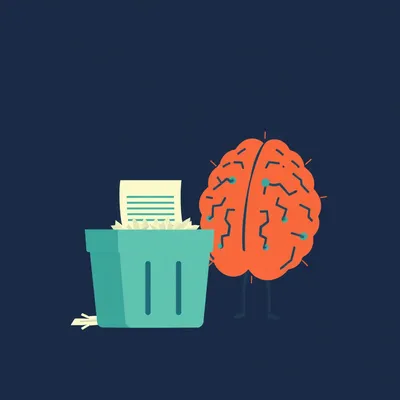
It’s the digital equivalent of writing a masterpiece on a chalkboard and then immediately reaching for the eraser. It’s gone. Poof. It’s a tragedy of the commons, but the "commons" is just your own future productivity.
It’s physically painful once you realize how much institutional knowledge is just evaporating every single hour. Today’s prompt from Daniel hits on exactly that—this "leaking bucket" of organizational intelligence. We’re talking about the gap between the brilliant things AI tells us in a chat window and the actually useful, permanent knowledge bases where that info should live. By the way, today’s episode is powered by Google Gemini 1.5 Flash. I’m Corn.
And I’m Herman Poppleberry. This really is the frontier of knowledge management. We’ve spent the last two years getting really good at prompting, but we’re still treating the outputs like disposable tissues. We use them once, they solve the immediate problem, and then they’re discarded. But if you’re a company with five hundred engineers all doing that, you’re losing a massive percentage of your collective R and D. Think about the duplication of effort. If Engineer A spends two hours getting an LLM to explain a legacy codebase, and then Engineer B does the exact same thing three weeks later because Engineer A’s chat is buried in a private history... that’s a massive hidden tax on the company.
It’s bizarre because we have the tools to generate the content, and we have the wikis to store it, but there’s no plumbing connecting the two. It’s like having a world-class desalination plant and a thirsty city, but no pipes. You’re just standing there with a bucket trying to catch what you can. And even when you do catch a bucketful, where do you put it? Does it go in the "General" Slack channel? Does it go in a Google Doc that no one will ever open again?
The technical term for this is the "ephemeral context trap." Most AI interfaces are designed for the "now." They want to help you with the task sitting on your desk this second. They aren’t incentivized to help you build a library for next year. And that’s a massive problem because the "trail of thought" an AI helps you produce is often more valuable than the final answer.
I love that quote Daniel shared: "Currently, we are burning the trail behind us as we walk." It’s so true. If I spend three hours brainstorming a new product architecture with Claude, I’ve explored ten dead ends and found one golden path. If I only copy-paste the golden path into our Notion, I’ve lost the context of those ten dead ends, which might be exactly what a teammate needs to see six months from now so they don’t repeat the same mistakes. But how do you actually capture that without making the wiki a total mess?
That’s the friction point. If you dump the whole transcript, it’s unreadable. If you summarize too much, you lose the nuance. And that’s where the tooling landscape gets interesting. There are people trying to build these pipes, but it’s still very fragmented. You’ve got companies like Dust dot t-t, which is doing some of the most sophisticated work here. They don't just see AI as a chatbot; they see it as an organizational layer. In Dust, your conversations with the AI are essentially team artifacts. They can be searched, they have attribution, and they can pull from your Slack and GitHub to maintain context.
I’ve looked at Dust, and what’s clever is that they are trying to solve the "silo" problem. Usually, my chat with an AI is a private affair. If I don't tell you I had it, you’ll never know. Dust makes that interaction part of the team's collective memory. But how does that work in practice for a developer? Does it just hover over their IDE?
It’s more of a workspace. You build "agents" that have access to specific data sources. So when you’re chatting with the Dust agent, it’s already looking at your documentation. And because the chat happens within that shared space, it’s indexable by the rest of the team. But then you have the open-source side, like Khoj. I know you’ve been tracking their GitHub progress.
Khoj is fascinating. They hit over ten thousand stars on GitHub recently, which shows just how hungry people are for this. It’s a personal AI that indexes your own files and your conversation history. It creates this self-updating knowledge base. So, if I ask it about a project I worked on four months ago, it’s not just guessing; it’s looking at the specific interactions I had back then. It’s local-first, which appeals to the privacy-conscious crowd, but it demonstrates the "capture" mechanism perfectly. It basically turns your computer into a second brain that actually remembers what you discussed with the machine.
But most people aren't using Dust or Khoj yet. Most people are using the incumbents—Notion AI, Confluence, maybe some Obsidian plugins. And that’s where the friction is, right? Because Notion AI is great at writing a page once you’re on the page, but it doesn't necessarily know what I was talking about in a separate research session in a browser tab.
Notion and Confluence are "destination" tools. They are where knowledge goes to live, but they aren't great at the "capture" phase from external sources. If you’re a heavy Obsidian user, you might use something like Smart Connections. That uses vector embeddings to look at your local notes and say, "Hey, this thing you’re typing right now relates to this other note from three years ago." It’s grassroots knowledge management. But even there, getting a chat transcript from a browser into Obsidian is usually a manual "save to markdown" step. It’s not a pipeline; it’s a manual labor project. It’s like we’re back in the days of hand-copying manuscripts.
And it’s not just about the labor. It’s about the "mental load" of deciding what is worth saving. When you’re in the flow of work, you don’t want to stop and think, "Is this insight worth a permanent entry in the wiki?" You just want the answer. By the time you’ve finished the task, you’re too tired to do the administrative work of archiving the session.
And we haven’t even touched on the biggest reason companies are terrified of this: the "oops, I just leaked the CEO's credit card number" problem. If you’re going to automate the capture of AI chats into a corporate wiki, you need a serious sanitization layer. You can't just have a raw stream of consciousness going into a searchable database.
That’s the critical missing piece in the public imagination, but the tech actually exists. Microsoft Presidio is the big one here. It’s an open-source SDK that uses named entity recognition to find and redact P-I-I—personally identifiable information. Names, emails, phone numbers, crypto keys, you name it. There’s also Private AI and Nightfall AI doing similar things. If you’re going to build a pipeline, you have to have a "scrubber" in the middle of it. You can't just dump raw transcripts into a searchable database.
Wait, so if I’m an IT manager, I could theoretically set up a system where every time an employee uses a company-approved LLM, the transcript goes through Presidio first? How much latency does that add?
It’s surprisingly fast. We’re talking milliseconds. The real challenge isn't the speed; it's the accuracy. You don't want to redact something that was actually vital context—like a specific product name that looks like a person's name. But companies like Nightfall are getting very good at that "context-aware" redaction.
Right, because a chat with an AI is often very informal. You might paste in a snippet of a customer email or a log file that has some sensitive tokens in it. If that gets indexed in the company Guru or Glean without being cleaned, you’ve just created a massive security vulnerability. It’s a "searchable liability."
Glean and Guru are interesting because they sit on the "search" end. They index everything—your Slack, your Docs, your AI interactions. But indexing isn't the same as structuring. If I search for "Project X architecture," and I get fifty raw chat logs where I was arguing with a bot about a specific function, that’s not a knowledge base. That’s a digital landfill.
A digital landfill! That’s the perfect description of most corporate Slacks. It’s where information goes to be buried under a thousand "thumbs up" emojis. So let's map out what a real pipeline looks like. Not just a "search" tool, but a system that turns ephemeral chat into a structured asset. What are the steps?
Okay, step one is Capture. This is the "Save to Knowledge Base" button that should exist in every chat interface. Or better yet, an auto-trigger. If a conversation exceeds a certain length or hits certain keywords, it gets flagged for the pipeline. You don't want to save "tell me a joke about a penguin," but you do want to save "explain the logic behind the Q3 billing migration."
Step two is Sanitize. That’s where Presidio or Nightfall comes in. It scrubs the P-I-I. You don't want the raw data hitting the next stage. It’s the "car wash" for your data.
Step three is Extraction. This is where you use a different, very capable LLM—maybe a GPT-4o or a Claude 3.5 Sonnet—to look at the scrubbed transcript and say, "What actually happened here?" It discards the "Hello, how can I help you" and the "Thanks, that was great" fluff. It identifies the "nuggets"—the key decisions, the research findings, the specific code snippets that worked. It turns a 5,000-word rambling transcript into a 300-word executive summary.
So it’s basically writing the minutes of the meeting between me and the AI. I love that. It’s like having a silent secretary sitting on your shoulder.
Precisely. Then step four is Categorization. The system looks at your existing wiki structure—maybe you use Confluence or a custom Notion workspace—and it says, "This looks like an Architecture Decision Record for the Engineering team. I’m going to tag it 'Project X' and 'Database Migration'." It places the knowledge where it’s most likely to be found.
And then step five—the most important one—is the Human-in-the-Loop. You get a notification that says, "Hey Corn, I noticed you spent two hours researching solid-state batteries. I’ve drafted a summary for the Engineering Wiki. Want to review and approve?"
And that’s the "gold standard." You aren't just dumping "raw AI sludge" into your wiki. You are using the AI to do the eighty percent of the work—the capturing, cleaning, and drafting—and then the human provides the "verified" stamp. This solves the "trust" issue. If it’s in the wiki, it’s because a human looked at the AI’s summary and said, "Yes, this is correct."
So if the pieces exist—we have the LLMs, we have the sanitization tools like Presidio, we have the wikis with A-P-Is—why hasn't someone like Microsoft or Google or a big startup just shipped this as a single, unified product? Why are we still doing the "copy-paste dance"? Is it just a lack of imagination?
There are a few big reasons. First is the "Context Window Trap." Companies like OpenAI or Anthropic want you to stay in their garden. They want your history to be in their sidebar. Building a seamless "export-to-competitor-wiki" feature isn't exactly at the top of their priority list. It’s a classic platform play. They want to be the knowledge base, not the feeder for someone else’s.
It’s also a trust gap issue. If an AI "hallucinates" a summary of a research session and that gets auto-posted to the company wiki, it becomes "official." If a junior dev reads that and thinks it’s the verified truth because it’s in the wiki, you’ve just institutionalized a mistake. That’s a nightmare for a CTO.
That’s the "hallucination pollution" problem. It’s much harder to fix a lie in a structured knowledge base than it is to ignore a weird comment in a chat log. And then there’s the sheer complexity of formatting. Every company uses a different template. My "Architecture Decision Record" looks different than yours. Mapping a messy markdown chat into a specific corporate template requires a lot of custom "plumbing" that’s hard to productize at scale. You end up with a "consulting" problem rather than a "software" problem.
But I think there’s an even deeper issue here, which is the "volume" problem. Even if the pipeline was perfect, the sheer amount of content would overwhelm a traditional wiki. If every engineering chat session became a wiki page, the wiki would become unusable within a month. You’d have ten thousand pages for one project. How do you find the "truth" in all that noise?
This is where we need a new paradigm. The "Wiki" model—a hierarchy of static pages—is a leftover from the paper world. It doesn't scale for AI-generated knowledge. We might need to move toward what people in the "Building a Second Brain" community call a "Liquid" knowledge base.
A liquid knowledge base? Explain that. It sounds like something out of a sci-fi novel.
Think of it as a "graph of fragments" instead of a "folder of pages." Instead of writing a whole page, the AI adds a "node" to a giant graph. When you search for something, the system doesn't just show you a page; it assembles a view of all the relevant nodes. It’s dynamic. If you ask about "Postgres performance," it pulls the relevant code snippet from a chat in June, a summary of a research paper from July, and the official config file from August, and stitches them together into a "page" that only exists while you’re looking at it.
So it’s like a personalized, just-in-time wiki generated on the fly from all those captured chat fragments? That’s wild. It’s like the wiki is a living organism that rearranges itself based on what you need to know.
Right. And you’d have "Quality Tiers." Tier one would be human-verified, polished documentation. The official stuff. Tier two would be AI-synthesized summaries of chats and meetings—labeled as "AI-generated." And Tier three would be the raw, searchable logs. You wouldn't treat them all the same. If I’m looking for the official company travel policy, I only want Tier one. But if I’m trying to figure out why we chose Postgres over MongoDB two years ago, I might want to dive into the Tier two summaries of those old brainstorming sessions.
I like that. It solves the "pollution" problem because you know exactly what level of "truth" you’re looking at. It’s like the difference between a peer-reviewed journal and a researcher’s lab notes. Both are valuable, but you use them differently. But how do you prevent Tier three from just becoming a massive, expensive storage bill?
And you could even have "decaying" knowledge. AI-generated fragments that haven't been accessed or verified in six months could just... evaporate or move to deep storage. It prevents the "data swamp" from getting too deep. You only keep what is being "used" by the collective intelligence of the team.
It’s funny, we talk about AI "memory" all the time, but we’re usually talking about the model's memory—the context window. We’re not talking about our memory of the AI. We are effectively giving these models a lobotomy every time we start a new session, and we’re giving ourselves a lobotomy by not capturing what they told us. We’re losing the "why" behind our decisions.
We really are. And for a company, that’s a massive financial leak. If you pay an engineer two hundred thousand dollars a year, and thirty percent of their "output" is trapped in ephemeral AI chats that never get shared, you are essentially lighting sixty thousand dollars on fire every year, per engineer. Multiply that by a team of a hundred, and you're looking at six million dollars of lost intelligence.
When you put it in those terms, it’s a wonder the VCs aren't throwing even more money at this. I mean, Dust dot t-t raised five million in a seed round back in January twenty twenty-five, but that feels small compared to the scale of the problem. Is it just that the problem is too "invisible" for people to care yet?
It’s starting to ramp up. The realization is hitting that "search" isn't enough. You can't just index the mess; you have to structure the mess. The "Knowledge Engineer" might become a real job title soon—someone whose entire job is managing these pipelines and ensuring the "liquid knowledge" stays high-quality.
So let’s get practical for a second. If someone is listening to this and they’re running a team, and they realize, "Oh man, my team is burning their trails every day," what can they actually do right now? Since the "perfect product" doesn't exist yet, do they just have to build it themselves?
The first step is an audit. Just ask your team: "Where are your AI outputs going?" If the answer is "nowhere," you have a problem. You can start small with tools like Khoj for personal use, or look into Dust if you want a team-wide solution. But even just a simple policy—"If an AI helps you make a decision, that summary must be pasted into the project Notion"—is a start. It’s about building the habit of "archiving as you go."
It’s the "manual pipe" approach. It’s better than no pipe at all. It’s like carrying buckets of water until the plumbing is finished.
And look into the sanitization side. If you have an internal dev team, give them a weekend to play with Microsoft Presidio. See if they can build a simple "scrubber" script. You’d be surprised how much confidence that gives a legal department when you say, "We aren't just dumping data; we have an automated P-I-I filter." It turns a "security risk" into a "managed asset."
I think the "Human-in-the-Loop" part is the cultural hurdle. People think that if they use an AI to write a wiki page, they are "cheating" or being lazy. We need to shift that mindset to: "The AI is the court reporter. I am the judge." The court reporter captures everything, but the judge decides what goes into the final record. If you don't have a record, the trial never happened.
That’s a great way to frame it. The "lazy" thing is actually not capturing it. Being "diligent" in twenty twenty-six means making sure that every useful insight is preserved for the next person who joins the team. It’s an act of generosity toward your future colleagues.
I wonder if we’ll see a future where the AI itself proactively manages the wiki. Like, if I’m in a chat and I say, "Wow, that’s a great explanation of our new A-P-I," the AI should say, "I agree. Should I add this to the developer docs, or is this just for you?" It becomes a proactive librarian.
We’re already seeing hints of that with "agentic" workflows. An agent that has "write access" to your documentation is the logical next step. But that brings us back to the trust issue. I don't know if I want an agent writing my company's official public documentation without a very heavy human gatekeeper. Imagine an AI accidentally updating your public API docs with a "hallucinated" feature. That’s a support nightmare.
Maybe the "wiki" of the future isn't even a place you go to read. Maybe it’s just the "brain" of the company's internal bot. Instead of me reading a page, I ask the bot, "What did we decide about the database?" and the bot looks at the captured fragments and gives me a synthesized answer. Is the document itself even necessary if the search is good enough?
That’s the "Glean" model, and it’s powerful. But the risk there is that if you never "harden" that knowledge into a document, it stays "mushy." There’s a value in the process of a human sitting down, looking at five chat logs, and writing a definitive one-page summary. It forces clarity. It forces you to reconcile conflicting information. If the AI just gives you a "synthesized" answer every time, you might never realize that your team is actually fundamentally disagreed on the strategy.
It’s the "writing is thinking" principle. If we let the AI handle all the capture and all the synthesis, do we stop thinking? Do we lose the ability to spot contradictions?
That’s the million-dollar question. I suspect the answer is that we just start thinking at a higher level. We stop thinking about "how to summarize this chat" and start thinking about "how this summary changes our strategy." We’re moving up the value chain. We’re focusing on the "so what?" rather than the "what happened?"
I hope you’re right, Herman. Because otherwise, we’re just building a giant library that no one ever reads, maintained by librarians who never sleep. It’s the Borgesian library, but digital.
Well, as long as the search works, maybe that’s okay. But I think the real winners in the next few years will be the organizations that figure out this "capture pipeline" first. They’ll have a compound interest effect on their knowledge that their competitors just won't be able to match. Every day they get smarter, while their competitors are still erasing their chalkboards every night. Think of it as the difference between a company that keeps its blueprints and a company that has to redraw them every time they build a house.
It’s a literal brain drain, just happening one browser tab at a time. I’m definitely going to be more conscious of that "close tab" button from now on. I might even start a "scrapbook" Notion page today just to stop the bleeding.
It’s a habit we all have to break. Think of it as "digital conservation." Every time you save a useful AI interaction, you’re saving a piece of your own cognitive labor from the void.
Digital conservation. I like that. Protect the endangered insights! We need a "Save the Chats" campaign.
Or, as you said earlier, stop burning the trail. Leave some markers for the people coming after you.
Well, this has been a deep one. I think we’ve given people plenty to chew on regarding the "leaking bucket" of AI knowledge. It’s not just a tooling problem; it’s a mindset shift. It's about moving from "chatting" to "knowledge production."
It really is. And I’m excited to see who actually builds the "unified pipe" that makes this all seamless. The pieces are all there, sitting on the workbench. Someone just needs to pick up the wrench and connect the desalination plant to the city.
Probably a startup with a very clever name that involves the word "context" or "memory." Or maybe just something like "Plumber AI."
Or "Brain." There are a lot of "Brain" startups out there. "Collective Brain," "Team Brain," "Wiki Brain." It’s getting a bit crowded in the cranium.
Too many brains, not enough pipes. Anyway, we should probably wrap this up before I start coming up with even worse startup names.
Fair enough. I think we've reached the end of this particular trail.
This has been My Weird Prompts. Big thanks to our producer, Hilbert Flumingtop, for keeping the gears turning behind the scenes and making sure our own knowledge doesn't evaporate.
And a huge thanks to Modal for providing the GPU credits that power the generation of this show. We couldn't do it without them—they are the infrastructure that makes our "ephemeral" thoughts audible.
If you found this useful—or if you’ve built your own "chat-to-wiki" pipeline and want to brag about it—search for My Weird Prompts on Telegram and let us know. We’d love to hear how people are actually solving this in the wild. Give us your best "scrubber" tips.
Until next time, I’m Herman Poppleberry.
And I’m Corn. Keep your insights scrubbed and your wikis liquid. Don't let your best ideas die in a closed tab.
See ya.
Bye.