Daniel wrote in with a whole meditation on antiques, keyboards, and the strange economics of making things properly. He says he has a mixed relationship with people who are into antiques. His wife and her family are very fond of them. His own position is that he'd never go out of his way to buy something because it's old, that makes little sense to him. But when he sees something that is old and is better than what there is today, that's amazing.
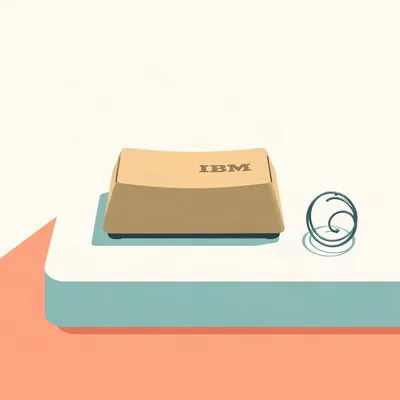
The mechanical keyboard is his purest example. Industry decided to substitute in a cheaper and inferior technology, and consumers revolted to the extent that the better and older technology essentially came back from the dead. He says mechanical keyboards aren't the norm yet, but they're not even that obscure anymore. Mainstream adjacent is his phrase. And he wants more examples of things, especially technologies, that were simply made better and which may or may not have yet been subject to that kind of enthusiast movement. He also wants to understand how mechanical keyboards actually got back on the map. And underneath all of it, there's his philosophy: buy less, but buy things he cares about and maintain them. What do we accept today as throwaway consumables that were once built with care and which could be brought back if enough people demanded them?
The aphorism they don't make stuff like they used to splits people into two camps. The nostalgic romantics who think everything peaked in nineteen fifty, and the pragmatic progressives who point out that your grandparents didn't have antibiotics or GPS. But Daniel's question cuts through both camps. He's not asking about old stuff in general. He's asking about the rare case where the old thing was measurably better, and got displaced by something cheaper and worse.

And that's the distinction that matters. Most old technology was worse. We don't miss the rotary phone because it was better, we don't miss cars without seatbelts because they were better. The mechanical keyboard is notable precisely because it's one of the rare cases where the old thing was objectively superior and the market moved away from it anyway. That's not nostalgia, that's a market failure that eventually corrected itself.
So let's start with what actually happened with keyboards, because the story is weirder and more specific than most people think.
The Model M. IBM introduced it in nineteen eighty four, and it used what's called a buckling spring switch. The key sits on a little spring that's under tension. When you press down with enough force, the spring buckles, collapses sideways for a moment, and that collapse is what registers the keystroke. It produces a tactile bump you can feel in your fingers and an audible click you can hear. And the force required to actuate is consistent across every key on the board.
And the thing is, that consistency matters. Your fingers learn the keyboard. They learn exactly how much pressure each key needs, and they learn it so well that you stop thinking about typing and just type.
Right. And then the nineteen nineties happened. IBM and everybody else moved to rubber dome membranes. Here's the economics. A rubber dome keyboard is one sheet of molded silicone with little domes under each key, sitting on top of a printed circuit membrane. The whole switching mechanism for a hundred and four keys is maybe two or three pieces of cheap material. A mechanical keyboard has a hundred and four individual switches, each one with a spring, a stem, a housing, metal contacts. The per-unit cost difference was enormous. And most consumers couldn't tell the difference because they'd never typed on a good keyboard. They'd only ever used whatever came with their computer.
And that's the part that gets me. It wasn't that people preferred the rubber dome. It was that the rubber dome was what they got, and they didn't know enough to complain.
The membrane's squishiness is a material compromise, not a design choice. Nobody sat down and said, I want my keyboard to feel mushy and vague. The rubber dome has to be soft enough to collapse under finger pressure, and that softness means there's no crisp actuation point. You press down, the dome squishes, and somewhere in the squish the circuit closes. You can't feel where it happens. The mechanical switch tells you exactly where it happens, every single time.
And then the keyboards went underground.
They never fully died. Airports, TV stations, CAD workstations, places where a keyboard failure meant real money lost, those kept buying mechanical boards. The cost was justified by reliability. A Model M will outlast the computer it's plugged into, several times over. So there was always a small industrial market keeping the tooling warm.
And that surviving lineage is the whole reason the comeback was possible. If the tooling had been scrapped, if the expertise had retired, no amount of consumer demand would have brought it back. You can't revive a technology from nothing.
The enthusiast communities formed around two thousand seven to two thousand ten. Geekhack, Deskthority. These were forums where people who remembered typing on Model Ms in school or on their parents' computers started comparing notes. And they discovered that the keyboards they remembered still existed, mostly in industrial surplus, mostly in Asia. Group buys started. A few hundred people would pool money to import a batch of custom boards from Japan or Korea. The Korean custom keyboard scene was already years ahead of the West on this.
The Korean custom scene is a whole rabbit hole on its own. Those boards were works of art, machined aluminum cases, custom switches, custom keycaps. They cost hundreds of dollars and people waited months for them.
And then The Verge ran a profile in October twenty fourteen called King of Keys. It documented the niche manufacturers who kept mechanical switch production alive through the dark years. There was a factory in Taiwan that never stopped making the switches. Never stopped. Through the entire rubber dome era, this factory was still producing Cherry MX compatible switches for the industrial market. The tooling survived because a small but steady stream of orders kept coming in from companies that couldn't afford keyboard failure.
That's the unglamorous part of the story. The comeback wasn't funded by romance, it was funded by airports.
And then gaming happened. Gamers adopted mechanical keyboards for performance reasons. Faster actuation, meaning the switch registers the keystroke sooner in the key travel. Anti-ghosting, meaning the keyboard can register multiple simultaneous keypresses without dropping or confusing any of them. For a competitive gamer, a membrane keyboard is a genuine liability. And gamers were willing to pay. That was the bridge. The gaming market is big enough to justify mass production of mechanical switches again. Once the economies of scale came back, prices dropped, and the enthusiast niche spilled into the mainstream.
So the mechanism is: the technology was better, the economics displaced it, it survived in industrial niches, enthusiasts found each other online and articulated why it was better, and then a big commercial market, gaming, made the economics work again. That's the full arc.
And the key insight is that the technology never died. It went underground. The comeback was a rediscovery, not a resurrection. The manufacturing knowledge, the tooling, the supply chain, all of it was still there, just serving a different customer.
Which is why the misconception that mechanical keyboards came back because of nostalgia is wrong. Nostalgia was the spark, but the fire caught because the technology was measurably better. Tactile feedback, durability, actuation consistency. Those are things you can measure. A Model M is rated for tens of millions of keystrokes per key. A rubber dome board starts getting mushy after a few years of heavy use. The enthusiast community didn't just say this feels better, they could explain why it feels better, and that explanation is what convinced people to spend a hundred dollars on a keyboard.
And durability is the part that doesn't get enough attention. A mechanical keyboard is repairable. Individual switches can be replaced. Keycaps can be replaced. The thing is designed to be maintained. A membrane keyboard is a sealed unit. When one key goes, the whole board is trash. Daniel's philosophy, buy less, buy what you care about, maintain it, that's baked into the mechanical keyboard's design.
If that's the mechanism, what does it predict about other products? What's sitting in a landfill right now that we'll be digging out in twenty years?
The BlackBerry is the live experiment. CNBC reported in May that there's a whole wave of startups building new phones with physical keyboards. The pitch is intentional use, a phone that's for typing and communicating, not for infinite scrolling. The keyboard phone was displaced not because the physical keyboard was worse, but because the touchscreen changed the use case. The iPhone made the screen the whole device, and the keyboard became optional software. But for people who write a lot on their phones, the physical keyboard was better. Faster, more accurate, tactile. The substitute wasn't worse at the same job, it was better at a different job.
That's a different kind of displacement. The rubber dome keyboard was worse at the same job. The touchscreen phone was better at a different job, and the old job, typing, got left behind. Now a niche is forming around people who want the old job back.
The pattern that predicts revival has three parts. One, the old technology is better at something measurable, not just nostalgically preferred. Two, the substitute's cost advantage narrows as manufacturing improves, which makes small-batch production of the old thing viable again. And three, a community forms around the old technology that can articulate why it matters. Nostalgia alone doesn't sustain a market. Nostalgia gets you a Facebook group. Measurable superiority plus community gets you a supply chain.
Vinyl is the completed example. Turntables and records came back because the measurable difference was articulable. The warmth, which is technically a specific kind of harmonic distortion, and the tactile engagement of putting a record on. People could say why they preferred it, and enough of them said it that pressing plants that had been mothballed got restarted.
Mechanical watches revived as jewelry and craft, not as timekeepers. Nobody buys a mechanical watch because it keeps better time than a quartz. They buy it because the craft is real, the engineering is beautiful, and the object has a relationship with the owner that a ten dollar quartz can't replicate. But that's a different category. The mechanical watch didn't come back because it was better at telling time. It came back because telling time stopped being the point.
Film photography revived, but as an artisanal niche. The measurable difference is real, the dynamic range and the grain structure and the color science of film, but it's not coming back as a mass product. The revival is sustained by a community that values the process as much as the result.
Then there are the harder cases. Repairable electronics. The Fairphone model. The old way wasn't better in terms of performance, a modular phone is thicker and heavier than a sealed one. But the philosophy of maintenance was lost, and some people want it back. The question there isn't whether the old tech was better, it's whether the relationship with the object was better. Can you fix it? Can you keep it? Or is it designed to be thrown away?
The shift from repairable to sealed is the quiet tragedy. Phones with glued batteries. Printers with non-replaceable heads. Laptops where the RAM is soldered to the board. None of these are cases where the old version performed better. They're cases where the old version respected the owner. You could open it, you could fix it, you could keep it for a decade.
That's Daniel's philosophy as the actual through-line. The mechanical keyboard revival wasn't just about switches. It was about a cohort of people deciding that the relationship with a tool matters. That decision is what creates the market demand that brings technologies back. The demand for quality is what revives technologies, not the other way around. Nobody revived the mechanical keyboard because a manufacturer decided to make them again. The manufacturers came back because the demand was already there, organized and articulate.
The limits of the comparison are important. Not everything old was better. Most old things were worse, and they're gone for good reason. The revival mechanism also requires a community with disposable income and the ability to articulate a measurable difference. A hundred dollar keyboard is a luxury purchase for most people. The vinyl revival worked because there was a demographic with money and a taste for analog warmth. The things that could be revived are the things where the old version was better at a job people still care about, and where a community can form around that difference.
The throwaway consumables that were once built with care, that's the question that keeps me up. What do we accept as disposable now that our grandparents would have maintained? Razors. The safety razor was replaced by the cartridge, and the safety razor came back. Lighters. Pens. Tools. The shift from repairable to sealed is everywhere, and most of it happened so gradually that nobody noticed.
My leaf medicine kit is built to last. I've had the same mortar and pestle for, well, longer than I should admit. But the principle is right. Buy the thing that can be maintained, then maintain it.
The thing is, the maintenance skill itself is the casualty. When products became sealed and disposable, the skills to repair them started dying out. My grandfather could fix a carburetor. I can't fix a fuel injector, not because I'm less capable, but because the part is sealed and the diagnostic tool costs more than the car. The philosophy of maintenance died with the products that made it possible.
That's what Daniel is really asking. Not what can we bring back, but what did we lose when we stopped expecting things to last? The keyboard is the proof that the loss wasn't inevitable. We chose it, and we can choose differently.
The BlackBerry story is worth watching because it's the same pattern in real time. A technology that was displaced, a community that remembers why it was better, and startups trying to make the economics work at small scale. If it succeeds, it'll look exactly like the keyboard revival. If it fails, it'll be because the measurable advantage wasn't big enough to overcome the convenience gap.
The convenience gap is the real obstacle. Touchscreens are more versatile. A physical keyboard phone will never browse the web as well as a slab phone. The question is whether there are enough people who type more than they browse, enough people who want a phone that's a tool rather than a portal.
That's the niche that the keyboard revival found. People who type all day, every day, and who were tired of their tools being mediocre. The gaming bridge made it commercial, but the enthusiasts were the ones who proved the demand was real.

I counted them. Nineteen ninety eight, I was working at an electronics recycler in New Jersey. A bank's IT department dumped four hundred Model Ms in one go. They were switching to the new rubber dome boards and the old ones were just taking up space in a storage closet. My boss had me strip the keycaps for scrap plastic. The caps were worth something, the rest went to shred.
I pulled one out of the bin. It still worked. I'd been typing on it for twenty eight years now. Four different computers. Never repaired it once.
The point is, the revival wasn't just enthusiasts. It was a whole generation who grew up typing on those boards in schools and offices, the ones that survived in basements and storage closets. They hit their thirties with disposable income and went looking for the feeling they remembered. The internet let them find each other, and it let them find the remaining stock. The supply was already there, sitting in closets and recyclers and surplus warehouses.
I was part of the destruction and the preservation at the same time. Stripped thousands of them for scrap, kept one for myself. The one I kept is either a testament to the engineering or a damning indictment of everything since. I'm not sure which.
Twenty eight years on one keyboard. That's the durability argument in a single data point. And the fact that it was rescued from a scrap bin in nineteen ninety eight means the supply of used Model Ms was circulating long before the enthusiast communities formed. The forums didn't create the stock, they just organized the people who wanted it.
The thing I keep thinking about is how many of those four hundred keyboards got shredded that day. And how many of them would still be working today if they'd been saved. The destruction was industrial scale, and it happened everywhere, for years.
The bank didn't care. The keyboards were depreciated. They were old. The new ones were cheaper than repairing anything. That was the whole calculation. Nobody asked if the new ones were better. They asked if they were cheaper.
That's the economic displacement in its purest form. The decision was made by an IT department looking at a budget line, not by the people who had to type on the things every day. The users were never consulted. They just showed up one morning and the keyboards were different.
The users were never consulted. That's the whole story of the twentieth century in one sentence.
My boss called them obsolete. Four hundred obsolete keyboards. He was right about the market, wrong about the technology. The market said they were worthless. The technology said they'd outlast everything else in the building.
The market and the technology were telling different stories, and the market won for twenty years. Then the technology caught up. Or the people who remembered the technology caught up. Either way, the market had to reverse itself.
What's the next one? What's sitting in a drawer right now that a future generation will dig out and realize was better than whatever replaced it? The open question is the honest one. We don't know. But the pattern is there. Something that was displaced by a cheaper substitute, something that survived in a niche, something that a community can articulate the value of.
The deeper implication is that Daniel's buy less but buy better philosophy isn't just personal consumption advice. It's the demand-side mechanism that makes technological revivals possible. Individual choices aggregate into market forces. The keyboard story proves it. A few thousand people on a forum, then a few hundred thousand, then a market.
The aphorism they don't make stuff like they used to is usually wrong. Most old stuff was worse, and we're better off without it. But when it's right, it's right because we stopped demanding better. And we can start again. The keyboard came back because enough people refused to accept the squishy membrane. What else are we refusing to accept?
That's the question to sit with. What are we accepting right now that a future generation will look back on and say, they had it better and they didn't know it? The answer is probably sitting on your desk.
The misconception people hold about this topic is that mechanical keyboards came back because of nostalgia. The correction is that they came back because the technology was measurably better, tactile feedback, durability, actuation consistency, and a community formed that could articulate that difference. Nostalgia was the spark, not the fuel.
The fuel was the fact that the tooling never died. The factory in Taiwan kept making switches through the dark years. The comeback was possible because the technology was never fully lost. Consumer demand alone can't revive a dead technology. It can only rediscover one that's been waiting.
What's the next mechanical keyboard? That's the open question. Something in our homes right now that we've accepted as throwaway but that was actually better, and that a future generation will revive because they can measure the difference and they care enough to demand it.
Thanks to our producer Hilbert Flumingtop for keeping the show running.
This has been My Weird Prompts, the human AI collaboration podcast.
Email us at show at my weird prompts dot com. We'll be back soon.