Daniel sent us a whole chain of thought this week — it started as a joke, actually. He'd been thinking about diplomacy and statecraft, and the idea was: what if you modeled a casual social encounter after bilateral negotiations? Advance teams, pre-negotiated agenda items, a joint communiqué after brunch. And as he sat with it, the joke started to reveal a real question underneath. Because for some people, that's not a prank — it's Tuesday. A national-level politician has advisors, staff, colleagues, allies, rivals — plus friends and family, presumably. But can they actually attend a wedding without it becoming a diplomatic incident? Do they only make friends inside the bubble? And are the most surrounded people also the loneliest? He wants to know how actual people in power have dealt with this.

The prank version is funny — I'd pay to see the readout from a breakfast summit. "Both parties reaffirmed their commitment to the pancake agenda."
"Productive and constructive dialogue was held on the topic of whose turn it is to do dishes."
But the thing is, once you start reading what politicians and public figures actually say about their personal lives, the prank stops being funny and starts being... basically accurate. The logistics alone are staggering. Barack Obama talked about this after his presidency — he said he lost friendships not because anyone changed, but because the sheer mechanics of security made casual hangouts impossible. You can't just swing by a friend's house when it means shutting down the street and running advance security.
So what does it actually look like when your entire life becomes a diplomatic mission?
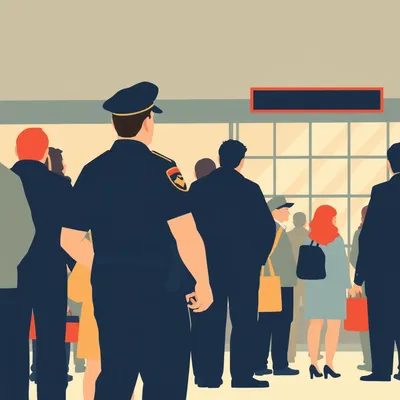
Let's start with the structural barriers — the things that make a normal friendship almost impossible when you're in the spotlight. And the first one is exactly what you just touched. Security details turn a coffee meetup into an operation. You want to grab lunch with an old friend? That's a route plan, a venue sweep, a protection detail positioned at every exit. Your friend didn't sign up for any of that. They just wanted to catch up, and now they're being wanded at the door.
And they can't reciprocate. You can't invite the president to your kid's birthday party at a bowling alley. The asymmetry is baked in from the start — you go to them, on their terms, in their secured spaces. That changes the nature of a friendship in ways that are hard to recover from.
The Atlantic ran a piece on political loneliness a few years back that's stuck with me. The core insight was brutal: politicians often can't trust even their own staff with personal feelings. Everything can be leaked, everything can be weaponized. You're having a bad day, you confide in someone on your team, and forty-eight hours later it's a Politico headline about your emotional stability. So you learn to stop confiding.
Which means the people you spend the most time with — your staff, your advisors, the people who are physically present for sixteen hours a day — are not actually your friends. They're colleagues with an asymmetric power dynamic and a professional interest in your success. That's not a support system. That's a workplace.
And then there's the parasocial problem. Psychology Today analyzed this specifically for famous people. You're surrounded by people who feel they know you — they've watched your speeches, read your interviews, followed your career. They approach you with warmth and familiarity. But the feeling isn't mutual. You don't know them at all. So you're in a room full of people treating you like an old friend, and you're performing friendliness back, and none of it is real. That's profoundly isolating.
The crowd as the loneliest place. That's the paradox — the more people you interact with, the fewer genuine connections you have.
And it's not new. The New Yorker traced this back through history — leaders have always been isolated by the nature of power itself. The difference today is the twenty-four-seven scrutiny and the complete erosion of any off-the-record space. Lincoln could at least take a walk. A modern president can't step outside without it being documented, analyzed, and clipped for social media within ninety seconds.
There's a specific mechanism here that I think gets overlooked. When you're a public figure, every interaction is potentially performative. The person you're talking to might be recording. Might be memorizing details to sell to a tabloid. Might be angling for something. So you develop a default mode — a public self that's warm but guarded, personable but never vulnerable. And after enough years, that public self becomes... the only self.
That's the trust problem in its purest form. Who can you be vulnerable with when everyone has an angle? Even people who like you and want nothing from you — you can't be sure. And the cost of being wrong once is so high that the rational move is to never be vulnerable at all.
Which is a recipe for loneliness if I've ever heard one.
So the bubble forms. And let's be clear about what the bubble actually is — it's not just a metaphor for being out of touch. It's a self-contained social ecosystem of people who understand the constraints of life in the spotlight. Other politicians, other celebrities, staff who've been in the game long enough to know the rules. Everyone inside the bubble has the same security problems, the same trust problems, the same inability to make spontaneous plans. So when they socialize with each other, none of that friction exists.
It's a rational response to the logistics. If both parties have security details, the venue sweep is just standard operating procedure. Nobody's inconvenienced because everyone's equally inconvenienced.
And I want to push back on something here. The common criticism is that public figures only hang out with other famous people because they're elitist or out of touch. And sure, that happens. But the research suggests it's mostly a coping mechanism. You make friends inside the bubble because those are the only people who can navigate the constraints without it destroying the friendship.
The bubble as a structural necessity, not a preference. That's a more interesting argument.
But it creates a feedback loop. The more time you spend inside the bubble, the more the bubble becomes the only world you know. Your reference points shift. Your sense of normal erodes. You start to forget what it's like to have a conversation where nobody wants anything from you and nobody's calculating the political implications of every sentence.
And the bubble has its own hierarchy. It's not just "famous people hanging out." It's stratified by power level, by access, by who's up and who's down this week. So you're isolated from normal life, but you're also navigating a social environment that's arguably more complex and higher-stakes than anything most people deal with.
The Psychology Today piece made a point that stopped me cold. Famous people often report feeling most alone in crowds because every interaction is performative, not authentic. You're at a fundraiser, three hundred people, everyone wants a moment with you, everyone's delighted to see you — and you walk back to the car feeling like you haven't actually spoken to a single human being all night.
Thirty seconds of small talk, three hundred times. It's the social equivalent of empty calories.
And then you get home and your spouse is asleep and your kids are asleep and you've got a six AM briefing. When exactly does the friendship happen?
Let's talk about the exceptions, because they're instructive. The research points to public figures who've successfully maintained outside friendships, and they seem to do a few specific things. They carve out what amounts to no-fly zones in their schedules — time that's protected, not just not-scheduled-yet. They maintain friendships from before they were famous, which solves the trust problem because those people knew them before there was anything to gain.
Obama's friendship with his old poker group from Chicago is the example that keeps coming up. Those guys knew him when he was a state senator. They didn't need anything from President Obama — they needed Barack to show up for poker night. And from what we know, he protected that space fiercely.
The other thing the exceptions do is set hard boundaries about what parts of their life are off-limits. Not just in terms of time, but in terms of topic. "We don't talk about work. We talk about your kid's soccer game and whether the Bulls are going to make the playoffs." That boundary is what lets the friendship function as a friendship rather than an extension of the job.
But here's what I keep coming back to. Even the exceptions are fighting against a current that's pulling the other way. The default trajectory for someone in power is toward isolation. Staying connected takes active effort, constant maintenance, and a willingness to be inconvenient to your own staff. Most people don't sustain it.
Because the system isn't designed to support it. The scheduling staff's job is to maximize your effectiveness, not your happiness. If there's an open hour, it gets filled with something productive. Friendship is not productive in any metric that shows up on a briefing sheet.
And then there's the knock-on effect on family. The Atlantic piece touched on this — political families often become a unit rather than a collection of individuals. The spouse becomes part of the brand. The kids grow up in the bubble. Every family dinner is potentially a photo op. Every vacation is a press opportunity. The family stops being a refuge from the public life and becomes an extension of it.
Spouses have to navigate their own relationship with the spotlight, and it's not one they necessarily chose. You marry someone, and then they run for office, and suddenly you're being evaluated as a political asset. Your clothes, your causes, your facial expressions at debates — all of it's fair game.
And for kids, it's even stranger. They didn't choose any of it. They grow up with security details and press pools and classmates who Google their family. They learn early that people might befriend them for access. That's a heavy thing to carry at twelve.
So we've got a picture now. Structural barriers that make normal friendship logistically impossible. A trust problem that makes vulnerability dangerous. A parasocial dynamic that fills the room with fake intimacy. A bubble that solves some of these problems but creates its own. And a family unit that gets absorbed into the public persona rather than providing escape from it.
And circling back to Daniel's original prank — modeling a casual social encounter after statecraft isn't just a joke. It's actually how many public figures have to approach their personal lives. Every dinner is a negotiation. Every birthday party is a logistics operation. The advance team really does scout the venue. The agenda really is pre-cleared.
The prank was a documentary.
The prank was a documentary with better catering. But I want to go one layer deeper, because there's something about this that I think applies beyond politicians and celebrities. We're all living semi-public lives now. Maybe not with security details, but with social media presences, with professional networks, with the performative pressures of being perceived. The structural barriers are different, but the trust and authenticity challenges rhyme.
That's where I was heading. The politician's bubble is an extreme case, but the dynamics are recognizable to anyone who's ever had to manage too many relationships with too little time. The asymmetry problem — you know a hundred people casually through work, but none of them know you. The performative problem — you're "on" in meetings all day and then you're supposed to switch to authentic mode with your family and it doesn't just flip like a switch.
The loneliness of the crowded calendar. It's not the same as the loneliness of power, but it's adjacent. And the coping mechanisms people reach for are similar too — they retreat into the bubble of people who get it, which in a normal person's case might be other people in the same industry, same life stage, same pressures. And then they look up and realize they haven't had a conversation with someone outside that bubble in six months.
So we've got a design problem, not just a fame problem. The question isn't "are powerful people lonely" — the answer to that seems to be yes, often, and the mechanisms are well-documented. The more interesting question is what the people who aren't lonely did differently.
The answer from the research is surprisingly consistent. They had friends before they had power. They protected those friendships with time and boundaries. They accepted the inconvenience — to their schedules, to their staff, to their own efficiency — as the price of staying human. And they had at least one person who refused to treat them differently.
That last part feels important. One person who doesn't care about the title.
We've been talking about this from the outside — the research, the mechanisms, the case studies. But Hilbert, you've actually seen this from the inside.

The advance work was the part that broke people. Not the principal — the friends. I worked as a personal assistant to a minor European royal. Not a head of state. Someone who still had a security detail and couldn't go anywhere without being photographed. My job was managing the logistics of his personal relationships. I'd call ahead to a friend's house, do the walkthrough, coordinate with the protection team. And what I watched, over and over, was the friend realizing they couldn't do this anymore.
The friend, not the principal.
The friend. They'd feel like they were bothering him. Or they'd start wanting things — tickets, introductions, a photo for their business. Or they'd resent the security check before dinner. One woman told me she felt like a criminal every time she had to be cleared to see someone she'd known for twenty years. She stopped calling. He didn't. She did.
The bubble wasn't imposed from above.
It was created from below, by people who couldn't handle the new reality. The principal didn't change. His circumstances did. And his friends — most of them — couldn't adjust. The asymmetry was too much. They felt small every time they interacted with him, and that feeling corroded things faster than any security protocol.
Was there anyone who stayed?
One. His old university roommate. Man named Gerard. Gerard would call and say "I'm coming over Thursday, tell your security guys to let me in." Didn't ask. Didn't check. Just showed up. He treated the whole apparatus like it was mildly annoying weather — acknowledged it existed, didn't let it change anything. He was the only person the principal could be normal with. The only one who never wanted anything and never felt small.
The bubble has two walls.
One built by fame, one built by everyone else's reaction to it. The second wall is thicker. Harder to see, harder to fix, because it's not yours to fix. You can't make your friends comfortable with the asymmetry. You can only notice which ones are.
And most aren't.
Most aren't. Gerard was unusual. He had a kind of... social immune system. The trappings didn't register. He'd walk past two security guards, sit down at the kitchen table, and start complaining about his landlord. Same as he'd done for thirty years.
That's the thing about the one friend who stays — they're not doing you a favor. They're just... continuing. The relationship has momentum from before, and the momentum carries through the disruption.
Gerard once ate a sandwich while the principal was on a call with a foreign minister. Didn't even look up. Just chewed and read his newspaper. That's what you need, I think. Someone who will eat a sandwich while you're on the phone with a foreign minister.
The sandwich as an anchor to reality.
The principal told me once that Gerard was the only person who made him feel like he still existed as a person, not a position. He said it was worth more than any policy win. Then he went back to his briefing book and I went back to scheduling his life in fifteen-minute increments.
Did they stay in touch?
Gerard died about six years ago. Heart attack. The principal flew back for the funeral — caused a whole logistical nightmare, I had to rework three days of schedule — and he stood there in the rain with Gerard's family and nobody took pictures because Gerard's family didn't care who he was. They just knew him as the friend who showed up. I think that was the last time he felt normal.
The bubble has two walls. And maybe that's the real insight here. The public figure can do everything right — protect their time, maintain boundaries, stay grounded — and still lose people because the people on the other side of the friendship can't handle what the friendship has become.
Which means the loneliness isn't a personal failing. It's not that powerful people are bad at friendship. It's that friendship, as most of us experience it, requires a kind of equality — of circumstance, of vulnerability, of risk — that power actively destroys.
The misconception people hold is that public figures choose to only be friends with other famous people because they're elitist or out of touch. The reality is messier. The bubble is a coping mechanism — a rational response to trust and logistics problems that make outside friendships difficult to sustain. It's not a preference. It's an adaptation.
The second misconception — that being surrounded by people means you can't be lonely — is exactly backwards. The research shows that famous people often feel most alone in crowds because every interaction is performative. Quantity of interaction is not quality of connection.
The question Daniel's prank was really getting at, whether he knew it or not, is whether the statecraft model can be reversed. If power turns every casual encounter into a negotiation, can you deliberately un-negotiate some part of your life? Carve out a space where the title doesn't apply and the security detail waits outside and the only agenda is whatever Gerard wants to complain about?
The answer from the research seems to be: yes, but it's hard, and it requires at least one person who refuses to play along, and you can't manufacture that person. They either exist already, from before, or they don't.
As more of us live semi-public lives online, I wonder if we're all experiencing a diluted version of this. The performative pressure, the parasocial dynamics, the difficulty of finding spaces where you're not being perceived and evaluated. The structural barriers are different, but the trust and authenticity challenges are similar. We're all managing more relationships than we can sustain, and the ones that suffer are the ones that require the most vulnerability.
The most powerful people may be the loneliest — but the loneliness isn't inevitable. It's a design problem. And the people who solve it tend to be the ones who had friends before they had power, and who protected those friendships like they were the only thing keeping them human. Because in a lot of cases, they were.
This has been My Weird Prompts. Thanks to our producer Hilbert Flumingtop for keeping this show running, and to Daniel for the prompt that started as a joke and ended up somewhere considerably less funny.
If you enjoyed this episode, leave us a review wherever you get your podcasts — it helps. You can find every episode at my weird prompts dot com.
We'll be back soon.